
EPISODE · Feb 11, 2026 · 39 MIN
Turbulence in the Tank: The FAA’s 2030 Unleaded Transition Plan vs. Real-World Physics
from Colorado Pilots Association CPA Newsletter · host ibmacgeek
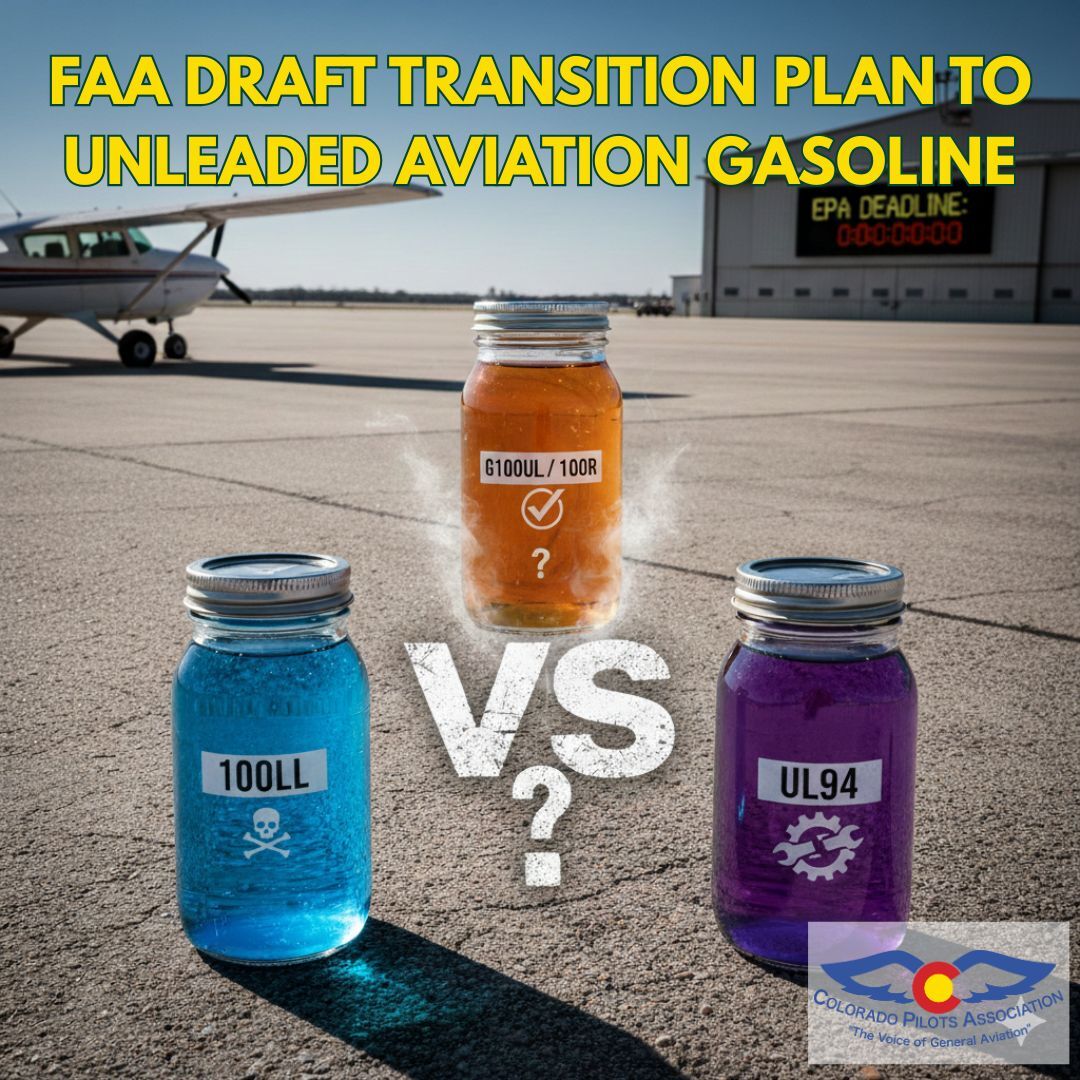
The clock is ticking on 100LL. In this deep dive, we unpack the FAA’s newly released "Draft Transition Plan," which sets a hard target to eliminate leaded aviation fuel by 2030 (2032 for Alaska). We move beyond the press releases to analyze the friction between regulatory timelines and mechanical reality. Join us as we break down the FAA's four-phase roadmap, the fierce competition between fuel contenders (G100UL, 100R, and UL100E), and the massive supply chain hurdles facing every airport and FBO in the country. Show Notes & Key Takeaways • The FAA’s 4-Phase Roadmap: ◦ Phase 1: Finalizing fuel authorizations and completing comparative testing. ◦ Phase 2: Gaining market experience with early adopters and managing supply chains. ◦ Phase 3: A nationwide rollout for the contiguous U.S. by 2030. ◦ Phase 4: A specialized transition for Alaska extending to 2032 due to unique infrastructure challenges. • The Technical Risks (What Pilots Need to Know): ◦ Valve Recession: A UND study found a statistically significant correlation between UL94 usage and exhaust valve seat recession, leading to cylinder failures. ◦ Material Compatibility: AOPA’s Baron demo with G100UL highlighted that the fuel does not evaporate like 100LL, causing paint staining, and may be incompatible with certain older fuel bladders. ◦ Microwelding: The lack of lead results in "microwelding" between valves and seats, a protective function lead oxides previously provided. • The Contenders: ◦ G100UL (GAMI): Approved via STC for nearly all engines but facing material compatibility questions. ◦ 100R (Swift Fuels): Approved via STC for specific airframes (e.g., Cessna 172) and expanding; recently achieved ASTM production specification. ◦ UL100E (LyondellBasell/VP Racing): Currently in the FAA’s PAFI testing pipeline, targeting authorization in 2027. • Infrastructure Challenges: The transition requires dedicated storage, preventing misfueling, and potentially flushing tanks—complex tasks for FBOs currently managing a single AvGas grade AA Draft Transition Plan and Federal Register Notice • Draft FAA Transition Plan (Federal Register): https://www.federalregister.gov/d/2026-00296 • FAA Aviation Safety Draft Documents: https://www.faa.gov/aircraft/draft_docs • FAA Unleaded Future: https://www.faa.gov/unleaded, • FAA Grant Assurance 40 Q&A: https://www.faa.gov/airports/airport_compliance/compliance_guidance/Grant-Assurance-40-Leaded-Aviation-Gas-QA.pdf EAGLE Initiative and Fuel Information • EAGLE Homepage: https://flyeagle.org, • EAGLE Fuel Developers: https://flyeagle.org/fuel-developers/• EAGLE Transition Guidance for Flight Schools: https://flyeagle.org/wp-content/uploads/2023/08/EAGLE-Guidance-on-Transitioning-a-Flight-School-to-UL-Avgas-July2023.pdf EPA Endangerment Finding • EPA Regulations on Lead Emissions: www.epa.gov/regulations-emissions-vehicles-and-engines/regulations-lead-emissions-aircraft University of North Dakota Study • Supplemental Data for UND Case Study: http://doi.org/10.31356/data033, Industry Resources and Safety • NATA Unleaded Avgas Fact Sheet: https://www.nata.aero/assets/Site_18/files/Safety 1st documents/Misfueling/UnleadedAvGasFactSheet.pdf • NATA Misfueling Prevention Program: www.preventmisfueling.com • Lycoming Service Instruction 1070AB: https://www.lycoming.com/sites/default/files/attachments/SI1070AB%2520Specified%2520Fuels.pdf • AOPA News (California Fuel Mandates): https://www.aopa.org/news-and-media/all-news/2021/december/09/aopa-concerned-about-mandated-fuel-policies-in-california • Swift Fuels FAQ: https://www.swiftfuelsavgas.com/faq This AI-generated podcast series is brought to you from the Colorado Pilots Association. Please visit https://coloradopilots.org and consider becoming a member to help support these series.
What this episode covers
The clock is ticking on 100LL. In this deep dive, we unpack the FAA’s newly released "Draft Transition Plan," which sets a hard target to eliminate leaded aviation fuel by 2030 (2032 for Alaska). We move beyond the press releases to analyze the friction between regulatory timelines and mechanical reality. Join us as we break down the FAA's four-phase roadmap, the fierce competition between fuel contenders (G100UL, 100R, and UL100E), and the massive supply chain hurdles facing every airport and FBO in the country. Show Notes & Key Takeaways• The FAA’s 4-Phase Roadmap: ◦ Phase 1: Finalizing fuel authorizations and completing comparative testing. ◦ Phase 2: Gaining market experience with early adopters and managing supply chains. ◦ Phase 3: A nationwide rollout for the contiguous U.S. by 2030. ◦ Phase 4: A specialized transition for Alaska extending to 2032 due to unique infrastructure challenges.• The Technical Risks (What Pilots Need to Know): ◦ Valve Recession: A UND study found a statistically significant correlation between UL94 usage and exhaust valve seat recession, leading to cylinder failures. ◦ Material Compatibility: AOPA’s Baron demo with G100UL highlighted that the fuel does not evaporate like 100LL, causing paint staining, and may be incompatible with certain older fuel bladders. ◦ Microwelding: The lack of lead results in "microwelding" between valves and seats, a protective function lead oxides previously provided.• The Contenders: ◦ G100UL (GAMI): Approved via STC for nearly all engines but facing material compatibility questions. ◦ 100R (Swift Fuels): Approved via STC for specific airframes (e.g., Cessna 172) and expanding; recently achieved ASTM production specification. ◦ UL100E (LyondellBasell/VP Racing): Currently in the FAA’s PAFI testing pipeline, targeting authorization in 2027.• Infrastructure Challenges: The transition requires dedicated storage, preventing misfueling, and potentially flushing tanks—complex tasks for FBOs currently managing a single AvGas grade AA Draft Transition Plan and Federal Register Notice• Draft FAA Transition Plan (Federal Register): https://www.federalregister.gov/d/2026-00296• FAA Aviation Safety Draft Documents: https://www.faa.gov/aircraft/draft_docs• FAA Unleaded Future: https://www.faa.gov/unleaded,• FAA Grant Assurance 40 Q&A: https://www.faa.gov/airports/airport_compliance/compliance_guidance/Grant-Assurance-40-Leaded-Aviation-Gas-QA.pdf EAGLE Initiative and Fuel Information• EAGLE Homepage: https://flyeagle.org,• EAGLE Fuel Developers: https://flyeagle.org/fuel-developers/• EAGLE Transition Guidance for Flight Schools: https://flyeagle.org/wp-content/uploads/2023/08/EAGLE-Guidance-on-Transitioning-a-Flight-School-to-UL-Avgas-July2023.pdf EPA Endangerment Finding• EPA Regulations on Lead Emissions: www.epa.gov/regulations-emissions-vehicles-and-engines/regulations-lead-emissions-aircraft University of North Dakota Study• Supplemental Data for UND Case Study: http://doi.org/10.31356/data033, Industry Resources and Safety• NATA Unleaded Avgas Fact Sheet: https://www.nata.aero/assets/Site_18/files/Safety 1st documents/Misfueling/UnleadedAvGasFactSheet.pdf• NATA Misfueling Prevention Program: www.preventmisfueling.com• Lycoming Service Instruction 1070AB: https://www.lycoming.com/sites/default/files/attachments/SI1070AB%2520Specified%2520Fuels.pdf• AOPA News (California Fuel Mandates): https://www.aopa.org/news-and-media/all-news/2021/december/09/aopa-concerned-about-mandated-fuel-policies-in-california• Swift Fuels FAQ: https://www.swiftfuelsavgas.com/faq This AI-generated podcast series is brought to you from the Colorado Pilots Association. Please visit https://coloradopilots.org and consider becoming a member to help support these series.
NOW PLAYING
Turbulence in the Tank: The FAA’s 2030 Unleaded Transition Plan vs. Real-World Physics
No transcript for this episode yet
Similar Episodes
May 9, 2026 ·77m
May 8, 2026 ·81m
May 7, 2026 ·47m
May 4, 2026 ·63m