
EPISODE · Oct 18, 2024 · 8 MIN
Type IIIB CGP: why it may be important to know your CGP, even if you are not overweight.
from Continuous Glucose Monitoring (CGM): stories, tips and tricks · host Dr Edward Leatham
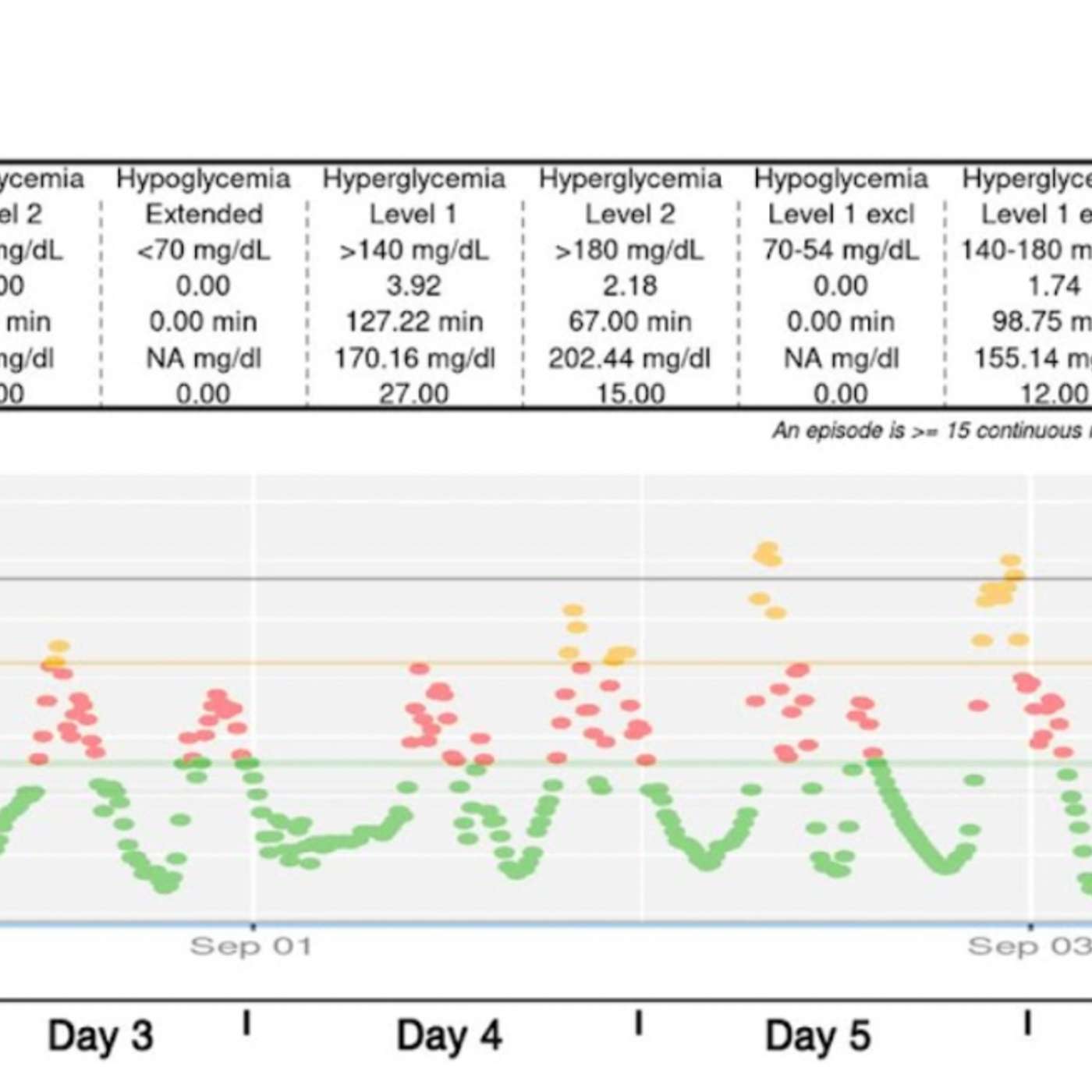
In many non diabetic patients wearing a CGM we observe frequent glucose excursions over 7.8 mmol/L (140 mg/dL) often averaging more than two per day, and even some exceeding 10 mmol/L. This suggests that there are some challenges in the body’s processing of carbohydrates. Although these individuals are not formally classified as ‘diabetic’ or ‘prediabetic’ by current standards, research indicates that this degree of glucose dysregulation may increase the risk of developing Type 2 diabetes and, over time, glucose spikes may contribute to an increase in inflammation in key organs such as the heart and brain. Therefore, it makes sense to implement lifestyle and dietary changes to improve glucose control.
What this episode covers
In many non diabetic patients wearing a CGM we observe frequent glucose excursions over 7.8 mmol/L (140 mg/dL) often averaging more than two per day, and even some exceeding 10 mmol/L. This suggests that there are some challenges in the body’s processing of carbohydrates. Although these individuals are not formally classified as ‘diabetic’ or ‘prediabetic’ by current standards, research indicates that this degree of glucose dysregulation may increase the risk of developing Type 2 diabetes and, over time, glucose spikes may contribute to an increase in inflammation in key organs such as the heart and brain. Therefore, it makes sense to implement lifestyle and dietary changes to improve glucose control.
NOW PLAYING
Type IIIB CGP: why it may be important to know your CGP, even if you are not overweight.
No transcript for this episode yet
Similar Episodes
Mar 26, 2026 ·1m
Mar 19, 2026 ·34m
Feb 18, 2026 ·11m
Feb 11, 2026 ·45m