
EPISODE · Jun 26, 2026 · 9 MIN
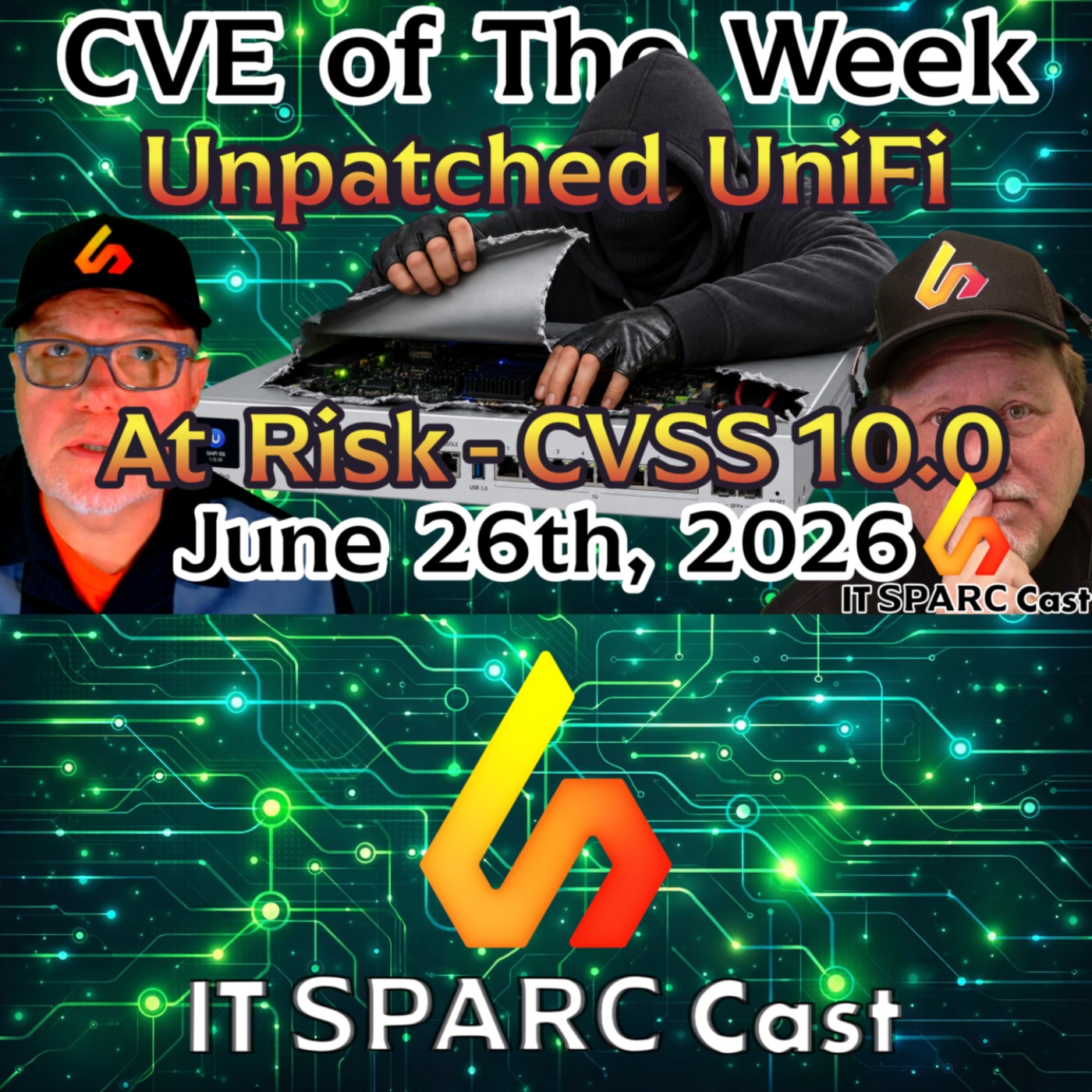
UniFi Under Attack? Why Auto-Patching Saved the Day from Multiple 10.0 CVEs
from IT SPARC Cast
Three recently patched UniFi OS vulnerabilities are now being actively exploited, highlighting the growing importance of automatic patching and vulnerability management. In this episode of IT SPARC Cast – CVE of the Week, John and Lou explain how chaining CVEs can lead to full system compromise, why UniFi’s default auto-update policy likely protected many users, and why continuous patching may soon replace traditional maintenance windows.⸻📄 Show Notes🚨 CVE of the Week: UniFi OS VulnerabilitiesThis week we’re covering three UniFi OS vulnerabilities:CVE-2026-34908CVE-2026-34909CVE-2026-34910While each vulnerability has its own severity rating, security researchers demonstrated that chaining all three together can result in full remote system compromise with elevated privileges.The vulnerabilities were patched in May 2026, but organizations that delayed updates are now at risk as active exploitation has been reported.⸻⚠️ Why This MattersUniFi OS normally enables automatic updates by default, meaning many deployments were likely protected before the attacks began.However, organizations that disabled auto-updates or delayed maintenance may still be vulnerable.Researchers also released a free detection script to help administrators identify vulnerable UniFi deployments.⸻🛠️ Mitigation Steps✅ Update UniFi OS ImmediatelyVerify every UniFi device is running the latest available firmware and UniFi OS version.If automatic updates were disabled, patch immediately.✅ Verify Auto-Update SettingsConfirm that:Automatic update checks are enabledFirmware updates install automaticallyDevices are regularly checking for new releases✅ Run the Detection ScriptUse the detection tool released by Bishop Fox to identify vulnerable or improperly updated UniFi systems.✅ Audit Network DevicesDon’t stop with UniFi.Review firmware and update status for:FirewallsSwitchesAccess PointsGatewaysOther embedded infrastructure✅ Review Patch StrategyModern attacks are moving faster than traditional maintenance windows.Consider:Overnight automated patchingLive patching where supportedRolling upgrades to minimize downtime⸻🔒 The Bigger LessonJohn and Lou revisit a recurring theme:Modern attacks rely on exploit chaining.Three medium-severity vulnerabilities can combine into a critical compromise.Current CVSS scoring evaluates individual vulnerabilities, but organizations should also consider how vulnerabilities interact across an entire system.⸻🤖 Why Continuous Patching MattersThe average time between disclosure of a critical vulnerability and AI-assisted exploit development continues to shrink.Waiting weeks—or even days—to patch infrastructure is becoming increasingly risky.Vendors are also being encouraged to improve:Live patchingRolling firmware upgradesHigh-availability updates with minimal downtime⸻📣 Wrap UpHas your organization embraced automatic patching, or do you still rely on traditional maintenance windows?📧 [email protected]🐦 @itsparccast on X⸻🔗 Social LinksIT SPARC Cast@ITSPARCCast on Xhttps://www.linkedin.com/company/sparc-sales/ on LinkedInJohn Barger@john_Video on Xhttps://www.linkedin.com/in/johnbarger/ on LinkedInLou Schmidt@loudoggeek on Xhttps://www.linkedin.com/in/louis-schmidt-b102446/ on LinkedIn Hosted on Acast. See acast.com/privacy for more information.
Embed this episode
Ready to play
UniFi Under Attack? Why Auto-Patching Saved the Day from Multiple 10.0 CVEs
No transcript for this episode yet
Similar Episodes
No similar episodes found.
Similar Podcasts
No similar podcasts found.