PodParley PodParley

Unwritten by Vernon Ah Kee

An episode of the Aboriginal Art in America podcast, hosted by Kluge-Ruhe Aboriginal Art Collection and The Virginia Audio Collective, titled "Unwritten by Vernon Ah Kee" was published on May 25, 2021 and runs 3 minutes.

May 25, 2021 ·3m · Aboriginal Art in America

0:00 / 0:00

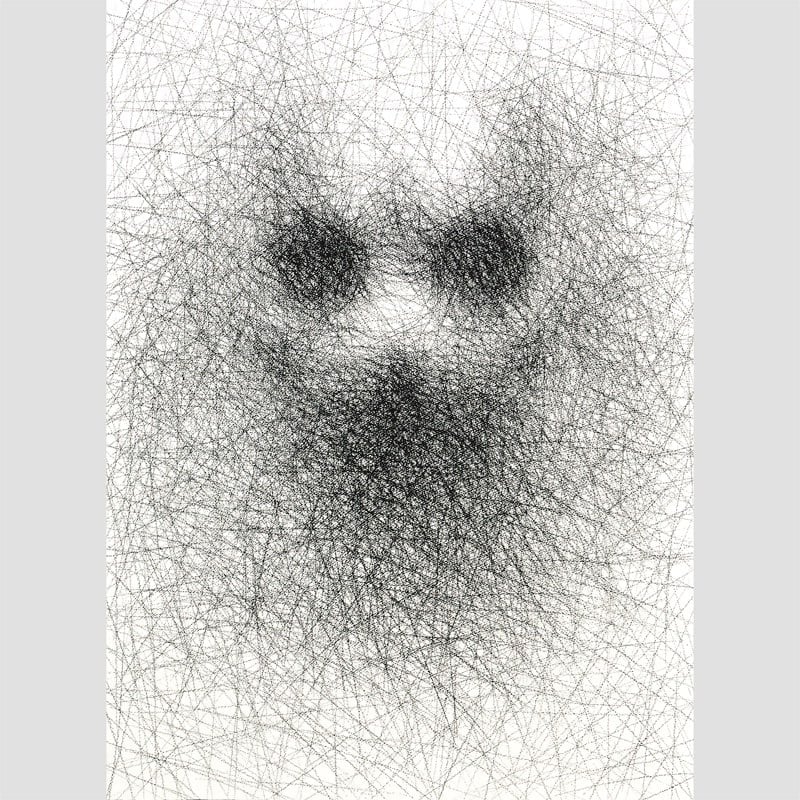
A solitary figure emerges from an urgent flurry of charcoal lines. Vernon Ah Kee’s “Unwritten” is a potent metaphor for the struggle of indigenous artists to control their identities amid the continuing pressures of racism and colonial oppression. In 2004, Ah Kee began a series of large scale photorealistic charcoal portraits of his family members. These works were based upon ethnographic photos taken by the anthropologist Norman Tyndale on Palm Island during the 1930s. In enlarging these images to an imposing scale, Ah Kee returns power to their gaze, reclaiming the ethnographic photography for those who are once its subjects.

Vernon Ah Kee Indigenous Australian, b. 1967  Unwritten, 2011 Charcoal on paper, 29 15/16 x 22 1/16 in. (76.04 x 56.04 cm) Museum purchase from Milani Gallery, 201

American Indian Art Mitch Battese American Indian Art is sometimes controversial and sometimes elusive. Contemporary Native American Artists maintain the traditions and culture of the aboriginal people of North America. This reflects the dynamic and sometimes painful changes that Native peoples have endured for hundreds of years. Native artists, in their work, cover the gamut of expression in all mediums and provide a sense of pride, ownership, emotions, and a gateway to spirituality and culture. These podcasts provide a window into a mysterious and complex culture that is full of dreams and visions. Artist, Mitch Battese, provides the illustrations in these very interesting podcasts. National Gallery of Australia | Collection Video Tour | Aboriginal and Torres Straight Islander art National Gallery of Australia The National Gallery of Australia is one of the world's most recently established national galleries. It opened to the public in 1982, after little more than a decade of collecting. The Gallery now holds the nation's largest and most valuable collection of art. Connecting the Dots: First Peoples Art from the NGV with Tony Armstrong NGV Melbourne A four-episode series that delves into the stories, works and artists in the NGV’s globally significant collection of Aboriginal and Torres Strait Islander art and design. Inspired by the new ground floor galleries Wurrdha Marra, located at The Ian Potter Centre: NGV Australia, the podcast series features interviews between Armstrong and trailblazing figures of First Peoples creativity who are challenging stereotypes and pushing contemporary discourse into new and surprising contexts. These include Destiny Deacon, Tony Albert, Keemon Williams and Amrita Hepi. Further conversations with NGV’s Director Tony Ellwood AM, Senior Curator Myles Russell-Cook and Curator of Australian and First Nations Art Sophie Gerhard, the podcast contextualises the breadth and diversity of First Peoples art and design; how it has developed over 65,000 years; and the wealth of disciplines utilised by practitioner Connecting the Dots: First Peoples Art from the NGV with Tony Armstrong A four-episode series that delves into the stories, works and artists in the NGV’s globally significant collection of Aboriginal and Torres Strait Islander art and design. Inspired by the new ground floor galleries Wurrdha Marra, located at The Ian Potter Centre: NGV Australia, the podcast series features interviews between Armstrong and trailblazing figures of First Peoples creativity who are challenging stereotypes and pushing contemporary discourse into new and surprising contexts. These include Destiny Deacon, Tony Albert, Keemon Williams and Amrita Hepi. Further conversations with NGV’s Director Tony Ellwood AM, Senior Curator Myles Russell-Cook and Curator of Australian and First Nations Art Sophie Gerhard, the podcast contextualises the breadth and diversity of First Peoples art and design; how it has developed over 65,000 years; and the wealth of disciplines utilised by practitioner
URL copied to clipboard!