
EPISODE · Jul 18, 2025 · 3 MIN
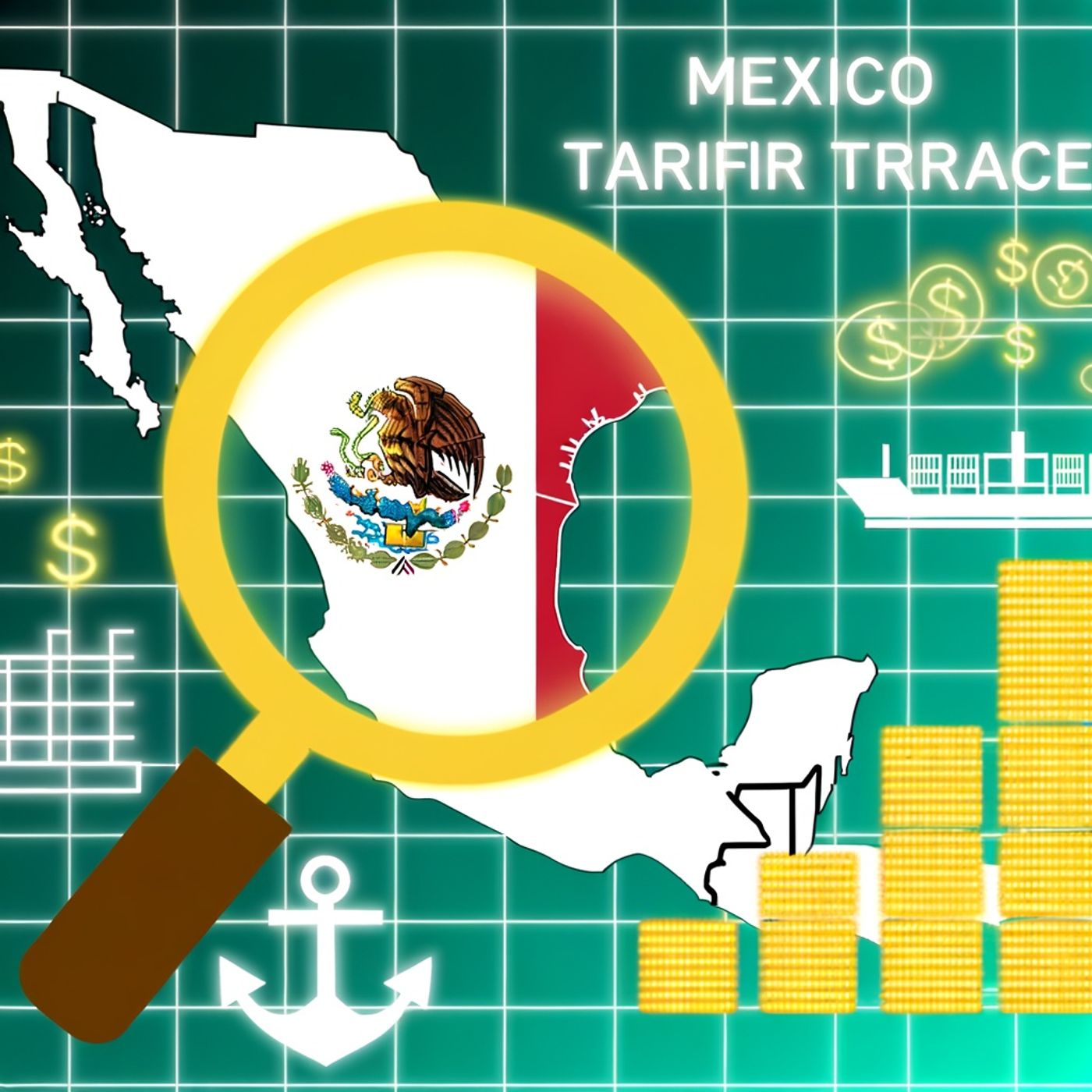
US Imposes 30% Tariffs on Mexican Imports Starting August 1, Escalating Trade Tensions and Economic Uncertainty
from Mexico Tariff News and Tracker · host Inception Point AI
Listeners, welcome to today’s episode of Mexico Tariff News and Tracker. US-Mexico trade tensions have hit a significant inflection point as President Donald Trump’s administration announces a major shift in tariff policy set for August 1. According to Baker Botts and recent logistics updates, President Trump has sent formal letters to Mexican officials stating a 30% tariff will be imposed on imports from Mexico starting August 1. Administration sources indicate this increase will likely apply to goods not in compliance with the United States-Mexico-Canada Agreement, or USMCA, but no final and public guidance has been issued clarifying which products will face the new duty. Flexport, a global logistics leader, reports that it remains unclear whether goods that currently benefit from USMCA’s duty-free provisions will continue to be exempt from the upcoming duties. Tariff rates are being described as "reciprocal,” and the administration warns any rise in Mexican tariffs on US goods could result in a matching US response. Key industries such as electronics, automotive, agricultural products, and consumer goods now face looming uncertainty, with trade partners and global supply chains bracing for volatility. Mexico is not standing still. El País reports that President Claudia Sheinbaum has fast-tracked implementation of Plan Mexico, a six-year roadmap seeking to attract $277 billion in investment and create 1.5 million new jobs per year. But business leaders and government officials cite persistent economic headwinds—slow growth, high inflation, and weakened federal spending—complicating Mexico’s efforts to counter Trump’s protectionist agenda. Plan Mexico’s core objective is to sharply boost domestic production, reduce import dependency, and deepen North American industrial integration, especially in auto, aerospace, and semiconductor sectors. Still, tariff threats have already delayed results and forced a reassessment of large-scale investment projects. The US trade approach is now defined by intensified protectionism and rapid executive action. Torres Trade Law summarizes the latest White House orders: a 10% baseline reciprocal tariff rate remains in place for now, but will jump to the new country-specific rates—including 30% for Mexican goods—come August 1. President Trump recently extended the previous tariff suspension until that date, aiming to give space for last-minute negotiation, but there’s little expectation of a breakthrough before implementation. Meanwhile, the Mexican government has responded with urgent meetings between President Sheinbaum, top business leaders, and international investors, all focused on shoring up domestic capacity and securing capital for productive industries. Yet, as US tariff threats loom, the effectiveness of these measures remains uncertain. Both sides now face a race against the clock as supply chains, prices, and jobs hang in the balance. Thanks for tuning in to Mexico Tariff News and Tracker. Don’t fo This content was created in partnership and with the help of Artificial Intelligence AI.
Embed this episode
NOW PLAYING
US Imposes 30% Tariffs on Mexican Imports Starting August 1, Escalating Trade Tensions and Economic Uncertainty
No transcript for this episode yet
Similar Episodes
No similar episodes found.
Similar Podcasts
No similar podcasts found.