
EPISODE · Mar 10, 2026 · 44 MIN
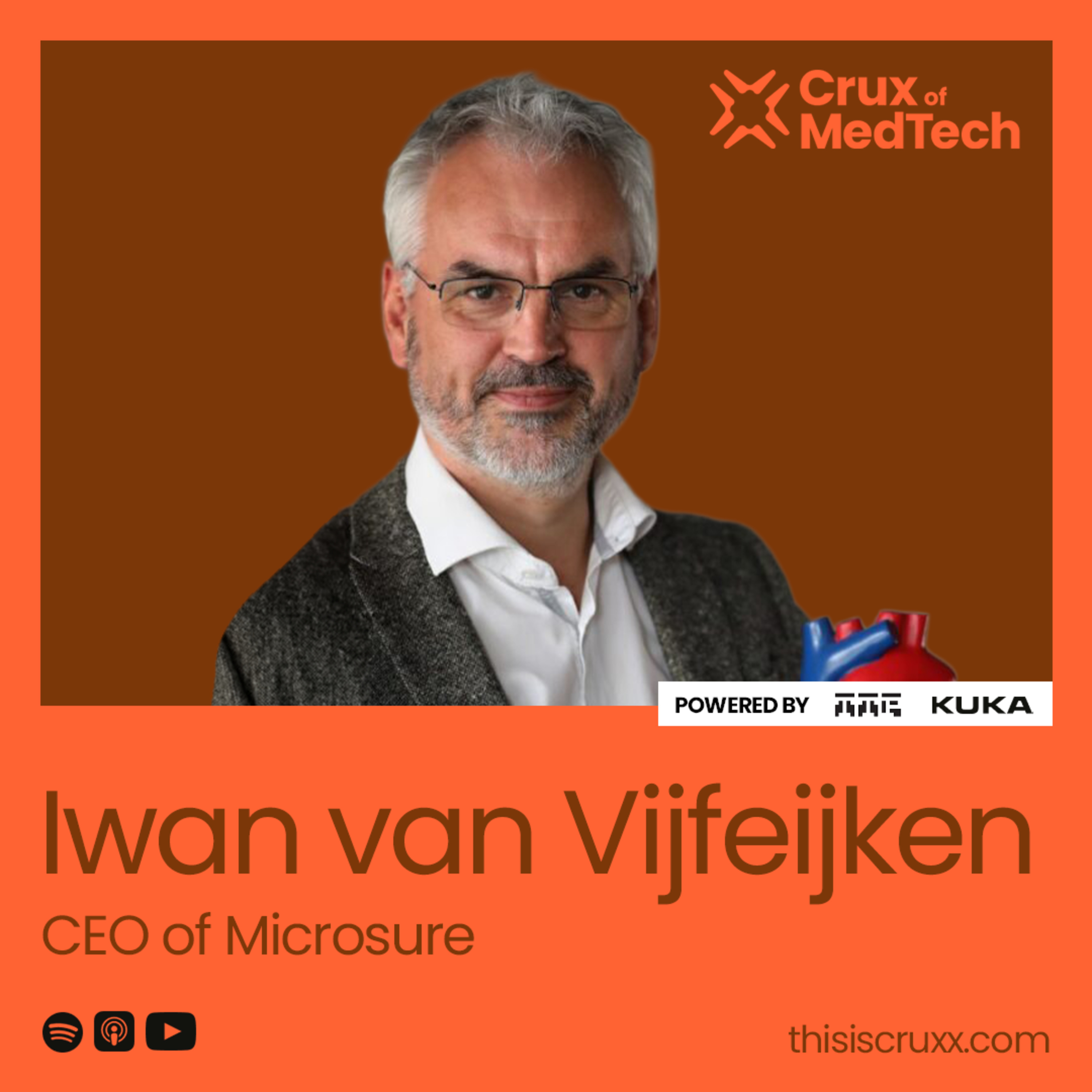
Venture is First and Foremost an Adventure with Iwan van Vijfeijken
from The Crux of Medtech · host Crux of Medtech
In this episode, host Henry Norton sits down with Iwan van Vijfeijken, CEO of Microsure and a four-time medtech entrepreneur who's been through the full cycle of startup life.Iwan made the jump from NXP Semiconductors to medtech 15 years ago, starting as employee number one at Dermasun Medical. Since then, he's navigated three more ventures including Pulsify Medical, a cardiac monitoring startup that raised €10M before going bankrupt.Today at Microsure, Iwan leads a surgical robotics company that's 100% focused on open microsurgery with their MUSA robot. Unlike the crowded minimally invasive space, Microsure is tackling procedures that can't be done laparoscopically.This conversation goes deep on entrepreneurial resilience, the brutal statistics of failure in medtech, and what it really costs to keep going when cash is running out and families depend on you.Key Topics:Transitioning from corporate semiconductors to medtech startupsThe journey through four ventures: UV therapy, cardiac monitoring, and surgical roboticsWhy Pulsify Medical collapsed despite breakthrough technology and strong fundingMicrosure's strategic bet on open microsurgery versus minimally invasive roboticsThe harsh reality: more medtech companies fail than succeedRelated Insights:Why small medtech startups can out-innovate billion-dollar corporatesThe personal grief and emotional toll of venture failureHow to go all-in while still protecting yourself and your teamWhy encouraging your team to explore external opportunities isn't being unfaithfulCore Challenges:Pulsify Medical attempted two massive technical challenges at once: pioneering new semiconductor fabrication AND developing a wearable cardiac device. After raising €10M, European investors wouldn't fund the next stage. The company went bankrupt, a painful reality that took months for Iwan to process and move past.Microsure is carving out its niche in open microsurgery, deliberately avoiding the saturated minimally invasive market. The bet is that there's a vast, underserved market in procedures that simply can't be done laparoscopically. This requires absolute focus and the discipline to say no to adjacent opportunities.Tune in now to hear the unvarnished truth about surviving, failing, and thriving in medtech entrepreneurship.The Crux of MedTech podcast is brought to you by Cruxx, a specialist surgical robotics recruitment agency. To learn more about Cruxx, click here.A big thank you to our sponsors on this season of the podcast; TTP plc With a 35-year track record, TTP excels in turning innovative ideas into market-ready solutions. Their team of 300+ experts deliver breakthrough solutions in areas ranging from endoluminal robotics and navigation systems to ultrasound imaging. Whether you're a startup or a multinational, TTP plc can accelerate your development with the latest technologies. Learn more at TTP.com
Embed this episode
NOW PLAYING
Venture is First and Foremost an Adventure with Iwan van Vijfeijken
No transcript for this episode yet
Similar Episodes
No similar episodes found.
Similar Podcasts
No similar podcasts found.