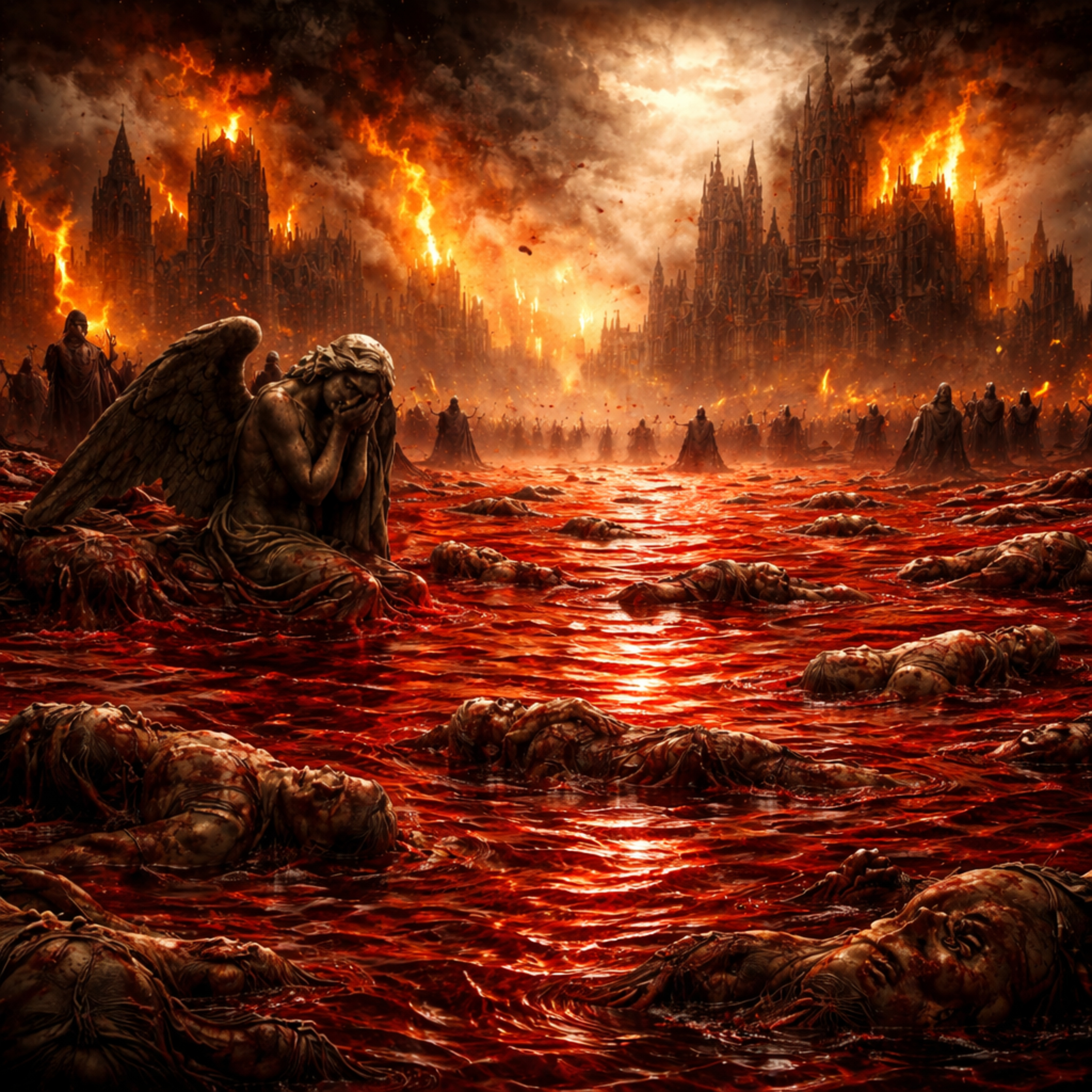
Vexed to Nightmare by a Rocking Cradle—The 2026 Horror of W. B. Yeats' "The Second Coming" episode artwork

EPISODE · Apr 7, 2026 · 32 MIN

Vexed to Nightmare by a Rocking Cradle—The 2026 Horror of W. B. Yeats' "The Second Coming"

from Reversing Climate Change · host Carbon Removal Strategies LLC

I've had a poem stuck in my head, and it isn't one of biophilia and whimsy. It's about liminality, death, and interregna. Let me read for you one of my favorites and one of the all-time classics of Enlighs literature, William Butler Yeats's "The Second Coming". While beautiful for its own sake, I'll also make a case for the defense of useless things, an argument for the horror genre as a serious art form, and a close reading of a poem that has become a kind of shared vocabulary for moments when the center will not hold.I work through the imagery line by line, and connect it to everything from Frankenstein and Genesis's exile from Eden, to Tig Notaro's stage presence, to theriantropic madness from The Office's Michael Scott, to H.P. Lovecraft, to Slavoj Žižek on Alfred Hitchcock's The Birds, and more.The trigger wasn't climate policy rollback or the war in Iran, as you might guess—it was actually thinking about artificial general intelligence, and that the falcon that can no longer hear the falconer.Listen in to hear more about why "The Second Coming" reads as present-progressive horror rather than past-tense lament, why "troubles my sight" is a master class in economy of language, what monsters are actually for (the etymology connects to the Spanish mostrar—to show; which I minorly mispronounce in my freestyling—forgive me!), how Hereditary, The Babadook, and Jordan Peele's films use horror to talk about grief, depression, and race, and why this liminal moment between world orders feels so monstrous: not because the new world has arrived, but because the rough beast is only now slouching toward Bethlehem."The old world is dying, and the new world struggles to be born. Now is the time of monsters."- Antonio GramsciResources⁠⁠⁠⁠⁠⁠⁠⁠⁠⁠⁠⁠⁠⁠⁠⁠⁠⁠⁠⁠⁠⁠⁠⁠⁠⁠⁠⁠⁠⁠⁠⁠⁠⁠⁠⁠⁠⁠⁠⁠⁠⁠⁠⁠⁠Become a paid subscriber of Reversing Climate Change⁠⁠⁠⁠⁠⁠⁠⁠⁠⁠⁠⁠⁠⁠⁠⁠⁠⁠⁠⁠⁠⁠⁠⁠⁠⁠⁠⁠⁠⁠⁠⁠⁠⁠⁠⁠⁠⁠⁠⁠⁠⁠⁠⁠⁠⁠⁠Subscribe to the Reversing Climate Change Substack⁠⁠⁠⁠"The Second Coming" by William Butler YeatsPaul Muldoon's reading of "The Second Coming"In Praise of the Useless Life: A Monk's Memoir by Paul Quenon (referenced via Thomas Merton)Slouching Towards Bethlehem by Joan DidionEschatology on WikipediaThings Fall Apart by Chinua AchebeParis 1919: Six Months That Changed the World by Margaret MacMillanParis 1919 (album) by John CalePervert's Guide to Cinema — Slavoj Žižek on Hitchcock's The BirdsSegment on The BirdsTreaty of VersaillesTreaty of Trianon (I didn't mention this by name, but I've been thinking a lot about how it shaped/shapes Central Europe.)HereditaryThe BabadookJordan PeeleHP LovecraftId, ego, superego in Freudian psychoanalysisMichael Scott's theriantrope fantasy/nightmare/prophecy from The Office

I've had a poem stuck in my head, and it isn't one of biophilia and whimsy. It's about liminality, death, and interregna. Let me read for you one of my favorites and one of the all-time classics of Enlighs literature, William Butler Yeats's "The Second Coming". While beautiful for its own sake, I'll also make a case for the defense of useless things, an argument for the horror genre as a serious art form, and a close reading of a poem that has become a kind of shared vocabulary for moments when the center will not hold.I work through the imagery line by line, and connect it to everything from Frankenstein and Genesis's exile from Eden, to Tig Notaro's stage presence, to theriantropic madness from The Office's Michael Scott, to H.P. Lovecraft, to Slavoj Žižek on Alfred Hitchcock's The Birds, and more.The trigger wasn't climate policy rollback or the war in Iran, as you might guess—it was actually thinking about artificial general intelligence, and that the falcon that can no longer hear the falconer.Listen in to hear more about why "The Second Coming" reads as present-progressive horror rather than past-tense lament, why "troubles my sight" is a master class in economy of language, what monsters are actually for (the etymology connects to the Spanish mostrar—to show; which I minorly mispronounce in my freestyling—forgive me!), how Hereditary, The Babadook, and Jordan Peele's films use horror to talk about grief, depression, and race, and why this liminal moment between world orders feels so monstrous: not because the new world has arrived, but because the rough beast is only now slouching toward Bethlehem."The old world is dying, and the new world struggles to be born. Now is the time of monsters."- Antonio GramsciResources⁠⁠⁠⁠⁠⁠⁠⁠⁠⁠⁠⁠⁠⁠⁠⁠⁠⁠⁠⁠⁠⁠⁠⁠⁠⁠⁠⁠⁠⁠⁠⁠⁠⁠⁠⁠⁠⁠⁠⁠⁠⁠⁠⁠⁠Become a paid subscriber of Reversing Climate Change⁠⁠⁠⁠⁠⁠⁠⁠⁠⁠⁠⁠⁠⁠⁠⁠⁠⁠⁠⁠⁠⁠⁠⁠⁠⁠⁠⁠⁠⁠⁠⁠⁠⁠⁠⁠⁠⁠⁠⁠⁠⁠⁠⁠⁠⁠⁠Subscribe to the Reversing Climate Change Substack⁠⁠⁠⁠"The Second Coming" by William Butler YeatsPaul Muldoon's reading of "The Second Coming"In Praise of the Useless Life: A Monk's Memoir by Paul Quenon (referenced via Thomas Merton)Slouching Towards Bethlehem by Joan DidionEschatology on WikipediaThings Fall Apart by Chinua AchebeParis 1919: Six Months That Changed the World by Margaret MacMillanParis 1919 (album) by John CalePervert's Guide to Cinema — Slavoj Žižek on Hitchcock's The BirdsSegment on The BirdsTreaty of VersaillesTreaty of Trianon (I didn't mention this by name, but I've been thinking a lot about how it shaped/shapes Central Europe.)HereditaryThe BabadookJordan PeeleHP LovecraftId, ego, superego in Freudian psychoanalysisMichael Scott's theriantrope fantasy/nightmare/prophecy from The Office

NOW PLAYING

Vexed to Nightmare by a Rocking Cradle—The 2026 Horror of W. B. Yeats' "The Second Coming"

0:00 32:04

No transcript for this episode yet

We transcribe on demand. Request one and we'll notify you when it's ready — usually under 10 minutes.

Eat to Live Jenna Fuhrman, Dr. Fuhrman Our health is our most precious gift and smart nutrition can change your life. Each month, join Dr. Fuhrman and his daughter, Jenna Fuhrman as they discuss important topics in the world of nutrition. Eat to Live will change the way you eat and think about food. Kaizen Blueprint Aldo Chandra "Kaizen" is a Japanese term for continuous improvement. This podcast provides a blueprint to learn about health, wealth, relationships and everything else in between. Through our podcast, we strive to inspire, educate, and motivate our audience to cultivate a mindset of lifelong learning, productivity, and personal development. By sharing insights, strategies, and practical tips, we aim to guide listeners on their journey towards realizing their fullest potential, fostering success, and creating lasting positive change. Solving for Change MOBIA Technology Innovations Solving for Change welcomes business and technology leaders to share stories of bold business transformation within complex organizations. In an era when technology and markets are changing around businesses, the key to staying competitive is to evolve in response to those changes.  MOBIA’s Mike Reeves and Marc LeBlanc investigate business transformation, deconstructing the challenges, ambitions, and market disruptions that drive companies to embark on transformation journeys, and exploring their unique approaches to achieving meaningful outcomes.  What sparks leaders to pursue business transformation? How do they overcome the challenges along the way? What are the keys to creating enduring change?  Through in-depth conversations with business and technology leaders, Mike and Marc answer these questions and explore how businesses evolve by pulling four key transformation levers: people, process, technology, and culture. Humanizing Change Tremendousness Join us each episode as we talk with innovators in their respective fields about their unique journeys and how they humanize change in their own work, right here, on Humanizing Change.

Frequently Asked Questions

How long is this episode of Reversing Climate Change?

This episode is 32 minutes long.

When was this Reversing Climate Change episode published?

This episode was published on April 7, 2026.

What is this episode about?

I've had a poem stuck in my head, and it isn't one of biophilia and whimsy. It's about liminality, death, and interregna. Let me read for you one of my favorites and one of the all-time classics of Enlighs literature, William Butler Yeats's "The...

Can I download this Reversing Climate Change episode?

Yes, you can download this episode by clicking the download button on the episode player, or subscribe to the podcast in your preferred podcast app for automatic downloads.
URL copied to clipboard!