
EPISODE · May 30, 2026 · 29 MIN
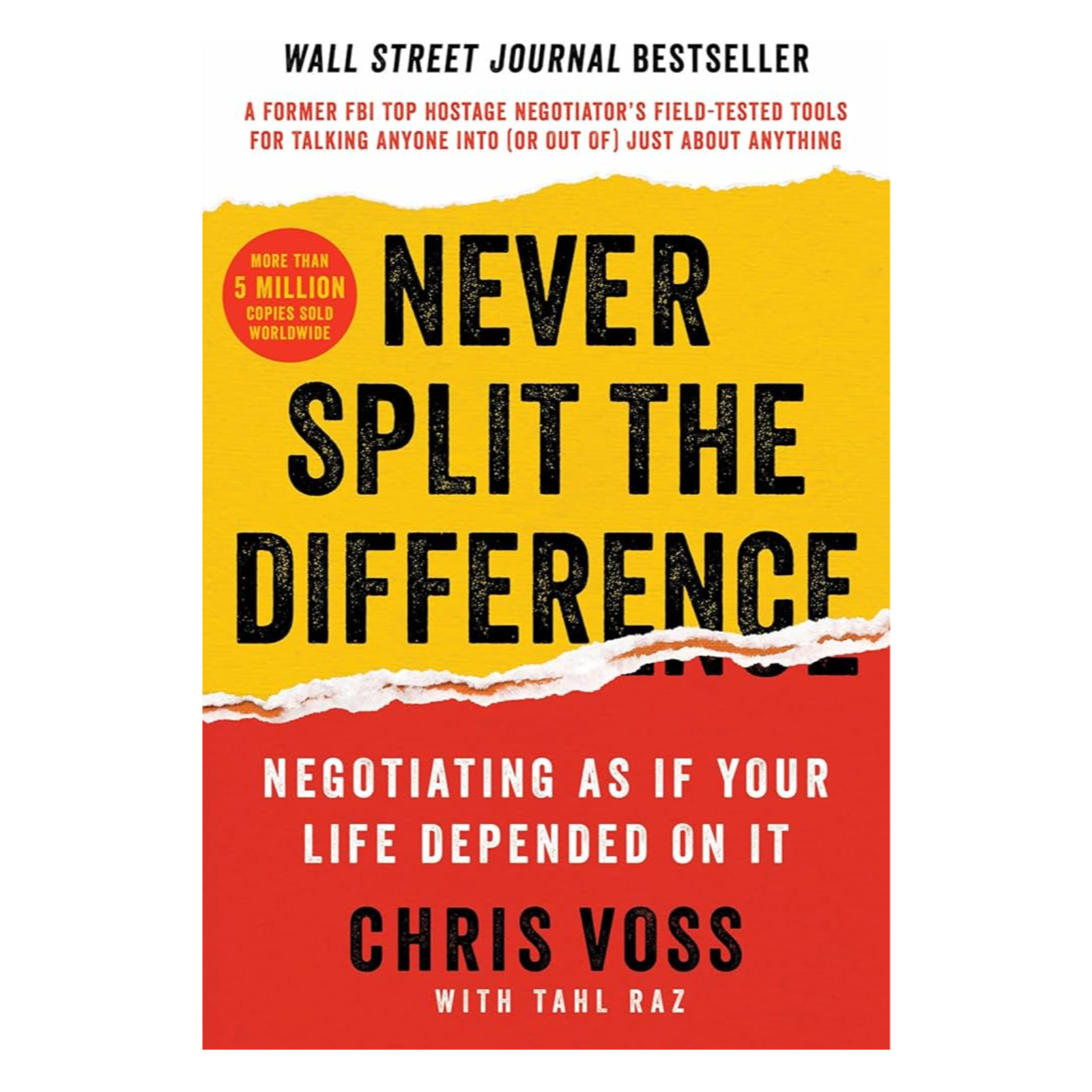
Voss, C., & Raz, T. (2016). Never Split the Difference: Negotiating As If Your Life Depended On It. Harper Business
from Fei's Library: Personal Improvement
Never Split the Difference by Chris Voss presents a field-tested system of "Tactical Empathy" derived from high-stakes FBI hostage negotiations to help individuals navigate daily interactions by focusing on the emotional and irrational drivers of human behavior rather than logic alone.Main TakeawaysTactical Empathy: This is the ability to recognize a counterpart’s perspective and vocalize that recognition to gain access to their mind. Unlike sympathy, it does not require agreement; it focuses on understanding the emotional obstacles and pathways to getting a deal done.The Late-Night FM DJ Voice: Negotiation is often influenced more by how you speak than what you say. Use a deep, soft, slow, and reassuring voice with a downward inflection to convey that you are in control and to calm your counterpart.Mirroring: This "Jedi mind trick" involves repeating the last three words (or the critical one to three words) of what someone just said. This triggers an instinct to elaborate, establishes rapport, and encourages the other side to reveal their strategy.Labeling and Accusation Audits: Validate emotions by giving them a name (e.g., "It seems like you are worried about...") to diffuse negative dynamics or reinforce positive ones. An Accusation Audit involves listing every terrible thing the counterpart could say about you in advance to disarm them and head off negative reactions before they take root.Mastering "No": Voss argues that "No" is the start of a negotiation, not the end, because it provides the speaker with a sense of safety and control. Avoid pushing for a "Yes," which often leads to defensive or counterfeit agreement; instead, use "No"-oriented questions like "Is now a bad time to talk?" to gain total focus.Triggering "That’s Right": Strive for the moment your counterpart says, "That’s right," which signals deep understanding and gut-level buy-in. This is far superior to "You're right," which is often a polite way for someone to get you to stop talking without actually agreeing to your position.Calibrated Questions: Replace confrontational statements with open-ended questions starting with "How" or "What". These questions—such as the "greatest-of-all-time" query, "How am I supposed to do that?"—force your counterpart to apply their mental energy to solving your problems and give them the illusion of control.Bending Reality: Use Prospect Theory to influence choices. People are statistically more likely to act to avert a loss than to achieve a gain (Loss Aversion). Avoid "splitting the difference," which usually leads to a "bad deal" for both sides, similar to wearing one black and one brown shoe.Guaranteeing Execution: Use the 7-38-55% Rule to monitor if words match tone and body language. Apply the Rule of Three to ensure a "Yes" is real by getting the counterpart to agree to the same thing three times in one conversation using different tools like summaries and "How" questions.Hard Bargaining (Ackerman Model): For "bare-knuckle" haggling, use a six-step process: set a target, then offer 65%, 85%, 95%, and 100% of that goal. Always use precise, non-round numbers (e.g., $37,893) to give your offer more weight and credibility.Finding Black Swans: In every negotiation, there are three to five pieces of hidden information—Black Swans—that would change everything if uncovered. To find them, you must understand the counterpart’s "religion" or worldview and observe them during unguarded moments.
Embed this episode
NOW PLAYING
Voss, C., & Raz, T. (2016). Never Split the Difference: Negotiating As If Your Life Depended On It. Harper Business
No transcript for this episode yet
Similar Episodes
No similar episodes found.
Similar Podcasts
No similar podcasts found.