
EPISODE · Nov 21, 2024 · 13 MIN
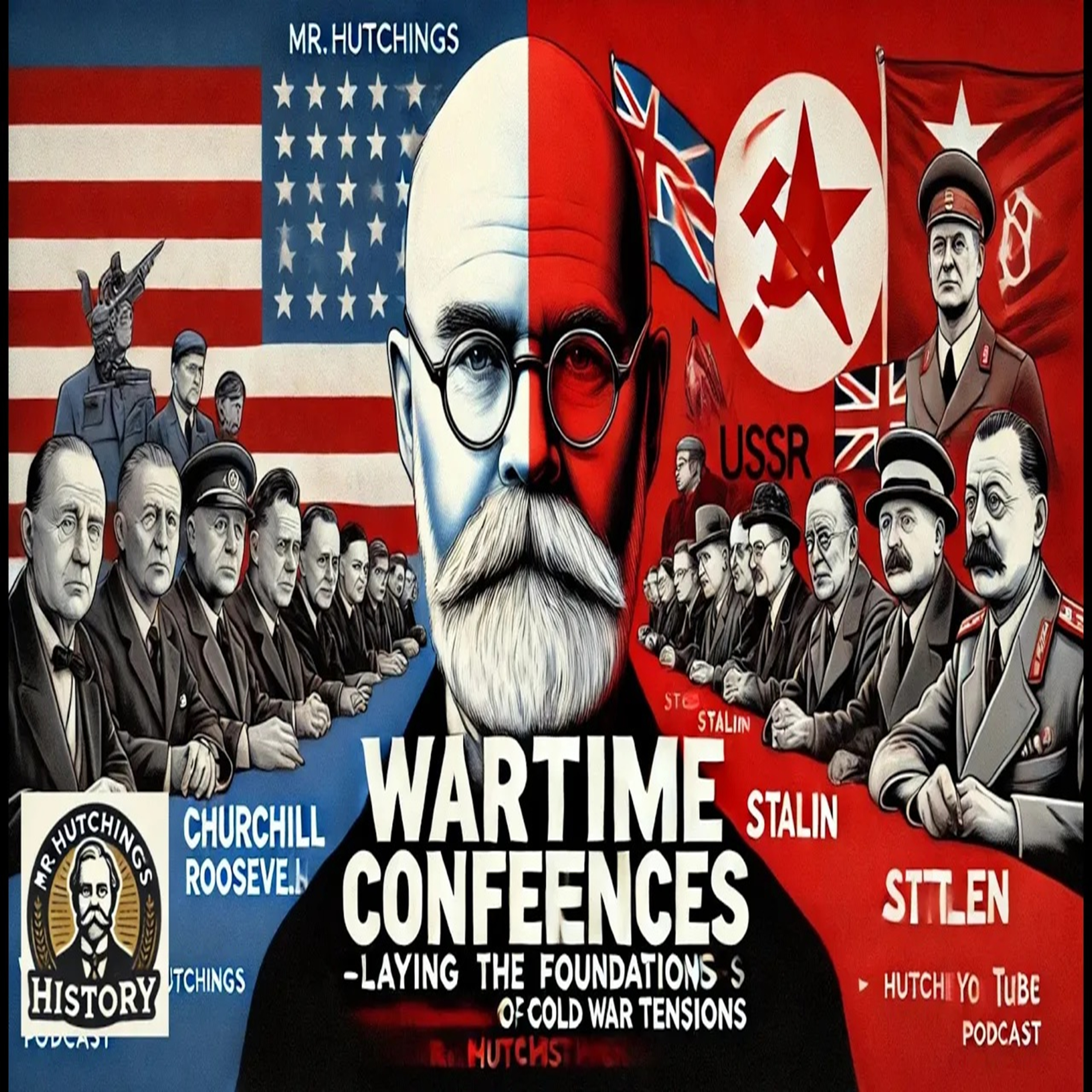
Wartime Conferences – Laying the Foundations for Cold War Tensions
from Mr. Hutchings History · host Produced, created, and written by Harold M. Hutchings
Welcome toMr. Hutchings History! In today’s episode, we analyze the Wartime Conferences of World War II—Tehran, Yalta, and Potsdam—and how they set the stage for the Cold War. While these meetings aimed to coordinate the Allied war effort, they also exposed deep ideological divides between the United States and the Soviet Union, planting the seeds of Cold War tensions.We’ll cover key issues from each conference, such as the future of Eastern Europe, the division of Germany, and the first hints of atomic diplomacy. We’ll also explore how these tensions grew due to differing political ideologies—capitalism vs. communism—and the competing security interests of both superpowers.Historians provide varying interpretations: the Orthodox School views Soviet expansion as the cause, while the Revisionist School emphasizes U.S. actions, particularly in the use of atomic diplomacy. Realist scholars argue that power politics, rather than ideology, was at the core of the conflict.By the end of this episode, you’ll gain a deeper understanding of the key events that laid the foundation for the Cold War.#ColdWar #SuperpowerTensions #TehranConference #YaltaConference #PotsdamConference #CapitalismVsCommunism #USSR #USA #ColdWarOrigins #Paper2WorldHistory #TheColdWar #ColdWarTensions #WartimeConferences #HistoricalDebatesWorks CitedGaddis, John Lewis. Strategies of Containment: A Critical Appraisal of American National Security Policy during the Cold War. Oxford UP, 1982.Leffler, Melvyn P. For the Soul of Mankind: The United States, the Soviet Union, and the Cold War. Hill and Wang, 2007.Overy, Richard. The Origins of the Cold War: Wartime Diplomacy and Ideological Rivalries. Yale UP, 2010.Schlesinger, Arthur. The Origins of the Cold War. Harvard UP, 1967.Williams, William Appleman. The Tragedy of American Diplomacy. W.W. Norton & Co., 1959.Chapters(0:00) Introduction: The Foundations of Cold War TensionsHow did WWII conferences shape the post-war world and spark future conflict?(0:22) Tehran Conference (1943): The First MeetingStalin, Roosevelt, and Churchill negotiate wartime strategy and post-war visions.(1:46) Stalin’s Push for a Second FrontWhy the USSR demanded Western action and how it shaped post-war power.(2:52) Yalta Conference (1945): The Post-War BlueprintTensions rise as agreements on Germany, Poland, and Eastern Europe unfold.(4:10) Stalin’s Promise of Free ElectionsDid Stalin ever intend democratic elections, or was this the start of the Iron Curtain?(5:29) Potsdam Conference (1945): The War Ends, Tensions RiseWith Truman in charge and the atomic bomb tested, power dynamics shift.(6:40) The Atomic Bomb as a Bargaining ChipHow nuclear weapons shaped diplomacy and intensified Soviet mistrust.(7:55) Division of Germany: A Future BattlegroundThe split of Germany and Berlin plants the seeds of Cold War conflict.(9:15) Was the Cold War Inevitable?Traditionalist, revisionist, and post-revisionist debates on missed opportunities.(10:45) Lessons from History: Avoiding Future ConflictsWhat WWII diplomacy teaches us about today’s geopolitical tensions.(13:38) Conclusion: The Power of Understanding HistoryCritical thinking and diplomacy remain key to avoiding global conflicts.
Embed this episode
NOW PLAYING
Wartime Conferences – Laying the Foundations for Cold War Tensions
No transcript for this episode yet
Similar Episodes
No similar episodes found.
Similar Podcasts
No similar podcasts found.