
EPISODE · Feb 6, 2024 · 6 MIN
“What are Antoni A & B Areas of a Schwannoma?”
from Dr. Gallagher's Podcast · host Brendan Gallagher, DDS
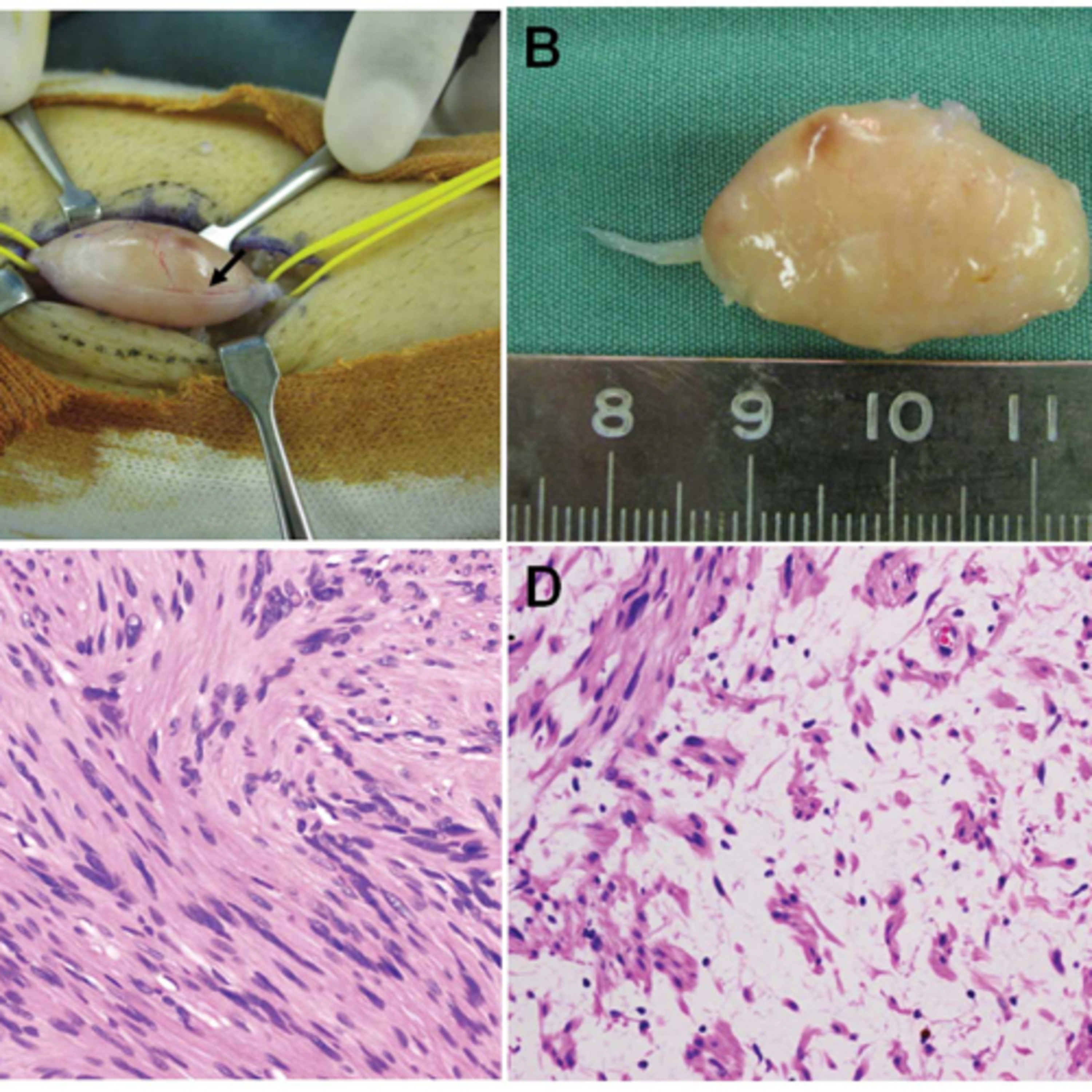
2.6.24 Quick Review #103 - #pathology #oralpathology #doctorgallagher #oralsurgery #oralsurgeon #dentist #dentistry #dental Schwannomas, also known as neurilemmomas, are benign tumors that arise from Schwann cells, the cells responsible for the myelin sheath around peripheral nerves. The Antoni A and Antoni B areas are histological features observed in schwannomas under a microscope: 1. Antoni A areas: • Regions within the schwannoma that are highly organized and cellular. • Characterized by closely packed Schwann cells with elongated nuclei, forming palisades. This palisading pattern can lead to the formation of Verocay bodies, which are diagnostic of schwannomas. • Cells in Antoni A areas are arranged in such a way that they form parallel rows with anuclear zones (areas without nuclei) called Verocay bodies, giving a structured appearance. • Indicative of active and cellular regions within the tumor. The high cellularity and organized structure suggest that these areas are where the tumor is most proliferative. The densely packed Schwann cells in Antoni A areas are indicative of a less degenerative state, which could correlate with a more robust area of the tumor. 2. Antoni B areas: • Less cellular and less organized than Antoni A areas. • Contain a more loosely arranged matrix of cells and have a more myxoid (mucoid) stroma, which is a gelatinous connective tissue. • Cells in Antoni B areas are more sparsely distributed and can sometimes contain cystic spaces. This area represents a degenerative change within the tumor, with less proliferation of Schwann cells. • Represent regions of the tumor that are less cellular and more degenerative. The myxoid changes and cystic spaces often found in Antoni B areas can indicate areas where the tumor might be undergoing degeneration or slower growth. These areas might also be associated with increased fluid content and a looser matrix, which could impact the tumor’s texture and consistency, potentially making it softer or more cystic in nature. Clinical Implications: The proportion of Antoni A and Antoni B areas can have implications for the clinical presentation and behavior of the tumor. For instance, tumors with a higher proportion of Antoni A areas might be more solid and less likely to undergo cystic changes, whereas those with more Antoni B areas might be more prone to cyst formation and degenerative changes. Both types of areas, however, are generally benign and the presence of these areas does not typically alter the overall benign nature of schwannomas. References: 1. Yamamoto, K., Nishio, J., Yano, S., & Naito, M. (2013). Solitary schwannoma of the sural nerve: An unusual clinical presentation. Experimental and Therapeutic Medicine, 7(1), 90-92. https://doi.org/10.3892/etm.2013.1395 2. Neville, B. W., Damm, D. D., Allen, C. M., & Chi, A. C. (2015). Oral and Maxillofacial Pathology (4th ed.). Saunders. 3. ChatGPT. 2024.
What this episode covers
2.6.24 Quick Review #103 - #pathology #oralpathology #doctorgallagher #oralsurgery #oralsurgeon #dentist #dentistry #dental Schwannomas, also known as neurilemmomas, are benign tumors that arise from Schwann cells, the cells responsible for the myelin sheath around peripheral nerves. The Antoni A and Antoni B areas are histological features observed in schwannomas under a microscope: 1. Antoni A areas: • Regions within the schwannoma that are highly organized and cellular. • Characterized by closely packed Schwann cells with elongated nuclei, forming palisades. This palisading pattern can lead to the formation of Verocay bodies, which are diagnostic of schwannomas. • Cells in Antoni A areas are arranged in such a way that they form parallel rows with anuclear zones (areas without nuclei) called Verocay bodies, giving a structured appearance. • Indicative of active and cellular regions within the tumor. The high cellularity and organized structure suggest that these areas are where the tumor is most proliferative. The densely packed Schwann cells in Antoni A areas are indicative of a less degenerative state, which could correlate with a more robust area of the tumor. 2. Antoni B areas: • Less cellular and less organized than Antoni A areas. • Contain a more loosely arranged matrix of cells and have a more myxoid (mucoid) stroma, which is a gelatinous connective tissue. • Cells in Antoni B areas are more sparsely distributed and can sometimes contain cystic spaces. This area represents a degenerative change within the tumor, with less proliferation of Schwann cells. • Represent regions of the tumor that are less cellular and more degenerative. The myxoid changes and cystic spaces often found in Antoni B areas can indicate areas where the tumor might be undergoing degeneration or slower growth. These areas might also be associated with increased fluid content and a looser matrix, which could impact the tumor’s texture and consistency, potentially making it softer or more cystic in nature. Clinical Implications: The proportion of Antoni A and Antoni B areas can have implications for the clinical presentation and behavior of the tumor. For instance, tumors with a higher proportion of Antoni A areas might be more solid and less likely to undergo cystic changes, whereas those with more Antoni B areas might be more prone to cyst formation and degenerative changes. Both types of areas, however, are generally benign and the presence of these areas does not typically alter the overall benign nature of schwannomas. References: 1. Yamamoto, K., Nishio, J., Yano, S., & Naito, M. (2013). Solitary schwannoma of the sural nerve: An unusual clinical presentation. Experimental and Therapeutic Medicine, 7(1), 90-92. https://doi.org/10.3892/etm.2013.1395 2. Neville, B. W., Damm, D. D., Allen, C. M., & Chi, A. C. (2015). Oral and Maxillofacial Pathology (4th ed.). Saunders. 3. ChatGPT. 2024.
NOW PLAYING
“What are Antoni A & B Areas of a Schwannoma?”
No transcript for this episode yet
Similar Episodes
Dec 5, 2025 ·50m
Oct 9, 2025 ·33m
Oct 3, 2025 ·40m
Sep 11, 2025 ·31m
Aug 27, 2025 ·39m
Aug 18, 2025 ·54m