
EPISODE · Oct 8, 2024 · 3 MIN
📝 “What are Common Flap Designs Used in Dentistry?”
from Dr. Gallagher's Podcast · host Brendan Gallagher, DDS
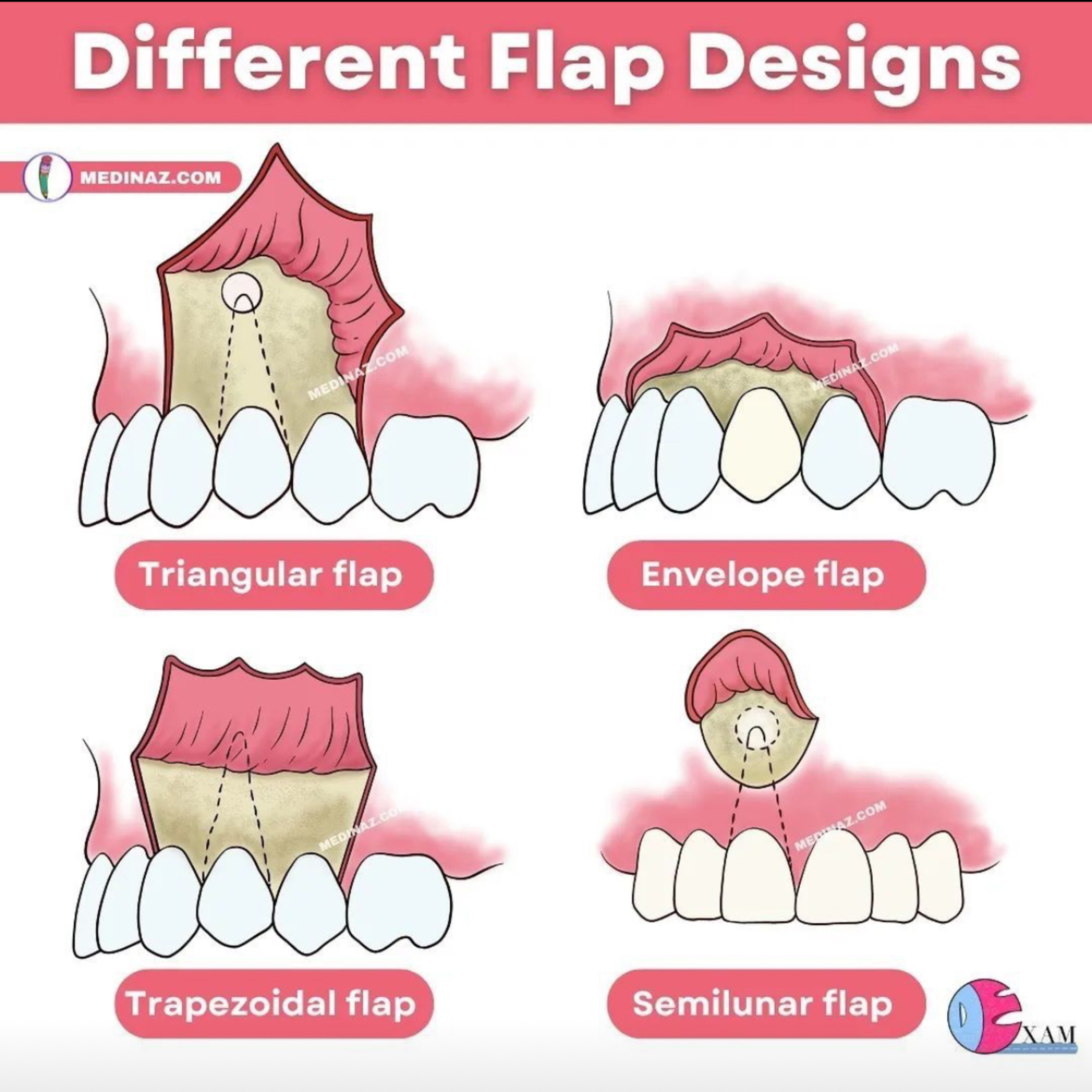
- 10.8.24Quick Review #242 - #dental #dentist #dentistry #dentalstudent #dentalschool #teeth #cavity #wisdomteeth #extraction #oralsurgery #oralsurgeon 1. Envelope Flap:• Design: A straight horizontal incision along the gingival margin without vertical releasing incisions.• Use: Widely used for simple extractions, implant placements, and small cyst removal.• Advantages: Minimal disruption to blood supply and easier to close with fewer sutures.• Disadvantages: Limited access, especially for posterior or deeper structures.2. Triangular Flap (Three-cornered Flap):• Design: A horizontal incision along the gingiva with one vertical releasing incision.• Use: Common for impacted third molar surgery or apicoectomy.• Advantages: Provides wider access than the envelope flap while preserving good blood supply.• Disadvantages: Slightly more difficult to close and can cause more postoperative swelling.3. Trapezoidal Flap (Four-cornered Flap):• Design: A horizontal incision with two vertical releasing incisions.• Use: Often used for more complex surgical procedures requiring wide exposure, such as bony impaction surgery or jaw cyst removal.• Advantages: Provides excellent access to surgical sites.• Disadvantages: Greater tissue dissection, which can result in increased swelling and postoperative discomfort.4. Semilunar Flap:• Design: A curved incision made in the mucosa above the surgical site without involving the gingival margin.• Use: Often used for apicoectomy or accessing periapical lesions without disturbing the attached gingiva.• Advantages: Minimal disruption to gingival tissue, making it ideal for esthetic areas.• Disadvantages: Limited access, especially for larger surgical sites.5. Y-shaped Flap:• Design: An incision shaped like a “Y,” often used in the palate or areas where a circular lesion or access is needed.• Use: Typically employed for palatal surgery or excision of large lesions like torus palatinus.• Advantages: Provides good access to midline palatal areas.• Disadvantages: More complex to close and can result in increased postoperative discomfortReferences:1. whizdental. (2024, June 24). Different Flap Designs [Image]. Instagram.2. Hupp, J. R., Ellis, E., & Tucker, M. R. (2014). Contemporary Oral and Maxillofacial Surgery (6th ed.). Elsevier.3. Miloro, M., Ghali, G. E., Larsen, P. E., & Waite, P. (Eds.). (2022). Peterson’s Principles of Oral and Maxillofacial Surgery (4th ed.). Springer.4. ChatGPT. 2024.#podcast #podcasts #dentalpodcast #dentalpodcasts #doctorgallagherpodcast #doctorgallagherspodcast #doctor #dentistry #oralsurgery #dental #viral #dentalschool #dentalstudent #omfs #surgeon #doctorlife #dentistlife #residency #oralsurgeon #dentist #doctorgallagher
What this episode covers
- 10.8.24Quick Review #242 - #dental #dentist #dentistry #dentalstudent #dentalschool #teeth #cavity #wisdomteeth #extraction #oralsurgery #oralsurgeon 1. Envelope Flap:• Design: A straight horizontal incision along the gingival margin without vertical releasing incisions.• Use: Widely used for simple extractions, implant placements, and small cyst removal.• Advantages: Minimal disruption to blood supply and easier to close with fewer sutures.• Disadvantages: Limited access, especially for posterior or deeper structures.2. Triangular Flap (Three-cornered Flap):• Design: A horizontal incision along the gingiva with one vertical releasing incision.• Use: Common for impacted third molar surgery or apicoectomy.• Advantages: Provides wider access than the envelope flap while preserving good blood supply.• Disadvantages: Slightly more difficult to close and can cause more postoperative swelling.3. Trapezoidal Flap (Four-cornered Flap):• Design: A horizontal incision with two vertical releasing incisions.• Use: Often used for more complex surgical procedures requiring wide exposure, such as bony impaction surgery or jaw cyst removal.• Advantages: Provides excellent access to surgical sites.• Disadvantages: Greater tissue dissection, which can result in increased swelling and postoperative discomfort.4. Semilunar Flap:• Design: A curved incision made in the mucosa above the surgical site without involving the gingival margin.• Use: Often used for apicoectomy or accessing periapical lesions without disturbing the attached gingiva.• Advantages: Minimal disruption to gingival tissue, making it ideal for esthetic areas.• Disadvantages: Limited access, especially for larger surgical sites.5. Y-shaped Flap:• Design: An incision shaped like a “Y,” often used in the palate or areas where a circular lesion or access is needed.• Use: Typically employed for palatal surgery or excision of large lesions like torus palatinus.• Advantages: Provides good access to midline palatal areas.• Disadvantages: More complex to close and can result in increased postoperative discomfortReferences:1. whizdental. (2024, June 24). Different Flap Designs [Image]. Instagram.2. Hupp, J. R., Ellis, E., & Tucker, M. R. (2014). Contemporary Oral and Maxillofacial Surgery (6th ed.). Elsevier.3. Miloro, M., Ghali, G. E., Larsen, P. E., & Waite, P. (Eds.). (2022). Peterson’s Principles of Oral and Maxillofacial Surgery (4th ed.). Springer.4. ChatGPT. 2024.#podcast #podcasts #dentalpodcast #dentalpodcasts #doctorgallagherpodcast #doctorgallagherspodcast #doctor #dentistry #oralsurgery #dental #viral #dentalschool #dentalstudent #omfs #surgeon #doctorlife #dentistlife #residency #oralsurgeon #dentist #doctorgallagher
NOW PLAYING
📝 “What are Common Flap Designs Used in Dentistry?”
No transcript for this episode yet
Similar Episodes
Dec 5, 2025 ·50m
Oct 9, 2025 ·33m
Oct 3, 2025 ·40m
Sep 11, 2025 ·31m
Aug 27, 2025 ·39m
Aug 18, 2025 ·54m