
EPISODE · Apr 13, 2024 · 11 MIN
“What Are Key Considerations For The Submandibular Approach When Accessing The Mandible?”
from Dr. Gallagher's Podcast · host Brendan Gallagher, DDS
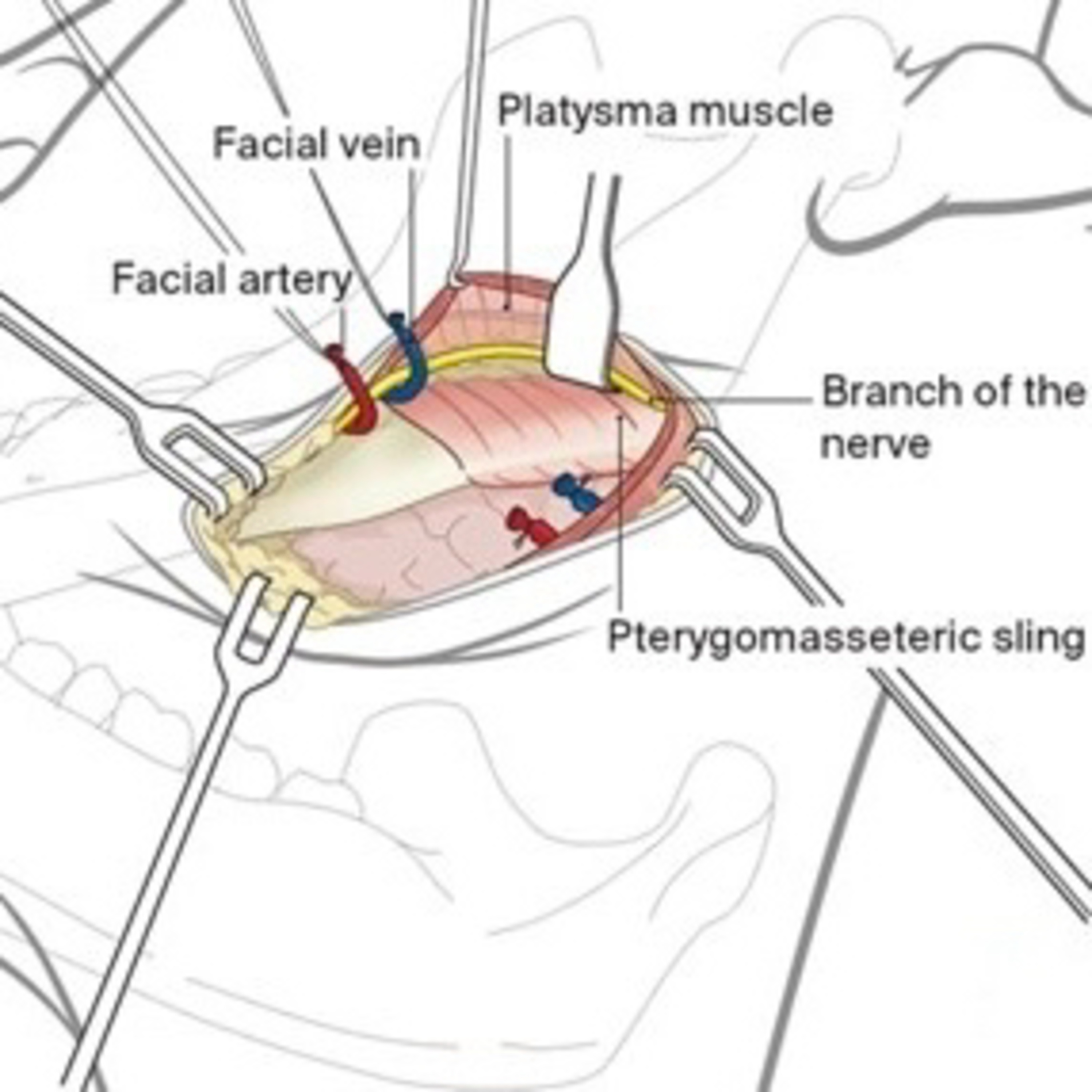
4.13.24 Quick Review #124 - #surgery #surgeon #doctorgallagher #oralsurgery #oralsurgeon #omfs #dentist #dentistry #dental #submandibular #risdon The submandibular approach, also known as the “Risdon” approach, is a critical technique for accessing the mandible for procedures such as fracture repair, providing exposure to the inferior border of the mandible, while helping to preserve facial aesthetics and minimize nerve damage. 1. Protection of the Marginal Mandibular Nerve: This nerve is vulnerable to injury as it runs just beneath the lower border of the mandible. To protect this nerve, the incision is typically made about 2-3 cm below the mandible and care is taken during dissection to avoid nerve traction or direct damage. 2. Incision Placement and Initial Dissection: The incision is generally made along a skin crease to enhance cosmesis, extending from the angle of the mandible toward the chin. Initial dissection involves cutting through the skin and subcutaneous tissue to reach the platysma. 3. Dissecting Through Layers: • Epithelium and Subcutaneous Tissue: These are the superficial layers through which the initial incision is made. • Platysma Muscle: The platysma is carefully incised or retracted to expose the deeper structures. Care must be taken to ensure that this muscle layer is cleanly dissected to prevent irregular healing or scarring. • Superficial Layer of the Deep Cervical Fascia: This layer is dissected to expose the submandibular gland and the facial vessels. It serves as an important anatomical landmark. 4. Preservation of Facial Vessels: The facial artery and vein are encountered during this approach and need to be carefully preserved or ligated if necessary. Their management depends on the exact location of the fracture but preserving these vessels helps maintain adequate blood supply and reduces postoperative complications. 5. Identification and Management of Submandibular Gland: The submandibular gland may need to be manipulated or partially resected depending on the location and extent of the fracture. Careful handling of this gland is crucial to avoid damage and subsequent complications such as salivary fistula. 6. Deeper Dissection Towards the Mandible: Once the submandibular gland and facial vessels are managed, the deeper dissection towards the periosteum of the mandible can proceed. The periosteum is then incised to expose the bone for fracture repair. References: 1. Mirdamadi, D. (n.d.). Submandibular Approach (Risdon Approach). Retrieved April 12, 2024, from https://lnkd.in/ezJYs54d 2. Ellis, E., & Zide, M. F. (2006). Surgical Approaches to the Facial Skeleton. Philadelphia: Lippincott Williams & Wilkins. 3. Fonseca, R. J., Walker, R. V., Betts, N. J., Barber, H. D., & Powers, M. P. (2004). Oral and Maxillofacial Trauma. St. Louis: Elsevier Health Sciences. 4. ChatGPT. 2024. #podcast #podcasts #dentalpodcast #dentalpodcasts #doctorgallagherpodcast #doctorgallagherspodcast #oralsurgeon #dentist #doctorgallagher #doctor #dentistry #oralsurgery #dental #viral #dentalschool #dentalstudent #omfs #surgeon #doctorlife #dentistlife #residency
What this episode covers
4.13.24 Quick Review #124 - #surgery #surgeon #doctorgallagher #oralsurgery #oralsurgeon #omfs #dentist #dentistry #dental #submandibular #risdon The submandibular approach, also known as the “Risdon” approach, is a critical technique for accessing the mandible for procedures such as fracture repair, providing exposure to the inferior border of the mandible, while helping to preserve facial aesthetics and minimize nerve damage. 1. Protection of the Marginal Mandibular Nerve: This nerve is vulnerable to injury as it runs just beneath the lower border of the mandible. To protect this nerve, the incision is typically made about 2-3 cm below the mandible and care is taken during dissection to avoid nerve traction or direct damage. 2. Incision Placement and Initial Dissection: The incision is generally made along a skin crease to enhance cosmesis, extending from the angle of the mandible toward the chin. Initial dissection involves cutting through the skin and subcutaneous tissue to reach the platysma. 3. Dissecting Through Layers: • Epithelium and Subcutaneous Tissue: These are the superficial layers through which the initial incision is made. • Platysma Muscle: The platysma is carefully incised or retracted to expose the deeper structures. Care must be taken to ensure that this muscle layer is cleanly dissected to prevent irregular healing or scarring. • Superficial Layer of the Deep Cervical Fascia: This layer is dissected to expose the submandibular gland and the facial vessels. It serves as an important anatomical landmark. 4. Preservation of Facial Vessels: The facial artery and vein are encountered during this approach and need to be carefully preserved or ligated if necessary. Their management depends on the exact location of the fracture but preserving these vessels helps maintain adequate blood supply and reduces postoperative complications. 5. Identification and Management of Submandibular Gland: The submandibular gland may need to be manipulated or partially resected depending on the location and extent of the fracture. Careful handling of this gland is crucial to avoid damage and subsequent complications such as salivary fistula. 6. Deeper Dissection Towards the Mandible: Once the submandibular gland and facial vessels are managed, the deeper dissection towards the periosteum of the mandible can proceed. The periosteum is then incised to expose the bone for fracture repair. References: 1. Mirdamadi, D. (n.d.). Submandibular Approach (Risdon Approach). Retrieved April 12, 2024, from https://lnkd.in/ezJYs54d 2. Ellis, E., & Zide, M. F. (2006). Surgical Approaches to the Facial Skeleton. Philadelphia: Lippincott Williams & Wilkins. 3. Fonseca, R. J., Walker, R. V., Betts, N. J., Barber, H. D., & Powers, M. P. (2004). Oral and Maxillofacial Trauma. St. Louis: Elsevier Health Sciences. 4. ChatGPT. 2024. #podcast #podcasts #dentalpodcast #dentalpodcasts #doctorgallagherpodcast #doctorgallagherspodcast #oralsurgeon #dentist #doctorgallagher #doctor #dentistry #oralsurgery #dental #viral #dentalschool #dentalstudent #omfs #surgeon #doctorlife #dentistlife #residency
NOW PLAYING
“What Are Key Considerations For The Submandibular Approach When Accessing The Mandible?”
No transcript for this episode yet
Similar Episodes
Dec 5, 2025 ·50m
Oct 9, 2025 ·33m
Oct 3, 2025 ·40m
Sep 11, 2025 ·31m
Aug 27, 2025 ·39m
Aug 18, 2025 ·54m