
EPISODE · Apr 13, 2025 · 3 MIN
📝 "What Are Key Features Of The Adenomatoid Odontogenic Tumor?"
from Dr. Gallagher's Podcast · host Brendan Gallagher, DDS
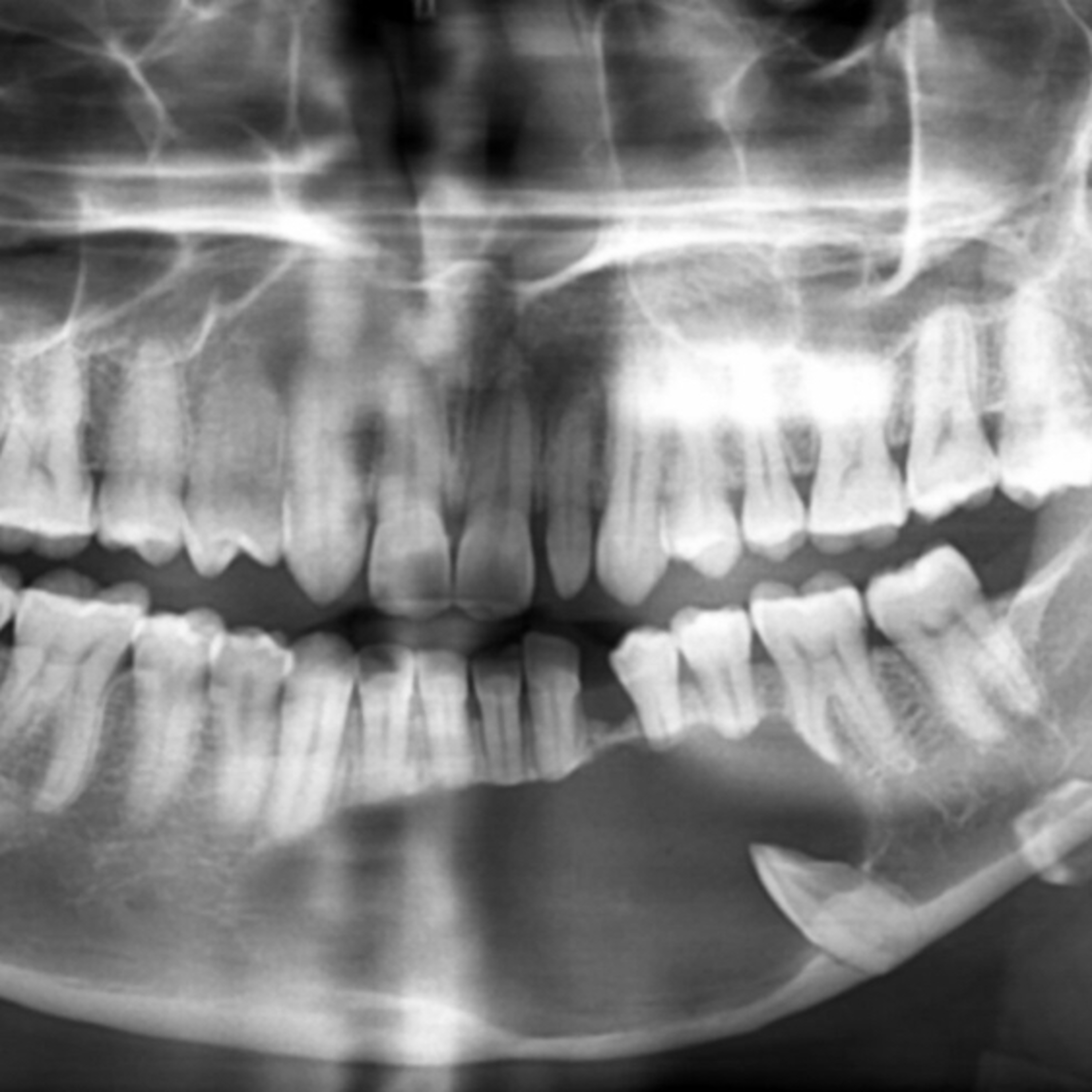
Quick Review #276 - #pathology #oralpathology #doctorgallagher #oralsurgery #oralsurgeon #dentist #dentistry #dental #aot #adenomatoidodontogenictumor - 4.13.25 Adenomatoid Odontogenic Tumor (AOT) is a benign (hamartomatous) epithelial odontogenic tumor most commonly affecting adolescents and young adults, with a strong predilection for females (2:1) and typically occurring during the second decade of life. It accounts for 3–7% of all odontogenic tumors. Location: - Maxillary anterior region is most frequently involved (up to 65% of cases). - Often associated with an impacted tooth, especially the maxillary canine. Clinical Presentation: - Usually asymptomatic, slow-growing lesion. - May present with painless swelling or delayed tooth eruption. Radiographic Features: - Appears as a well-circumscribed unilocular radiolucency. - Frequently surrounds the crown and may extend apically beyond the CEJ, unlike a dentigerous cyst. - Characteristic presence of fine, “snowflake”-like calcifications within the radiolucency in 70% of cases. - Often causes mild expansion but rarely leads to root resorption. Histopathology: - Composed of spindle-shaped epithelial cells forming duct-like structures, rosettes, and whorled patterns. - May contain eosinophilic amyloid-like material and dystrophic calcifications. - The name “adenomatoid” reflects the duct-like structures microscopically, though no glandular differentiation is present. Variants: - Follicular type: associated with an impacted tooth. - Extrafollicular type: not associated with a tooth but still intraosseous. - Peripheral type: rare, presents in gingiva. Treatment and Prognosis: - Managed by simple enucleation. - Excellent prognosis with rare recurrence due to its encapsulated nature. Key Differentiators: - More common in younger females, anterior maxilla, and often misdiagnosed as a dentigerous cyst or calcifying odontogenic cyst. - Radiographic extension beyond the CEJ and presence of intra-lesional calcifications help distinguish it from other cystic lesions. References: 1. Loganathan, K., & Vaithilingam, B. (2014). Adenomatoid odontogenic tumor in the mandible: A case report. International Journal of Dental Sciences and Research, 2(4B), 6–8. 2. Neville, B. W., Damm, D. D., Allen, C. M., & Chi, A. C. (2015). Oral and Maxillofacial Pathology (4th ed.). Saunders. 3. Philipsen, H. P., & Reichart, P. A. (1998). Adenomatoid odontogenic tumour: Facts and figures. Oral Oncology, 34(5), 389–399. 4. Buchner, A., Merrell, P. W., & Carpenter, W. M. (2006). Relative frequency of central odontogenic tumors: A study of 1,088 cases from Northern California and comparison to studies from other parts of the world. Journal of Oral and Maxillofacial Surgery, 64(9), 1343–1352. 5. ChatGPT. 2025. #podcast #dentalpodcast #doctorgallagherpodcast #doctorgallagherspodcast #doctor #dentist #dentistry #oralsurgery #dental #dentalschool #dentalstudent #doctorlife #dentistlife #oralsurgeon #doctorgallagher
Embed this episode
Ready to play
📝 "What Are Key Features Of The Adenomatoid Odontogenic Tumor?"
No transcript for this episode yet
Similar Episodes
No similar episodes found.
Similar Podcasts
No similar podcasts found.