
EPISODE · Oct 28, 2024 · 4 MIN
📝 What are the Key Differences Between Proliferative Verrucous Leukoplakia & Verrucous Carcinoma?
from Dr. Gallagher's Podcast · host Brendan Gallagher, DDS
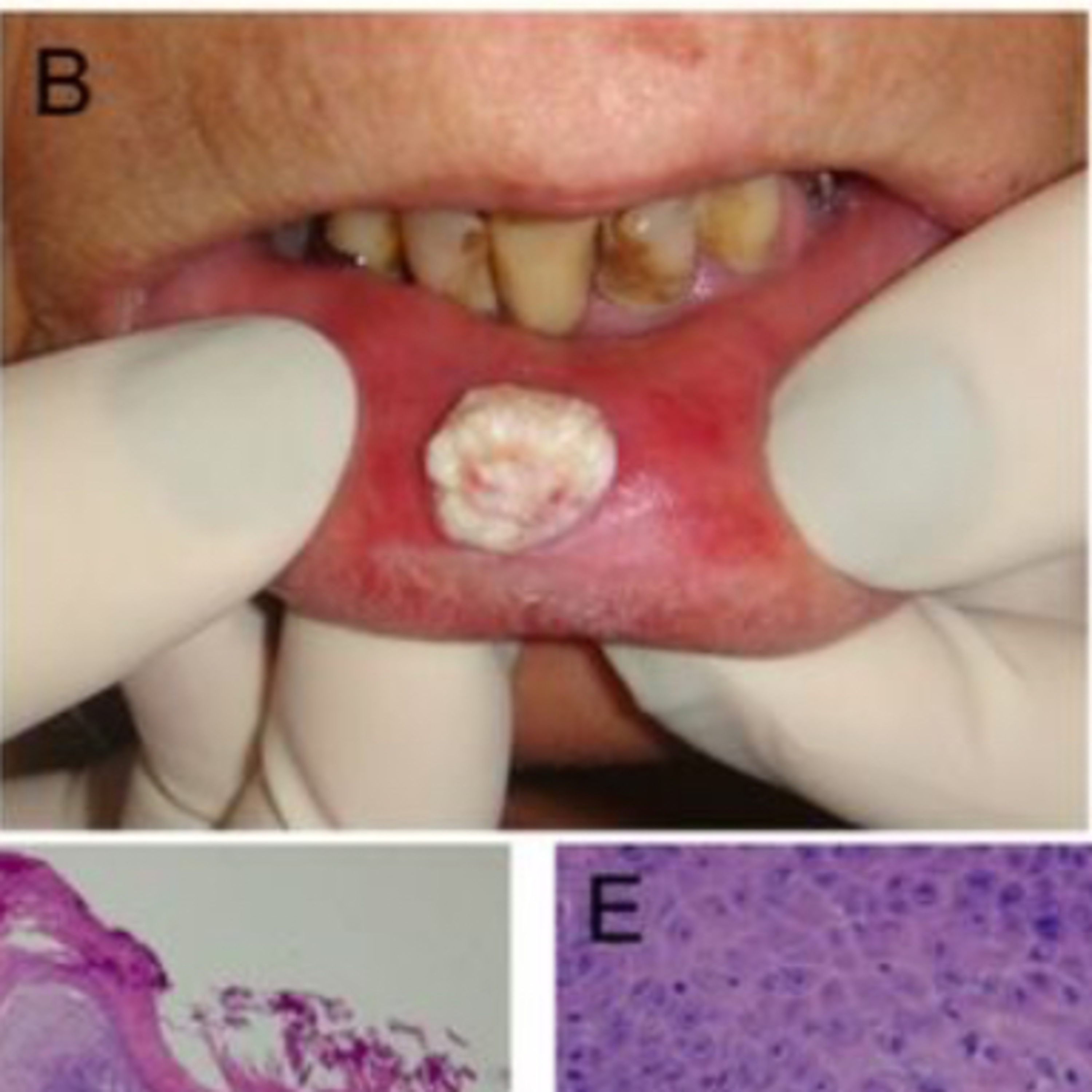
- 10.28.24Quick Review #250 - #pathology #oralpathology #doctorgallagher #oralsurgery #oralsurgeon #dentist #dentistry #dental #oralcancer #cancerClinical:• Proliferative Verrucous Leukoplakia (PVL):• PVL is a progressive, multifocal, and recurrent form of oral leukoplakia.• It often presents as a slow-growing white patch with a high likelihood of recurrence and malignant transformation.• PVL primarily affects older adults, with a female predilection.• Over time, PVL lesions tend to become more aggressive, transforming into verrucous carcinoma or squamous cell carcinoma.• Verrucous Carcinoma (VC):• VC is a well-differentiated variant of squamous cell carcinoma.• It manifests as an exophytic, warty, or cauliflower-like growth with minimal tendency for metastasis but can invade local tissues.• Typically affects older adults and is often associated with tobacco use, especially smokeless forms.Radiographic:• PVL lesions are often limited as it primarily affects the mucosa; however, it can occasionally show mild bone involvement in advanced stages, particularly if there’s malignant transformation.• VC may show evidence of local invasion in advanced cases, such as bone erosion, especially if it invades deeply into surrounding tissues. Radiographs can help assess the depth and extent of invasion in cases with substantial growth.Histopathological:• PVL is characterized by hyperkeratosis and dysplasia. Early PVL lesions show features of hyperplastic epithelium and may lack overt dysplasia.• As PVL progresses, it can display various degrees of dysplasia, leading to carcinoma in situ or invasive carcinoma.• PVL typically has a slow, progressive increase in atypia, often necessitating longitudinal histopathological evaluation due to its transformation risk.• VC histopathologically demonstrates a thickened, verrucous (warty) epithelial surface with minimal cellular atypia.• It has a “pushing” pattern of invasion rather than the usual infiltrative invasion seen in other carcinomas, with broad, bulbous rete ridges that extend into the underlying connective tissue.• VC generally lacks the significant dysplasia seen in PVL, although it may coexist with areas of conventional squamous cell carcinoma, particularly in advanced or long-standing cases.References:1. Camisasca, D. R. (n.d.). Oral verrucous carcinoma of the lip mucosa: Typical clinical presentation showing an indolent sessile nodule with a white verrucous surface [Figure]. ResearchGate2. Neville, B. W., Damm, D. D., Allen, C. M., & Chi, A. C. (2015). Oral and maxillofacial pathology (4th ed.). Elsevier3. ChatGPT.2024#podcast #podcasts #dentalpodcast #dentalpodcasts #doctorgallagherpodcast #doctorgallagherspodcast #doctor #dentistry #oralsurgery #dental #viral #dentalschool #dentalstudent #omfs #surgeon #doctorlife #dentistlife #residency #oralsurgeon #dentist #doctorgallagher
What this episode covers
- 10.28.24Quick Review #250 - #pathology #oralpathology #doctorgallagher #oralsurgery #oralsurgeon #dentist #dentistry #dental #oralcancer #cancerClinical:• Proliferative Verrucous Leukoplakia (PVL):• PVL is a progressive, multifocal, and recurrent form of oral leukoplakia.• It often presents as a slow-growing white patch with a high likelihood of recurrence and malignant transformation.• PVL primarily affects older adults, with a female predilection.• Over time, PVL lesions tend to become more aggressive, transforming into verrucous carcinoma or squamous cell carcinoma.• Verrucous Carcinoma (VC):• VC is a well-differentiated variant of squamous cell carcinoma.• It manifests as an exophytic, warty, or cauliflower-like growth with minimal tendency for metastasis but can invade local tissues.• Typically affects older adults and is often associated with tobacco use, especially smokeless forms.Radiographic:• PVL lesions are often limited as it primarily affects the mucosa; however, it can occasionally show mild bone involvement in advanced stages, particularly if there’s malignant transformation.• VC may show evidence of local invasion in advanced cases, such as bone erosion, especially if it invades deeply into surrounding tissues. Radiographs can help assess the depth and extent of invasion in cases with substantial growth.Histopathological:• PVL is characterized by hyperkeratosis and dysplasia. Early PVL lesions show features of hyperplastic epithelium and may lack overt dysplasia.• As PVL progresses, it can display various degrees of dysplasia, leading to carcinoma in situ or invasive carcinoma.• PVL typically has a slow, progressive increase in atypia, often necessitating longitudinal histopathological evaluation due to its transformation risk.• VC histopathologically demonstrates a thickened, verrucous (warty) epithelial surface with minimal cellular atypia.• It has a “pushing” pattern of invasion rather than the usual infiltrative invasion seen in other carcinomas, with broad, bulbous rete ridges that extend into the underlying connective tissue.• VC generally lacks the significant dysplasia seen in PVL, although it may coexist with areas of conventional squamous cell carcinoma, particularly in advanced or long-standing cases.References:1. Camisasca, D. R. (n.d.). Oral verrucous carcinoma of the lip mucosa: Typical clinical presentation showing an indolent sessile nodule with a white verrucous surface [Figure]. ResearchGate2. Neville, B. W., Damm, D. D., Allen, C. M., & Chi, A. C. (2015). Oral and maxillofacial pathology (4th ed.). Elsevier3. ChatGPT.2024#podcast #podcasts #dentalpodcast #dentalpodcasts #doctorgallagherpodcast #doctorgallagherspodcast #doctor #dentistry #oralsurgery #dental #viral #dentalschool #dentalstudent #omfs #surgeon #doctorlife #dentistlife #residency #oralsurgeon #dentist #doctorgallagher
NOW PLAYING
📝 What are the Key Differences Between Proliferative Verrucous Leukoplakia & Verrucous Carcinoma?
No transcript for this episode yet
Similar Episodes
Dec 5, 2025 ·50m
Oct 9, 2025 ·33m
Oct 3, 2025 ·40m
Sep 11, 2025 ·31m
Aug 27, 2025 ·39m
Aug 18, 2025 ·54m