
EPISODE · Apr 3, 2024 · 3 MIN
“What Are The Stages of Blood Loss and Each Stage’s Effect on BP & HR?”
from Dr. Gallagher's Podcast · host Brendan Gallagher, DDS
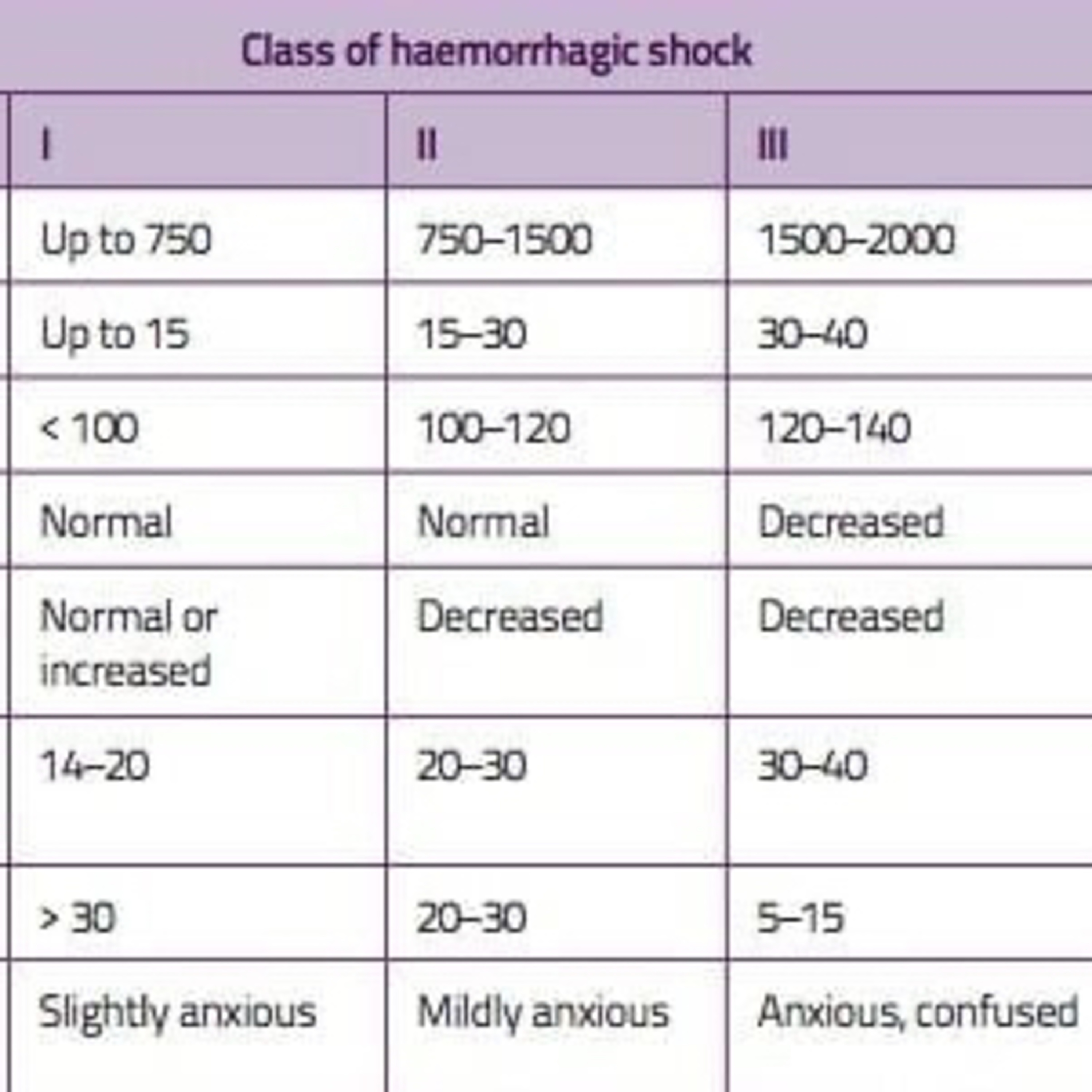
4.3.24 #podcast #podcasts #dentalpodcast #dentalpodcasts #doctorgallagherpodcast #doctorgallagherspodcast Quick Review #120 - #surgery #surgeon #doctorgallagher #oralsurgery #oralsurgeon #omfs #dentist #dentistry #dental #bloodloss #hemorrhage There are 4 main classes of acute blood loss, with each class indicating a specific percentage of blood volume lost and corresponding physiological changes: 1. Class 1: In this stage, less than 15% of the total blood volume is lost, which is approximately up to 750 mL. At this point, the heart rate is usually less than 100 beats per minute (BPM), and blood pressure remains normal. The respiratory rate is typically between 14 and 20 breaths per minute, and the pulse pressure (the difference between systolic and diastolic blood pressure) is normal or slightly increased. 2. Class 2: This stage involves blood volume loss between 15% and 30%, which is usually between 750 mL and 1,500 mL. The heart rate and respiratory rate become elevated in this stage, typically ranging from 100 BPM to 120 BPM for the heart rate and 20 breaths per minute for the respiratory rate. Pulse pressure begins to narrow, but the systolic blood pressure may remain unchanged or slightly decreased. 3. Class 3: At this stage, blood volume loss ranges from 30% to 40%, which is approximately 1,500 mL to 2,000 mL. The heart rate and respiratory rate continue to increase, and the blood pressure progressively decreases. 4. Class 4: This stage involves more than 40% of total blood volume loss, which is more than 2,000 mL. The heart rate and respiratory rate are markedly elevated, and blood pressure drops significantly. This stage is life-threatening and requires immediate medical intervention. In each stage of acute blood loss, the body tries to compensate for the reduced blood volume by increasing the heart rate to maintain adequate blood flow to vital organs. As the blood loss progresses, the compensatory mechanisms become overwhelmed, leading to a drop in blood pressure and potentially shock if not treated promptly. References: 1. 1. Guly HR, Bouamra O, Spiers M, Dark P, Coats T, Lecky FE. Vital signs and estimated blood loss in patients with major trauma: testing the validity of the ATLS classification of hypovolaemic shock. Resuscitation. 2011;82(5):556-559. doi:10.1016/j.resuscitation.2010.12.016 2. Sasser SM, Hunt RC, Faul M, et al. Guidelines for field triage of injured patients: recommendations of the National Expert Panel on Field Triage, 2011. MMWR Recomm Rep. 2012;61(RR-1):1-20. 3. Cannon JW, Khan MA, Raja AS, et al. Damage control resuscitation in patients with severe traumatic hemorrhage: a practice management guideline from the Eastern Association for the Surgery of Trauma. J Trauma Acute Care Surg. 2017;82(3):605-617. doi:10.1097/TA.0000000000001357 4. Grok. 2024.
What this episode covers
4.3.24 #podcast #podcasts #dentalpodcast #dentalpodcasts #doctorgallagherpodcast #doctorgallagherspodcast Quick Review #120 - #surgery #surgeon #doctorgallagher #oralsurgery #oralsurgeon #omfs #dentist #dentistry #dental #bloodloss #hemorrhage There are 4 main classes of acute blood loss, with each class indicating a specific percentage of blood volume lost and corresponding physiological changes: 1. Class 1: In this stage, less than 15% of the total blood volume is lost, which is approximately up to 750 mL. At this point, the heart rate is usually less than 100 beats per minute (BPM), and blood pressure remains normal. The respiratory rate is typically between 14 and 20 breaths per minute, and the pulse pressure (the difference between systolic and diastolic blood pressure) is normal or slightly increased. 2. Class 2: This stage involves blood volume loss between 15% and 30%, which is usually between 750 mL and 1,500 mL. The heart rate and respiratory rate become elevated in this stage, typically ranging from 100 BPM to 120 BPM for the heart rate and 20 breaths per minute for the respiratory rate. Pulse pressure begins to narrow, but the systolic blood pressure may remain unchanged or slightly decreased. 3. Class 3: At this stage, blood volume loss ranges from 30% to 40%, which is approximately 1,500 mL to 2,000 mL. The heart rate and respiratory rate continue to increase, and the blood pressure progressively decreases. 4. Class 4: This stage involves more than 40% of total blood volume loss, which is more than 2,000 mL. The heart rate and respiratory rate are markedly elevated, and blood pressure drops significantly. This stage is life-threatening and requires immediate medical intervention. In each stage of acute blood loss, the body tries to compensate for the reduced blood volume by increasing the heart rate to maintain adequate blood flow to vital organs. As the blood loss progresses, the compensatory mechanisms become overwhelmed, leading to a drop in blood pressure and potentially shock if not treated promptly. References: 1. 1. Guly HR, Bouamra O, Spiers M, Dark P, Coats T, Lecky FE. Vital signs and estimated blood loss in patients with major trauma: testing the validity of the ATLS classification of hypovolaemic shock. Resuscitation. 2011;82(5):556-559. doi:10.1016/j.resuscitation.2010.12.016 2. Sasser SM, Hunt RC, Faul M, et al. Guidelines for field triage of injured patients: recommendations of the National Expert Panel on Field Triage, 2011. MMWR Recomm Rep. 2012;61(RR-1):1-20. 3. Cannon JW, Khan MA, Raja AS, et al. Damage control resuscitation in patients with severe traumatic hemorrhage: a practice management guideline from the Eastern Association for the Surgery of Trauma. J Trauma Acute Care Surg. 2017;82(3):605-617. doi:10.1097/TA.0000000000001357 4. Grok. 2024.
NOW PLAYING
“What Are The Stages of Blood Loss and Each Stage’s Effect on BP & HR?”
No transcript for this episode yet
Similar Episodes
Dec 5, 2025 ·50m
Oct 9, 2025 ·33m
Oct 3, 2025 ·40m
Sep 11, 2025 ·31m
Aug 27, 2025 ·39m
Aug 18, 2025 ·54m