
EPISODE · Jan 24, 2024 · 4 MIN
“What Important Structures Are Affected In Cavernous Sinus Thrombosis?”
from Dr. Gallagher's Podcast · host Brendan Gallagher, DDS
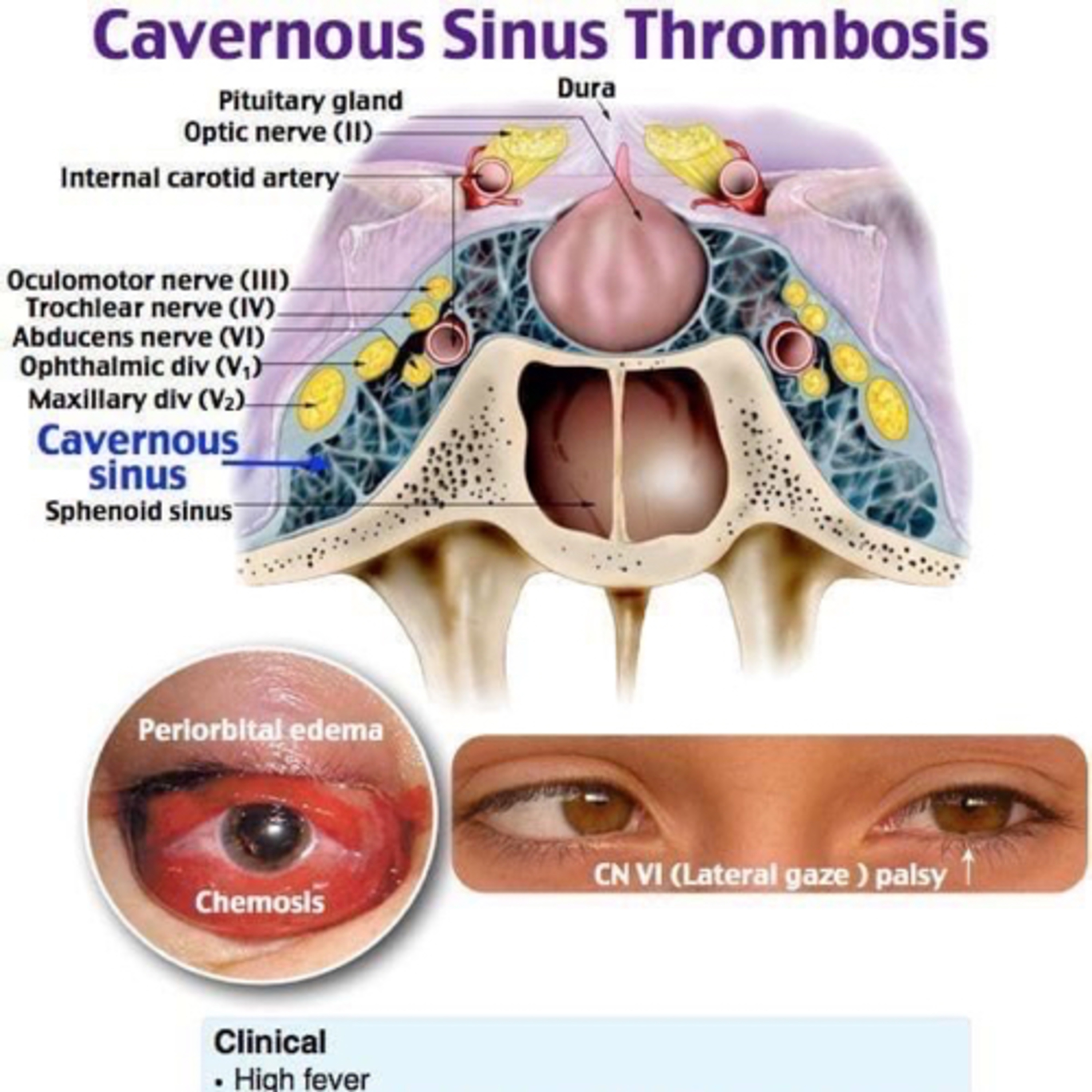
1.24.24 Quick Review #99 - #cavernoussinus #pathology #oralpathology #doctorgallagher #oralsurgery #oralsurgeon #dentist #dentistry #dental #surgery #surgeon #omfs Cavernous Sinus Thrombosis (CST) is a rare and potentially life-threatening condition characterized by a blood clot in the cavernous sinuses, which are located behind the eyes and beneath the brain. These sinuses play a crucial role in draining blood from the brain and face. CST often arises as a complication of a bacterial infection in the face or skull, and its symptoms can rapidly worsen. Early signs include severe headaches, particularly around or behind the eyes, and may progress to include bulging or swelling around the eyes, droopy eyelids, eye movement pain, blurred vision, and fever. Without prompt treatment, CST can lead to confusion, sleepiness, coma, and even death. Important anatomical structures involved and affected include: 1. Cavernous Sinus: A large collection of thin-walled veins creating a cavity bordered by the temporal bone of the skull and the sphenoid bone. It plays a central role in the condition. 2. Cranial Nerves: Several cranial nerves run through the cavernous sinus: - The oculomotor nerve (CN III) - The trochlear nerve (CN IV) - The ophthalmic and maxillary branches of the trigeminal nerve (CN V1 and V2) - The abducens nerve (CN VI) These nerves control eye movements, eyelid opening, facial sensation, and other facial functions. 3. Internal Carotid Artery: Passes through the cavernous sinus and can be compressed or affected by the thrombosis, potentially affecting blood supply to the brain. 4. Venous Drainage: The cavernous sinus receives blood from the brain and face. Thrombosis here can lead to impaired venous drainage, increasing intracranial pressure and causing edema in areas like the eyelids and cheeks. 5. Pituitary Gland: Located close to the cavernous sinus, it can be affected by changes in the sinus, leading to hormonal imbalances. References: 1. Cleveland Clinic. (2022). Cavernous Sinus Thrombosis: Symptoms, Causes & Treatment. Retrieved from https://my.clevelandclinic.org. 2. Allen, R. C. (2022). Cavernous Sinus Thrombosis - Eye Disorders. Merck Manuals Professional Edition. Retrieved from https://www.merckmanuals.com. 3. Abubaker, A.O., Lam, D., & Benson, K. (2016). OMFS Secrets (3rd ed.). Elsevier. 4. ChatGPT. 2024.
What this episode covers
1.24.24 Quick Review #99 - #cavernoussinus #pathology #oralpathology #doctorgallagher #oralsurgery #oralsurgeon #dentist #dentistry #dental #surgery #surgeon #omfs Cavernous Sinus Thrombosis (CST) is a rare and potentially life-threatening condition characterized by a blood clot in the cavernous sinuses, which are located behind the eyes and beneath the brain. These sinuses play a crucial role in draining blood from the brain and face. CST often arises as a complication of a bacterial infection in the face or skull, and its symptoms can rapidly worsen. Early signs include severe headaches, particularly around or behind the eyes, and may progress to include bulging or swelling around the eyes, droopy eyelids, eye movement pain, blurred vision, and fever. Without prompt treatment, CST can lead to confusion, sleepiness, coma, and even death. Important anatomical structures involved and affected include: 1. Cavernous Sinus: A large collection of thin-walled veins creating a cavity bordered by the temporal bone of the skull and the sphenoid bone. It plays a central role in the condition. 2. Cranial Nerves: Several cranial nerves run through the cavernous sinus: - The oculomotor nerve (CN III) - The trochlear nerve (CN IV) - The ophthalmic and maxillary branches of the trigeminal nerve (CN V1 and V2) - The abducens nerve (CN VI) These nerves control eye movements, eyelid opening, facial sensation, and other facial functions. 3. Internal Carotid Artery: Passes through the cavernous sinus and can be compressed or affected by the thrombosis, potentially affecting blood supply to the brain. 4. Venous Drainage: The cavernous sinus receives blood from the brain and face. Thrombosis here can lead to impaired venous drainage, increasing intracranial pressure and causing edema in areas like the eyelids and cheeks. 5. Pituitary Gland: Located close to the cavernous sinus, it can be affected by changes in the sinus, leading to hormonal imbalances. References: 1. Cleveland Clinic. (2022). Cavernous Sinus Thrombosis: Symptoms, Causes & Treatment. Retrieved from https://my.clevelandclinic.org. 2. Allen, R. C. (2022). Cavernous Sinus Thrombosis - Eye Disorders. Merck Manuals Professional Edition. Retrieved from https://www.merckmanuals.com. 3. Abubaker, A.O., Lam, D., & Benson, K. (2016). OMFS Secrets (3rd ed.). Elsevier. 4. ChatGPT. 2024.
NOW PLAYING
“What Important Structures Are Affected In Cavernous Sinus Thrombosis?”
No transcript for this episode yet
Similar Episodes
Dec 5, 2025 ·50m
Oct 9, 2025 ·33m
Oct 3, 2025 ·40m
Sep 11, 2025 ·31m
Aug 27, 2025 ·39m
Aug 18, 2025 ·54m