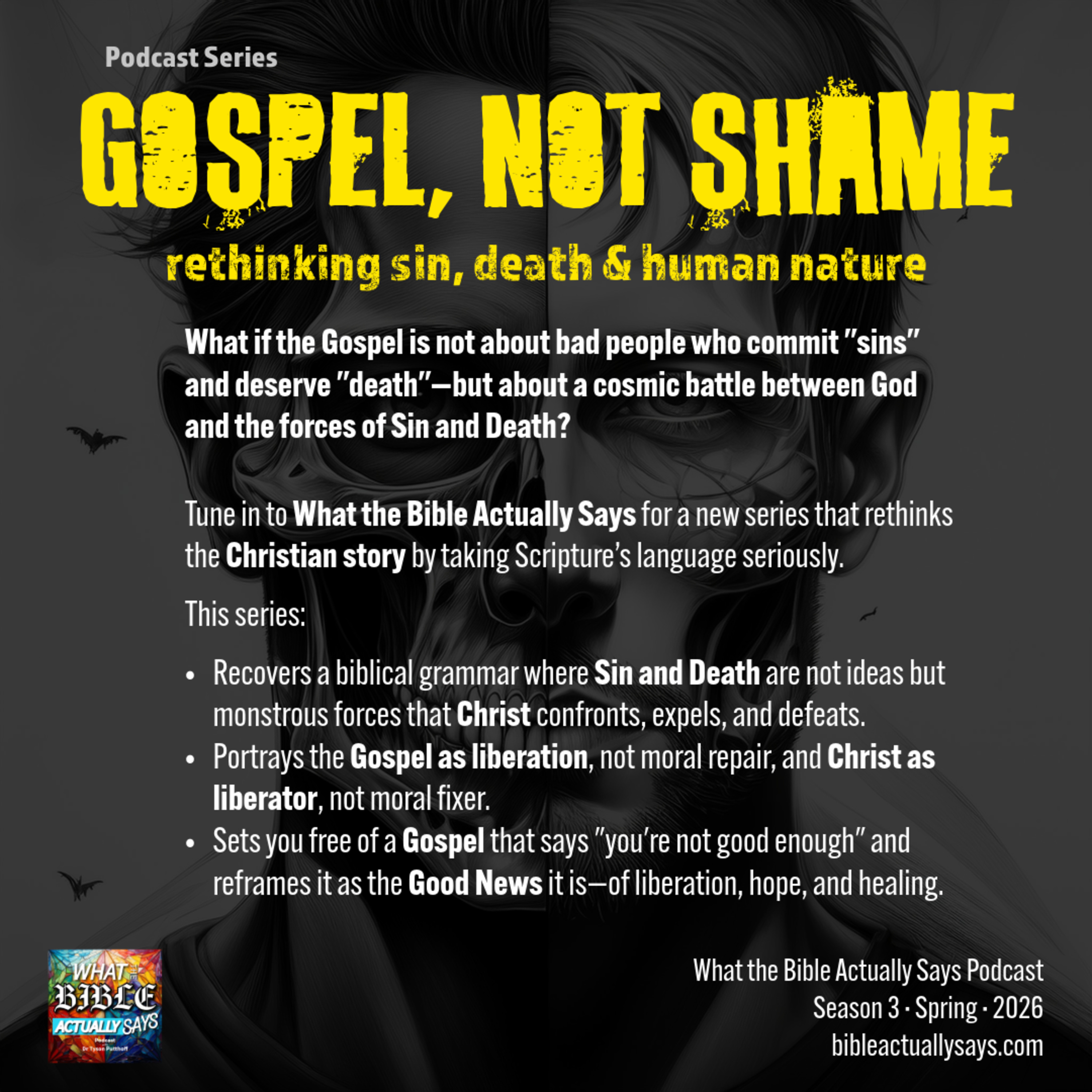
What is a Human? The Porous Self in Biblical Theology episode artwork

EPISODE · Mar 3, 2026 · 1H

What is a Human? The Porous Self in Biblical Theology

from What the Bible Actually Says · host Dr Tyson Putthoff

What kind of “self” does the Bible actually assume you and I are?In Episode 2 of Gospel, Not Shame, we take a step back and ask a foundational question: What is a human being according to Scripture? Before we can understand Sin, Death, or salvation, we need to understand the nature of the human person itself.Modern Western culture often imagines the self as sealed, autonomous, and internally self-contained. But the Bible describes something different. Drawing from Genesis, temple theology, and ancient Near Eastern context, this episode explores the human being as living sacred space—formed from dust, animated by divine breath, and structured for indwelling presence.If humans are porous, responsive "statues" of God, according to Genesis 1–2, or "temples" of the Spirit, according to Paul, then biblical language about dwelling, reigning, and transformation begins to make new sense. This episode lays the anthropological groundwork for the rest of Season 3, and moves us toward rethinking some of the core elements of the Gospel story itself.Based on Tyson Putthoff’s new, groundbreaking book: I, Monster: A New Model for Understanding Sin, Death, and Human Nature (Hekhal, 2026).Grab your copy at ⁠Amazon⁠, ⁠Barnes & Noble⁠, or any of your favorite booksellers.

What kind of “self” does the Bible actually assume you and I are?In Episode 2 of Gospel, Not Shame, we take a step back and ask a foundational question: What is a human being according to Scripture? Before we can understand Sin, Death, or salvation, we need to understand the nature of the human person itself.Modern Western culture often imagines the self as sealed, autonomous, and internally self-contained. But the Bible describes something different. Drawing from Genesis, temple theology, and ancient Near Eastern context, this episode explores the human being as living sacred space—formed from dust, animated by divine breath, and structured for indwelling presence.If humans are porous, responsive "statues" of God, according to Genesis 1–2, or "temples" of the Spirit, according to Paul, then biblical language about dwelling, reigning, and transformation begins to make new sense. This episode lays the anthropological groundwork for the rest of Season 3, and moves us toward rethinking some of the core elements of the Gospel story itself.Based on Tyson Putthoff’s new, groundbreaking book: I, Monster: A New Model for Understanding Sin, Death, and Human Nature (Hekhal, 2026).Grab your copy at ⁠Amazon⁠, ⁠Barnes & Noble⁠, or any of your favorite booksellers.

NOW PLAYING

What is a Human? The Porous Self in Biblical Theology

0:00 1:00:20

No transcript for this episode yet

We transcribe on demand. Request one and we'll notify you when it's ready — usually under 10 minutes.

Frequently Asked Questions

How long is this episode of What the Bible Actually Says?

This episode is 1 hour and 0 minutes long.

When was this What the Bible Actually Says episode published?

This episode was published on March 3, 2026.

What is this episode about?

What kind of “self” does the Bible actually assume you and I are?In Episode 2 of Gospel, Not Shame, we take a step back and ask a foundational question: What is a human being according to Scripture? Before we can understand Sin, Death, or salvation,...

Can I download this What the Bible Actually Says episode?

Yes, you can download this episode by clicking the download button on the episode player, or subscribe to the podcast in your preferred podcast app for automatic downloads.
URL copied to clipboard!