
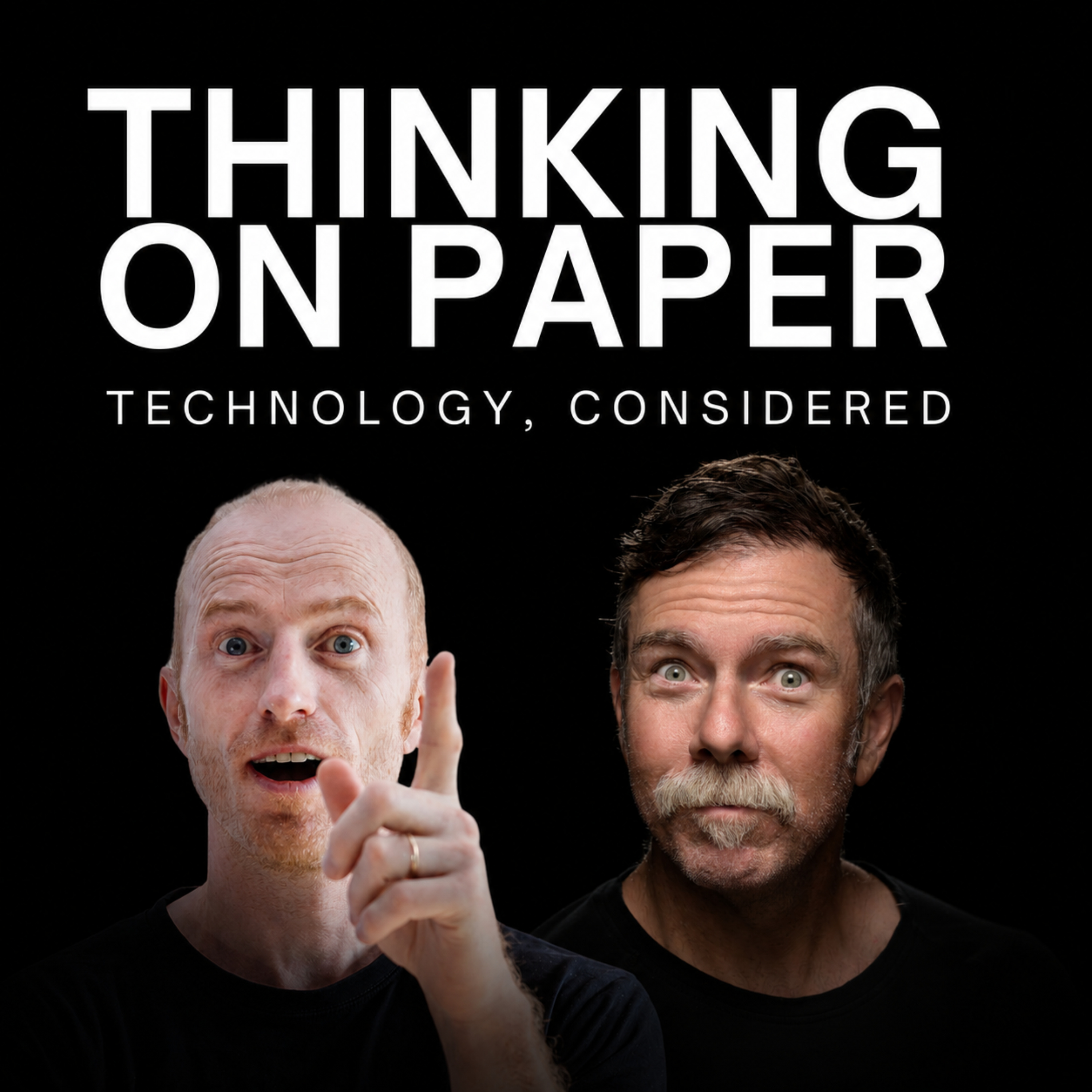
EPISODE · Jun 11, 2026 · 34 MIN
AI Is Automating Engineers Out Of A Job
from Thinking On Paper · host Mark Fielding and Jeremy Gilbertson
The Vij brothers join Thinking on Paper to discuss Neo, an autonomous machine learning engineer designed to automate parts of the AI development process.As demand for AI systems grows, companies and governments are competing for a limited pool of experienced machine learning engineers. The challenge isn’t only access to data or computing power. Many organisations also lack the technical expertise required to build, test and deploy effective models.Neo uses a multi-agent system to perform tasks normally handled by machine learning engineers, including analysing datasets, selecting modelling approaches, running experiments and evaluating results. The aim is to automate repetitive technical work while allowing human engineers to concentrate on higher-level decisions and more creative problems.In this episode, we discuss:What an autonomous machine learning engineer isHow Neo’s multi-agent AI system worksWhy skilled machine learning engineers are in such high demandWhich parts of AI development can be automatedHow autonomous agents compare with traditional machine learning workflowsWhy Kaggle Grandmasters are considered leading practitioners in applied machine learningWhether AI agents can match expert human performanceHow automation could affect machine learning jobs and salariesThe evolution of GPUs from graphics hardware to AI infrastructureWhat the Vij brothers learned from working at CERNHow autonomous AI systems could change business, creativity and technical workNeo is intended to expand access to machine learning expertise rather than simply generate code. Its development raises a wider question: what happens when AI systems can perform the specialised work required to build other AI systems?This conversation examines the technical capabilities of autonomous machine learning agents, the shortage of experienced AI talent and how automation could reshape the role of engineers--Timestamps(00:00) Why Are There So Few Machine Learning Engineers?(01:54) Meet Gaurav Vij and Saurabh Vij(02:57) Lessons Learned from Working at CERN(04:45) How to Explain The Importance Of A.I. to Your Parents(07:24) The World’s First Autonomous Machine Learning Engineer: What AI Problem Does NEO Solve?(08:17) AI Competitions and Kaggle Grandmasters(11:06) How Many A.I./ML Engineers Do We Need?(17:30) Fixing The A.I. Hallucination Problem(18:09) Hot Buttons: 5 AI Questions In 30 Seconds(18:46) Hollywood: Doomed by A.I, or Reborn?(20:26) AI News: Nvidia Digits Explained(21:51) Moore's Law And Could AI Models Be Motivated by Rewards?(25:42) AI And Quantum Computing(29:45) The Thinking on Paper Carry-Over Question(30:16) After Hours: Backstage Extra--Check out NEO: https://heyneo.so/Learn more about the show: www.thinkingonpaper.xyzFollow Thinking On Paper On Instagram: https://www.instagram.com/thinkingonpaperpodcast/
Embed this episode
NOW PLAYING
AI Is Automating Engineers Out Of A Job
No transcript for this episode yet
Similar Episodes
No similar episodes found.
Similar Podcasts
No similar podcasts found.