
EPISODE · Jun 19, 2024 · 8 MIN
“What Is ‘Osmotic Diuresis’ In The Setting Of Diabetic Ketoacidosis?”
from Dr. Gallagher's Podcast · host Brendan Gallagher, DDS
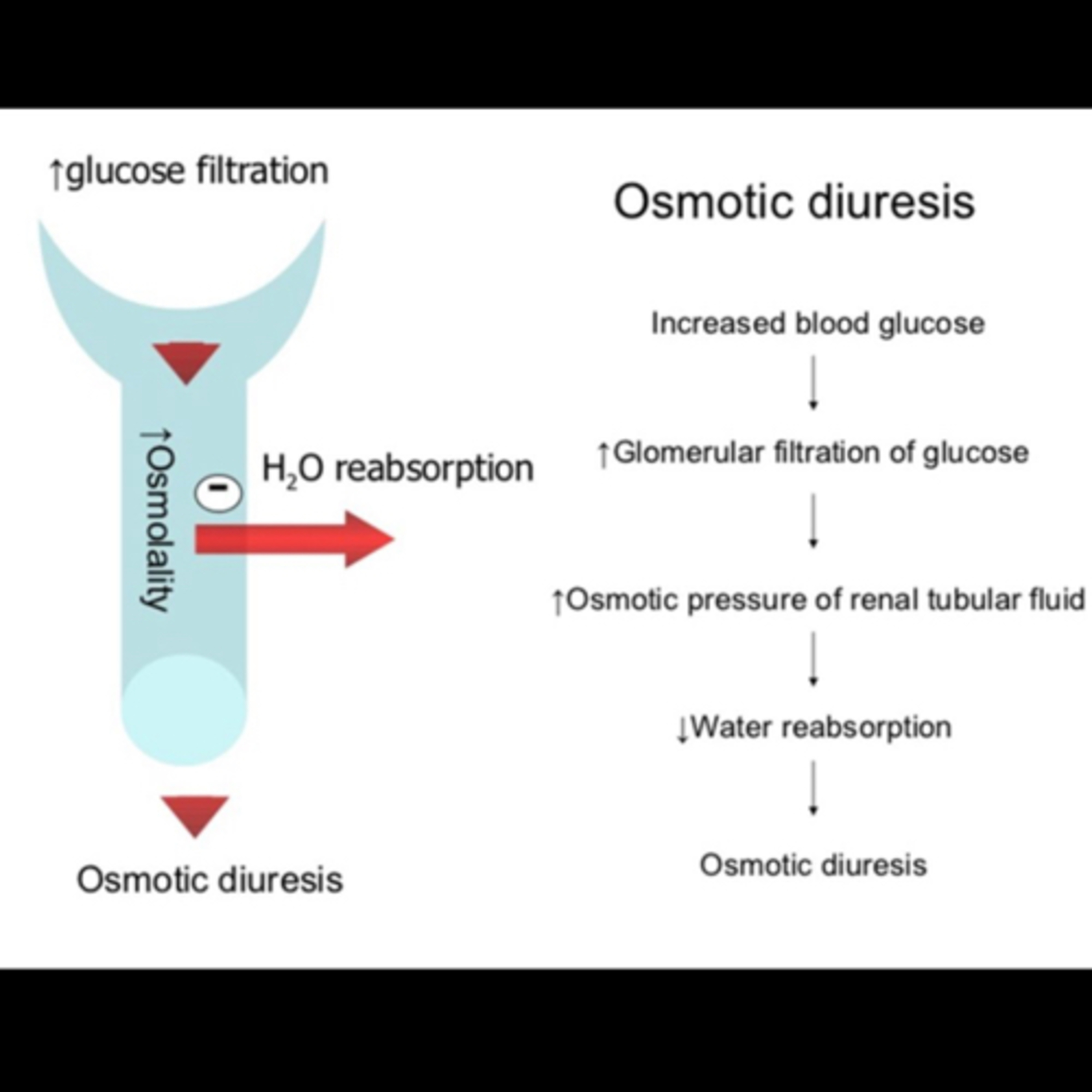
6.19.24 Quick Review #153 - #pathology #oralpathology #doctorgallagher #oralsurgery #oralsurgeon #dentist #dentistry #dental Osmotic diuresis in the setting of diabetic ketoacidosis (DKA) refers to the increased urine output caused by the presence of high levels of glucose and ketones in the blood. Here’s how it happens: 1. Hyperglycemia: In DKA, there is a significant lack of insulin, which leads to high blood glucose levels. Insulin normally facilitates the uptake of glucose into cells for energy, but in its absence, glucose remains in the bloodstream. 2. Renal Threshold for Glucose: The kidneys filter blood to form urine. Normally, glucose is reabsorbed in the renal tubules and returned to the bloodstream. However, when blood glucose levels exceed the renal threshold (about 180 mg/dL), the renal tubules cannot reabsorb all the glucose, and it begins to appear in the urine. 3. Osmotic Effect: Glucose in the urine creates an osmotic gradient. Since glucose is an osmotically active substance, it draws water with it into the urine, increasing urine volume. This is osmotic diuresis. 4. Ketones: In DKA, the body also produces ketones (acetoacetate, β-hydroxybutyrate, and acetone) as alternative energy sources due to the lack of insulin. Ketones are also osmotically active and contribute to osmotic diuresis. 5. Dehydration and Electrolyte Imbalance: The increased urine output leads to significant loss of fluids and electrolytes (such as sodium, potassium, and phosphate), causing dehydration and electrolyte imbalances. This exacerbates the clinical manifestations of DKA. Clinical Consequences: • Dehydration: Patients with DKA can become severely dehydrated due to the excessive loss of water in the urine. • Electrolyte Imbalances: The loss of electrolytes in the urine can lead to dangerous imbalances, such as hypokalemia (low potassium) and hyponatremia (low sodium). • Acidosis: The accumulation of ketones, which are acidic, leads to metabolic acidosis, a hallmark of DKA. Management: • Fluid Replacement: To correct dehydration and restore renal perfusion. • Insulin Therapy: To reduce blood glucose levels and halt ketone production. • Electrolyte Replacement: To address imbalances, particularly potassium. • Monitoring: Close monitoring of blood glucose, ketones, electrolytes, and acid-base status is essential. References: 1. Biology Online. (n.d.). Diuresis. In Biology Dictionary. Retrieved June 18, 2024, from https://lnkd.in/ebXA5zdb. 2. Kitabchi, A. E., Umpierrez, G. E., Miles, J. M., & Fisher, J. N. (2009). Hyperglycemic crises in adult patients with diabetes. Diabetes Care, 32(7), 1335-1343. 3. Umpierrez, G. E., & Korytkowski, M. (2016). Diabetic emergencies—ketoacidosis, hyperglycaemic hyperosmolar state and hypoglycaemia. Nature Reviews Endocrinology, 12(4), 222-232. 4. ChatGPT. 2024. - #podcast #podcasts #dentalpodcast #dentalpodcasts #doctorgallagherpodcast #doctorgallagherspodcast #oralsurgeon #dentist #doctorgallagher #doctor #dentistry #oralsurgery #dental #viral #dentalschool #dentalstudent #omfs #surgeon #doctorlife #dentistlife #residency
What this episode covers
6.19.24 Quick Review #153 - #pathology #oralpathology #doctorgallagher #oralsurgery #oralsurgeon #dentist #dentistry #dental Osmotic diuresis in the setting of diabetic ketoacidosis (DKA) refers to the increased urine output caused by the presence of high levels of glucose and ketones in the blood. Here’s how it happens: 1. Hyperglycemia: In DKA, there is a significant lack of insulin, which leads to high blood glucose levels. Insulin normally facilitates the uptake of glucose into cells for energy, but in its absence, glucose remains in the bloodstream. 2. Renal Threshold for Glucose: The kidneys filter blood to form urine. Normally, glucose is reabsorbed in the renal tubules and returned to the bloodstream. However, when blood glucose levels exceed the renal threshold (about 180 mg/dL), the renal tubules cannot reabsorb all the glucose, and it begins to appear in the urine. 3. Osmotic Effect: Glucose in the urine creates an osmotic gradient. Since glucose is an osmotically active substance, it draws water with it into the urine, increasing urine volume. This is osmotic diuresis. 4. Ketones: In DKA, the body also produces ketones (acetoacetate, β-hydroxybutyrate, and acetone) as alternative energy sources due to the lack of insulin. Ketones are also osmotically active and contribute to osmotic diuresis. 5. Dehydration and Electrolyte Imbalance: The increased urine output leads to significant loss of fluids and electrolytes (such as sodium, potassium, and phosphate), causing dehydration and electrolyte imbalances. This exacerbates the clinical manifestations of DKA. Clinical Consequences: • Dehydration: Patients with DKA can become severely dehydrated due to the excessive loss of water in the urine. • Electrolyte Imbalances: The loss of electrolytes in the urine can lead to dangerous imbalances, such as hypokalemia (low potassium) and hyponatremia (low sodium). • Acidosis: The accumulation of ketones, which are acidic, leads to metabolic acidosis, a hallmark of DKA. Management: • Fluid Replacement: To correct dehydration and restore renal perfusion. • Insulin Therapy: To reduce blood glucose levels and halt ketone production. • Electrolyte Replacement: To address imbalances, particularly potassium. • Monitoring: Close monitoring of blood glucose, ketones, electrolytes, and acid-base status is essential. References: 1. Biology Online. (n.d.). Diuresis. In Biology Dictionary. Retrieved June 18, 2024, from https://lnkd.in/ebXA5zdb. 2. Kitabchi, A. E., Umpierrez, G. E., Miles, J. M., & Fisher, J. N. (2009). Hyperglycemic crises in adult patients with diabetes. Diabetes Care, 32(7), 1335-1343. 3. Umpierrez, G. E., & Korytkowski, M. (2016). Diabetic emergencies—ketoacidosis, hyperglycaemic hyperosmolar state and hypoglycaemia. Nature Reviews Endocrinology, 12(4), 222-232. 4. ChatGPT. 2024. - #podcast #podcasts #dentalpodcast #dentalpodcasts #doctorgallagherpodcast #doctorgallagherspodcast #oralsurgeon #dentist #doctorgallagher #doctor #dentistry #oralsurgery #dental #viral #dentalschool #dentalstudent #omfs #surgeon #doctorlife #dentistlife #residency
NOW PLAYING
“What Is ‘Osmotic Diuresis’ In The Setting Of Diabetic Ketoacidosis?”
No transcript for this episode yet
Similar Episodes
Dec 5, 2025 ·50m
Oct 9, 2025 ·33m
Oct 3, 2025 ·40m
Sep 11, 2025 ·31m
Aug 27, 2025 ·39m
Aug 18, 2025 ·54m