
EPISODE · Jul 11, 2024 · 3 MIN
“What is Plasmic Imbitition and its Role in Healing?”
from Dr. Gallagher's Podcast · host Brendan Gallagher, DDS
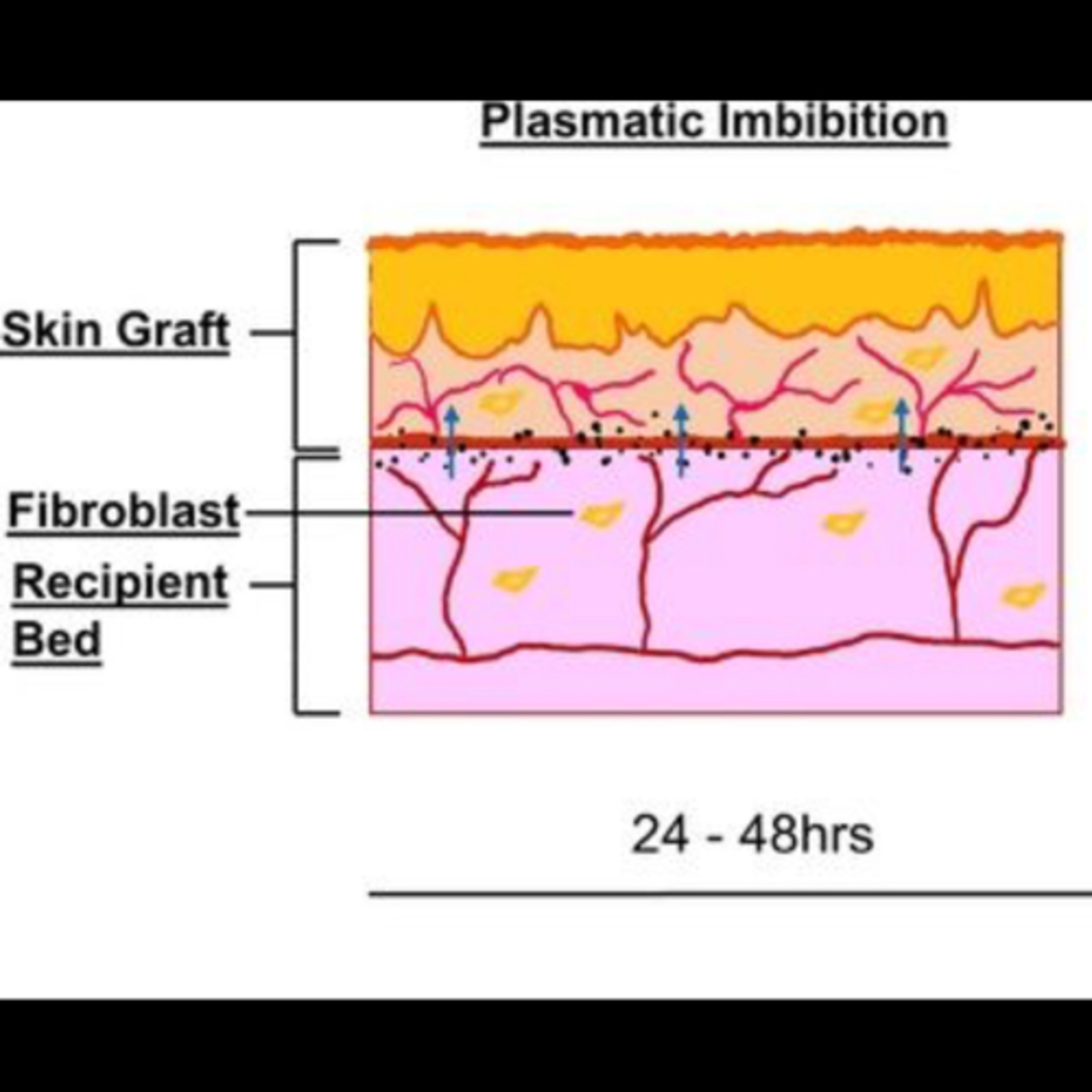
7.11.24 Quick Review #174 - #surgery #surgeon #doctorgallagher #oralsurgery #oralsurgeon #omfs #dentist #dentistry #dental #healing Plasmic imbibition refers to the process where a graft (such as a free gingival graft) absorbs plasma from the recipient bed through capillary action. This initial phase is critical for the survival of the graft as it supplies nutrients and oxygen before the establishment of new blood vessels. Relevance to Wound Healing: In the context of wound healing in the oral cavity, plasmic imbibition is particularly significant following dental surgeries involving soft tissue grafts and laceration repairs. Timeline: Plasmic imbibition occurs within the first 24 to 48 hours post-surgery. During this period, the graft relies entirely on the plasma it absorbs for its metabolic needs. This phase is followed by the process of revascularization (angiogenesis), where new blood vessels begin to form and integrate the graft into the recipient site. Primary Intention Healing: • Definition: Wounds are closed surgically with sutures, minimizing the space between wound edges. • Plasmic Imbibition Role: In grafting procedures healing by primary intention, such as free gingival grafts, plasmic imbibition is vital for the initial survival of the graft before new blood vessels form. • Example: A graft placed over a prepared recipient bed, with the graft sutured in place. Secondary Intention Healing: • Definition: Wounds are left open to heal naturally by granulation, contraction, and epithelialization. • Plasmic Imbibition Role: Less directly involved compared to primary intention, but it may still play a role if a soft tissue graft is used to cover an open wound. • Example: Extractions sockets healing without immediate closure, or large surgical defects left to heal over time with a graft to aid in soft tissue closure. Timeline in Healing Contexts: • First 24-48 hours: Plasmic imbibition dominates, crucial for the survival of soft tissue grafts. • 2-4 days: Early stages of revascularization begin, reducing the graft’s dependency on plasmic imbibition. • 1-2 weeks: New blood vessel formation stabilizes the graft, marking the transition from the reliance on plasmic imbibition to self-sustained blood supply. References: 1. Journal of Translational Medicine. (n.d.). A schematic representation of the process of vasculogenesis and angiogenesis subsequent to the skin graft transplantation [Figure]. ResearchGate. 2. Miloro, M., Ghali, G. E., Larsen, P. E., & Waite, P. (Eds.). (2012). Peterson’s Principles of Oral and Maxillofacial Surgery (4th ed.). Shelton, CT: People’s Medical Publishing House. 3. Neville, B. W., Damm, D. D., Allen, C. M., & Chi, A. C. (2015). Oral and Maxillofacial Pathology (4th ed.). St. Louis, MO: Elsevier. 4. ChatGPT. 2024. #podcast #podcasts #dentalpodcast #dentalpodcasts #doctorgallagherpodcast #doctorgallagherspodcast #doctor #dentistry #oralsurgery #dental #viral #dentalschool #dentalstudent #omfs #surgeon #doctorlife #dentistlife #residency #oralsurgeon #dentist #doctorgallagher
What this episode covers
7.11.24 Quick Review #174 - #surgery #surgeon #doctorgallagher #oralsurgery #oralsurgeon #omfs #dentist #dentistry #dental #healing Plasmic imbibition refers to the process where a graft (such as a free gingival graft) absorbs plasma from the recipient bed through capillary action. This initial phase is critical for the survival of the graft as it supplies nutrients and oxygen before the establishment of new blood vessels. Relevance to Wound Healing: In the context of wound healing in the oral cavity, plasmic imbibition is particularly significant following dental surgeries involving soft tissue grafts and laceration repairs. Timeline: Plasmic imbibition occurs within the first 24 to 48 hours post-surgery. During this period, the graft relies entirely on the plasma it absorbs for its metabolic needs. This phase is followed by the process of revascularization (angiogenesis), where new blood vessels begin to form and integrate the graft into the recipient site. Primary Intention Healing: • Definition: Wounds are closed surgically with sutures, minimizing the space between wound edges. • Plasmic Imbibition Role: In grafting procedures healing by primary intention, such as free gingival grafts, plasmic imbibition is vital for the initial survival of the graft before new blood vessels form. • Example: A graft placed over a prepared recipient bed, with the graft sutured in place. Secondary Intention Healing: • Definition: Wounds are left open to heal naturally by granulation, contraction, and epithelialization. • Plasmic Imbibition Role: Less directly involved compared to primary intention, but it may still play a role if a soft tissue graft is used to cover an open wound. • Example: Extractions sockets healing without immediate closure, or large surgical defects left to heal over time with a graft to aid in soft tissue closure. Timeline in Healing Contexts: • First 24-48 hours: Plasmic imbibition dominates, crucial for the survival of soft tissue grafts. • 2-4 days: Early stages of revascularization begin, reducing the graft’s dependency on plasmic imbibition. • 1-2 weeks: New blood vessel formation stabilizes the graft, marking the transition from the reliance on plasmic imbibition to self-sustained blood supply. References: 1. Journal of Translational Medicine. (n.d.). A schematic representation of the process of vasculogenesis and angiogenesis subsequent to the skin graft transplantation [Figure]. ResearchGate. 2. Miloro, M., Ghali, G. E., Larsen, P. E., & Waite, P. (Eds.). (2012). Peterson’s Principles of Oral and Maxillofacial Surgery (4th ed.). Shelton, CT: People’s Medical Publishing House. 3. Neville, B. W., Damm, D. D., Allen, C. M., & Chi, A. C. (2015). Oral and Maxillofacial Pathology (4th ed.). St. Louis, MO: Elsevier. 4. ChatGPT. 2024. #podcast #podcasts #dentalpodcast #dentalpodcasts #doctorgallagherpodcast #doctorgallagherspodcast #doctor #dentistry #oralsurgery #dental #viral #dentalschool #dentalstudent #omfs #surgeon #doctorlife #dentistlife #residency #oralsurgeon #dentist #doctorgallagher
NOW PLAYING
“What is Plasmic Imbitition and its Role in Healing?”
No transcript for this episode yet
Similar Episodes
Dec 5, 2025 ·50m
Oct 9, 2025 ·33m
Oct 3, 2025 ·40m
Sep 11, 2025 ·31m
Aug 27, 2025 ·39m
Aug 18, 2025 ·54m