
EPISODE · Jun 4, 2024 · 5 MIN
“What Is The Difference Between An Aneurysmal Bone Cyst And Stafne Bone Defect?”
from Dr. Gallagher's Podcast · host Brendan Gallagher, DDS
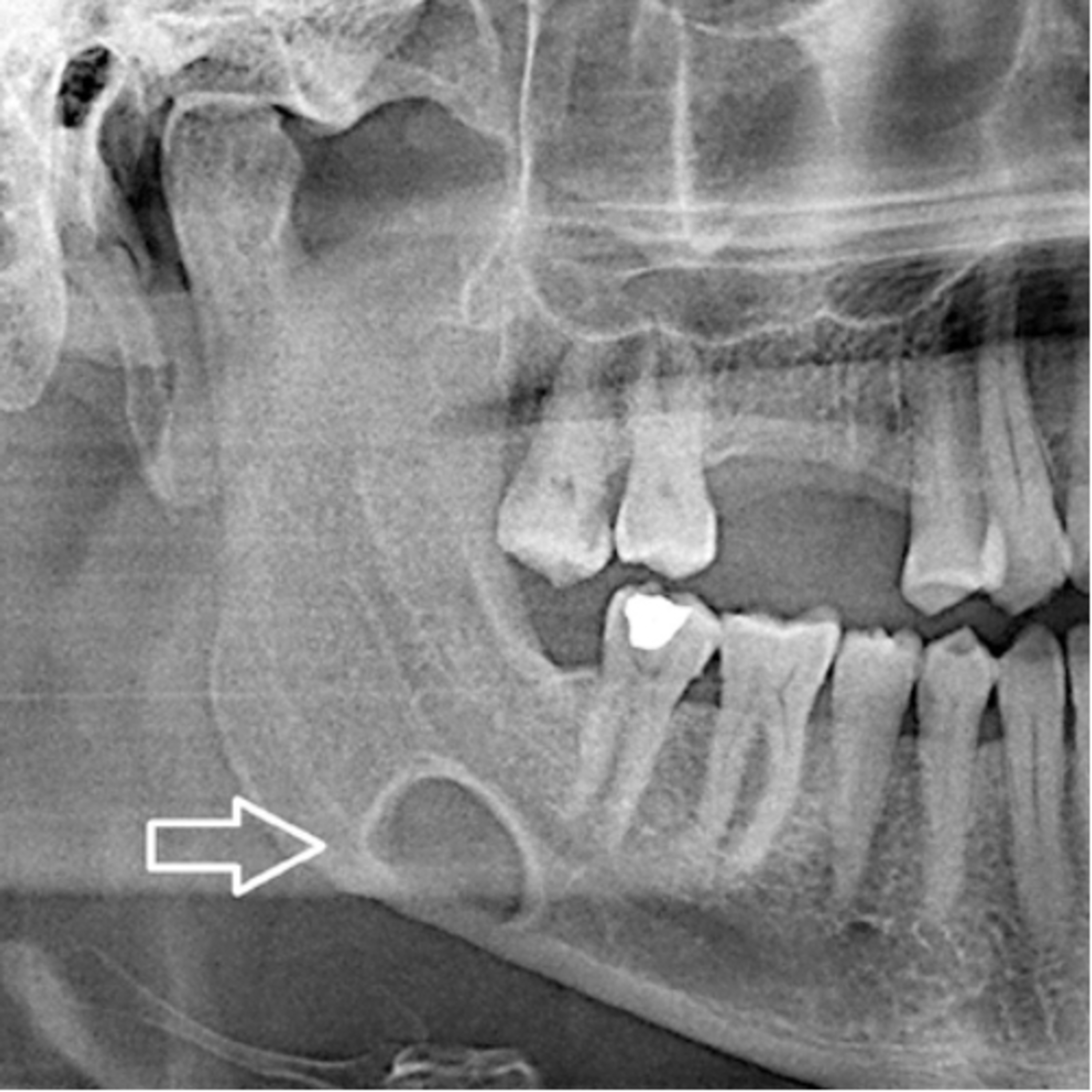
6.4.24 Quick Review #141 - #pathology #oralpathology #doctorgallagher #oralsurgery #oralsurgeon #dentist #dentistry #dental An aneurysmal bone cyst (ABC) and a Stafne bone defect (SBD) are both bone lesions but they differ significantly in their nature, location, and clinical implications: Aneurysmal Bone Cyst (ABC) 1. Nature: - ABCs are benign but potentially aggressive bone lesions. - They are characterized by blood-filled spaces separated by connective tissue septa containing osteoid tissue and osteoclast giant cells. 2. Location: - ABCs can occur in any bone but are most commonly found in the long bones and the vertebrae. - They are relatively rare in the jaws but can still occur there. 3. Etiology: - The exact cause is unknown, but they are thought to arise secondary to trauma, a vascular malformation, or as a secondary lesion to other bone tumors. 4. Clinical Features: - Symptoms often include pain, swelling, and potential pathological fractures. - They can cause significant bone expansion and destruction. 5. Radiographic Appearance: - ABCs typically appear as expansile, lytic lesions with a "soap-bubble" or "honeycomb" appearance. - They often have well-defined margins. 6. Treatment: - Treatment often involves surgical curettage, sometimes combined with bone grafting. - Recurrence can occur, so follow-up is necessary. Stafne Bone Defect (SBD) 1. Nature: - SBDs, also known as static bone cysts or Stafne cysts, are asymptomatic, non-progressive bone defects. - They are considered developmental anomalies rather than true cysts or tumors. 2. Location: - SBDs are most commonly located in the posterior mandible, typically below the mandibular canal near the angle of the jaw. - They are rarely found in other locations. 3. Etiology: - SBDs are believed to be caused by ectopic salivary gland tissue entrapped during the development of the mandible. 4. Clinical Features: - They are usually discovered incidentally on radiographs taken for other reasons. - Patients are typically asymptomatic. 5. Radiographic Appearance: - SBDs appear as well-defined, round or oval radiolucencies with a corticated border. - They are located below the inferior alveolar nerve canal. 6. Treatment: - No treatment is required as they are benign and non-progressive. - Periodic radiographic monitoring may be done to confirm stability. References: 1. Castilho, E. C., Vieira, E. M., & Cavalcanti, H. G. (2018). Stafne bone cavity containing ectopic parotid gland. Brazilian Journal of Otorhinolaryngology, 84(5), 676-679. 2. Miloro, M., Ghali, G. E., Larsen, P. E., & Waite, P. (Eds.). (2022). Peterson’s Principles of Oral and Maxillofacial Surgery (4th ed.). Springer. 3. Abubaker, A.O., Lam, D., & Benson, K. (2016). OMFS Secrets (3rd ed.). Elsevier. 4. ChatGPT. 2024. #podcast #podcasts #dentalpodcast #dentalpodcasts #doctorgallagherpodcast #doctorgallagherspodcast
What this episode covers
6.4.24 Quick Review #141 - #pathology #oralpathology #doctorgallagher #oralsurgery #oralsurgeon #dentist #dentistry #dental An aneurysmal bone cyst (ABC) and a Stafne bone defect (SBD) are both bone lesions but they differ significantly in their nature, location, and clinical implications: Aneurysmal Bone Cyst (ABC) 1. Nature: - ABCs are benign but potentially aggressive bone lesions. - They are characterized by blood-filled spaces separated by connective tissue septa containing osteoid tissue and osteoclast giant cells. 2. Location: - ABCs can occur in any bone but are most commonly found in the long bones and the vertebrae. - They are relatively rare in the jaws but can still occur there. 3. Etiology: - The exact cause is unknown, but they are thought to arise secondary to trauma, a vascular malformation, or as a secondary lesion to other bone tumors. 4. Clinical Features: - Symptoms often include pain, swelling, and potential pathological fractures. - They can cause significant bone expansion and destruction. 5. Radiographic Appearance: - ABCs typically appear as expansile, lytic lesions with a "soap-bubble" or "honeycomb" appearance. - They often have well-defined margins. 6. Treatment: - Treatment often involves surgical curettage, sometimes combined with bone grafting. - Recurrence can occur, so follow-up is necessary. Stafne Bone Defect (SBD) 1. Nature: - SBDs, also known as static bone cysts or Stafne cysts, are asymptomatic, non-progressive bone defects. - They are considered developmental anomalies rather than true cysts or tumors. 2. Location: - SBDs are most commonly located in the posterior mandible, typically below the mandibular canal near the angle of the jaw. - They are rarely found in other locations. 3. Etiology: - SBDs are believed to be caused by ectopic salivary gland tissue entrapped during the development of the mandible. 4. Clinical Features: - They are usually discovered incidentally on radiographs taken for other reasons. - Patients are typically asymptomatic. 5. Radiographic Appearance: - SBDs appear as well-defined, round or oval radiolucencies with a corticated border. - They are located below the inferior alveolar nerve canal. 6. Treatment: - No treatment is required as they are benign and non-progressive. - Periodic radiographic monitoring may be done to confirm stability. References: 1. Castilho, E. C., Vieira, E. M., & Cavalcanti, H. G. (2018). Stafne bone cavity containing ectopic parotid gland. Brazilian Journal of Otorhinolaryngology, 84(5), 676-679. 2. Miloro, M., Ghali, G. E., Larsen, P. E., & Waite, P. (Eds.). (2022). Peterson’s Principles of Oral and Maxillofacial Surgery (4th ed.). Springer. 3. Abubaker, A.O., Lam, D., & Benson, K. (2016). OMFS Secrets (3rd ed.). Elsevier. 4. ChatGPT. 2024. #podcast #podcasts #dentalpodcast #dentalpodcasts #doctorgallagherpodcast #doctorgallagherspodcast
NOW PLAYING
“What Is The Difference Between An Aneurysmal Bone Cyst And Stafne Bone Defect?”
No transcript for this episode yet
Similar Episodes
Dec 5, 2025 ·50m
Oct 9, 2025 ·33m
Oct 3, 2025 ·40m
Sep 11, 2025 ·31m
Aug 27, 2025 ·39m
Aug 18, 2025 ·54m