
EPISODE · Feb 25, 2026 · 13 MIN
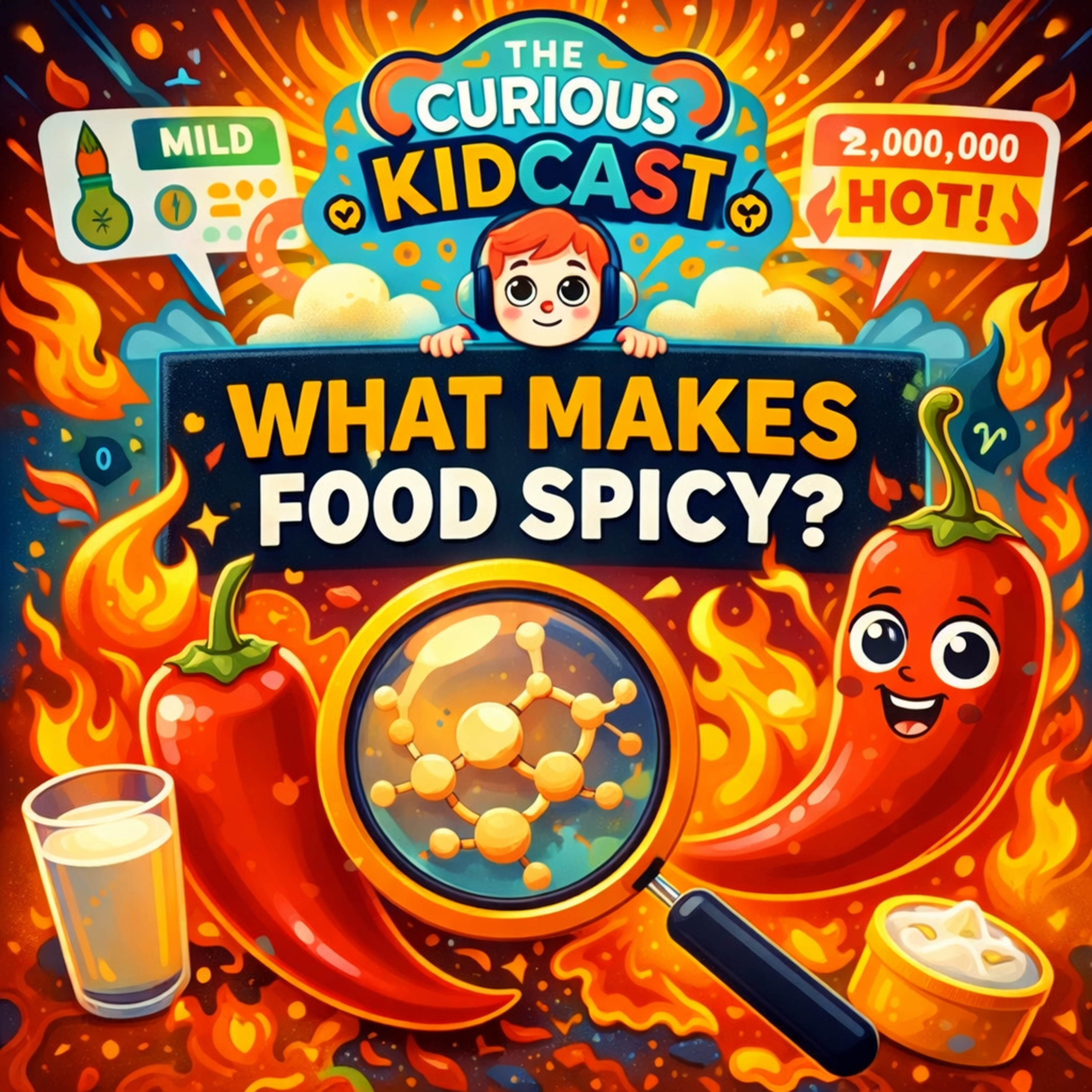
What Makes Food Spicy? | Science Podcast for kids
from The Curious Kidcast · host Andy & Charlie
Spicy food isn't actually hot. There are no flames, no sparks, and nothing burning in your mouth at all — and yet your eyes water, your face turns red, and you start desperately fanning your tongue like a penguin trying to take off. In this episode, Charlie digs into the brilliant, bizarre science behind what spice really is, why your brain gets completely fooled, and how a single tiny molecule inside a chilli pepper has been outwitting mammals for thousands of years.What You Will Learn in This EpisodeThis episode covers how a chemical called capsaicin works, why it tricks your brain's heat sensors into firing even when there is no real heat, and why your body responds with sweating, tears, and a racing heart. We also explore why spicy food can feel exciting and even pleasurable thanks to endorphins, the body's natural feel-good chemicals.We look at the chilli plant's surprisingly clever evolutionary strategy: using capsaicin to repel mammals while letting birds eat freely and carry seeds far and wide. Birds, it turns out, cannot feel spice at all. Their heat receptors are simply different.Charlie also explains why water makes a spicy mouth worse (capsaicin is oily and water just spreads it around), why milk genuinely works (a protein called casein grabs onto capsaicin molecules and removes them), and how different spices like wasabi, black pepper, and Sichuan pepper each create completely different sensations.Why This Episode Is Great for Homeschooling and Learning at HomeThis episode connects naturally to several areas of science that children aged 7 to 11 encounter in school and home learning. The story of capsaicin introduces the idea that our senses can be tricked, which opens up discussions about how the nervous system works, how the brain processes signals, and why we feel pain. The concept that spicy is a pain signal rather than a taste is genuinely surprising to most children and adults alike, making it a brilliant entry point for conversations about the five senses and how they are sometimes more complex than we think.The section on plant evolution and why chilli peppers developed capsaicin in the first place is a natural fit for topics in biology covering adaptation, survival strategies, and the relationship between plants and animals. The bird and mammal contrast provides a clear, memorable example of how different species can experience the same thing in completely different ways.The Scoville Scale introduces a real-world example of how scientists measure and compare things, connecting to maths and data skills as well as science. The milk and water explanation is a simple, practical lesson in chemistry: oil and water do not mix, and knowing why helps children understand solutions, mixtures, and how the body interacts with food.Related Topics to ExploreIf this episode sparked curiosity, here are some related areas to explore further. The human nervous system and how pain signals travel from nerve endings to the brain. Plant evolution and defence strategies, including thorns, toxins, and other adaptations. The science of taste and smell, and how the two senses work together when we eat. The history of spices in food, cooking, and trade around the world. Endorphins, the brain's reward system, and how the body manages discomfort.Do you have a question you would like Charlie to answer on the show? Visit curiouskidcast.com to send it in. If you enjoyed this episode, please share it with a friend, subscribe so you never miss a new episode, and leave a review wherever you listen. Every curious question helps.Full episode transcript available at curiouskidcast.com · The Curious Kidcast is suitable for children aged 7–11 and is designed to be enjoyed by families together.
What this episode covers
Spicy food isn't actually hot. There are no flames, no sparks, and nothing burning in your mouth at all — and yet your eyes water, your face turns red, and you start desperately fanning your tongue like a penguin trying to take off. In this episode, Charlie digs into the brilliant, bizarre science behind what spice really is, why your brain gets completely fooled, and how a single tiny molecule inside a chilli pepper has been outwitting mammals for thousands of years.What You Will Learn in This EpisodeThis episode covers how a chemical called capsaicin works, why it tricks your brain's heat sensors into firing even when there is no real heat, and why your body responds with sweating, tears, and a racing heart. We also explore why spicy food can feel exciting and even pleasurable thanks to endorphins, the body's natural feel-good chemicals.We look at the chilli plant's surprisingly clever evolutionary strategy: using capsaicin to repel mammals while letting birds eat freely and carry seeds far and wide. Birds, it turns out, cannot feel spice at all. Their heat receptors are simply different.Charlie also explains why water makes a spicy mouth worse (capsaicin is oily and water just spreads it around), why milk genuinely works (a protein called casein grabs onto capsaicin molecules and removes them), and how different spices like wasabi, black pepper, and Sichuan pepper each create completely different sensations.Why This Episode Is Great for Homeschooling and Learning at HomeThis episode connects naturally to several areas of science that children aged 7 to 11 encounter in school and home learning. The story of capsaicin introduces the idea that our senses can be tricked, which opens up discussions about how the nervous system works, how the brain processes signals, and why we feel pain. The concept that spicy is a pain signal rather than a taste is genuinely surprising to most children and adults alike, making it a brilliant entry point for conversations about the five senses and how they are sometimes more complex than we think.The section on plant evolution and why chilli peppers developed capsaicin in the first place is a natural fit for topics in biology covering adaptation, survival strategies, and the relationship between plants and animals. The bird and mammal contrast provides a clear, memorable example of how different species can experience the same thing in completely different ways.The Scoville Scale introduces a real-world example of how scientists measure and compare things, connecting to maths and data skills as well as science. The milk and water explanation is a simple, practical lesson in chemistry: oil and water do not mix, and knowing why helps children understand solutions, mixtures, and how the body interacts with food.Related Topics to ExploreIf this episode sparked curiosity, here are some related areas to explore further. The human nervous system and how pain signals travel from nerve endings to the brain. Plant evolution and defence strategies, including thorns, toxins, and other adaptations. The science of taste and smell, and how the two senses work together when we eat. The history of spices in food, cooking, and trade around the world. Endorphins, the brain's reward system, and how the body manages discomfort.Do you have a question you would like Charlie to answer on the show? Visit curiouskidcast.com to send it in. If you enjoyed this episode, please share it with a friend, subscribe so you never miss a new episode, and leave a review wherever you listen. Every curious question helps.Full episode transcript available at curiouskidcast.com · The Curious Kidcast is suitable for children aged 7–11 and is designed to be enjoyed by families together.
NOW PLAYING
What Makes Food Spicy? | Science Podcast for kids
No transcript for this episode yet
Similar Episodes
No similar episodes found.
Similar Podcasts
No similar podcasts found.