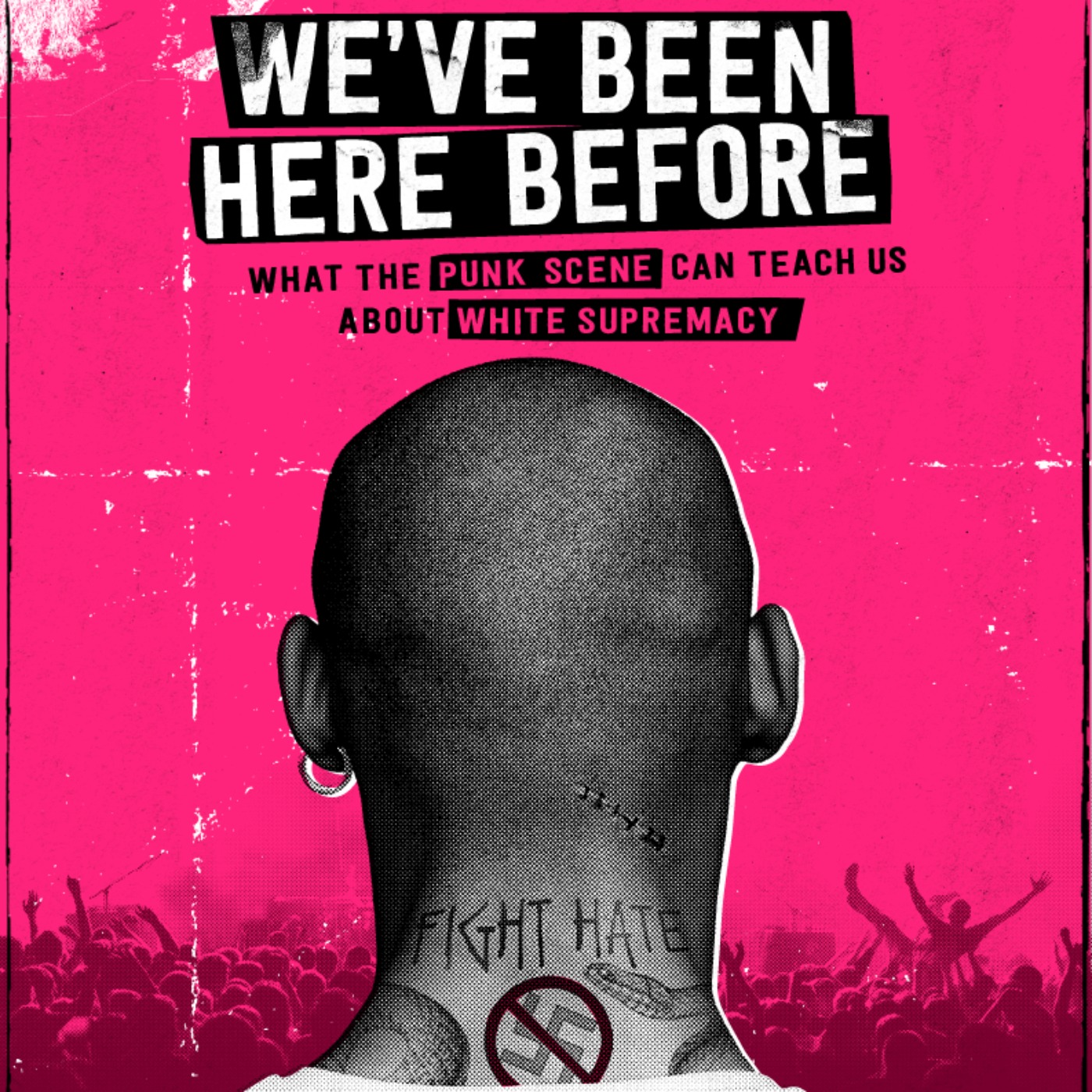
What punk subcultures can teach us about resisting hate episode artwork

EPISODE · May 29, 2026 · 1H 12M

What punk subcultures can teach us about resisting hate

from Berkeley Talks

Across the American West Coast in the 1980s, the burgeoning punk rock and skinhead scenes were much more than just raw music and counterculture fashion — they quickly became contested ground in an ideological battle against white supremacy. Neo-Nazi groups actively targeted these subcultures to recruit alienated kids, and anti-racist punks were forced to step up in response, organizing grassroots community defense networks, confronting extremist infiltration and building alternative spaces rooted in inclusion.Those strategies — forged in clubs, at shows and within tight-knit local scenes — offer a vital, real-world blueprint for confronting today’s mainstream political crises, according to a recent panel discussion at UC Berkeley.The May 3 event, which headlined the second annual Jewish Arts and Book Fest hosted by the Magnes Collection of Jewish Art and Life, began with a screening of We've Been Here Before, a 2023 documentary short chronicling these subcultural struggles. Following the film, the program brought together the film's director, Jacob Kornbluth, and anti-racist activists Eric Ward, who's featured in the film, and Dion Garcia to explore how lessons from that fringe resistance can help heal a fractured modern society.For Ward and Garcia, the history of that resistance is deeply personal. In their youth, protecting music scenes from infiltration meant building solidarity and making sure marginalized voices were not pushed out. Yet Garcia said that looking back on the intensity of that era, he also remembers its emotional toll.“Hate is a horrible word and it's a horrible thing to carry,” Garcia said. “I don't like carrying that.”The speakers argued that the same divisive tactics that targeted 1980s youth have now mutated into mainstream public discourse. Ward, a leading expert on organized hate, explained that modern antisemitism functions on the far right as a "racialized other,” scapegoating Jewish communities as “puppet masters” of social grievances.  Today, Ward warned, society is trapped in a dangerous "sectarian moment" where nuance is erased in favor of absolute polarization, particularly surrounding global conflicts."No one wants nuance," Ward said, critiquing how people today build political identities out of distant tragedies. He noted that such political theater often comes "at the expense of the most actual vulnerable, Israelis and Palestinians, who still have to live in the real world each and every day."Ultimately, the talk underscored that the path forward requires looking past ideological purity and reclaiming the cultural spaces where lonely or alienated individuals seek community. True resistance to racism and antisemitism, the speakers concluded, lies in a shared commitment to contesting these complicated spaces, finding "strange allies" across different backgrounds and strengthening the foundation of an inclusive democracy."I would argue this alliance between those of us who identify in the mainstream and empathy for people who are existing in these kind of fringe subcultures is something that I think we could all work on," said Kornbluth. "I think it's something new to a lot of folks who are thinking about where and how to fight back ... but I think it's a little piece to how we can heal ourselves." This event was sponsored by the Magnes Collection of Jewish Art and Life at Berkeley.Listen to the episode and read the transcript on UC Berkeley News (news.berkeley.edu/podcasts/berkeley-talks).Music by by HoliznaCC0.Image courtesy of Reboot Studios/7th Art Releasing. Hosted on Acast. See acast.com/privacy for more information.

Across the American West Coast in the 1980s, the burgeoning punk rock and skinhead scenes were much more than just raw music and counterculture fashion — they quickly became contested ground in an ideological battle against white supremacy. Neo-Nazi groups actively targeted these subcultures to recruit alienated kids, and anti-racist punks were forced to step up in response, organizing grassroots community defense networks, confronting extremist infiltration and building alternative spaces rooted in inclusion.Those strategies — forged in clubs, at shows and within tight-knit local scenes — offer a vital, real-world blueprint for confronting today’s mainstream political crises, according to a recent panel discussion at UC Berkeley.The May 3 event, which headlined the second annual Jewish Arts and Book Fest hosted by the Magnes Collection of Jewish Art and Life, began with a screening of We've Been Here Before, a 2023 documentary short chronicling these subcultural struggles. Following the film, the program brought together the film's director, Jacob Kornbluth, and anti-racist activists Eric Ward, who's featured in the film, and Dion Garcia to explore how lessons from that fringe resistance can help heal a fractured modern society.For Ward and Garcia, the history of that resistance is deeply personal. In their youth, protecting music scenes from infiltration meant building solidarity and making sure marginalized voices were not pushed out. Yet Garcia said that looking back on the intensity of that era, he also remembers its emotional toll.“Hate is a horrible word and it's a horrible thing to carry,” Garcia said. “I don't like carrying that.”The speakers argued that the same divisive tactics that targeted 1980s youth have now mutated into mainstream public discourse. Ward, a leading expert on organized hate, explained that modern antisemitism functions on the far right as a "racialized other,” scapegoating Jewish communities as “puppet masters” of social grievances.  Today, Ward warned, society is trapped in a dangerous "sectarian moment" where nuance is erased in favor of absolute polarization, particularly surrounding global conflicts."No one wants nuance," Ward said, critiquing how people today build political identities out of distant tragedies. He noted that such political theater often comes "at the expense of the most actual vulnerable, Israelis and Palestinians, who still have to live in the real world each and every day."Ultimately, the talk underscored that the path forward requires looking past ideological purity and reclaiming the cultural spaces where lonely or alienated individuals seek community. True resistance to racism and antisemitism, the speakers concluded, lies in a shared commitment to contesting these complicated spaces, finding "strange allies" across different backgrounds and strengthening the foundation of an inclusive democracy."I would argue this alliance between those of us who identify in the mainstream and empathy for people who are existing in these kind of fringe subcultures is something that I think we could all work on," said Kornbluth. "I think it's something new to a lot of folks who are thinking about where and how to fight back ... but I think it's a little piece to how we can heal ourselves." This event was sponsored by the Magnes Collection of Jewish Art and Life at Berkeley.Listen to the episode and read the transcript on UC Berkeley News (news.berkeley.edu/podcasts/berkeley-talks).Music by by HoliznaCC0.Image courtesy of Reboot Studios/7th Art Releasing. Hosted on Acast. See acast.com/privacy for more information.

NOW PLAYING

What punk subcultures can teach us about resisting hate

0:00 1:12:02

No transcript for this episode yet

We transcribe on demand. Request one and we'll notify you when it's ready — usually under 10 minutes.

Carnivores Don't Get Sunburn - Carnivore Diet Talks Carnivores Don't Get Sunburn - Carnivore Diet Talks Welcome to “Carnivores Don’t Get Sunburn,” where we have fun and explore the carnivore diet and its transformative power. Join us as we uncover real stories from individuals who have thrived on this diet, defying convention and embracing optimal health. Plus, stay tuned for our upcoming documentary featuring diverse carnivores overcoming health challenges. Learn more at www.carnivoredietdocumentary.com.Excitingly, we’re working on an upcoming documentary where we’ll feature carnivores from various walks of life, conquering diverse health challenges. Join us on this journey and learn more at www.carnivoredietdocumentary.com.Join us in uncovering the power of the carnivore diet. Prepare to be inspired, informed, and empowered to embrace optimal health and well-being.Welcome to “Carnivores Don’t Get Sunburn: Unveiling Real Stories of the Carnivore Diet.” Stay tuned for our upcoming documentary. Discover how this lifestyle can transform lives. Learn more at www.carnivoredietdocumentary.com IT IS WHAT IT IS with SHALLZ - SHALLY ZOMORODI Shally Zomorodi What?  "It is what it is" with ShallZ – Shally ZomorodiWhen? WeeklyHow long? 35 minutesEvery week, Mother of 4, wife, morning TV news anchor and ultimate hostess, Shally Zomorodi talks about life - its up's and downs and how to stay on track in her weekly podcast, ‘It is what it is.’  Known for her high energy, infectious smile and ability to see the cup as half full Shally talks about all things in life and how to work through its challenges. From parenting, marriage, friendships, current events to how to smile when it just seems impossible ‘It is what it is’ is the perfect podcast to help inspire you to dance through the rain. Tracking Nuclear Weapons Programs Center for Strategic and International Studies The CSIS Proliferation Prevention Program talks to experts about transparency and nuclear weapons. Cover Stories with Chess Life US Chess Chess Life Editor John Hartmann talks to the authors of each month's Chess Life cover story.

Frequently Asked Questions

How long is this episode of Berkeley Talks?

This episode is 1 hour and 12 minutes long.

When was this Berkeley Talks episode published?

This episode was published on May 29, 2026.

What is this episode about?

Across the American West Coast in the 1980s, the burgeoning punk rock and skinhead scenes were much more than just raw music and counterculture fashion — they quickly became contested ground in an ideological battle against white supremacy. Neo-Nazi...

Can I download this Berkeley Talks episode?

Yes, you can download this episode by clicking the download button on the episode player, or subscribe to the podcast in your preferred podcast app for automatic downloads.
URL copied to clipboard!