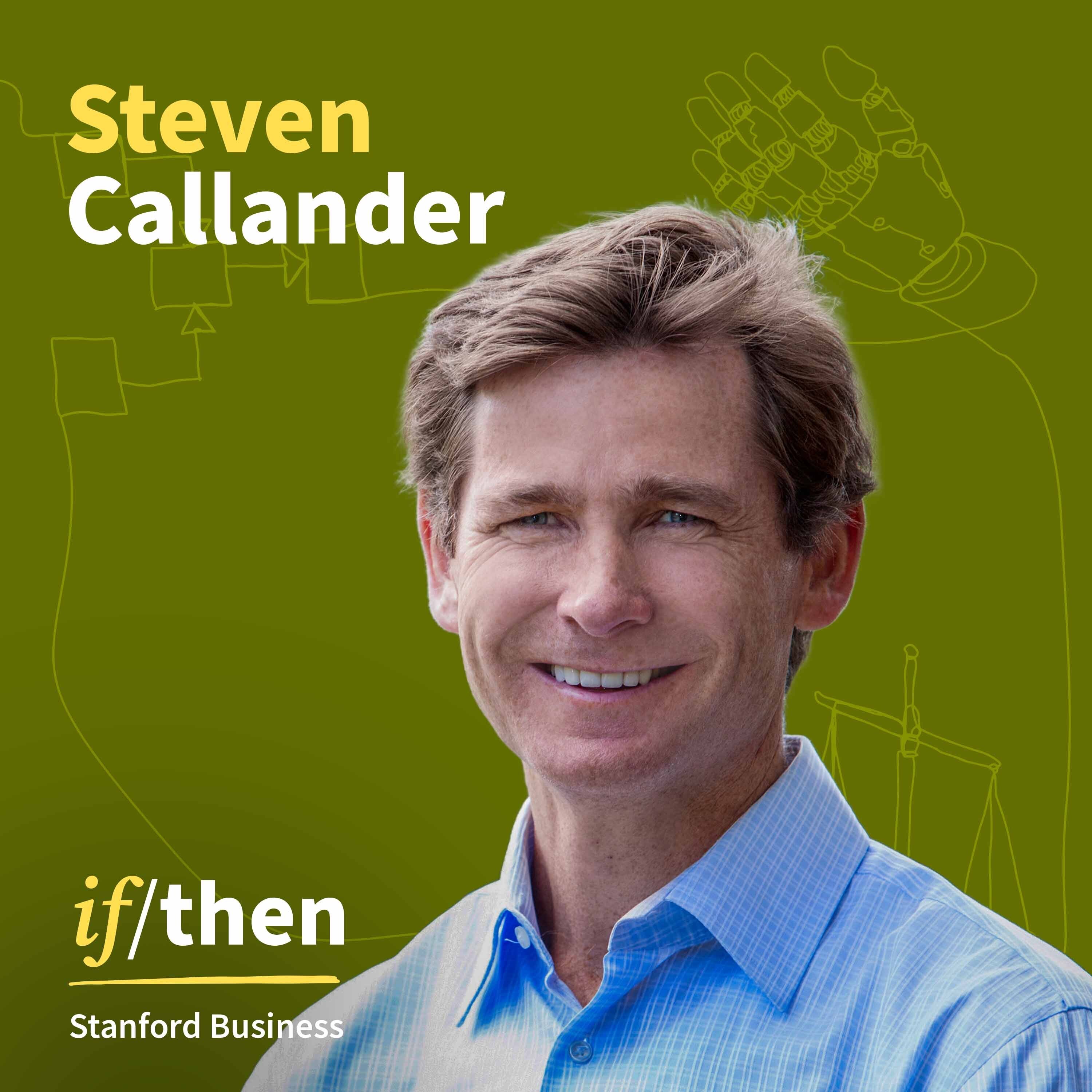
What We Actually Learn From Experience episode artwork

EPISODE · Mar 25, 2026 · 25 MIN

What We Actually Learn From Experience

from If/Then

Steven Callander has spent years building a mathematical framework to answer the question of how people learn from experience. “Here in Silicon Valley, the expression that you learn from failure is very widespread and very intuitive. But the question is… what do you learn? How do you optimally learn from that experience?”In this episode, Callander, the Herbert Hoover Professor of Public and Private Management and Professor of Political Economy at Stanford Graduate School of Business, explains the hidden, deceptively simple logic of correlated learning — and it may change how you think about finding the right job, the right market, or the right strategy. “It fascinates me and I can't stop thinking about it,” he says.  Has theory made an impact on your life? Tell us more at [email protected] Content:Steven Callander faculty profileHow to Turn Old Ideas Into Creative Solutions to Modern ProblemsWhat We’re Still Learning from Silicon Valley’s Bank CollapseChapters:00:00 Ann Miura-Ko on learning and the search for patterns in Venture capital02:51 Introduction05:23 What is correlated learning?06:40 Where does this research apply in the real world?09:28 Brownian Motion12:45 Steven Callander’s Framework15:25 Examples of correlated learning when seeking expert advice20:53 Applying correlated learning23:57 Why correlated learning research?24:51 ConclusionIf/Then, from Stanford GSB, features conversations with faculty that explore how their research deepens our understanding of business and leadership.See Privacy Policy at https://art19.com/privacy and California Privacy Notice at https://art19.com/privacy#do-not-sell-my-info.

NOW PLAYING

What We Actually Learn From Experience

0:00 25:56

No transcript for this episode yet

We transcribe on demand. Request one and we'll notify you when it's ready — usually under 10 minutes.

No similar episodes found.

Accidental Accountant Regan Williams Hi, I'm Regan! I'm a CPA of 30+ years helping "accidental accountants" navigate tax & accounting issues with confidence! Here, we find solutions to common challenges bookkeepers, accountants and CPAs face. Don't see an answer to your question? Then ask! I'm here to help people like you. Tweens and Dreams Anna B 💕 Hi! I’m Anna, a 12 year old in seventh grade! I’m a theater kid! (HAMILTON IS GOD!!) I post about a variety of things; some of these things include journaling, TV shows/movies, music, shopping, theater, books, etc. If you have any episode requests please comment and I will do my best to do them! If you have any movie, TV show, book, or music recommendations I would love to hear them so please comment!! I’m always looking for more TV shows, movies, books, and music artists to watch/read/listen to! But anyways, I hope you enjoy listening 💕💕 Mind The Music Radio - Artist Well-Being In Electronic Music The Unicorn Mothership This radio show explores artist well-being in electronic music from a holistic viewpoint. In a series of exclusive interviews with artists and people with active roles both inside the music industry and on the outskirts of it, Eline shares with you her devotion to artist well-being and how we can provide support for artists in electronic music. The music is handpicked for each show by the guests themselves for an extra personal, mindful experience. This show runs monthly on Reform Radio, Manchester. Join in live at reformradio.co.uk or listen back online! Warning! The jingle contains binaural beats for brainwave entrainment, which only has an effect when using headphones. It is played at the beginning of the show, lasting about 45 seconds. If you’re prone to seizures, it may be best not to listen to the jingle through headphones or skip it altogether. Song Against Songs, The by G. K. Chesterton (1874 - 1936) LibriVox LibriVox volunteers bring you 9 recordings of The Song Against Songs by G. K. Chesterton. This was the Fortnightly Poetry project for October 16, 2011.Chesterton was a large man, standing 6 feet 4 inches (1.93 m) and weighing around 21 stone (130 kg; 290 lb). His girth gave rise to a famous anecdote. During World War I a lady in London asked why he was not 'out at the Front'; he replied, 'If you go round to the side, you will see that I am.' On another occasion he remarked to his friend George Bernard Shaw: "To look at you, anyone would think a famine had struck England". Shaw retorted, "To look at you, anyone would think you have caused it". P. G. Wodehouse once described a very loud crash as "a sound like Chesterton falling onto a sheet of tin."( Summary from Wikipedia )

Frequently Asked Questions

How long is this episode of If/Then?

This episode is 25 minutes long.

When was this If/Then episode published?

This episode was published on March 25, 2026.

What is this episode about?

Steven Callander has spent years building a mathematical framework to answer the question of how people learn from experience. “Here in Silicon Valley, the expression that you learn from failure is very widespread and very intuitive. But the...

Can I download this If/Then episode?

Yes, you can download this episode by clicking the download button on the episode player, or subscribe to the podcast in your preferred podcast app for automatic downloads.
URL copied to clipboard!