
EPISODE · Jul 2, 2026 · 7 MIN
What's In a Pronoun
from Street Smart Naturalist · host David B. Williams
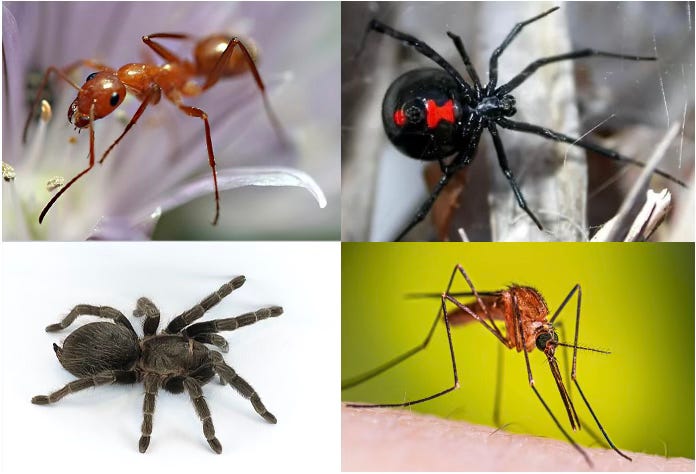
Three years ago, I sent out a newsletter about the use of the word it to refer to animals. Now that I am more experienced with trying to meet this goal and to paying more attention to how people use it, I wanted to return to the subject. Based on recent articles and books I have read, the use of it is still rampant and the main way people indicate an animal, whether they know the animal’s sex or not. For example, I often read news articles about a doe or buck, sow or boar, hen or rooster, terms that specifically indicate female or male, and yet, the author describes the deer, pig, or chicken as it. Why? When we use the reductive it, we rob animals of their animacy, and of their agency. We know that animals are living, breathing beings, just like us, and, like us again, they also have agency. They are sentient and able to adapt to changing situations. They are individuals with personality. If you have any doubt, just take a few minutes and watch a gathering of crows; clearly these are animals with a dynamic, personal, and thoughtful relationship to their world. And, if you’ve ever been flight-bombed by crows (often during fledging season), you’ll know that they have strong opinions about our species, too.While I have been trying consciously to not use it when writing about animals, I confess that I struggle with invertebrates. (And I like to think of myself as a FOB, or Friend of Bugs!) That big bug over there, it’s gotta be an it. Doesn’t it? Ascribing sex to a spider or Jerusalem cricket or geoduck or worm can seem a bit odd, but luckily for us, some invertebrates make the task easier than for many vertebrates. Consider the following. Every big, shiny black widow spider with a red hourglass is female; males are small and non-biting, and in fact, sometimes become a progeny-feeding meal. Practically all tarantulas roaming the landscape are males, on the hunt for a mate. The ants you see, they’re females, out doing the hard work of keeping their colony alive and well. Same with mosquitoes; every mosquito bite you have gotten is from a hungry female seeking your blood.More challenging are the species where you could be right or wrong with sex. For example, our local Olympia oysters switch back and forth without regard to age or season between being male and female. As one early biologist wrote: “all possible intergradations between the different phases…are found in young animals, so that it is frequently impossible to assign the individuals to any one of the principal phases of sexuality.” Then we have everyone’s favorite garden slinkers, slugs; with both male and female parts, they are hermaphroditic, thus they, though again that’s a human construct on sex.Prompted by Rob Macfarlane’s book, Is a River Alive?, I have also begun to try and move away from it in reference to what are typically perceived as inanimate objects, such as mountains, rocks, rivers, and cliffs. Not only it but also pronouns such as that and which. As Rob writes, he prefers to “speak of rivers who flow and forests who grow,” in contrast to that flow or which grow. A subtle but a profound reframing.As part of his quest to answer the question of his title, he also writes of “daylight[ing] long-buried ways of feeling about water…and to see what transforms when rivers are recognized as both alive and killable. If you find it hard to think of a river as alive, he notes, try picturing a dying river or a dead river.” Sadly, writes Rob, for many people that is not hard; they simply have to find the nearest river and see the challenges the river has faced and continues to face from neglect, pollution, and habitat degradation. When one begins to see a river or mountain or cliff as alive, one opens a world of possibility and responsibility. No longer simply confined to be a disjointed, unconnected thing, or other, these entities now join the larger body of what we think of as our community, our kith and kin. I suspect that most of us have an idea of what is meant by kin, but kith is an odd word, rarely uttered except in connection with its sister kin. Kith dates back to the Old English cyðð, meaning “kinship, knowledge, acquaintance, and familiarity.” To me, this original meaning of kith carries a powerful evocation of place, of what I have been trying to do as a writer, that is to learn the cultural and natural histories of my chosen home so that I feel grounded and rooted to my surroundings.On one level, I find this new way of thinking immensely appealing. I want to use who and he and she and to excise my use of it. Doing this with animals feels natural and easy; they have eyes and mouths and breathe and give birth and I cannot help but sense their animacy. I want to see and feel and experience mountains and rivers as alive and animate, too, but do not find the change easy to accomplish. I struggle to unlearn a lifetime of thinking and speaking and writing and my very literal view of the world. I don’t expect my change to happen quickly, and I know that I will continue use it inadvertently. I also know that as I have tried to move away from it over the past few years that I have felt more kith and kin with the wildness around me. Get full access to Street Smart Naturalist: Explorations of the Urban Kind at streetsmartnaturalist.substack.com/subscribe
NOW PLAYING
What's In a Pronoun
No transcript for this episode yet
Similar Episodes
No similar episodes found.
Similar Podcasts
No similar podcasts found.