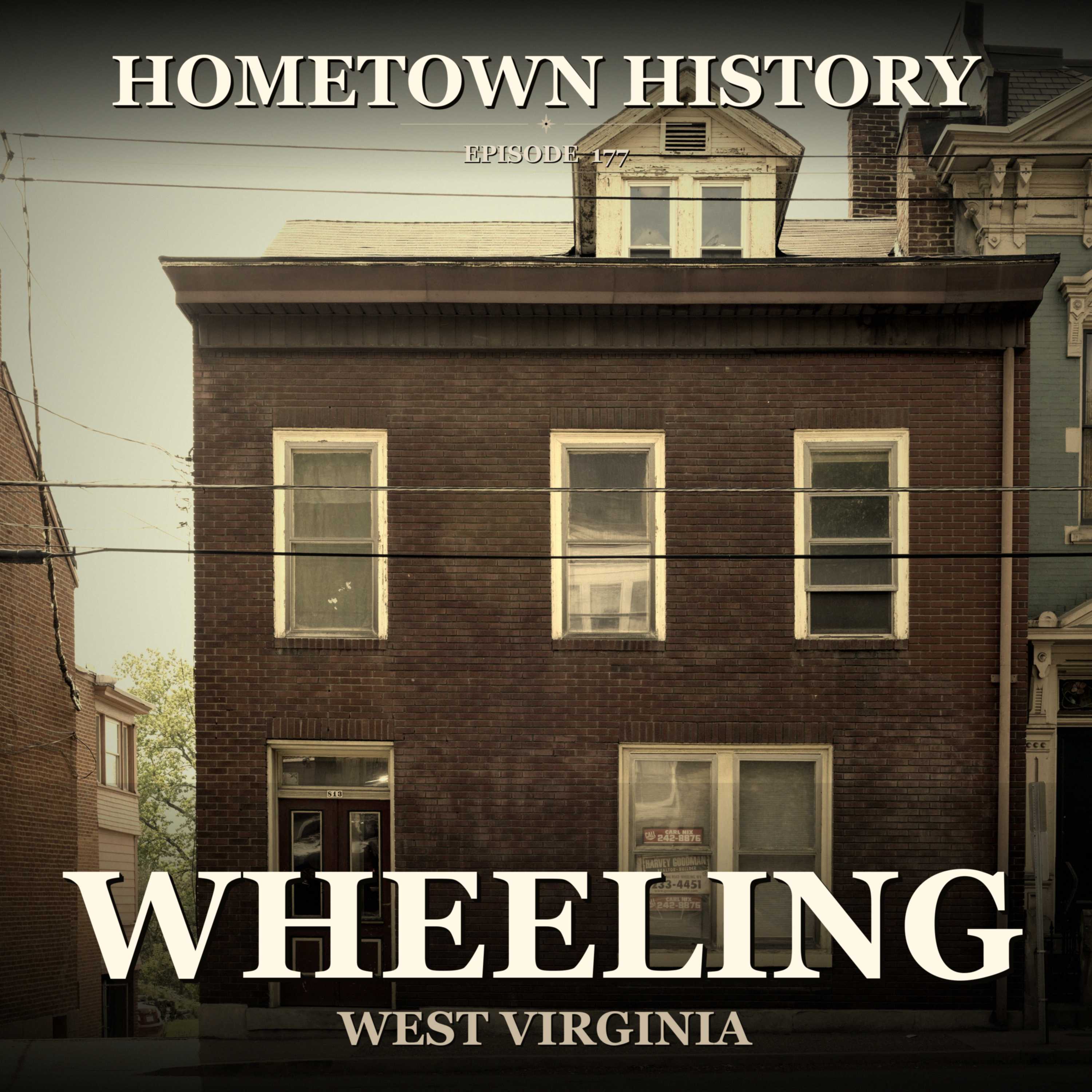
Wheeling, West Virginia: When Steel Workers Became Radio Stars episode artwork

EPISODE · Dec 2, 2025 · 24 MIN

Wheeling, West Virginia: When Steel Workers Became Radio Stars

from Hometown History · host Shane Waters

The StoryIn the depths of the Great Depression, when unemployment in West Virginia topped 25% and families struggled to afford even basic necessities, something remarkable happened in Wheeling. Steel workers—machinists, crane operators, stenographers—became national radio celebrities. Their show, "It's Wheeling Steel," reached millions of Americans coast to coast and proved that working-class people weren't just audiences—they were artists.The man behind this unlikely experiment was John L. Grimes, advertising director for the Wheeling Steel Corporation. For six years, from 1930 to 1936, Grimes lobbied his bosses with a radical idea: create a radio variety show featuring only company employees and their families as performers. His executives were skeptical. Why would anyone want to listen to factory workers sing and play music? But Grimes saw something they didn't—untapped talent, community pride, and an advertising opportunity that could transform both the company's image and employee morale.On November 8, 1936, "It's Wheeling Steel" debuted on Wheeling's WWVA radio station. The half-hour program featured light classics, popular songs, and show tunes performed by an orchestra of local musicians and amateur headliner performers—all drawn from Wheeling Steel's extended family of employees. Grimes maintained strict requirements: every performer, every producer, every arranger had to work for Wheeling Steel Corporation or be an immediate family member. Even when professional talent like singer Regina Colbert joined the show, she was first hired as a secretary in the advertising department to meet the requirement.The program was an instant success with local audiences. The forty-two-piece orchestra, dubbed the Musical Steelmakers, featured employees who balanced grueling factory shifts with weekly rehearsals. Dorothy Ann Crowe, a company stenographer, performed solos that drew thousands of fan letters. The Steel Sisters harmonized for radio audiences between their office duties. These weren't professional entertainers—they were ordinary people with extraordinary talents, finally given a platform to shine.In January 1939, the Mutual Broadcasting System picked up "It's Wheeling Steel" for national distribution. The show's appeal proved nationwide. By 1939, the program had outgrown its studio space and moved to Wheeling's Capitol Theatre, where audiences of up to 2,400 people could watch the live broadcasts. On June 25, 1939, the Musical Steelmakers performed at the New York World's Fair before more than 26,000 attendees—one of the fair's largest outdoor performances.In 1941, "It's Wheeling Steel" jumped to NBC's Blue Network and rose to fifth place in national listener ratings. The show that skeptical executives had questioned was now competing with the biggest names in radio. For eight years, from 1936 to 1944, steel workers proved they belonged on America's biggest stages.When World War II began, the program shifted focus to support the war effort. "Buy a Bomber" broadcasts toured West Virginia cities, challenging communities to purchase enough defense bonds to buy a bomber plane. One broadcast from West Virginia University's field house generated more than $650,000 in bond sales—the largest such fundraiser in Monongalia County. Communities that met their goals had their city names painted on bomber aircraft heading into battle.The program remained at the height of its popularity when it broadcast its final episode on June 18, 1944. After 326 episodes spanning eight years, declining health forced John L. Grimes to end the show. He'd achieved what he set out to prove: that working-class Americans had talent worth celebrating, that industrial towns weren't cultural voids, and that employees could become their company's greatest ambassadors.The LegacyThe influence of "It's Wheeling Steel" extended far beyond its final broadcast. Lew Davies, the show's musical arranger, later assisted Lawrence Welk in developing a television variety show that reflected "It's Wheeling Steel's" format and character—family-oriented programming featuring a mix of light classics, popular songs, and wholesome entertainment where regular performers became audience favorites.The Capitol Theatre, where "It's Wheeling Steel" broadcast from 1939 onward, still stands at 1015 Main Street in Wheeling. After nearly two years of closure, the historic venue was purchased by the Wheeling Convention and Visitors Bureau in April 2009 and reopened that September following an $8 million restoration. Today it seats 2,400 people, hosts the Wheeling Symphony Orchestra, and welcomes over 50,000 annual attendees. You can visit it. You can sit in the seats where thousands once gathered to watch their neighbors perform on national radio.All 326 "It's Wheeling Steel" recordings are housed at the West Virginia and Regional History Center at West Virginia University, preserving the voices of steel workers who became radio stars.Timeline of Events1930: John L. Grimes begins pitching radio show concept to Wheeling Steel executivesNovember 8, 1936: "It's Wheeling Steel" debuts on WWVA radio in WheelingJanuary 1939: Mutual Broadcasting System picks up show for national distributionJune 25, 1939: Musical Steelmakers perform to 26,000+ people at New York World's Fair1939: Show moves to Capitol Theatre to accommodate larger orchestra and audiences1941: Program jumps to NBC Blue Network, reaches 5th place in national ratings1943: "Buy a Bomber" tours begin across West Virginia citiesJune 18, 1944: Final broadcast airs after 326 episodesSeptember 2009: Capitol Theatre reopens after $8 million restorationHistorical Significance"It's Wheeling Steel" pioneered a broadcasting model that had never been attempted before: an all-employee radio program featuring only company workers and their families as performers, producers, and arrangers. During America's darkest economic period, when unemployment exceeded 25% in West Virginia and industrial workers faced both economic hardship and cultural dismissal, these steel workers proved they could compete with professional entertainers on the biggest stages in America. The program demonstrated that working-class Americans possessed artistic talent worthy of national attention, challenged assumptions about who deserved to be called an "artist," and showed that employee engagement could become powerful corporate advertising. From a local Wheeling broadcast to fifth-place national ratings, from mill floors to the World's Fair, "It's Wheeling Steel" transformed how America saw its working class—not just as audiences, but as performers, not just as laborers, but as artists. That transformation, achieved by ordinary people given an extraordinary opportunity, remains the program's most enduring legacy.Advertising Inquiries: https://redcircle.com/brandsPrivacy & Opt-Out: https://redcircle.com/privacy

NOW PLAYING

Wheeling, West Virginia: When Steel Workers Became Radio Stars

0:00 24:44

No transcript for this episode yet

We transcribe on demand. Request one and we'll notify you when it's ready — usually under 10 minutes.

The 48 Laws of Power by Robert Greene (Full Audiobook) Robert Greene Amoral, cunning, ruthless, and instructive, this multi-million-copy New York Times bestseller is the definitive manual for anyone interested in gaining, observing, or defending against ultimate control – from the author of The Laws of Human Nature.In the book that People magazine proclaimed “beguiling” and “fascinating,” Robert Greene and Joost Elffers have distilled three thousand years of the history of power into 48 essential laws by drawing from the philosophies of Machiavelli, Sun Tzu, and Carl Von Clausewitz and also from the lives of figures ranging from Henry Kissinger to P.T. Barnum.Some laws teach the need for prudence (“Law 1: Never Outshine the Master”), others teach the value of confidence (“Law 28: Enter Action with Boldness”), and many recommend absolute self-preservation (“Law 15: Crush Your Enemy Totally”). Every law, though, has one thing in common: an interest in t The Laura Ingraham Show Laura Ingraham The most-watched woman in the history of cable news brings her no-holds-barred political and cultural commentary to podcasting with The Laura Ingraham Show. A bestselling author, breast cancer survivor, and mother of three internationally adopted children, Laura was the most listened-to woman in talk radio before launching her own podcast. A trailblazer across media platforms, she brings a unique perspective to this twice-weekly show, drawing on her experience as a white-collar criminal defense litigator and a Supreme Court law clerk.New episodes drop twice a week—delivering the clarity, courage, and common sense America needs. Vampires of the Paper Flower Consortium Elizabeth Guizzetti Come for the evening, stay for eternity! Paper Flower Consortium is a podcast from the largest vampire coven in Seattle. Their stories are told by Loretta Fabron Onfoy, coven historian and librarian, in the hope that the modern vampire's way of life is not lost during the next great language transformation. Some tales in this anthology are horrific, some are droll, some are filled with misadventure--just like any eternal existence. Episodes sponsored by the Paper Flower Consortium's Business Community. The history is followed by questions from curious initiates. Want to ask Lady Loretta a question about vampirism? Have a topic you want to see discussed? Email [email protected] WW2 - the Key Questions, answered by Laurence Rees. Laurence Rees A former Head of BBC TV History programmes, Laurence has specialized in writing books and making television documentaries about World War Two, the Nazis and Stalinism for thirty years. He won a BAFTA and a Peabody for his TV series 'The Nazis: A Warning from History' and a British Book Award for his book on Auschwitz, which is also the world's best selling book on this notorious camp. His book 'the Holocaust: A New History' was described by the Times as 'exemplary' and by the Daily Telegraph as 'the best single volume account of the atrocity ever written'. Educated at Oxford University, for several years he was a visiting senior fellow at the London School of Economics, London University. He holds honorary doctorates from the University of Sheffield and the Open University. Professor Robert Service, of Oxford University, described Rees as 'one of the world's experts on the Second World War'. Sir Max Hastings wrote in the Sunday Times, in a review of Laurence Rees' 'World War Two: Behi

Frequently Asked Questions

How long is this episode of Hometown History?

This episode is 24 minutes long.

When was this Hometown History episode published?

This episode was published on December 2, 2025.

What is this episode about?

The StoryIn the depths of the Great Depression, when unemployment in West Virginia topped 25% and families struggled to afford even basic necessities, something remarkable happened in Wheeling. Steel workers—machinists, crane operators,...

Is there a transcript available for this episode?

Yes, a full transcript is available for this episode. You can read the complete transcript on the episode page.

Can I download this Hometown History episode?

Yes, you can download this episode by clicking the download button on the episode player, or subscribe to the podcast in your preferred podcast app for automatic downloads.
URL copied to clipboard!