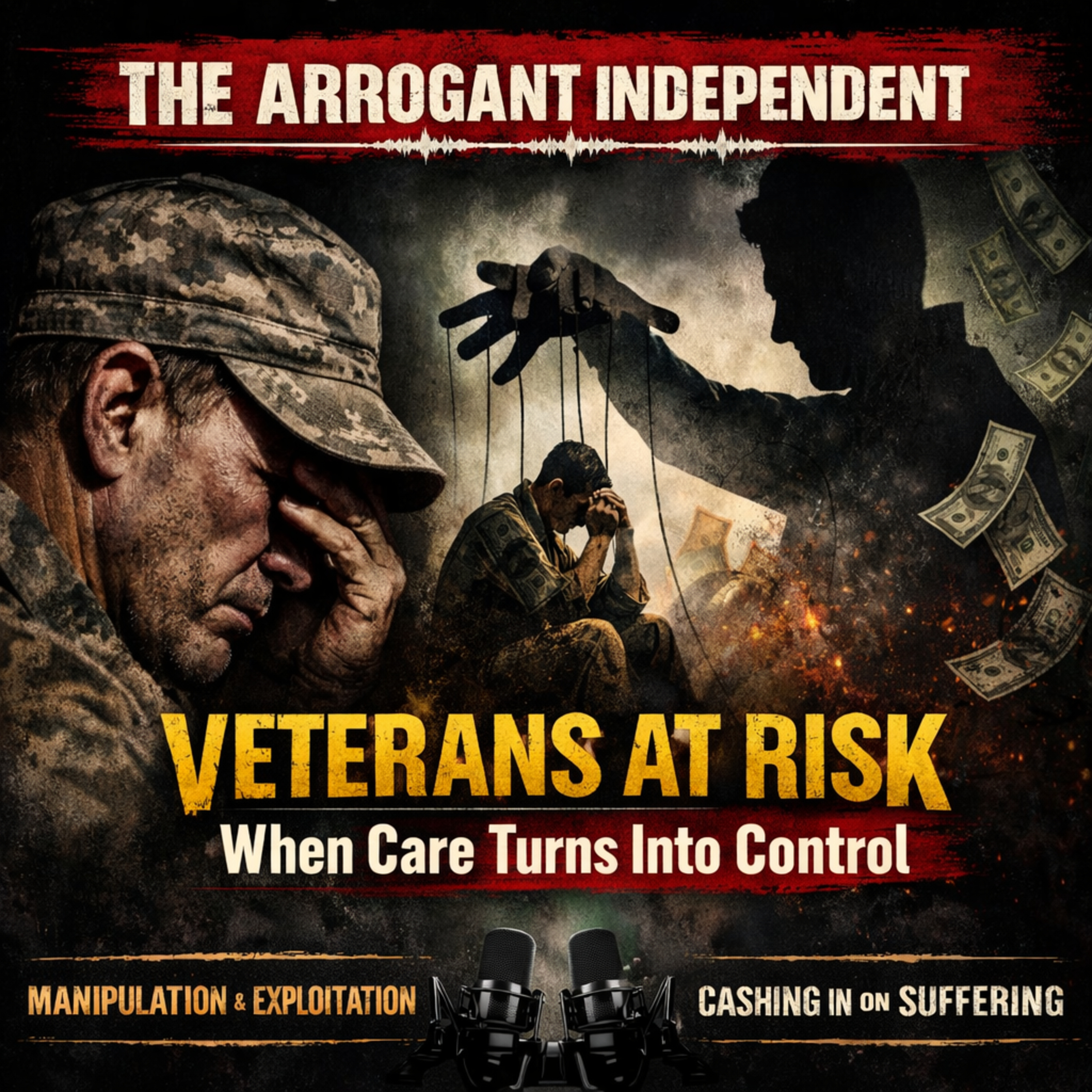
When Care Turns Into Control — And When Systems Benefit From Suffering episode artwork

EPISODE · Apr 5, 2026 · 13 MIN

When Care Turns Into Control — And When Systems Benefit From Suffering

from The Arrogant Independent · host Shawn Havens

THE ARROGANT INDEPENDENT Civic Awareness Series ——————————————— When Care Turns Into Control — And When Systems Benefit From Suffering We’ve talked about the possibility that individuals could exploit vulnerable veterans for financial gain. But there’s a harder question most people don’t want to ask: What if it’s not just individuals? What if entire systems — even organizations — unintentionally benefit when veterans remain unwell? ——————————————— Let’s be clear before going further: Most caregivers are good people.  Most organizations are trying to help.  Most professionals are doing their jobs ethically. But systems are not judged by intent alone — they are judged by incentives and outcomes. ——————————————— Here is the uncomfortable reality: Any system that ties funding, staffing levels, or program relevance to the severity of illness creates a built-in tension. If fewer veterans are struggling:→ Less funding may be allocated  → Fewer services may be required  → Fewer roles may be justified   If more veterans are struggling:→ More funding flows in → More programs expand → More positions are sustained   That doesn’t mean anyone is deliberately causing harm. But it does mean the system may not always be structurally aligned with full recovery. ——————————————— This creates what economists call a “perverse incentive.” Not a conspiracy.  Not necessarily malicious intent.   But a structure where: - Improvement can reduce resources  - Stability can reduce urgency  - Independence can reduce oversight   And in some cases, unintentionally: Chronic illness becomes more sustainable than recovery. ——————————————— For veterans dealing with trauma, this matters. A veteran struggling with mental health needs: - Independence  - Restoration  - Stability  - Dignity   Not long-term dependency reinforced by a system that quietly adapts to their suffering instead of aggressively working to resolve it. ——————————————— So what should a healthy system look like? A system that: - Rewards measurable improvement, not prolonged impairment  - Conducts independent evaluations, not single-source reporting  - Encourages transition to independence, not permanent dependency  - Protects veterans from both personal and institutional exploitation   Because exploitation is not always loud.  Sometimes it’s structural. Sometimes it’s invisible.  ——————————————— This is not about attacking caregivers or organizations. It’s about asking a necessary question: Are we building systems that help veterans heal… Or systems that become comfortable managing their illness? ——————————————— Final Thought A veteran who served this country should never become: - A paycheck  - A case file  - A funding justification - Or a long-term dependency asset   Whether that pressure comes from an individual… Or from a system. ——————————————— Real care restores independence.  Anything else deserves scrutiny. ——————————————— #TheArrogantIndependent #Veterans #Accountability #MentalHealth #PolicyMatters #Caregiving #TruthOverComfort

THE ARROGANT INDEPENDENT Civic Awareness Series ——————————————— When Care Turns Into Control — And When Systems Benefit From Suffering We’ve talked about the possibility that individuals could exploit vulnerable veterans for financial gain. But there’s a harder question most people don’t want to ask: What if it’s not just individuals? What if entire systems — even organizations — unintentionally benefit when veterans remain unwell? ——————————————— Let’s be clear before going further: Most caregivers are good people.  Most organizations are trying to help.  Most professionals are doing their jobs ethically. But systems are not judged by intent alone — they are judged by incentives and outcomes. ——————————————— Here is the uncomfortable reality: Any system that ties funding, staffing levels, or program relevance to the severity of illness creates a built-in tension. If fewer veterans are struggling:→ Less funding may be allocated  → Fewer services may be required  → Fewer roles may be justified   If more veterans are struggling:→ More funding flows in → More programs expand → More positions are sustained   That doesn’t mean anyone is deliberately causing harm. But it does mean the system may not always be structurally aligned with full recovery. ——————————————— This creates what economists call a “perverse incentive.” Not a conspiracy.  Not necessarily malicious intent.   But a structure where: - Improvement can reduce resources  - Stability can reduce urgency  - Independence can reduce oversight   And in some cases, unintentionally: Chronic illness becomes more sustainable than recovery. ——————————————— For veterans dealing with trauma, this matters. A veteran struggling with mental health needs: - Independence  - Restoration  - Stability  - Dignity   Not long-term dependency reinforced by a system that quietly adapts to their suffering instead of aggressively working to resolve it. ——————————————— So what should a healthy system look like? A system that: - Rewards measurable improvement, not prolonged impairment  - Conducts independent evaluations, not single-source reporting  - Encourages transition to independence, not permanent dependency  - Protects veterans from both personal and institutional exploitation   Because exploitation is not always loud.  Sometimes it’s structural. Sometimes it’s invisible.  ——————————————— This is not about attacking caregivers or organizations. It’s about asking a necessary question: Are we building systems that help veterans heal… Or systems that become comfortable managing their illness? ——————————————— Final Thought A veteran who served this country should never become: - A paycheck  - A case file  - A funding justification - Or a long-term dependency asset   Whether that pressure comes from an individual… Or from a system. ——————————————— Real care restores independence.  Anything else deserves scrutiny. ——————————————— #TheArrogantIndependent #Veterans #Accountability #MentalHealth #PolicyMatters #Caregiving #TruthOverComfort

NOW PLAYING

When Care Turns Into Control — And When Systems Benefit From Suffering

0:00 13:11

No transcript for this episode yet

We transcribe on demand. Request one and we'll notify you when it's ready — usually under 10 minutes.

Frequently Asked Questions

How long is this episode of The Arrogant Independent?

This episode is 13 minutes long.

When was this The Arrogant Independent episode published?

This episode was published on April 5, 2026.

What is this episode about?

THE ARROGANT INDEPENDENT Civic Awareness Series ——————————————— When Care Turns Into Control — And When Systems Benefit From Suffering We’ve talked about the possibility that individuals could exploit vulnerable veterans for financial gain. But...

Can I download this The Arrogant Independent episode?

Yes, you can download this episode by clicking the download button on the episode player, or subscribe to the podcast in your preferred podcast app for automatic downloads.
URL copied to clipboard!