
EPISODE · Jan 27, 2026 · 6 MIN
Why Bans Rarely Work: The Economics of Unintended Consequences
from The World Systems Journal · host Poornachandra Upadhya
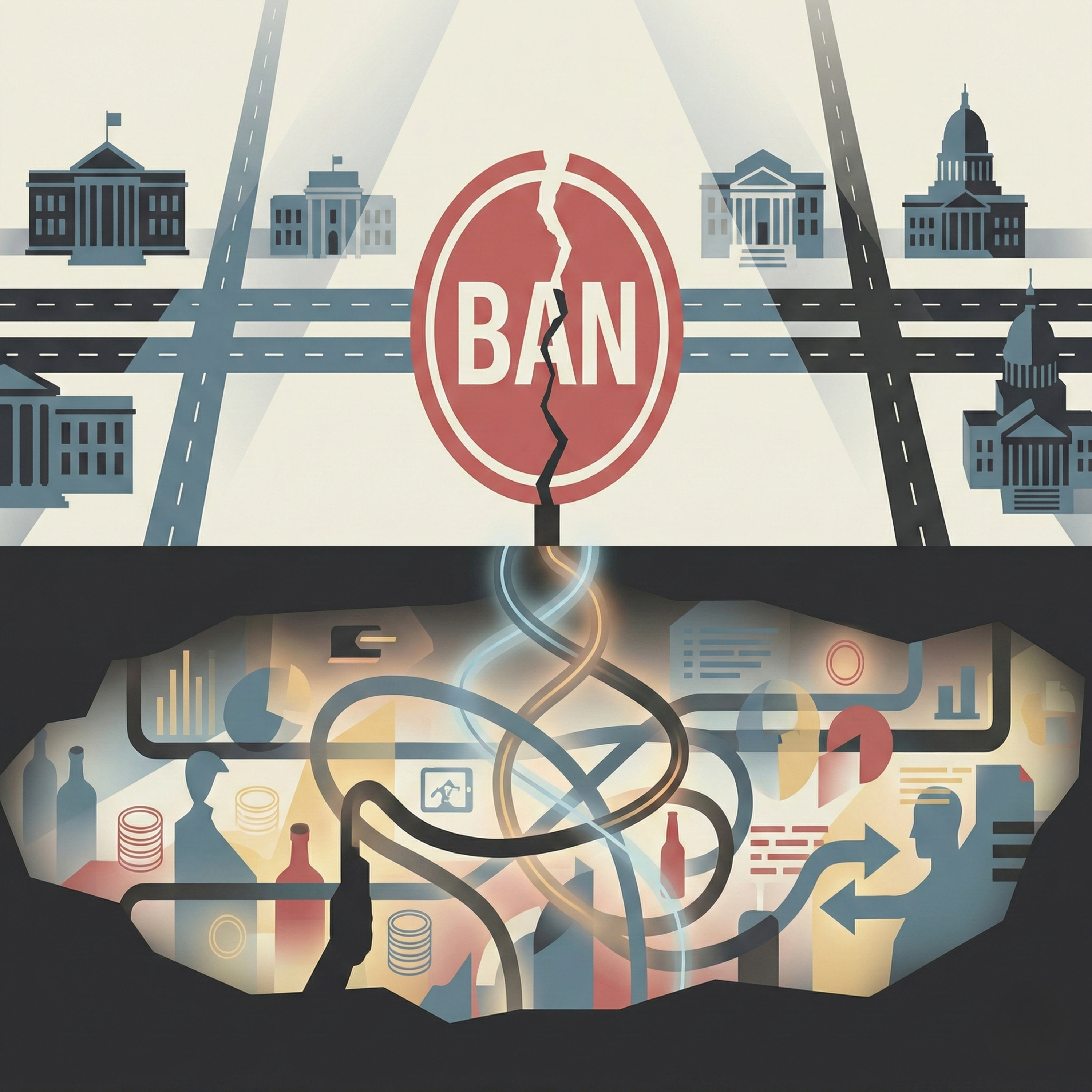
When a problem looks urgent, visible, or morally uncomfortable, banning it feels like decisive action. It sends a clear signal. It draws a sharp line between right and wrong.But in the real world, bans rarely end behaviour. They change it.In this episode, we explore why bans so often fail—not through ideology or outrage, but through the lens of economic reasoning and systems thinking.We begin with a simple insight: when demand exists, markets don’t disappear. They adapt. Bans push activity underground, raise risk premiums, reward organised crime, and often make outcomes worse than the original problem they were meant to solve.Using clear examples—from U.S. alcohol prohibition to the global war on drugs, from India’s COVID lockdowns and app bans to export controls and plastic bag bans—we trace a recurring pattern. Different countries. Different sectors. Same structure.You’ll hear about:• Why incentives matter more than intentions• How enforcement pressure increases harm• The “Iron Law of Prohibition”• Why bans disproportionately hurt the poor• How political incentives keep failed policies aliveMost importantly, we ask a harder question: if bans don’t work, what does?The answer isn’t doing nothing. It’s thinking in degrees, not binaries. It’s regulation, harm reduction, marginal improvements, and policies judged by outcomes rather than moral satisfaction.This episode is for anyone interested in public policy, governance, economics, or simply understanding why well-intentioned rules so often produce unintended consequences.Because in complex societies, the strongest policies are rarely the loudest ones.
What this episode covers
When a problem looks urgent, visible, or morally uncomfortable, banning it feels like decisive action. It sends a clear signal. It draws a sharp line between right and wrong.But in the real world, bans rarely end behaviour. They change it.In this episode, we explore why bans so often fail—not through ideology or outrage, but through the lens of economic reasoning and systems thinking.We begin with a simple insight: when demand exists, markets don’t disappear. They adapt. Bans push activity underground, raise risk premiums, reward organised crime, and often make outcomes worse than the original problem they were meant to solve.Using clear examples—from U.S. alcohol prohibition to the global war on drugs, from India’s COVID lockdowns and app bans to export controls and plastic bag bans—we trace a recurring pattern. Different countries. Different sectors. Same structure.You’ll hear about:• Why incentives matter more than intentions• How enforcement pressure increases harm• The “Iron Law of Prohibition”• Why bans disproportionately hurt the poor• How political incentives keep failed policies aliveMost importantly, we ask a harder question: if bans don’t work, what does?The answer isn’t doing nothing. It’s thinking in degrees, not binaries. It’s regulation, harm reduction, marginal improvements, and policies judged by outcomes rather than moral satisfaction.This episode is for anyone interested in public policy, governance, economics, or simply understanding why well-intentioned rules so often produce unintended consequences.Because in complex societies, the strongest policies are rarely the loudest ones.
NOW PLAYING
Why Bans Rarely Work: The Economics of Unintended Consequences
No transcript for this episode yet
Similar Episodes
No similar episodes found.
Similar Podcasts
No similar podcasts found.