
EPISODE · May 22, 2026 · 12 MIN
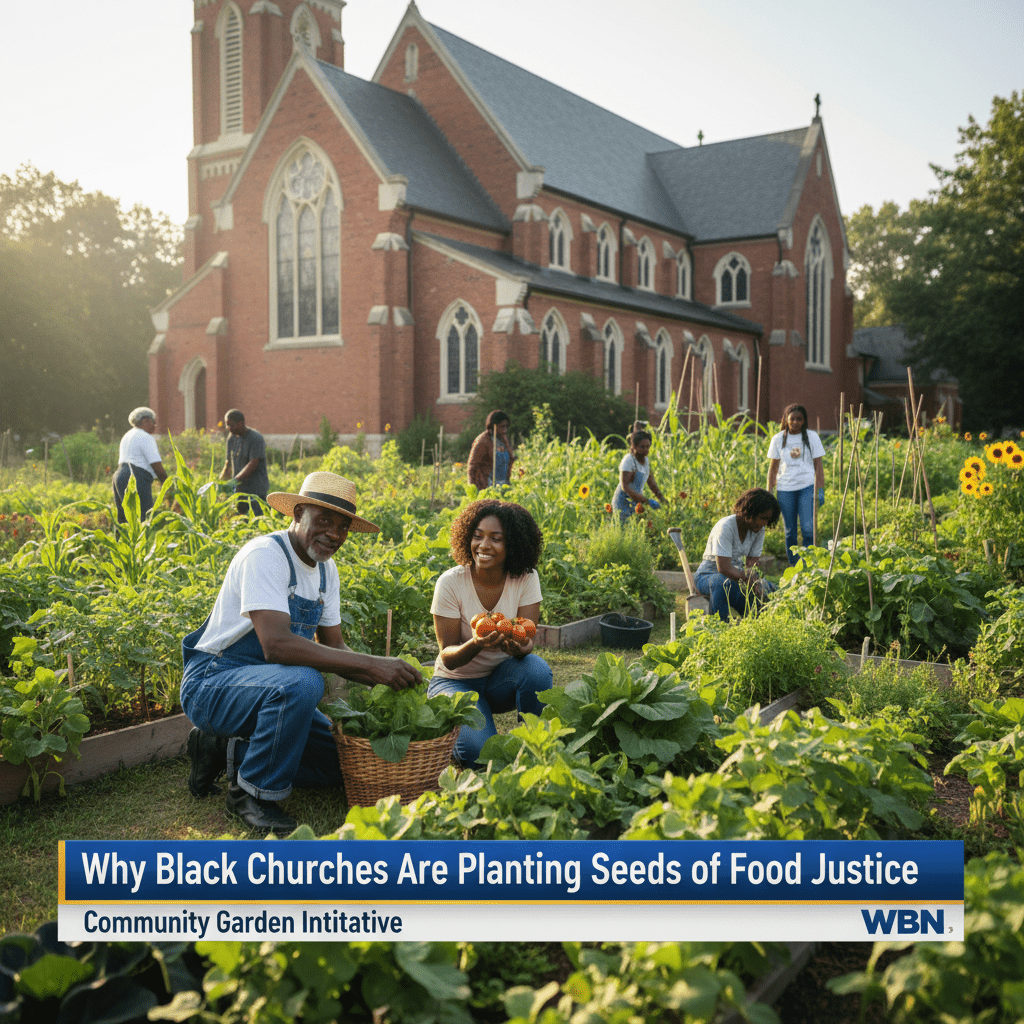
Why Black Churches Are Planting Seeds of Food Justice
from African Elements Daily · host African Elements
Discover how the "Soil to Sanctuary" model helps Black churches fight food apartheid and reclaim land to build independent, healthy food systems for communities. Why Black Churches Are Planting Seeds of Food Justice By Darius Spearman (africanelements) Support African Elements at patreon.com/africanelements and hear recent news in a single playlist. Additionally, you can gain early access to ad-free video content. A New Sanctuary on the Soil Across the United States, a quiet revolution is taking root on church lawns, parking lots, and rooftops. For decades, Black churches have operated traditional food pantries to feed hungry families. These pantries relied on canned goods and corporate leftovers. Today, a growing movement is shifting the focus from simple charity to structural food justice. Congregations are reclaiming their historical role as centers of self-determination by growing their own food and establishing independent supply chains. This shift is known as the "Soil to Sanctuary" model. It aims to dismantle systemic health inequities and combat chronic illness. Instead of waiting for external aid, communities are organizing to build their own food systems. The movement treats food access not as a matter of benevolence, but as a fundamental human right. By connecting spiritual life with agricultural self-reliance, these modern congregations are transforming how communities eat, heal, and survive. The Roots of Resistance: From Mutual Aid to Freedom Farms The connection between faith, land, and survival has deep historical roots. During the era of slavery and Jim Crow, the Black church functioned as a "quasi-state." It provided vital social safety nets that the official government actively denied to Black citizens. When commercial banks refused loans, churches pooled member tithes to provide credit, housing, and emergency assistance. This tradition of mutual aid was never about simple charity. It was a strategy for collective survival among equals (ursinus.edu). This philosophy of self-reliance became a powerful tool during the Civil Rights Movement. In 1969, activist Fannie Lou Hamer founded the Freedom Farm Cooperative in Mississippi (motherjones.com). She understood that food was a tool of political control. White landowners routinely evicted Black sharecroppers who tried to register to vote. The cooperative provided families with land to grow their own food, breaking their dependence on hostile employers. Hamer proved that self-sufficiency was a prerequisite for true political freedom (motherjones.com). During the same era, urban movements embraced similar tactics. The Black Panther Party launched its Free Breakfast for Children Program in 1969 (wikipedia.org). Utilizing church basements, the program fed tens of thousands of hungry children daily across the nation (wikipedia.org, abhmuseum.org). These early initiatives proved that feeding the community was a revolutionary act. Modern economic justice efforts draw directly from this rich history of self-determination. Understanding the Great Dispossession of Black Land To understand the necessity of the food justice movement, one must examine the history of land theft in America. In 1920, Black farmers owned nearly one million farms, representing fourteen percent of all farms in the nation (johnboydjr.com). Over the next century, that number fell precipitously. By 2022, only twenty-eight thousand Black-owned farms remained, making up a mere 1.5 percent of the national total (johnboydjr.com, investigatemidwest.org). This loss of land was not accidental. The United States Department of Agriculture earned the nickname "The Last Plantation" due to decades of systemic bias (motherjones.com). Local USDA county committees systematically denied Black farmers access to loans, disaster relief, and crop insurance (johnboydjr.com, investigatemidwest.org). Officials routinely delayed loan processing until the planting season had already passed. These discriminatory tactics forced countless families into foreclosure. Although the landmark Pigford versus Glickman lawsuit in 1997 settled some claims, the damage to generational wealth was already done (johnboydjr.com). Legal loopholes also contributed to this massive land loss. Millions of acres of Black-owned land were held as heirs' property, which is land passed down without a formal will (motherjones.com). Because the legal titles were fragmented among many descendants, families could not secure mortgages or government subsidies (investigatemidwest.org). Predatory developers exploited these legal vulnerabilities, forcing auctions that stripped families of their ancestral soil (investigatemidwest.org, motherjones.com). Reclaiming the land has become a critical step toward healing this historical wound. The Loss of Black-Owned U.S. Farms 1920: 925,000 Farms 14.0% of all US Farms 2022: 28,000 Farms 1.5% of all US Farms Source: USDA Census of Agriculture. Systemic discrimination and land loss stripped generational assets from Black farmers. Dismantling Food Apartheid and Systemic Redlining Many scholars and activists reject the commonly used term "food desert." Deserts are natural ecosystems that occur without human intervention. Instead, movement leaders use the term "food apartheid" to describe urban areas lacking fresh food access (faithandleadership.com). This term emphasizes that food scarcity is the direct result of intentional political and economic decisions. It points to a long history of institutional neglect and racial discrimination. This crisis is closely linked to the history of housing redlining. In the 1930s, the federal government drew red lines around Black neighborhoods, labeling them financial risks (brookings.edu). This denial of capital prevented investment in local grocery stores and businesses. Major supermarket chains subsequently fled to wealthy white suburbs, leaving urban neighborhoods behind. This pattern of supermarket flight created vast geographical zones stripped of healthy food options. Today, this systemic neglect continues through retail redlining. While major supermarkets refuse to build in Black neighborhoods, corporate dollar stores and fast-food chains saturate these communities. These businesses profit by selling cheap, processed foods with minimal nutritional value. This environment creates severe health vulnerabilities that the traditional food pantry model cannot resolve. Churches are stepping in to break this cycle of artificial scarcity. Food Insecurity & Health Disparities Food Insecurity 23.3% Black Households Food Insecurity 9.9% White Households Hypertension Rate 55% Black Adults Hypertension Rate 30% White Adults Sources: USDA & CDC data showing the direct biological impact of systemic food apartheid. The 2015 Baltimore Uprising: A Catalyst for Change The modern nationwide movement found its catalyst during the 2015 Baltimore Uprising. Following the tragic death of Freddie Gray in police custody, protests erupted across the city (pulitzercenter.org). The civil unrest resulted in the closure of over one hundred local businesses. Overnight, the fragile food supply in West Baltimore collapsed. Public transit routes were suspended, and a strict citywide curfew was imposed, trapping residents in neighborhoods without grocery options (pulitzercenter.org). During the crisis, thousands of children lost access to free school meals due to school closures (pulitzercenter.org). Reverend Heber Brown III, the pastor of Pleasant Hope Baptist Church, realized his congregation's traditional food pantry was utterly inadequate (faithandleadership.com, pulitzercenter.org). The pantry was dependent on external corporate donations, which completely dried up during the unrest. The community was left vulnerable because it did not control its own food supply. Reverend Brown decided to bypass the corporate distribution system entirely. He established direct connections with rural Black farmers, purchasing fresh produce in bulk (amsterdamnews.com, faithandleadership.com). Pleasant Hope Baptist Church used its own land to grow vegetables and distribute them to neighbors. This emergency response birthed the Black Church Food Security Network. The organization has expanded from a local crisis response into a national model for agricultural independence (faithandleadership.com). The Soil to Sanctuary Framework in Action Today, the Black Church Food Security Network is a thriving coalition of nearly three hundred member congregations (ubunturesearch.com). The network works to build self-reliance through its signature "Soil to Sanctuary" model. This framework relies on three primary pillars designed to establish local food ecosystems (ubunturesearch.com, faithandleadership.com). The first pillar is Operation Higher Ground, which helps congregations convert underutilized church land into productive vegetable gardens. The second pillar is known as the Agribusiness Realized in the Church program, or The ARC. This program acts as a database and matchmaking system that connects urban churches directly with Black farmers. Through bulk purchasing agreements and Community Supported Agriculture partnerships, churches purchase directly from regional growers. This pipeline provides farmers with reliable, consistent markets while delivering fresh food directly to urban centers (faithandleadership.com). The third pillar is the Soil to Sanctuary Markets (ubunturesearch.com, faithandleadership.com). These events transform church lobbies and parking lots into miniature farmers' markets on days of worship. To ensure economic justice, farmers set their own prices to secure a living wage. To keep the food affordable for low-income seniors and families, churches use volunteers to reduce distribution costs. This innovative model serves as a modern example of Black-owned business development that prioritizes community welfare over corporate profit. Food Sovereignty Over Food Security: A Structural Shift The core philosophy of this movement centers on the distinction between food security and food sovereignty. Food security is a technical measurement that simply focuses on whether people have access to enough calories. This framework is often satisfied by distributing processed, surplus foods through corporate food banks. While food security keeps people alive, it often reinforces dependency on the very corporate systems that caused the scarcity in the first place (healfoodalliance.org, faithandleadership.com). In contrast, food sovereignty is a political struggle for self-determination. It asserts that communities have the right to define their own food and agricultural systems. Food sovereignty demands that local communities own the land, control the seeds, and manage the distribution networks. This perspective is a core focus of study within the discipline of Black Studies, which analyzes how institutional systems affect the daily lives of African Americans. By moving from charity to sovereignty, churches are reclaiming their collective power. Traditional charity models treat community members as passive recipients of handouts. Mutual aid, however, is a horizontal relationship where all participants contribute to and benefit from shared resources. This cooperative approach builds community capacity, fosters pride, and establishes sustainable infrastructure that survives long after government grants disappear (ubunturesearch.com, faithandleadership.com). The Geographic Health Gap (Washington D.C.) 15% Ward 8 (Predominantly Black) vs 2% Ward 3 (Predominantly White) Adult Diabetes Rates. The dramatic 7x difference highlights how local food environments directly impact physical health. Building a Circular Economy and Restoring Generational Wealth The Soil to Sanctuary model serves as an engine for economic restoration. Historically, dollars spent in Black neighborhoods leak out of the community almost immediately. By establishing direct pipelines between urban congregations and Black farmers, the movement builds a circular economy. This closed-loop system ensures that community food budgets directly support Black-owned agricultural enterprises (ubunturesearch.com). Churches are redirecting their internal culinary budgets. Historically, congregations spent large sums of money at corporate grocery stores to prepare community meals. Today, participating churches redirect these funds to purchase fresh produce from the remaining 1.5 percent of Black farmers. This deliberate spending provides independent farmers with predictable, stable income. It helps preserve precious generational land that might otherwise be lost to foreclosure (johnboydjr.com, ubunturesearch.com). This economic strategy is supported by private philanthropy and community organizing. Organizations like the Claneil Foundation and the Meyer Foundation have provided critical funding to scale these operations (ubunturesearch.com). The network remains committed to a low-overhead model to maximize direct community investment. By transforming underutilized church property into productive agricultural assets, congregations are building collective resilience against systemic poverty (ubunturesearch.com, faithandleadership.com). Health as a Civil Right: Confronting the Biological Toll Modern medical research confirms that health outcomes are heavily determined by zip code. High rates of diabetes, hypertension, and heart disease in Black communities are not personal failures. They represent the biological manifestation of racial inequity (healfoodalliance.org). When a neighborhood is saturated with processed food and stripped of fresh produce, the human body pays the price. The movement views physical health as a spiritual and political imperative. The statistical realities of food apartheid are stark. Black households face food insecurity at more than double the rate of white households (healfoodalliance.org). These nutritional disparities lead directly to severe health complications. Black adults experience hypertension at a rate of fifty-five percent, compared to thirty percent among white adults. In Washington D.C., Ward Eight has a diabetes rate of fifteen percent, while the wealthier Ward Three has a rate of only two percent (healfoodalliance.org). By providing fresh, culturally appropriate produce, churches are offering a physical sanctuary. This hands-on approach combines spiritual care with clinical intervention. Growing, cooking, and sharing fresh food becomes a form of collective healing. It challenges the corporate food systems that profit from community illness. Through these grassroots efforts, congregations are proving that health is indeed a fundamental civil right (healfoodalliance.org, faithandleadership.com). About the Author Darius Spearman is a professor of Black Studies at San Diego City College, where he has been teaching for over 20 years. He is the founder of African Elements, a media platform dedicated to providing educational resources on the history and culture of the African diaspora. Through his work, Spearman aims to empower and educate by bringing historical context to contemporary issues affecting the Black community.
What this episode covers
Discover how the "Soil to Sanctuary" model helps Black churches fight food apartheid and reclaim land to build independent, healthy food systems for communities. Why Black Churches Are Planting Seeds of Food Justice By Darius Spearman (africanelements) Support African Elements at patreon.com/africanelements and hear recent news in a single playlist. Additionally, you can gain early access to ad-free video content. A New Sanctuary on the Soil Across the United States, a quiet revolution is taking root on church lawns, parking lots, and rooftops. For decades, Black churches have operated traditional food pantries to feed hungry families. These pantries relied on canned goods and corporate leftovers. Today, a growing movement is shifting the focus from simple charity to structural food justice. Congregations are reclaiming their historical role as centers of self-determination by growing their own food and establishing independent supply chains. This shift is known as the "Soil to Sanctuary" model. It aims to dismantle systemic health inequities and combat chronic illness. Instead of waiting for external aid, communities are organizing to build their own food systems. The movement treats food access not as a matter of benevolence, but as a fundamental human right. By connecting spiritual life with agricultural self-reliance, these modern congregations are transforming how communities eat, heal, and survive. The Roots of Resistance: From Mutual Aid to Freedom Farms The connection between faith, land, and survival has deep historical roots. During the era of slavery and Jim Crow, the Black church functioned as a "quasi-state." It provided vital social safety nets that the official government actively denied to Black citizens. When commercial banks refused loans, churches pooled member tithes to provide credit, housing, and emergency assistance. This tradition of mutual aid was never about simple charity. It was a strategy for collective survival among equals (ursinus.edu). This philosophy of self-reliance became a powerful tool during the Civil Rights Movement. In 1969, activist Fannie Lou Hamer founded the Freedom Farm Cooperative in Mississippi (motherjones.com). She understood that food was a tool of political control. White landowners routinely evicted Black sharecroppers who tried to register to vote. The cooperative provided families with land to grow their own food, breaking their dependence on hostile employers. Hamer proved that self-sufficiency was a prerequisite for true political freedom (motherjones.com). During the same era, urban movements embraced similar tactics. The Black Panther Party launched its Free Breakfast for Children Program in 1969 (wikipedia.org). Utilizing church basements, the program fed tens of thousands of hungry children daily across the nation (wikipedia.org, abhmuseum.org). These early initiatives proved that feeding the community was a revolutionary act. Modern economic justice efforts draw directly from this rich history of self-determination. Understanding the Great Dispossession of Black Land To understand the necessity of the food justice movement, one must examine the history of land theft in America. In 1920, Black farmers owned nearly one million farms, representing fourteen percent of all farms in the nation (johnboydjr.com). Over the next century, that number fell precipitously. By 2022, only twenty-eight thousand Black-owned farms remained, making up a mere 1.5 percent of the national total (johnboydjr.com, investigatemidwest.org). This loss of land was not accidental. The United States Department of Agriculture earned the nickname "The Last Plantation" due to decades of systemic bias (motherjones.com). Local USDA county committees systematically denied Black farmers access to loans, disaster relief, and crop insurance (johnboydjr.com, investigatemidwest.org). Officials routinely delayed loan processing until the planting season had already passed. Thes
NOW PLAYING
Why Black Churches Are Planting Seeds of Food Justice
No transcript for this episode yet
Similar Episodes
No similar episodes found.