
EPISODE · Nov 21, 2024 · 15 MIN
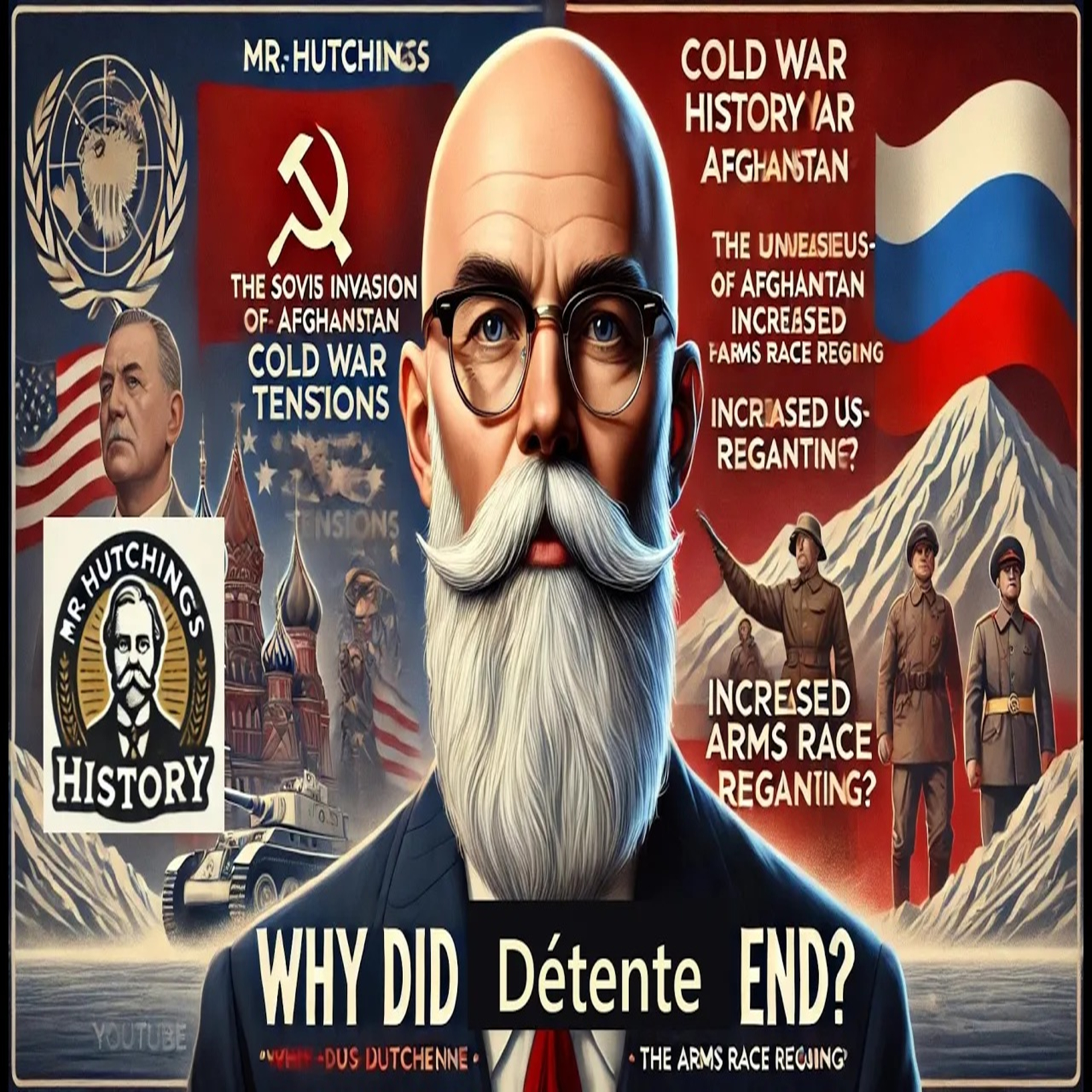
Why Did Détente End?
from Mr. Hutchings History · host Produced, created, and written by Harold M. Hutchings
Welcome to Mr. Hutchings History! In today’s episode, we explore the unraveling of détente, the period of eased tensions between the US and USSR during the Cold War. By the late 1970s, a combination of factors led to the collapse of this diplomatic era. We’ll examine key events like the Soviet invasion of Afghanistan,US disillusionment with the Helsinki Agreement, and the growing economic disparity between the superpowers. We also explore different historical interpretations, including the Orthodox,Revisionist,Post-revisionist, and Post-Cold War perspectives on why détente ultimately failed.Key Topics:We’ll analyze how the Soviet’s aggressive foreign policy, especially in Afghanistan, marked the official end of détente, leading to a new era of Cold War confrontation.By the end of this episode, you’ll understand how these pivotal events reshaped superpower relations and set the stage for the renewed Cold War tensions of the 1980s.#Paper2WorldHistory #ColdWar #Détente #USSR #US #SovietInvasion #SALT #CarterDoctrine #HelsinkiAgreement #SuperpowerRivalry #Afghanistan #ColdWarDiplomacyWorks CitedBarrass, Gordon S. The Great Cold War: A Journey Through the Hall of Mirrors. Stanford UP, 2009.Gaddis, John Lewis. The Cold War: A New History. Penguin, 2005.Kolko, Gabriel. Confronting the Third World: United States Foreign Policy, 1945-1980. Pantheon, 1988.Leffler, Melvyn P. For the Soul of Mankind: The United States, the Soviet Union, and the Cold War. Hill and Wang, 2007.Chapters(0:00) Introduction: The Fragility of DétenteDétente was meant to ease Cold War tensions, but was it ever truly stable? Let’s explore why it ultimately collapsed.(1:03) Superpowers’ Suspicion: A Trust IssueDétente was never about friendship—it was a strategic move by two rivals filled with mistrust and competing interests.(2:05) Soviet Nuclear Expansion: A Breach of Trust?Despite arms control agreements like SALT, the USSR continued stockpiling nuclear weapons, fueling US anxieties.(3:20) Soviet Influence in Africa: A Silent Expansion?As the USSR backed leftist movements in Angola and Ethiopia, the US saw this as an attempt to spread communism further.(4:40) The US and Hypocrisy: Soviet CounterclaimsThe Soviets pointed out America’s interventions in Latin America, accusing them of applying double standards in détente.(6:00) Economic Struggles: The USSR’s Hidden WeaknessBy the late 1970s, the Soviet economy was failing, pushing them to take bigger risks to maintain global influence.(7:10) The Soviet Invasion of Afghanistan (1979): The Breaking PointThe invasion shattered détente, confirming US fears of Soviet aggression and marking the return of Cold War hostilities.(8:45) The Carter Doctrine: US Draws a LinePresident Carter declared the US would defend the Persian Gulf from Soviet interference, shifting towards confrontation.(10:00) Historians Debate: Who’s to Blame?Orthodox, revisionist, and post-revisionist historians offer different perspectives on why détente fell apart.(11:30) The Soviet Archives Reveal the TruthAfter the Cold War, newly released Soviet documents exposed the USSR’s economic struggles and strategic miscalculations.(12:45) Lessons from Détente: Diplomacy and MistrustDétente’s failure highlights the importance of trust, communication, and economic stability in international relations.(14:00) Conclusion: What Can We Learn Today?The Cold War may be over, but détente’s lessons on diplomacy and global tensions remain relevant in today’s world.
Embed this episode
NOW PLAYING
Why Did Détente End?
No transcript for this episode yet
Similar Episodes
No similar episodes found.
Similar Podcasts
No similar podcasts found.