
EPISODE · Nov 21, 2024 · 12 MIN
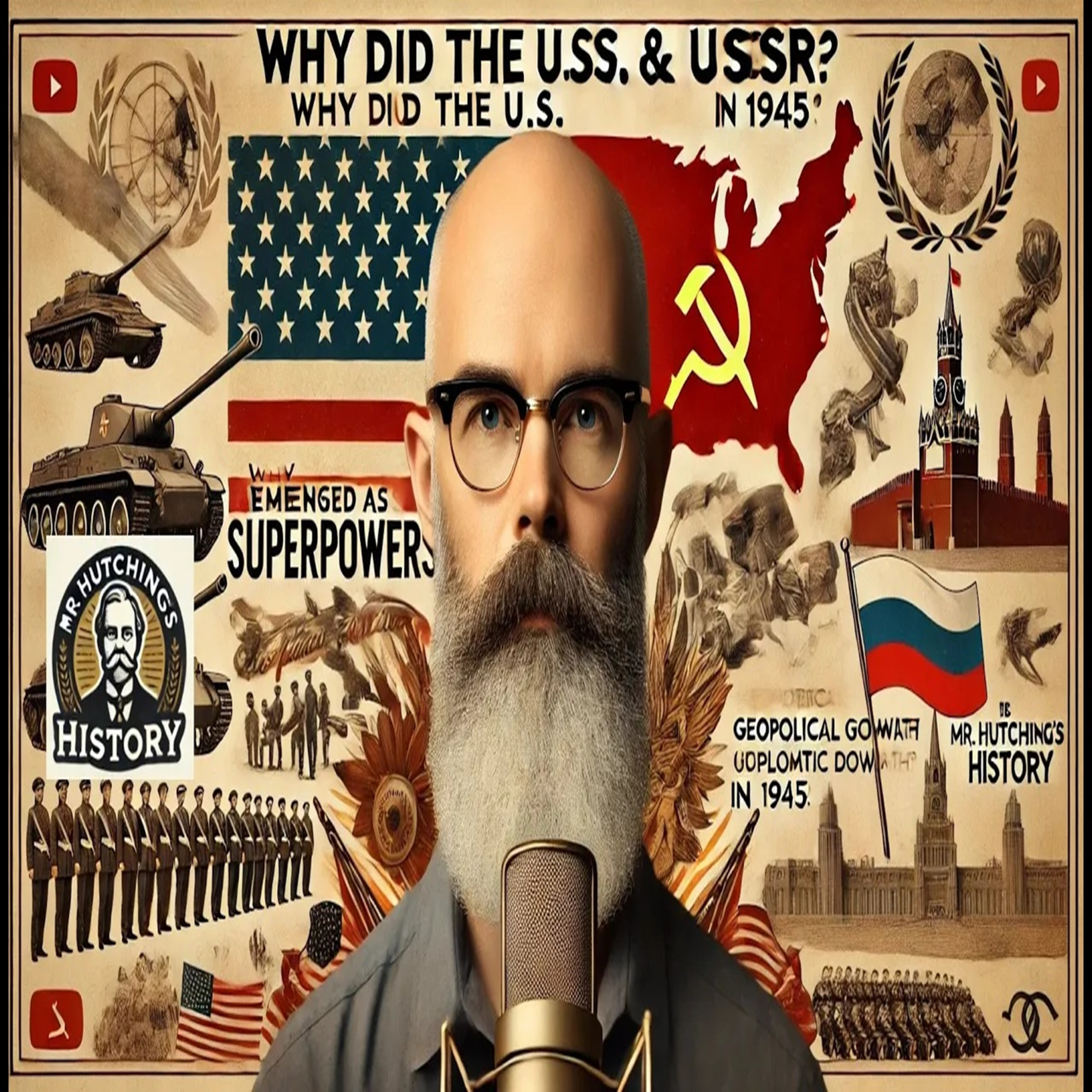
Why Did the US and USSR Emerge as Superpowers in 1945?
from Mr. Hutchings History · host Produced, created, and written by Harold M. Hutchings
Welcome toMr. Hutchings History. In this episode, we explore why the United States and the Soviet Union emerged as the dominant superpowers in 1945 after World War II, shaping the global power structure for the next several decades. We’ll unpack the ideological, political, and economic factors that set the stage for their Cold War rivalry, examining how the US championed liberal capitalism and democracy while the USSR embraced Marxist-Leninism and state-controlled economics. We’ll also dive into key events, including the Yalta and Potsdam Conferences, the role of nuclear weapons, and the economic aftermath of WWII.Additionally, we’ll look at the key historiographical schools—Orthodox, Revisionist, Realist, and Post-Revisionist—that provide varying perspectives on the US-Soviet rivalry and the origins of the Cold War. What role did the ideological divide play in their rise to superpower status? How did events like the dropping of the atomic bombs and the Soviet acquisition of nuclear capabilities fuel tensions? This episode provides essential context for understanding the Cold War’s origins and the emergence of the US and USSR as global superpowers.#ColdWar #Superpowers #USvsUSSR #Paper2WorldHistory #TheColdWar #ColdWarOrigins #ColdWarRivalries #PostWorldWarII #SuperpowerTensions #NuclearWeapons #SovietExpansion #USSR #USHistory #ColdWarHistoriography #YaltaConference #PotsdamConference #GlobalPoliticsWorks CitedMarx, Karl, and Friedrich Engels. The Communist Manifesto. Penguin Classics, 2002.Gaddis, John Lewis. The Cold War: A New History. Penguin, 2006.Caro, Robert. The Years of Lyndon Johnson: Master of the Senate. Alfred A. Knopf, 2002.Lend-Lease Act, U.S. Government, 1941.Roosevelt, Franklin D. “Yalta Conference.” February 1945.Truman, Harry. “Potsdam Conference.” July 1945.Chapters(0:00) Introduction: The Rise of SuperpowersWWII ends, but a new conflict begins—the Cold War. How did the U.S. and USSR emerge as superpowers?(1:00) The Post-War Power ShiftBritain and France weaken, leaving a void for the U.S. and USSR to fill. But this rivalry was about more than military strength.(1:24) Ideological Clash: Capitalism vs. CommunismThe U.S. promotes democracy and free markets, while the USSR enforces state control and a command economy.(2:24) The Marshall Plan: Aid or Political Move?The U.S. pumps billions into Europe, aiming to stop communism and expand its influence.(3:10) 1945 Conferences: Yalta & PotsdamAllied leaders divide post-war Europe, but instead of unity, tensions rise.(4:00) Germany & Berlin: A City DividedBerlin becomes the Cold War’s first major flashpoint, symbolizing the East-West divide.(4:56) Who’s to Blame? Competing ViewsHistorians debate whether Soviet aggression, U.S. policies, or inevitable conflict caused the Cold War.(5:30) The Orthodox View: Stalin’s ExpansionismSoviet control over Eastern Europe sparks U.S. containment policies.(6:00) The Revisionist View: U.S. ProvocationSome argue U.S. policies pushed Stalin into a defensive stance.(6:42) Realist & Post-Revisionist ViewsSome say the Cold War was inevitable; others see it as a series of miscalculations.(7:25) The Nuclear Arms Race & MADBoth sides amass nuclear weapons, ensuring total destruction if war breaks out.(8:00) Proxy Wars: Fighting Through OthersDirect war is too risky, so the U.S. and USSR back opposite sides in Korea and Vietnam.(8:50) The Cold War Ends: The USSR CollapsesEconomic struggles and political shifts lead to the Soviet Union’s fall in 1991.(9:30) Lasting Impact: The Cold War TodayIts effects still shape global politics, alliances, and nuclear policies.(10:05) Lessons from History: Why It MattersUnderstanding the Cold War helps us navigate modern conflicts.(10:45) Conclusion: Keep Questioning HistoryHistory isn’t just the past—it shapes the future. Keep exploring and learning.
What this episode covers
Welcome toMr. Hutchings History. In this episode, we explore why the United States and the Soviet Union emerged as the dominant superpowers in 1945 after World War II, shaping the global power structure for the next several decades. We’ll unpack the ideological, political, and economic factors that set the stage for their Cold War rivalry, examining how the US championed liberal capitalism and democracy while the USSR embraced Marxist-Leninism and state-controlled economics. We’ll also dive into key events, including the Yalta and Potsdam Conferences, the role of nuclear weapons, and the economic aftermath of WWII.Additionally, we’ll look at the key historiographical schools—Orthodox, Revisionist, Realist, and Post-Revisionist—that provide varying perspectives on the US-Soviet rivalry and the origins of the Cold War. What role did the ideological divide play in their rise to superpower status? How did events like the dropping of the atomic bombs and the Soviet acquisition of nuclear capabilities fuel tensions? This episode provides essential context for understanding the Cold War’s origins and the emergence of the US and USSR as global superpowers.#ColdWar #Superpowers #USvsUSSR #Paper2WorldHistory #TheColdWar #ColdWarOrigins #ColdWarRivalries #PostWorldWarII #SuperpowerTensions #NuclearWeapons #SovietExpansion #USSR #USHistory #ColdWarHistoriography #YaltaConference #PotsdamConference #GlobalPoliticsWorks CitedMarx, Karl, and Friedrich Engels. The Communist Manifesto. Penguin Classics, 2002.Gaddis, John Lewis. The Cold War: A New History. Penguin, 2006.Caro, Robert. The Years of Lyndon Johnson: Master of the Senate. Alfred A. Knopf, 2002.Lend-Lease Act, U.S. Government, 1941.Roosevelt, Franklin D. “Yalta Conference.” February 1945.Truman, Harry. “Potsdam Conference.” July 1945.Chapters(0:00) Introduction: The Rise of SuperpowersWWII ends, but a new conflict begins—the Cold War. How did the U.S. and USSR emerge as superpowers?(1:00) The Post-War Power ShiftBritain and France weaken, leaving a void for the U.S. and USSR to fill. But this rivalry was about more than military strength.(1:24) Ideological Clash: Capitalism vs. CommunismThe U.S. promotes democracy and free markets, while the USSR enforces state control and a command economy.(2:24) The Marshall Plan: Aid or Political Move?The U.S. pumps billions into Europe, aiming to stop communism and expand its influence.(3:10) 1945 Conferences: Yalta & PotsdamAllied leaders divide post-war Europe, but instead of unity, tensions rise.(4:00) Germany & Berlin: A City DividedBerlin becomes the Cold War’s first major flashpoint, symbolizing the East-West divide.(4:56) Who’s to Blame? Competing ViewsHistorians debate whether Soviet aggression, U.S. policies, or inevitable conflict caused the Cold War.(5:30) The Orthodox View: Stalin’s ExpansionismSoviet control over Eastern Europe sparks U.S. containment policies.(6:00) The Revisionist View: U.S. ProvocationSome argue U.S. policies pushed Stalin into a defensive stance.(6:42) Realist & Post-Revisionist ViewsSome say the Cold War was inevitable; others see it as a series of miscalculations.(7:25) The Nuclear Arms Race & MADBoth sides amass nuclear weapons, ensuring total destruction if war breaks out.(8:00) Proxy Wars: Fighting Through OthersDirect war is too risky, so the U.S. and USSR back opposite sides in Korea and Vietnam.(8:50) The Cold War Ends: The USSR CollapsesEconomic struggles and political shifts lead to the Soviet Union’s fall in 1991.(9:30) Lasting Impact: The Cold War TodayIts effects still shape global politics, alliances, and nuclear policies.(10:05) Lessons from History: Why It MattersUnderstanding the Cold War helps us navigate modern conflicts.(10:45) Conclusion: Keep Questioning HistoryHistory isn’t just the past—it shapes the future. Keep exploring and learning.
NOW PLAYING
Why Did the US and USSR Emerge as Superpowers in 1945?
No transcript for this episode yet
Similar Episodes
Dec 24, 2024 ·48m
Nov 16, 2024 ·23m
Oct 27, 2024 ·41m
Oct 27, 2024 ·26m
Oct 27, 2024 ·37m
Oct 27, 2024 ·35m