
EPISODE · Dec 10, 2025 · 20 MIN
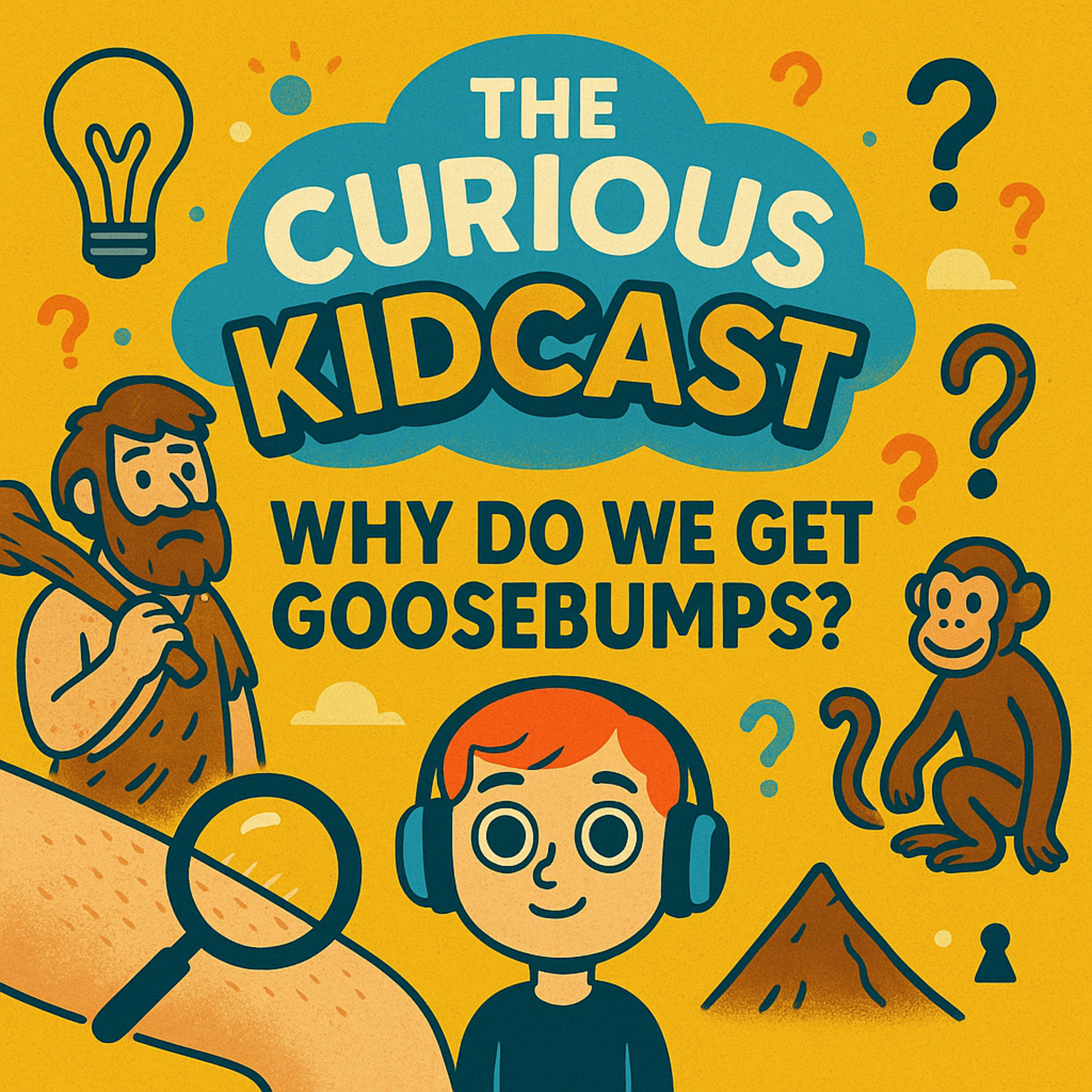
Why do we get goosebumps? | Fun body facts for curious kids
from The Curious Kidcast · host Andy & Charlie
Ever wondered why your skin gets all bumpy when you're cold, scared, or listening to amazing music? Join host Andy on The Curious Kidcast as we explore the fascinating science behind goosebumps in this fun, educational episode perfect for kids and families.This kid-friendly science podcast episode answers a question from a listener who wanted to know why their arms got covered in tiny bumps during a scary movie. Through humor, storytelling, and accurate science facts, kids will learn about evolution, the human body, and the surprising connections between goosebumps, ancient humans, and animal behavior.Perfect for Homeschooling FamiliesThis episode covers key science concepts including human anatomy, evolution, the nervous system, and comparative biology—making it an excellent resource for homeschool science curriculum, family learning time, or curious kids who love asking "why?"What Kids Will LearnHuman Biology: Understanding the arrector pili muscle and how goosebumps formEvolution Facts: Why humans still have this ancient survival mechanismBrain Science: How the hypothalamus controls body responsesAnimal Behavior: How cats, birds, hedgehogs, and other animals use the same trickEmotional Science: Why music and powerful moments can give us "frisson"Fight-or-Flight Response: Understanding the body's danger alarm systemComparative Anatomy: Connecting human and animal adaptationsKey Science Facts CoveredWhat the arrector pili muscle does and how it creates goosebumpsWhy early humans had more body hair and needed goosebumps for warmthHow goosebumps helped ancestors look bigger to scare predatorsThe science behind emotional goosebumps from music and powerful momentsWhy you can't get goosebumps on your face or palmsHow goosebumps help activate stem cells for skin repairOther leftover evolutionary traits humans still haveHow animals like cats, birds, and porcupines use the same mechanismWhy Parents and Educators Love The Curious KidcastScience made fun and accessible for kids ages 7-11Answers real questions from real kidsPerfect length for car rides, homeschool breaks, or family learning timeCombines humor with accurate scientific factsEncourages curiosity and critical thinkingNo ads or inappropriate content—100% kid-friendlySupports STEM education and science literacyGreat for auditory learners and reluctant readersFeatured Quiz QuestionsTest your family's knowledge with these fun quiz questions from the episode:What's the name of the tiny muscle that creates goosebumps?Can you get goosebumps on your nose?What's the French word for emotional shivers?Connect With The Curious KidcastHave a question your curious kid wants answered? Visit us at curiouskidcast.com to submit questions, download educational resources, and explore more episodes about science, nature, and the amazing world around us.Perfect for: Science-loving kids, homeschool curriculum, family car rides, classroom listening, bedtime learning, curious minds, STEM education, nature enthusiasts, and parents who want to nurture their child's natural curiosity.Related Topics and EpisodesIf your family enjoyed learning about goosebumps, you'll love these related science topics:Why do we hiccup?Why is yawning contagious?How does our brain control our body?What are emotions and where do they come from?Amazing animal adaptations in natureHuman evolution facts for kidsTagskids science podcast, educational podcast for children, homeschool science, why do we get goosebumps, human body facts, science for kids ages 7-11, family learning, parenting resources, STEM education, nature science, fun facts for kids, biology for kids, evolution explained for children, curious kids, educational entertainment, kid-friendly scienceSubscribe to The Curious Kidcast for more fun, educational science episodes that make learning an adventure for the whole family.
What this episode covers
Ever wondered why your skin gets all bumpy when you're cold, scared, or listening to amazing music? Join host Andy on The Curious Kidcast as we explore the fascinating science behind goosebumps in this fun, educational episode perfect for kids and families.This kid-friendly science podcast episode answers a question from a listener who wanted to know why their arms got covered in tiny bumps during a scary movie. Through humor, storytelling, and accurate science facts, kids will learn about evolution, the human body, and the surprising connections between goosebumps, ancient humans, and animal behavior.Perfect for Homeschooling FamiliesThis episode covers key science concepts including human anatomy, evolution, the nervous system, and comparative biology—making it an excellent resource for homeschool science curriculum, family learning time, or curious kids who love asking "why?"What Kids Will LearnHuman Biology: Understanding the arrector pili muscle and how goosebumps formEvolution Facts: Why humans still have this ancient survival mechanismBrain Science: How the hypothalamus controls body responsesAnimal Behavior: How cats, birds, hedgehogs, and other animals use the same trickEmotional Science: Why music and powerful moments can give us "frisson"Fight-or-Flight Response: Understanding the body's danger alarm systemComparative Anatomy: Connecting human and animal adaptationsKey Science Facts CoveredWhat the arrector pili muscle does and how it creates goosebumpsWhy early humans had more body hair and needed goosebumps for warmthHow goosebumps helped ancestors look bigger to scare predatorsThe science behind emotional goosebumps from music and powerful momentsWhy you can't get goosebumps on your face or palmsHow goosebumps help activate stem cells for skin repairOther leftover evolutionary traits humans still haveHow animals like cats, birds, and porcupines use the same mechanismWhy Parents and Educators Love The Curious KidcastScience made fun and accessible for kids ages 7-11Answers real questions from real kidsPerfect length for car rides, homeschool breaks, or family learning timeCombines humor with accurate scientific factsEncourages curiosity and critical thinkingNo ads or inappropriate content—100% kid-friendlySupports STEM education and science literacyGreat for auditory learners and reluctant readersFeatured Quiz QuestionsTest your family's knowledge with these fun quiz questions from the episode:What's the name of the tiny muscle that creates goosebumps?Can you get goosebumps on your nose?What's the French word for emotional shivers?Connect With The Curious KidcastHave a question your curious kid wants answered? Visit us at curiouskidcast.com to submit questions, download educational resources, and explore more episodes about science, nature, and the amazing world around us.Perfect for: Science-loving kids, homeschool curriculum, family car rides, classroom listening, bedtime learning, curious minds, STEM education, nature enthusiasts, and parents who want to nurture their child's natural curiosity.Related Topics and EpisodesIf your family enjoyed learning about goosebumps, you'll love these related science topics:Why do we hiccup?Why is yawning contagious?How does our brain control our body?What are emotions and where do they come from?Amazing animal adaptations in natureHuman evolution facts for kidsTagskids science podcast, educational podcast for children, homeschool science, why do we get goosebumps, human body facts, science for kids ages 7-11, family learning, parenting resources, STEM education, nature science, fun facts for kids, biology for kids, evolution explained for children, curious kids, educational entertainment, kid-friendly scienceSubscribe to The Curious Kidcast for more fun, educational science episodes that make learning an adventure for the whole family.
NOW PLAYING
Why do we get goosebumps? | Fun body facts for curious kids
No transcript for this episode yet
Similar Episodes
No similar episodes found.
Similar Podcasts
No similar podcasts found.