
EPISODE · May 29, 2026 · 10 MIN
Why France Just Repealed Its Brutal Code Noir Slavery Law
from African Elements Daily · host African Elements
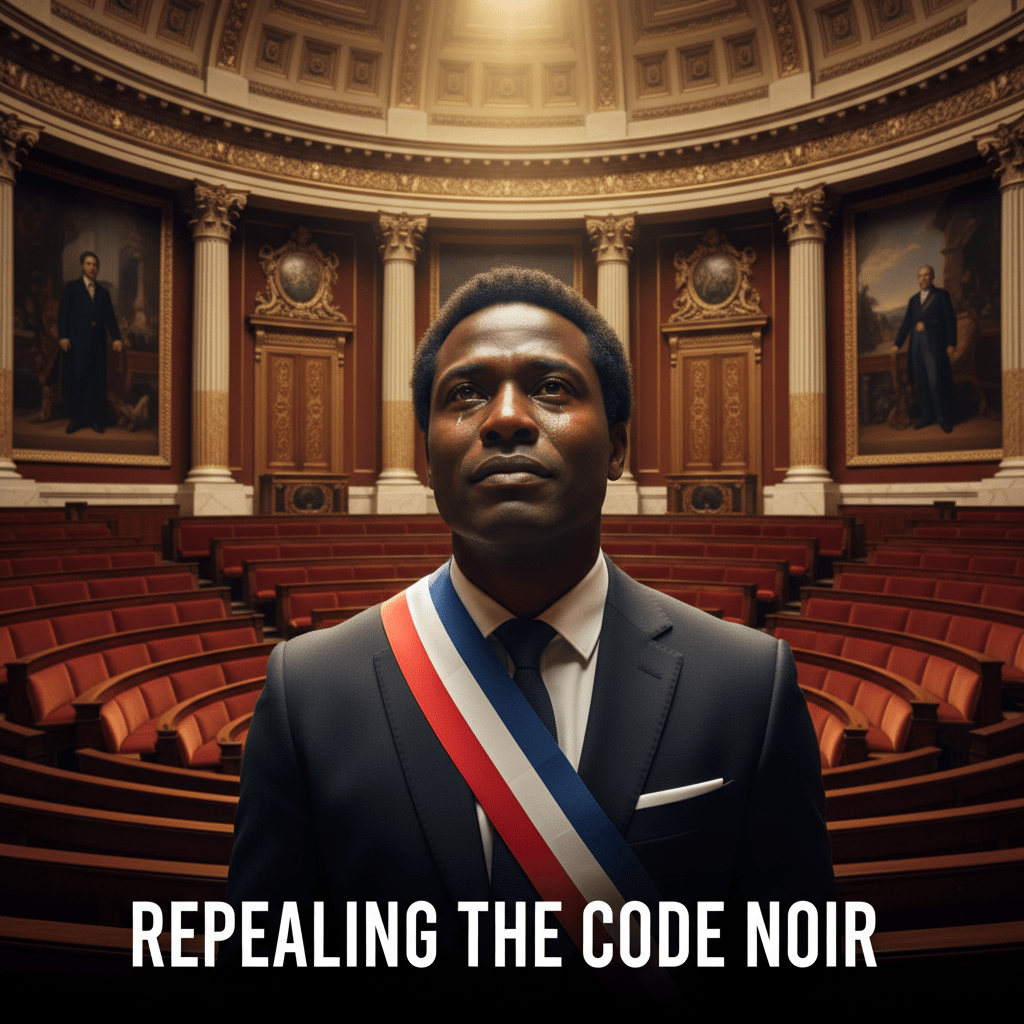
France's National Assembly voted unanimously to repeal the brutal 1685 Code Noir, highlighting the ongoing struggle for colonial reparatory justice. Why France Just Repealed Its Brutal Code Noir Slavery Law By Darius Spearman (africanelements) Support African Elements at patreon.com/africanelements and hear recent news in a single playlist. Additionally, you can gain early access to ad-free video content. The Historical Awakening in Paris On May 28, 2026, the French National Assembly made history. Lawmakers voted unanimously to formally repeal the Code Noir (apnews.com, lcp.fr). The final vote count stood at 254 to 0 (lcp.fr, bastillepost.com). This historic decision marked a major milestone in the national effort to address colonial crimes (theguardian.com, africanews.com). The Code Noir, or Black Code, was a royal decree that once dictated the lives of enslaved Africans across the French colonial empire (apnews.com, loc.gov). It had remained on the legislative books for nearly two centuries after France abolished slavery in 1848 (imazpress.com, dworaczek-bendome.org). This long delay has ended due to a sudden legislative push that began in May 2025 (lcp.fr, imazpress.com). During a parliamentary session, Deputy Laurent Panifous asked the government why this horrific text remained on the books (lcp.fr). Prime Minister François Bayrou admitted that he was entirely unaware of this legal reality (lcp.fr, vie-publique.fr). He promised that the state would act to reconcile the Republic with its values (imazpress.com). A year later, President Emmanuel Macron strongly backed the repeal during the anniversary of the Taubira Law (imazpress.com, sooleader.com). He declared that the ongoing silence toward the code had become a form of offense (theguardian.com, devdiscourse.com). The subsequent vote in the National Assembly was highly emotional (lcp.fr). Steevy Gustave, a deputy from Martinique and descendant of enslaved people, wept on the chamber floor as the bill passed (lcp.fr, imazpress.com). He reminded his colleagues that no simple vote can repair centuries of shattered lives (lcp.fr, nofi.media). Decoding the Brutal Framework of 1685 To understand the weight of this repeal, one must look back to March 1685 (loc.gov, chateaunantes.fr). King Louis XIV, known as the Sun King, promulgated the Code Noir to regulate the colonial sugar economy (loc.gov, chnm.org). His influential finance minister, Jean-Baptiste Colbert, initiated the drafting of this comprehensive legal framework (loc.gov, chateaunantes.fr). Colbert died before its completion, but his son finished the project (loc.gov, chateaunantes.fr). The finished decree consisted of sixty articles that stripped African people of their humanity (loc.gov, wikipedia.org). It aimed to establish absolute social and physical control over the enslaved population (loc.gov, chnm.org). The most infamous provision was Article 44 (nofi.media, dworaczek-bendome.org). This article legally declared enslaved people to be "meubles", which translates to movable property or chattel (loc.gov, dworaczek-bendome.org). Consequently, human beings could be bought, sold, seized, and traded like livestock (loc.gov, wikipedia.org). The code also mandated horrific physical punishments to prevent rebellion (loc.gov, chateaunantes.fr). If an enslaved person attempted to escape, royal authorities would cut off their ears and brand their shoulder with the fleur-de-lis (loc.gov, chnm.org). A second escape attempt resulted in the severing of the Achilles tendon (loc.gov). A third attempt carried the penalty of death (loc.gov, chateaunantes.fr). Furthermore, the Code Noir regulated religious and social life in the colonies (loc.gov, wikipedia.org). It forced all enslaved people to undergo baptism into the Catholic Church (loc.gov, chnm.org). It explicitly banned the practice of Protestantism to ensure religious conformity (wikipedia.org). Additionally, Article 1 of the decree ordered the immediate expulsion of all Jewish people from the colonies (loc.gov, wikipedia.org). Enslaved individuals could not own property, nor could they testify in courts of law against free persons (loc.gov, chnm.org). This systematic dehumanization laid the foundation for the massive accumulation of French colonial wealth. Deportation of African Captives by Destination Saint-Domingue (Haiti) 773,000 Martinique 217,200 Guadeloupe 73,000 The Grand Imperial Paradox A deep contradiction existed within French law for centuries. Since the medieval Edict of 1315, French common law declared that the soil of mainland France automatically freed any slave who touched it (wikipedia.org, wikipedia.org). This rule was known as the Freedom Principle (wikipedia.org, wikipedia.org). Therefore, slavery was strictly illegal on the European mainland of France, known as the Hexagon (wikipedia.org, wikipedia.org). To bypass this mainland prohibition, the French Crown established "laws of exception" specifically for its colonies (wikipedia.org, wikipedia.org). The Code Noir functioned as a separate legal system to protect the lucrative colonial slave trade (wikipedia.org). This legal separation did not go unchallenged (wikipedia.org, wikipedia.org). The Parlement of Paris, which functioned as a high court, consistently refused to register the Code Noir and subsequent slavery edicts (wikipedia.org, wikipedia.org). It argued that codifying slavery was contrary to French common law, natural law, and divine law (wikipedia.org). Enslaved people brought to the mainland frequently utilized this lack of registration to sue their masters for freedom (wikipedia.org). Many of these individuals successfully won their liberty in mainland courts (wikipedia.org). Despite this legal tension, France only abolished the practice of slavery in 1848 under the leadership of Victor Schœlcher (survie.org, dworaczek-bendome.org). However, the abolition decree did not contain a clause to formally repeal the Code Noir text (survie.org, imazpress.com). In French jurisprudence, laws that are no longer applied due to newer legislation often remain on the books as "legislative fossils" (dworaczek-bendome.org, imazpress.com). The code became practically obsolete, yet it technically persisted in the legal shadows (dworaczek-bendome.org). The unanimous vote in 2026 was necessary to finally erase this dark legacy from national legislation (lcp.fr). Comparing French Code Noir and U.S. Black Codes It is essential to clarify that the French Code Noir is historically distinct from the "Black Codes" of the United States. Many observers confuse these two legal frameworks due to their similar names. However, they operated in different eras and under different legal systems. The French Code Noir was a single, royal decree signed by King Louis XIV at the Versailles Palace in 1685 (loc.gov, chateaunantes.fr). It was designed to codify and regulate active, state-sanctioned chattel slavery across the French empire (loc.gov, wikipedia.org). In contrast, the U.S. "Black Codes" were a collection of state and local laws passed in the Southern United States after the Civil War (pbs.org, wikipedia.org). These laws were enacted during the Reconstruction era, beginning in 1865 (pbs.org, wikipedia.org). Their purpose was to restrict the freedom, labor, and civil rights of newly emancipated Black people. To understand how these laws impacted labor and freedom, one can read about how newly emancipated individuals continued to face involuntary servitude after the Civil War. While the French Code Noir institutionalized active slavery, the U.S. codes aimed to replicate slave labor conditions under a system of legal freedom. Legal Differences: Two Distinct Frameworks French Code Noir (1685) Signed by King Louis XIV at Versailles Governed active chattel slavery in colonies Classified human beings as "movable property" Ordered expulsion of Jewish people (Article 1) Mandated Catholic baptism for all slaves U.S. Black Codes (Post-1865) Passed by Southern states after Civil War Restricted rights of newly freed Black people Designed to compel involuntary labor Included vagrancy laws to force contracts Operated after the formal end of legal slavery The Legislative Champion: The LIOT Group The force behind this legislative milestone was the LIOT parliamentary group (lcp.fr, assemblee-nationale.fr). This group stands for Libertés, Indépendants, Outre-mer et Territoires (lcp.fr, assemblee-nationale.fr). It is a centrist, transpartisan coalition of independent and regionalist deputies in the French National Assembly (assemblee-nationale.fr, parlons-politique.fr). Because its membership contains many representatives from France's overseas territories, the coalition focuses heavily on historical justice and colonial legacy (lcp.fr, assemblee-nationale.fr). They routinely challenge Paris on regional disparities. Guadeloupean Deputy Max Mathiasin, a leading member of the LIOT group, officially sponsored the repeal bill in September 2025 (lcp.fr, parlons-politique.fr). The bill sought to remove the Code Noir and mandate research into the modern impacts of colonial legislation (lcp.fr, assemblee-nationale.fr). Mathiasin and his colleagues utilized their political platform to force the French state to address its past. This effort reflects a broader movement within the African diaspora to challenge systemic oppression through dynamics of Black politics. Their persistent lobbying ultimately secured the unanimous support of the assembly, pushing the bill forward to the French Senate (lcp.fr). Recognition vs. Action: The Taubira Law The 2026 repeal is not the first time France has legislated its colonial past. In May 2001, the French parliament passed the historic Taubira Law (opinion-internationale.com, seneweb.com). Championed by Christiane Taubira, an Afro-French Member of Parliament from French Guiana, the law officially recognized the transatlantic slave trade and slavery as crimes against humanity (seneweb.com, lenouvelliste.com). With its passage, France became the first former slave-owning country in the world to make such a legal declaration (opinion-internationale.com, seneweb.com). The law served as a monumental symbolic victory, yet it lacked teeth (survie.org, growthinktank.org). The final version of the Taubira Law did not include concrete regulatory or punitive mechanisms for material reparations (survie.org, growthinktank.org). Consequently, activist groups have faced ongoing legal battles as they seek material compensation (survie.org, growthinktank.org). This historical recognition of slavery did not translate into immediate economic relief for descendants. It left the core structures of colonial inequality largely untouched. Expeditions by Major French Slave-Trading Ports 1,744 Nantes 451 Le Havre 448 La Rochelle 419 Bordeaux From Colonial Plantations to Overseas Departments To understand the ongoing economic struggles in the French Caribbean, one must look at their political status. In 1946, France officially transformed its oldest slave colonies—Martinique, Guadeloupe, French Guiana, and Réunion—into "overseas departments" (survie.org, culanth.org). This administrative shift meant that these distant islands became fully integrated parts of the French Republic (lenouvelliste.com, culanth.org). Today, approximately 1.9 million people live in these territories, and most are descendants of enslaved Africans (survie.org, lenouvelliste.com). They hold full French and European Union citizenship, with active representation in the National Assembly (survie.org, culanth.org). However, direct integration has not resolved deep structural issues. These overseas departments remain among the poorest and most unequal regions under French rule (survie.org, lenouvelliste.com). They suffer from high cost of living and unemployment rates that are double those of mainland France (survie.org). Many residents trace these contemporary disparities back to the plantation systems codified in 1685. Activists continue to organize fights for economic justice to challenge the economic dependence on Paris. The Unfinished Battle for Reparations While the repeal of the Code Noir is a victory, many argue that symbols are not enough. Activists in both France and the Caribbean are demanding a comprehensive reparatory justice framework (survie.org, dworaczek-bendome.org). This framework includes direct financial compensation for the descendants of enslaved people (survie.org, dworaczek-bendome.org). It also involves land reform to address the unequal concentration of land ownership that persists in the former colonies (survie.org). Activist groups like the International Movement for Reparations have filed lawsuits against the French state to force action (survie.org, dworaczek-bendome.org). Furthermore, there are growing demands for international debt cancellation (lenouvelliste.com, growthinktank.org). Leaders like Martinique’s Serge Letchimy have urged France to pay billions of dollars to Haiti (lenouvelliste.com, dworaczek-bendome.org). This payment would compensate for the "independence debt" that France forced Haiti to pay in 1825 (lenouvelliste.com, growthinktank.org). This extortion of wealth is a prime example of exploitative post-colonial debts that continue to cripple Black nations. French leaders, including President Macron, have supported symbolic recognition but refuse to offer financial reparations or an official state apology (apnews.com, theguardian.com). Post-colonial historians warn that simple votes must not become a cheap way to clear the national conscience without making real structural changes (survie.org). About the Author Darius Spearman is a professor of Black Studies at San Diego City College, where he has been teaching for over 20 years. He is the founder of African Elements, a media platform dedicated to providing educational resources on the history and culture of the African diaspora. Through his work, Spearman aims to empower and educate by bringing historical context to contemporary issues affecting the Black community.
NOW PLAYING
Why France Just Repealed Its Brutal Code Noir Slavery Law
No transcript for this episode yet
Similar Episodes
No similar episodes found.