
EPISODE · May 15, 2026 · 39 MIN
Why US-China Leverage Is a Trap for Both Sides
from Chill Financial Historian · host Chill Financial Historian
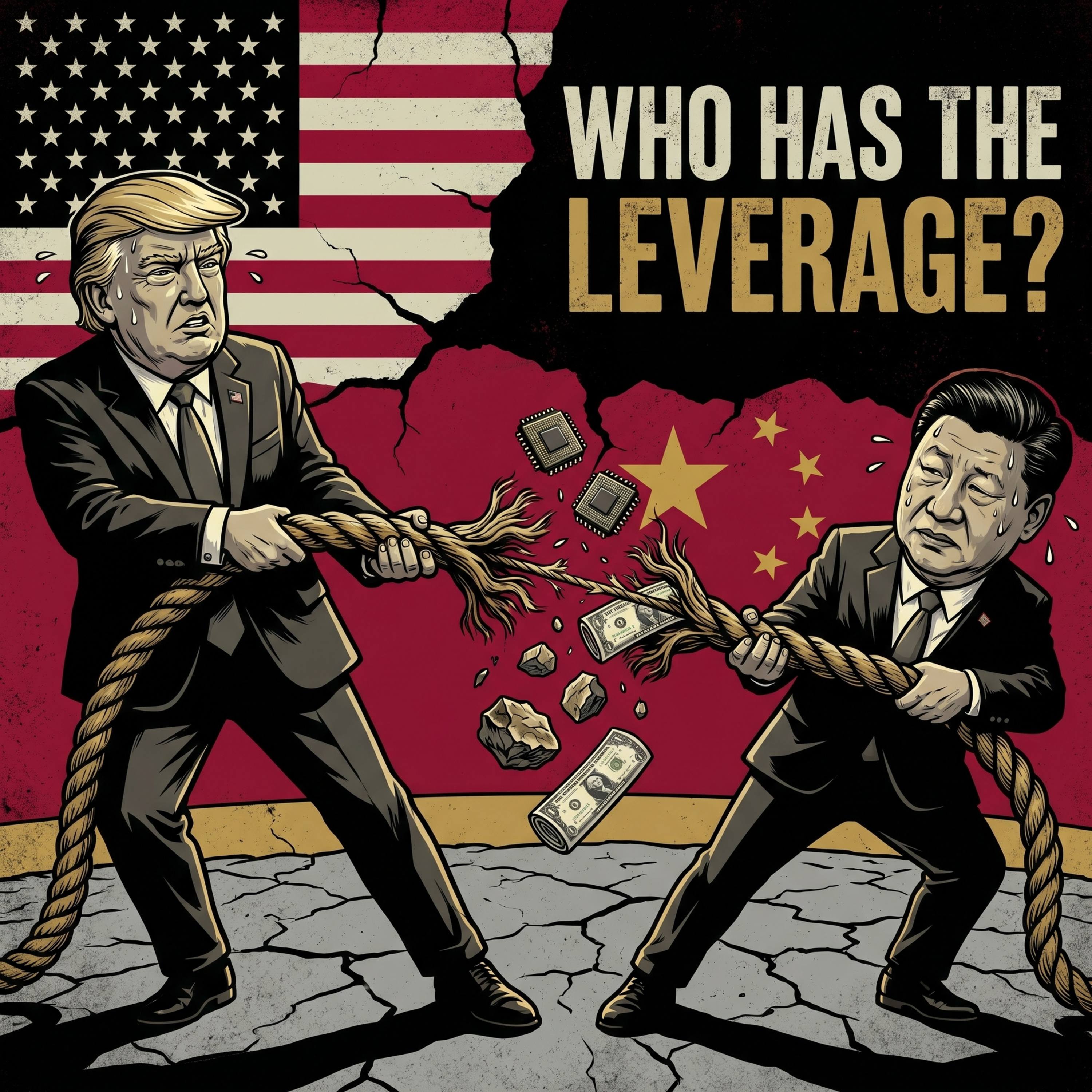
The US and China hold the most weaponizable economic relationship in human history — $693 billion in Treasury holdings, 91% of global rare earth processing, the dollar system, the most advanced chips on Earth. So why can't either side actually use any of it?In this Econodit deep-dive, we walk through six structural levers of US-China economic leverage — Treasury debt, rare earths, semiconductors, the dollar, supply chains, and consumer markets — and show, mechanically, why every single weapon either disarms itself the more it's used, hurts the user as much as the target, or accelerates the very alternatives both sides claim they don't want.With President Trump visiting Beijing alongside Nvidia's Jensen Huang and Tesla's Elon Musk, this is the leverage map nobody on cable news is willing to draw out honestly. We cover the "balance of financial terror," the rare earths game theory paradox, the H20 chip ban, the Russia 2022 sanctions blowback, hidden supply chain re-routing through Vietnam and Mexico, and why decoupling costs more than it saves.The conclusion is not that peace is permanent. It's that the equilibrium is stable — with brittle edges. And those edges are exactly where investors, policymakers, and ordinary viewers should be paying attention.If you want the deeper context, check out our breakdowns on the Strait of Hormuz blockade, the petrodollar's decline, the BRICS financial infrastructure, and the IMF's 2026 World Economic Outlook — they fit together like a single map.Subscribe for weekly structural breakdowns of the global economy that the financial press won't give you in 90 seconds.
Embed this episode
NOW PLAYING
Why US-China Leverage Is a Trap for Both Sides
No transcript for this episode yet
Similar Episodes
Feb 4, 2026 ·18m
Similar Podcasts
No similar podcasts found.