
EPISODE · Aug 22, 2024 · 10 MIN
Wise Blood
from Don't You Dare To Think Out Loud! · host Javier Truben
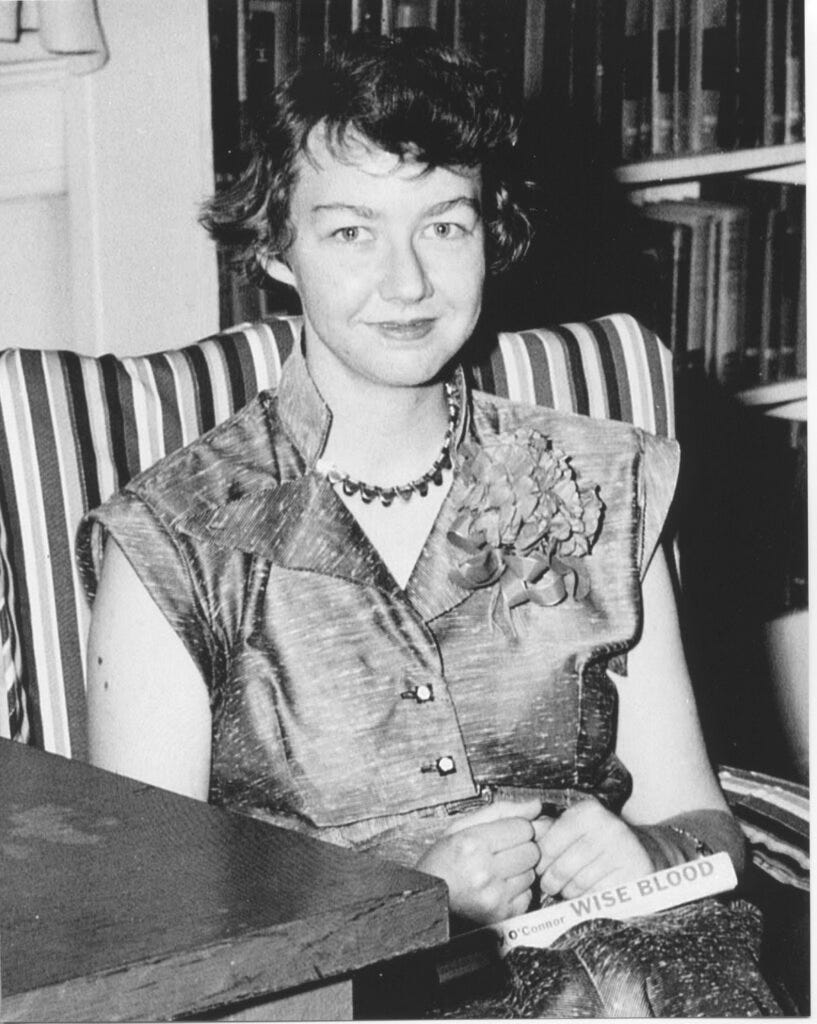
With indescribable relief, I note that the summer storms have finally arrived and two-thousand-year-old festival known as Ferragosto is behind us. The festival, originally a celebration of Roman Emperor Augustus, was once a time when beasts of burden were adorned with flowers after the rigors of harvesting and threshing wheat and workers bet their wages on horse races, a ritual which is in some places preserved, such as the Palio di Siena. The ancient tradition is so instilled in the unconscious collective, that the Digital Disconnection reaches its zenith during these holidays.I am still confined in my studio writing another novel with Spartan discipline, so that when I hear some folkloric shouting as tribal as repetitive or teenagers under the influence returning to their parent's house talking in loud voices at six in the morning, which reverberate in the very narrow Mediterranean streets as if their insufferable nonsense were of vital importance to the hood, then, I put in my ear plugs without losing a stitch and keep sewing words lost in thought. So there is no actual Digital Disconnection for me. Because the Flemish triptych of screens on my desk has me by the balls, excuse my French. With the first hailstorm of the summer, as promised, I also caught up with the podcasts that I had not been able to record during the dog days.And of course, I keep reading–making notes and underlining–the authors that stimulate me compelling me to write more, better, faster. Well, if someone doesn't know what I'm saying, writing is a ranging passion, as for others it will undoubtedly be gambling or politicking. It is for all these reasons that I consider it appropriate to comment on Wise Blood by Flannery O'Connor, considered one of the one hundred masterpieces ever written.The first work of any author is sometimes a surprising literary debut. Although at other times, on the contrary, the first sorrow of many others. Anyone coughs in the face of a first-time author to show in turn that the manuscript was read diagonally–or with an atmospheric reading as has been so fashionable lately.However, Mary Flannery did not give in one iota to the requests of her publishers to sweeten her fiction according to the usual commercial standards, nor did she sell herself short. All this took her from one publisher to another, until she managed to publish Wise Blood almost unnoticed. Then, ten years later, word of mouth turned Wise Blood into a cult novel; I imagine that editorially I would have to classify it as a long seller, one of those novels whose reputation is based on the generosity and intelligence of its readers, not on the crazy greed of getting hold of a literary novelty that after a year no one remembers.But let's go back to the beginning of her journey. Her short stories had opened the way for her in 1945 to scholarships and creative writing workshops at the University of Iowa, which could take her for a period of time of the backward-looking background of her native Georgia, a former Confederate state determined to stop time in an idealized past, based on the undisputed racial supremacy of whites over the descendants of black slaves, never mind that in World War II, which had just end, they fought and bled together in Europe and the Pacific.Apart from the racial injustice that would take twenty years to even begin to confront, religion became a consumer product in which to take refuge from the many apocalyptic fears that the new atomic age had awakened. Even avowed atheists with impious customs tried to educate their offspring under the precepts of any of the many Protestant variants to choose from or the Roman Catholic, if they had Irish or Italian ancestry. Americans under the old-fashioned concept of a Christian nation rather than being godless commies.In this particular temporal and social context and avoiding the intellectual bias of presentism, I entertained myself during this past Ferragosto by delving into this dazzling literary jewel, until I managed to find a digital copy John Huston's film adaptation in 1979, in which Harry Dean Stanton played his role as a crook.I was amazed when I reread the reviews and the brainy essays of the University of Georgia, now that Flannery O’Connor is dead as a doornail–and does not bother anymore–spoils her as a cultural icon, only the scholar Ted Spivey corroborated my first impression, that is, the very long shadow of Cervantes' Don Quixote cast upon Wise Blood.In the fall of 1974, Dr. Spivey wrote Flannery's South: Don Quixote Rides Again, in which he describes the author as a Frenchified and wittily wonders if the name of the farm where she lived, Andalusia, was a mere fluke of the Spanish legacy. I don't consider myself a worthy Cervantine, but I saw fit to reread Don Quixote with undivided attention because of Milan Kundera's The Art of the Novel, and I quote: “Once upon a time I too thought that the future was the only competent judge of our works and actions. Later on I understood that chasing after the future is the worst conformism of all, a craven flattery of the mighty. For the future is always mightier than the present. It will pass judgment on us, of course. And without any competence. But if the future is not a value for me, then to what am I attached? To God? Country? The people? The individual? My answer is as ridiculous as it is sincere: I am attached to nothing but the depreciated legacy of Cervantes.” End of quote.And I ask myself, is it really possible to ignore the precursor of the modern novel? Why do the rest of the American scholars stay in Kafka or Shakespeare for everything else? What a stubbornly insular bunch!The comic hat of the preacher Hazel Motes is identical to the shaving basin that Alonso Quixano comically puts on in the manner of a helmet. The beat-up car that leaves Motes stranded is identical to the Rocinante nag that Alonso Quixano rides. The misunderstood fantasy of founding The Church of Christ without Christ is identical to the misunderstood madness of an avid reader of chivalric romances like Alonso Quixano. The lascivious Sabbath Hawks is identical to the idealized peasant Dulcinea. The bore Enoch Emery who follows the crazy Motes is identical to the simpleton Sancho Panza who follows Alonso Quixano. The paid copycat preacher is identical to Don Quixote of Avellaneda who led Miguel de Cervantes to write the second and final part of Don Quixote to reveal the plagiarism. And final redemption of the failed and blind backward preacher Hazel Motes in the rooming house with the marriage proposal of the greedy landlady is identical to the final defeat Alonso Quixano against the Knight of White Moon on the beach in Barcelona.I could go on sharpening the pencil, but I won't go into more detail because the novel Wise Blood has aged as well as those cognacs that are kept in a safe place and can be read as one who visits a lost world. That's what the great classics are like. In addition, despite the parallels between Mary Flannery's genius makes for breathtaking dialogues throughout Wise Blood, so I am not surprised that John Huston did not modify them, a commendable case of loyalty to the original text at a time when film adaptations were the fury of the scissors. Get full access to Don't You Dare To Think Out Loud! at javiertruben.substack.com/subscribe
NOW PLAYING
Wise Blood
No transcript for this episode yet
Similar Episodes
Mar 26, 2026 ·1m
Mar 19, 2026 ·34m
Feb 18, 2026 ·11m
Feb 11, 2026 ·45m