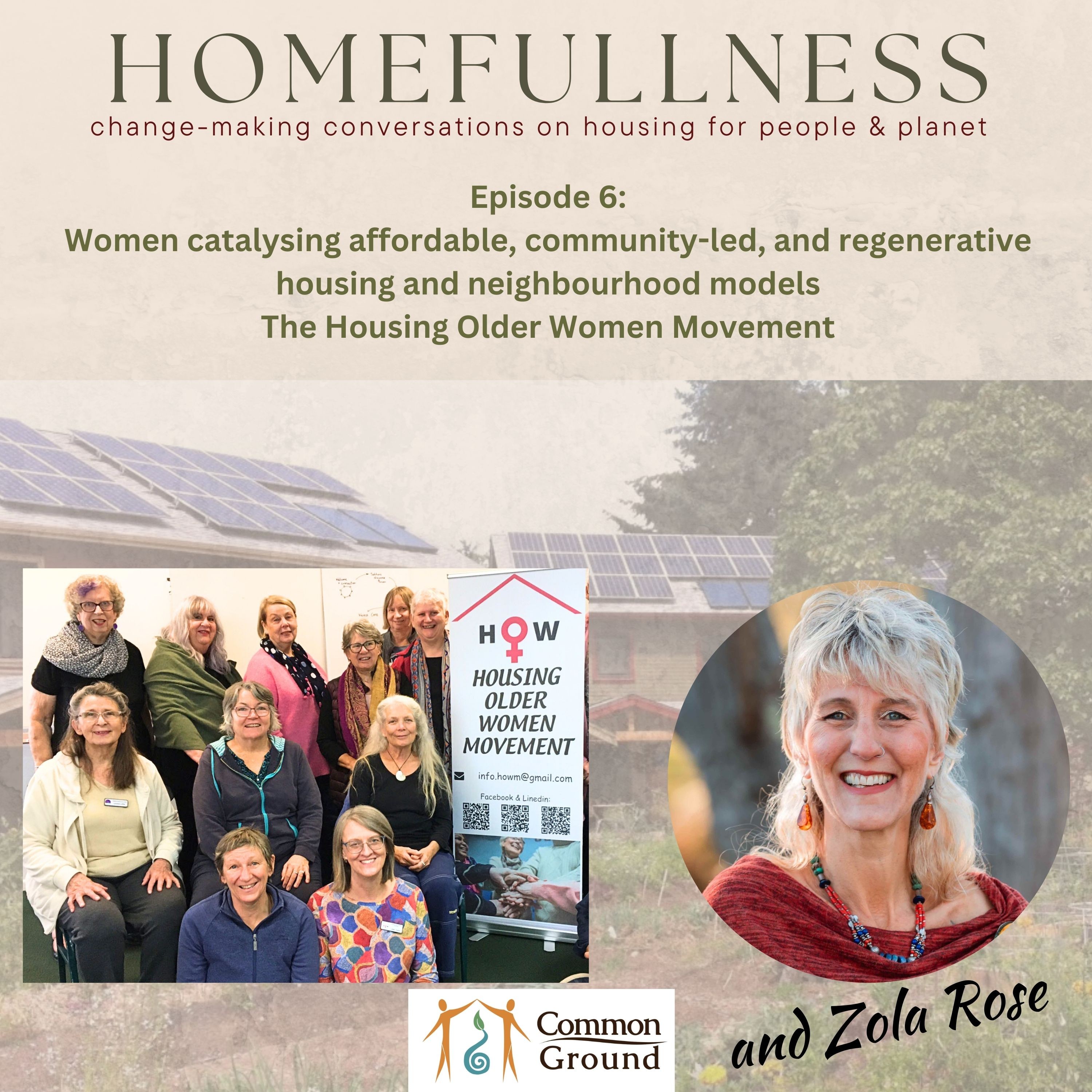
Women catalysing affordable housing and neighbourhood models episode artwork

EPISODE · Sep 24, 2024 · 57 MIN

Women catalysing affordable housing and neighbourhood models

from Homefullness · host Zola Rose

The fastest growing demographic who are vulnerable to housing insecurity and unaffordable housing is older women.  Many of these women have been valuable contributing members of their communities and working professionally yet find themselves in housing precariousness later in life due to a range of systemic societal and economic factors.   The Housing Older Women Movement believes these women should have a say and be able to participate in creating the kind of housing that meets their needs and aspirations.  HOWM are advocating and raising awareness for what they see meets not only the needs of women but provides more affordable and diverse housing choices for people from all walks of life. In South East Queensland, Australia this mighty group of HOWM women banded together to tackle this problem with an awareness-raising and advocacy campaign where women can be a part of designing the kinds of intergenerational and socially-connected neighbourhoods where they want to live. HOWM realised there is a need for more affordable, community-led, and regenerative housing options as house prices rise around the world but unless people know what options are available and what makes a successful housing development of this kind, people are not able to advocate for these models.  Collaboration on these models creates affordability so councils and other role players also need to understand these models and what is their part to play to enable it. I interview Maggie Shambrook and Lynette Loffel, two powerhouse women with HOWM, about their community engagement series called My Home, Your Home, Our Homes.   The three models that HOWM believes that will give the best results for retained affordable housing and where future-residents can participate or influence in the development process are the Community Land Trust, Cooperative Housing, and Cohousing.  There is also the Ecovillage model which can overlay any of these.   Listen to this interview to learn about this advocacy movement, their community engagement strategy to bring community and council together increasing agency and collaboration, and how you can replicate their methods to use in your own community to catalyse better housing outcomes--for women and everyone!

The fastest growing demographic who are vulnerable to housing insecurity and unaffordable housing is older women.  Many of these women have been valuable contributing members of their communities and working professionally yet find themselves in housing precariousness later in life due to a range of systemic societal and economic factors.   The Housing Older Women Movement believes these women should have a say and be able to participate in creating the kind of housing that meets their needs and aspirations.  HOWM are advocating and raising awareness for what they see meets not only the needs of women but provides more affordable and diverse housing choices for people from all walks of life. In South East Queensland, Australia this mighty group of HOWM women banded together to tackle this problem with an awareness-raising and advocacy campaign where women can be a part of designing the kinds of intergenerational and socially-connected neighbourhoods where they want to live. HOWM realised there is a need for more affordable, community-led, and regenerative housing options as house prices rise around the world but unless people know what options are available and what makes a successful housing development of this kind, people are not able to advocate for these models.  Collaboration on these models creates affordability so councils and other role players also need to understand these models and what is their part to play to enable it. I interview Maggie Shambrook and Lynette Loffel, two powerhouse women with HOWM, about their community engagement series called My Home, Your Home, Our Homes.   The three models that HOWM believes that will give the best results for retained affordable housing and where future-residents can participate or influence in the development process are the Community Land Trust, Cooperative Housing, and Cohousing.  There is also the Ecovillage model which can overlay any of these.   Listen to this interview to learn about this advocacy movement, their community engagement strategy to bring community and council together increasing agency and collaboration, and how you can replicate their methods to use in your own community to catalyse better housing outcomes--for women and everyone!

NOW PLAYING

Women catalysing affordable housing and neighbourhood models

0:00 57:08

No transcript for this episode yet

We transcribe on demand. Request one and we'll notify you when it's ready — usually under 10 minutes.

No similar episodes found.

No similar podcasts found.

Frequently Asked Questions

How long is this episode of Homefullness?

This episode is 57 minutes long.

When was this Homefullness episode published?

This episode was published on September 24, 2024.

What is this episode about?

The fastest growing demographic who are vulnerable to housing insecurity and unaffordable housing is older women.  Many of these women have been valuable contributing members of their communities and working professionally yet find themselves in...

Can I download this Homefullness episode?

Yes, you can download this episode by clicking the download button on the episode player, or subscribe to the podcast in your preferred podcast app for automatic downloads.
URL copied to clipboard!