Women Who Should Have Won Nobel Prizes in the Sciences (1) episode artwork

EPISODE · Jan 23, 2023 · 4 MIN

Women Who Should Have Won Nobel Prizes in the Sciences (1)

from Infinite Women · host Infinite Women

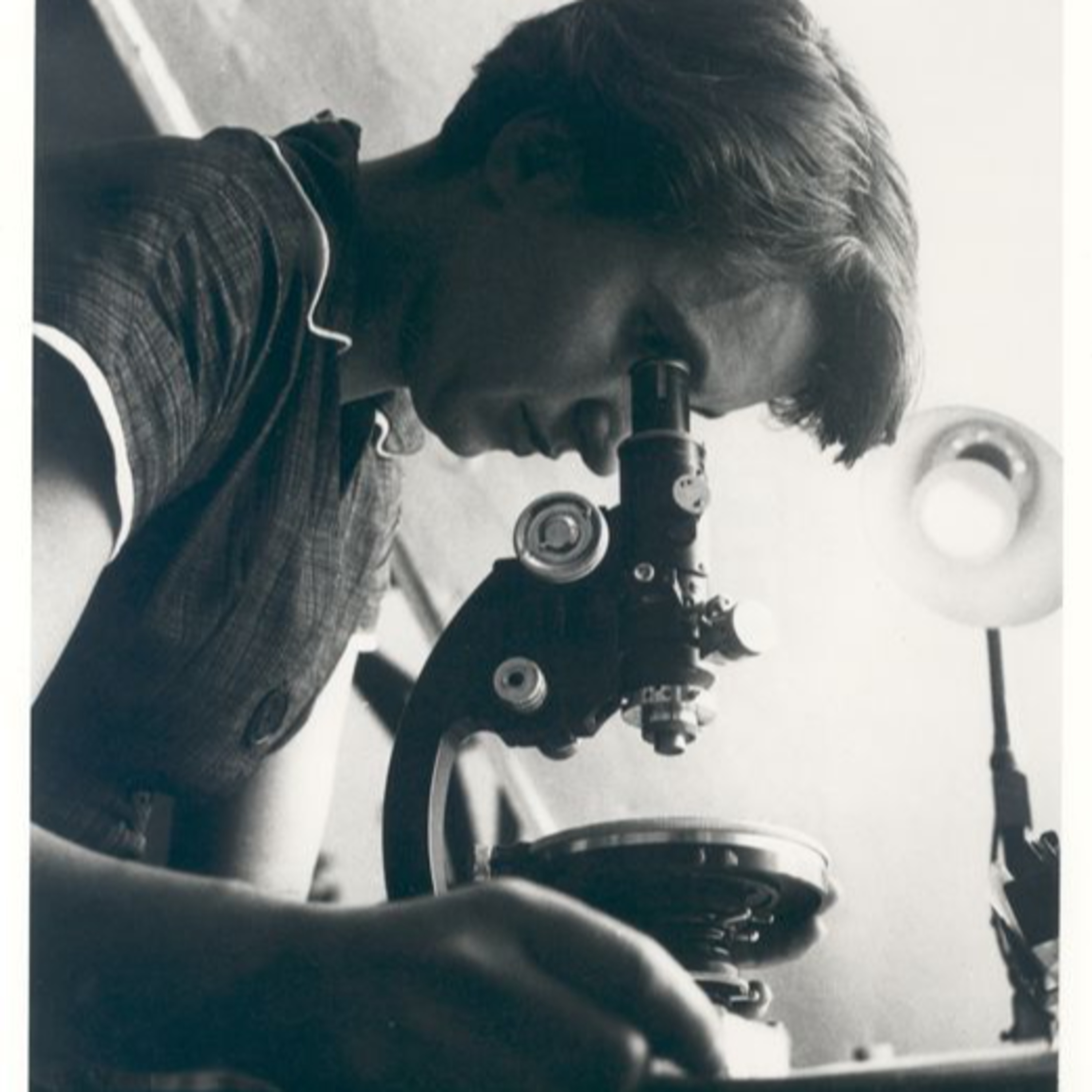
Mileva Marić was a brilliant physicist and mathematician, but we’ll never know what all she could have accomplished because a classmate knocked her up out of wedlock and she had to give up her career to care for their children. That classmate, named Albert Einstein, later divorced her after he decided he’d rather marry his cousin, though he did pay child support, including the money when he won the Nobel for work they likely collaborated on together. Mileva was the only woman in their class at Zürich Polytechnic and only the second woman to complete her studies in the Department of Mathematics and Physics. She had hoped to pursue a PhD, but her pregnancy and subsequent marriage derailed that plan. Although her husband never publicly acknowledged her contributions, contemporaneous sources, including witnesses and letters between the two, indicate that much of his work was the result of collaborations with her. He wrote to Mileva: “How happy and proud I will be when the two of us together will have brought our work on relative motion to a victorious conclusion.” He reputedly declared at a social gathering, “I need my wife. She solves for me all my mathematical problems”. American chemist Alice Augusta Ball developed the most effective treatment for leprosy of the early 20th century. She was the first woman and first African American to earn a master's degree from the University of Hawaii, and to be a chemistry professor at the university. After studying the kava plant for her master’s thesis, Ball developed a technique to make the plant’s oil injectable and able to be absorbed by the body. While it couldn’t cure or fully stop the progress of leprosy indefinitely, hers was the only effective treatment for leprosy available until sulfonamide drugs were developed in the 1940s. Unfortunately, she became ill and died at age 24 before she could publish her findings. Her graduate study advisor, who was also dean of the college and later university president, stole her research and, after additional trials, published her work without acknowledging her at all, even naming it after himself. She was largely forgotten until the 1970s, when University of Hawaii professors found records of her research and fought for recognition for her. Since then, she has posthumously received a variety of awards and acknowledgements, including a proclamation that Feb 28 is now "Alice Augusta Ball Day" in Hawaii. English chemist and crystallographer Rosalind Franklin is best known for her work on X-ray diffraction images of DNA while at King's College London. By refining existing techniques and tools, she was able to get clearer images than her colleague Maurice Wilkins, who apparently didn’t like her for personal reasons. As a result, she was able to identify the “helical structure” of DNA. One image, Photo 51, taken by her student Raymond Gosling, led to the discovery of the DNA double helix for which Francis Crick, James Watson, and Wilkins shared the Nobel Prize in Physiology or Medicine in 1962. Wilkins’ main contribution seems to have been showing Watson the photo Franklin's student captured using her methods under her guidance. Keep in mind, that was after Watson, who originally wanted to talk to Franklin, pissed her off by implying she didn’t know how to interpret her own data. It’s also worth noting that Watson racked up decades of racist, sexist, homophobic, anti-Semitic, and even fat-shaming remarks, including offensive comments about Franklin herself. Yet even he suggested that Franklin should have ideally been awarded a Nobel Prize in Chemistry; however, as Franklin died in 1958, she would have been ineligible as the Nobel committee does not award prizes posthumously. Incidentally, at the time of her death from ovarian cancer at age 37, she was leading pioneering work on the molecular structures of viruses. Her team member Aaron Klug continued her research, winning the Nobel Prize in Chemistry in 1982. So really, she should have won twice.

Mileva Marić was a brilliant physicist and mathematician, but we’ll never know what all she could have accomplished because a classmate knocked her up out of wedlock and she had to give up her career to care for their children. That classmate, named Albert Einstein, later divorced her after he decided he’d rather marry his cousin, though he did pay child support, including the money when he won the Nobel for work they likely collaborated on together. Mileva was the only woman in their class at Zürich Polytechnic and only the second woman to complete her studies in the Department of Mathematics and Physics. She had hoped to pursue a PhD, but her pregnancy and subsequent marriage derailed that plan. Although her husband never publicly acknowledged her contributions, contemporaneous sources, including witnesses and letters between the two, indicate that much of his work was the result of collaborations with her. He wrote to Mileva: “How happy and proud I will be when the two of us together will have brought our work on relative motion to a victorious conclusion.” He reputedly declared at a social gathering, “I need my wife. She solves for me all my mathematical problems”. American chemist Alice Augusta Ball developed the most effective treatment for leprosy of the early 20th century. She was the first woman and first African American to earn a master's degree from the University of Hawaii, and to be a chemistry professor at the university. After studying the kava plant for her master’s thesis, Ball developed a technique to make the plant’s oil injectable and able to be absorbed by the body. While it couldn’t cure or fully stop the progress of leprosy indefinitely, hers was the only effective treatment for leprosy available until sulfonamide drugs were developed in the 1940s. Unfortunately, she became ill and died at age 24 before she could publish her findings. Her graduate study advisor, who was also dean of the college and later university president, stole her research and, after additional trials, published her work without acknowledging her at all, even naming it after himself. She was largely forgotten until the 1970s, when University of Hawaii professors found records of her research and fought for recognition for her. Since then, she has posthumously received a variety of awards and acknowledgements, including a proclamation that Feb 28 is now "Alice Augusta Ball Day" in Hawaii. English chemist and crystallographer Rosalind Franklin is best known for her work on X-ray diffraction images of DNA while at King's College London. By refining existing techniques and tools, she was able to get clearer images than her colleague Maurice Wilkins, who apparently didn’t like her for personal reasons. As a result, she was able to identify the “helical structure” of DNA. One image, Photo 51, taken by her student Raymond Gosling, led to the discovery of the DNA double helix for which Francis Crick, James Watson, and Wilkins shared the Nobel Prize in Physiology or Medicine in 1962. Wilkins’ main contribution seems to have been showing Watson the photo Franklin's student captured using her methods under her guidance. Keep in mind, that was after Watson, who originally wanted to talk to Franklin, pissed her off by implying she didn’t know how to interpret her own data. It’s also worth noting that Watson racked up decades of racist, sexist, homophobic, anti-Semitic, and even fat-shaming remarks, including offensive comments about Franklin herself. Yet even he suggested that Franklin should have ideally been awarded a Nobel Prize in Chemistry; however, as Franklin died in 1958, she would have been ineligible as the Nobel committee does not award prizes posthumously. Incidentally, at the time of her death from ovarian cancer at age 37, she was leading pioneering work on the molecular structures of viruses. Her team member Aaron Klug continued her research, winning the Nobel Prize in Chemistry in 1982. So really, she should have won twice.

NOW PLAYING

Women Who Should Have Won Nobel Prizes in the Sciences (1)

0:00 4:40

No transcript for this episode yet

We transcribe on demand. Request one and we'll notify you when it's ready — usually under 10 minutes.

No similar episodes found.

2 Old Ladies Walking Rozee 2 Old Ladies Walking features the journeys, insights, and light conversation between Liz and Rosie, two women of a certain age who live in the Hudson Valley of New York. From pelvic floor challenges and life with young adult children to food, bird calls, fear of “mad lamb” disease, and myriad topics in between, we cover it all while walking on the scenic trails of the northeast, or wherever our travels take us. Join us and have a listen! The Hannah McGuire Podcast Hannah McGuire For women seeking encouragement on their mission of living a life of wild faith.www.hannahmcguire.com 🎙️Truth and Testimony the Broadcast Ray Gauthier & Adrian Scott This Podcast discusses and teaches the word of God. You will hear about world news and how it relates to bible prophecy. You will also hear interviews and testimonies from men and women of God who have devoted their lives to serving Yeshua (Jesus). Hosted by Ray Gauthier and Adrian Scott. These two long term broadcast colleagues have joined forces once again to provide you the highest quality in broadcast excellence, all for the glory of Yahweh: the God of all creation!You can see most of the podcasts uploaded here at our Youtube Channel.https://www.youtube.com/@truthandtestimonythebroadcast Thriving Woman Natasha Kredl Thriving Woman is the podcast where woman gather to come learn, grow & evolve. We love personal growth without "the work" or the perfectionism. Our pillars consists of being HEALTHY AF, CREATIVE & CONNECTIVE and FIERCE & FLEXIBLE. We discuss mental health, the pursuit of joy, emotional maturity, partnerships, womanhood, motherhood & postpartum, money & biz, self expression, nervous system & so much more. Postpartum Confessionals is also a series we have going on weekly to support women navigate their motherhood experience without shame or judgement.

Frequently Asked Questions

How long is this episode of Infinite Women?

This episode is 4 minutes long.

When was this Infinite Women episode published?

This episode was published on January 23, 2023.

What is this episode about?

Mileva Marić was a brilliant physicist and mathematician, but we’ll never know what all she could have accomplished because a classmate knocked her up out of wedlock and she had to give up her career to care for their children. That classmate, named...

Can I download this Infinite Women episode?

Yes, you can download this episode by clicking the download button on the episode player, or subscribe to the podcast in your preferred podcast app for automatic downloads.
URL copied to clipboard!