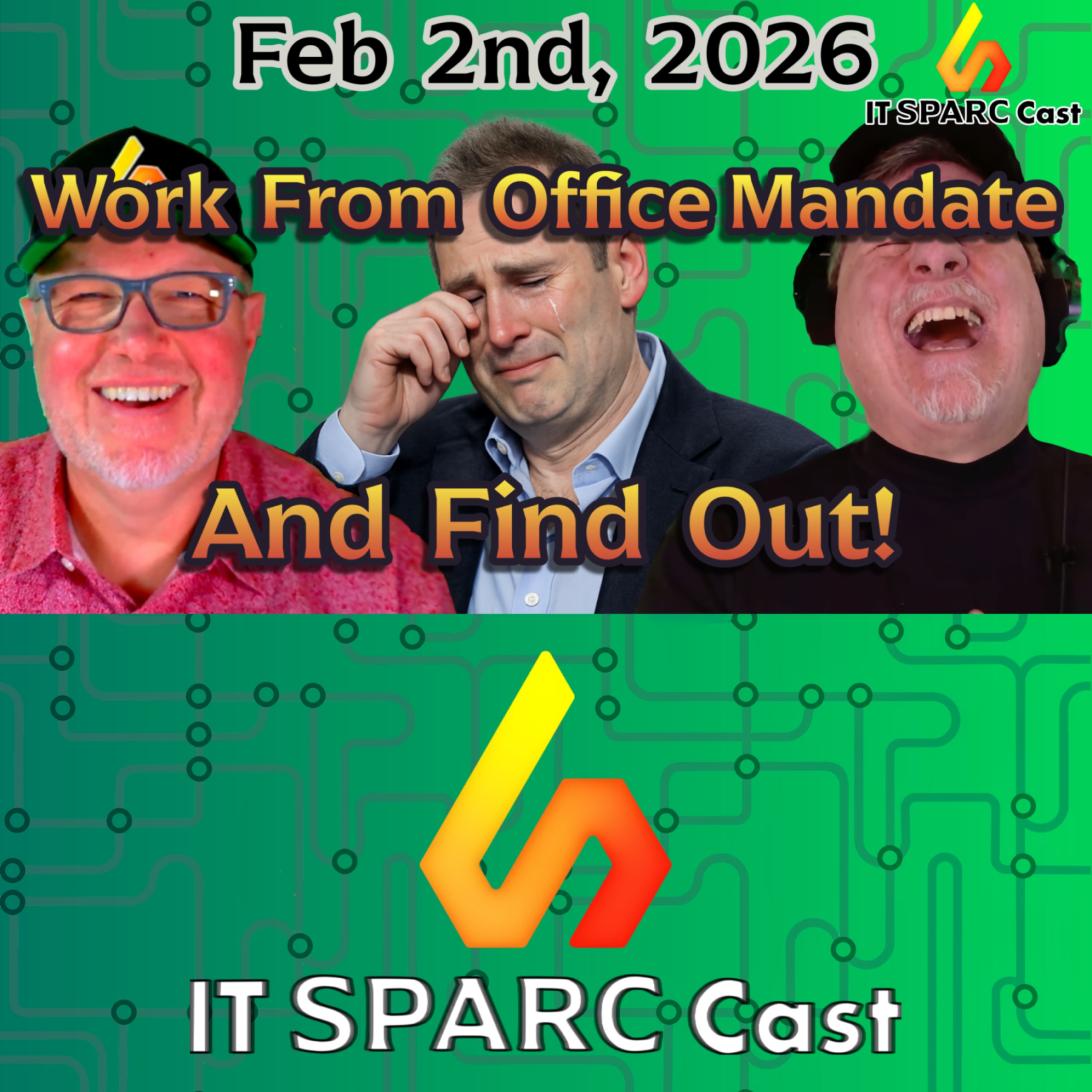
Work-From-Office Fallout, Rocket-Powered Data Center Cooling & Microsoft’s New AI Chip episode artwork

EPISODE · Feb 2, 2026 · 23 MIN

Work-From-Office Fallout, Rocket-Powered Data Center Cooling & Microsoft’s New AI Chip

from IT SPARC Cast

In this episode of IT SPARC Cast – News Bytes, John Barger & Lou Schmidt break down three stories that reveal how enterprise IT is being reshaped by workforce realities, infrastructure constraints, and custom silicon. From mounting evidence that work-from-office mandates are driving top talent out the door, to a Los Angeles startup using SpaceX rocket technology to cool data centers without water, to Microsoft unveiling a massive new AI inference chip designed to scale efficiently.The discussion connects culture, power, cooling, and compute—showing why AI growth isn’t just about models and GPUs, but about solving the physical and human constraints that come with them. If you’re responsible for enterprise IT strategy, infrastructure planning, or talent retention, this episode delivers context you won’t get from headlines alone.⸻⏱️ Show Notes00:00 – IntroJohn and Lou preview a packed episode covering remote-work backlash, radical new data-center cooling approaches, and Microsoft’s latest move to control its AI destiny with custom silicon.⸻📰 News Bytes01:00 – Work-From-Office Mandate? Expect Top Talent Turnover and Culture RotNew research highlighted by CIO Magazine shows that strict return-to-office mandates are driving increased attrition among top performers, longer hiring cycles, and declining trust. John and Lou unpack why “butts-in-seats” metrics fail modern organizations and how poor remote-management skills—not productivity—are often the real problem.https://www.cio.com/article/4119562/work-from-office-mandate-expect-top-talent-turnover-culture-rot.html ⸻08:14 – L.A. Startup Uses SpaceX Tech to Cool Data Centers With Less Power and No WaterAn LA-based startup is applying SpaceX rocket turbopump technology and supercritical CO₂ to dramatically reduce data-center cooling power, footprint, and water usage. The hosts explain why cooling—not chips—is becoming one of the biggest bottlenecks in AI expansion and how innovations like this could unlock sustainable growth.https://finance.yahoo.com/news/l-startup-uses-spacex-tech-175628363.html⸻14:11 – Microsoft Announces a Powerful New Chip for AI InferenceMicrosoft unveils the Maia 200, a custom AI inference accelerator built on TSMC’s 3-nm process with 100 billion transistors. John and Lou break down why inference-optimized chips matter, how this fits into a broader trend of hyperscalers building custom silicon, and why efficiency per watt is becoming the defining metric for AI at scale.https://techcrunch.com/2026/01/26/microsoft-announces-powerful-new-chip-for-ai-inference/⸻🔁 Wrap Up19:49 – Mail BagListener feedback revisits classic operating systems, early AI roots, and why distributed computing concepts from decades ago are suddenly relevant again.22:47 – Wrap UpJohn and Lou close by emphasizing that AI’s future depends on solving power, cooling, and organizational challenges—not just shipping faster chips.⸻🔗 Connect With UsIT SPARC Cast@ITSPARCCast on Xhttps://www.linkedin.com/company/sparc-sales/ on LinkedInJohn Barger@john_Video on Xhttps://www.linkedin.com/in/johnbarger/Lou Schmidt@loudoggeek on Xhttps://www.linkedin.com/in/louis-schmidt-b102446/ on LinkedIn Hosted on Acast. See acast.com/privacy for more information.

In this episode of IT SPARC Cast – News Bytes, John Barger & Lou Schmidt break down three stories that reveal how enterprise IT is being reshaped by workforce realities, infrastructure constraints, and custom silicon. From mounting evidence that work-from-office mandates are driving top talent out the door, to a Los Angeles startup using SpaceX rocket technology to cool data centers without water, to Microsoft unveiling a massive new AI inference chip designed to scale efficiently.The discussion connects culture, power, cooling, and compute—showing why AI growth isn’t just about models and GPUs, but about solving the physical and human constraints that come with them. If you’re responsible for enterprise IT strategy, infrastructure planning, or talent retention, this episode delivers context you won’t get from headlines alone.⸻⏱️ Show Notes00:00 – IntroJohn and Lou preview a packed episode covering remote-work backlash, radical new data-center cooling approaches, and Microsoft’s latest move to control its AI destiny with custom silicon.⸻📰 News Bytes01:00 – Work-From-Office Mandate? Expect Top Talent Turnover and Culture RotNew research highlighted by CIO Magazine shows that strict return-to-office mandates are driving increased attrition among top performers, longer hiring cycles, and declining trust. John and Lou unpack why “butts-in-seats” metrics fail modern organizations and how poor remote-management skills—not productivity—are often the real problem.https://www.cio.com/article/4119562/work-from-office-mandate-expect-top-talent-turnover-culture-rot.html ⸻08:14 – L.A. Startup Uses SpaceX Tech to Cool Data Centers With Less Power and No WaterAn LA-based startup is applying SpaceX rocket turbopump technology and supercritical CO₂ to dramatically reduce data-center cooling power, footprint, and water usage. The hosts explain why cooling—not chips—is becoming one of the biggest bottlenecks in AI expansion and how innovations like this could unlock sustainable growth.https://finance.yahoo.com/news/l-startup-uses-spacex-tech-175628363.html⸻14:11 – Microsoft Announces a Powerful New Chip for AI InferenceMicrosoft unveils the Maia 200, a custom AI inference accelerator built on TSMC’s 3-nm process with 100 billion transistors. John and Lou break down why inference-optimized chips matter, how this fits into a broader trend of hyperscalers building custom silicon, and why efficiency per watt is becoming the defining metric for AI at scale.https://techcrunch.com/2026/01/26/microsoft-announces-powerful-new-chip-for-ai-inference/⸻🔁 Wrap Up19:49 – Mail BagListener feedback revisits classic operating systems, early AI roots, and why distributed computing concepts from decades ago are suddenly relevant again.22:47 – Wrap UpJohn and Lou close by emphasizing that AI’s future depends on solving power, cooling, and organizational challenges—not just shipping faster chips.⸻🔗 Connect With UsIT SPARC Cast@ITSPARCCast on Xhttps://www.linkedin.com/company/sparc-sales/ on LinkedInJohn Barger@john_Video on Xhttps://www.linkedin.com/in/johnbarger/Lou Schmidt@loudoggeek on Xhttps://www.linkedin.com/in/louis-schmidt-b102446/ on LinkedIn Hosted on Acast. See acast.com/privacy for more information.

NOW PLAYING

Work-From-Office Fallout, Rocket-Powered Data Center Cooling & Microsoft’s New AI Chip

0:00 23:43

No transcript for this episode yet

We transcribe on demand. Request one and we'll notify you when it's ready — usually under 10 minutes.

No similar episodes found.

No similar podcasts found.

Frequently Asked Questions

How long is this episode of IT SPARC Cast?

This episode is 23 minutes long.

When was this IT SPARC Cast episode published?

This episode was published on February 2, 2026.

What is this episode about?

In this episode of IT SPARC Cast – News Bytes, John Barger & Lou Schmidt break down three stories that reveal how enterprise IT is being reshaped by workforce realities, infrastructure constraints, and custom silicon. From mounting evidence that...

Can I download this IT SPARC Cast episode?

Yes, you can download this episode by clicking the download button on the episode player, or subscribe to the podcast in your preferred podcast app for automatic downloads.
URL copied to clipboard!