
EPISODE · Nov 21, 2024 · 11 MIN
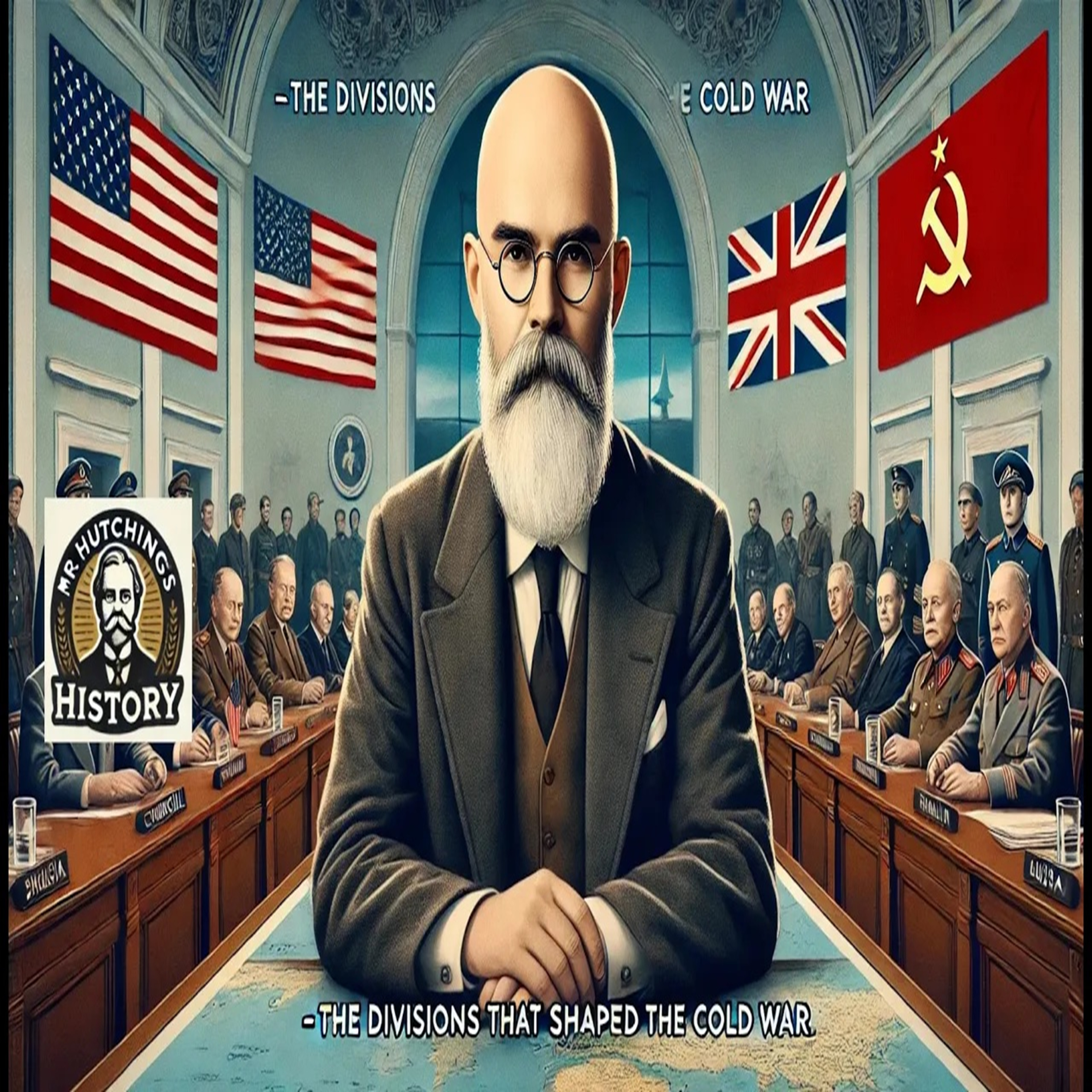
Yalta Conference – The Divisions That Shaped the Cold War
from Mr. Hutchings History · host Produced, created, and written by Harold M. Hutchings
Welcome toMr. Hutchings History! In this episode, we explore the pivotal Yalta Conference of 1945, where the leaders of the U.S., the U.K., and the Soviet Union—Roosevelt, Churchill, and Stalin—met to decide the post-war future of Europe. While their collaboration against Nazi Germany marked a moment of unity, the conference also exposed deep ideological and strategic divides that set the stage for the Cold War.We’ll dive into key decisions on Germany, Poland, and Eastern Europe, and examine how Stalin's demands for Soviet security and control collided with the Western Allies’ vision for a democratic Europe. Roosevelt’s approach, based on trust in Stalin, and Churchill’s concerns about Soviet expansion, created lasting tensions. Key agreements on the division of Germany and the fate of Poland were pivotal, but these would soon turn into Cold War flashpoints.Historians offer various perspectives on Yalta: Traditionalists argue it marked the beginning of Soviet domination, while Revisionists suggest Stalin’s actions were motivated by security needs. Post-Revisionists and Realists offer more nuanced views, pointing to miscommunication and power politics as the root causes.Join us as we dissect how the Yalta Conference sowed the seeds for the Cold War and redefined the future of Europe.#Paper2WorldHistory #ColdWar #YaltaConference #SuperpowerRivalry #Roosevelt #Stalin #Churchill #PostWarEurope #IdeologicalDivide #SovietExpansion #Germany #Poland #ColdWarHistoryWorks CitedDallek, Robert. Franklin D. Roosevelt and American Foreign Policy, 1932-1945. Oxford UP, 1995.Gaddis, John Lewis. The Cold War: A New History. Penguin, 2005.Leffler, Melvyn P. A Preponderance of Power: National Security, the Truman Administration, and the Cold War. Stanford UP, 1992.Schlesinger, Arthur M. The Coming of the New Deal. Houghton Mifflin, 1959.Chapters(0:00) Introduction – The High-Stakes Poker GameInside the Yalta Conference, where world leaders negotiated the fate of post-war Europe.(0:51) Stalin’s Strategy – Security Through ControlWhy Stalin demanded a buffer zone and how Soviet troops shaped negotiations.(1:49) Roosevelt’s Vision – The Hope for a United NationsDid FDR truly trust Stalin, or was he making a necessary gamble for peace?(2:41) Churchill’s Warning – The Iron Curtain Begins to FallWhy Churchill feared Soviet expansion and saw early signs of Cold War divisions.(3:36) Poland – The Key Battleground for PowerShifting borders, Soviet control, and the West’s struggle to secure free elections.(4:53) Was Roosevelt Naïve or Playing the Best Hand?The debate over whether FDR miscalculated or made the best deal possible.(6:02) The Fate of Germany – The Seeds of DivisionHow Yalta set the stage for East and West Germany and the Cold War’s front line.(7:13) Stalin’s True Intentions – The Reality of ‘Free Elections’Why Soviet-backed governments in Eastern Europe shattered Allied hopes.(8:28) Historians Debate – Was the Cold War Inevitable?Traditionalists, revisionists, and post-revisionists weigh in on Yalta’s consequences.(9:47) The Lessons of Yalta – Power, Diplomacy, and MiscalculationsWhy understanding history’s complexities helps us navigate modern conflicts.(10:51) Conclusion – What Would You Have Done?Reflecting on Yalta’s impossible choices and their lasting impact on world history.
What this episode covers
Welcome toMr. Hutchings History! In this episode, we explore the pivotal Yalta Conference of 1945, where the leaders of the U.S., the U.K., and the Soviet Union—Roosevelt, Churchill, and Stalin—met to decide the post-war future of Europe. While their collaboration against Nazi Germany marked a moment of unity, the conference also exposed deep ideological and strategic divides that set the stage for the Cold War.We’ll dive into key decisions on Germany, Poland, and Eastern Europe, and examine how Stalin's demands for Soviet security and control collided with the Western Allies’ vision for a democratic Europe. Roosevelt’s approach, based on trust in Stalin, and Churchill’s concerns about Soviet expansion, created lasting tensions. Key agreements on the division of Germany and the fate of Poland were pivotal, but these would soon turn into Cold War flashpoints.Historians offer various perspectives on Yalta: Traditionalists argue it marked the beginning of Soviet domination, while Revisionists suggest Stalin’s actions were motivated by security needs. Post-Revisionists and Realists offer more nuanced views, pointing to miscommunication and power politics as the root causes.Join us as we dissect how the Yalta Conference sowed the seeds for the Cold War and redefined the future of Europe.#Paper2WorldHistory #ColdWar #YaltaConference #SuperpowerRivalry #Roosevelt #Stalin #Churchill #PostWarEurope #IdeologicalDivide #SovietExpansion #Germany #Poland #ColdWarHistoryWorks CitedDallek, Robert. Franklin D. Roosevelt and American Foreign Policy, 1932-1945. Oxford UP, 1995.Gaddis, John Lewis. The Cold War: A New History. Penguin, 2005.Leffler, Melvyn P. A Preponderance of Power: National Security, the Truman Administration, and the Cold War. Stanford UP, 1992.Schlesinger, Arthur M. The Coming of the New Deal. Houghton Mifflin, 1959.Chapters(0:00) Introduction – The High-Stakes Poker GameInside the Yalta Conference, where world leaders negotiated the fate of post-war Europe.(0:51) Stalin’s Strategy – Security Through ControlWhy Stalin demanded a buffer zone and how Soviet troops shaped negotiations.(1:49) Roosevelt’s Vision – The Hope for a United NationsDid FDR truly trust Stalin, or was he making a necessary gamble for peace?(2:41) Churchill’s Warning – The Iron Curtain Begins to FallWhy Churchill feared Soviet expansion and saw early signs of Cold War divisions.(3:36) Poland – The Key Battleground for PowerShifting borders, Soviet control, and the West’s struggle to secure free elections.(4:53) Was Roosevelt Naïve or Playing the Best Hand?The debate over whether FDR miscalculated or made the best deal possible.(6:02) The Fate of Germany – The Seeds of DivisionHow Yalta set the stage for East and West Germany and the Cold War’s front line.(7:13) Stalin’s True Intentions – The Reality of ‘Free Elections’Why Soviet-backed governments in Eastern Europe shattered Allied hopes.(8:28) Historians Debate – Was the Cold War Inevitable?Traditionalists, revisionists, and post-revisionists weigh in on Yalta’s consequences.(9:47) The Lessons of Yalta – Power, Diplomacy, and MiscalculationsWhy understanding history’s complexities helps us navigate modern conflicts.(10:51) Conclusion – What Would You Have Done?Reflecting on Yalta’s impossible choices and their lasting impact on world history.
NOW PLAYING
Yalta Conference – The Divisions That Shaped the Cold War
No transcript for this episode yet
Similar Episodes
Dec 24, 2024 ·48m
Nov 16, 2024 ·23m
Oct 27, 2024 ·41m
Oct 27, 2024 ·26m
Oct 27, 2024 ·37m
Oct 27, 2024 ·35m