
EPISODE · Jun 21, 2026 · 13 MIN
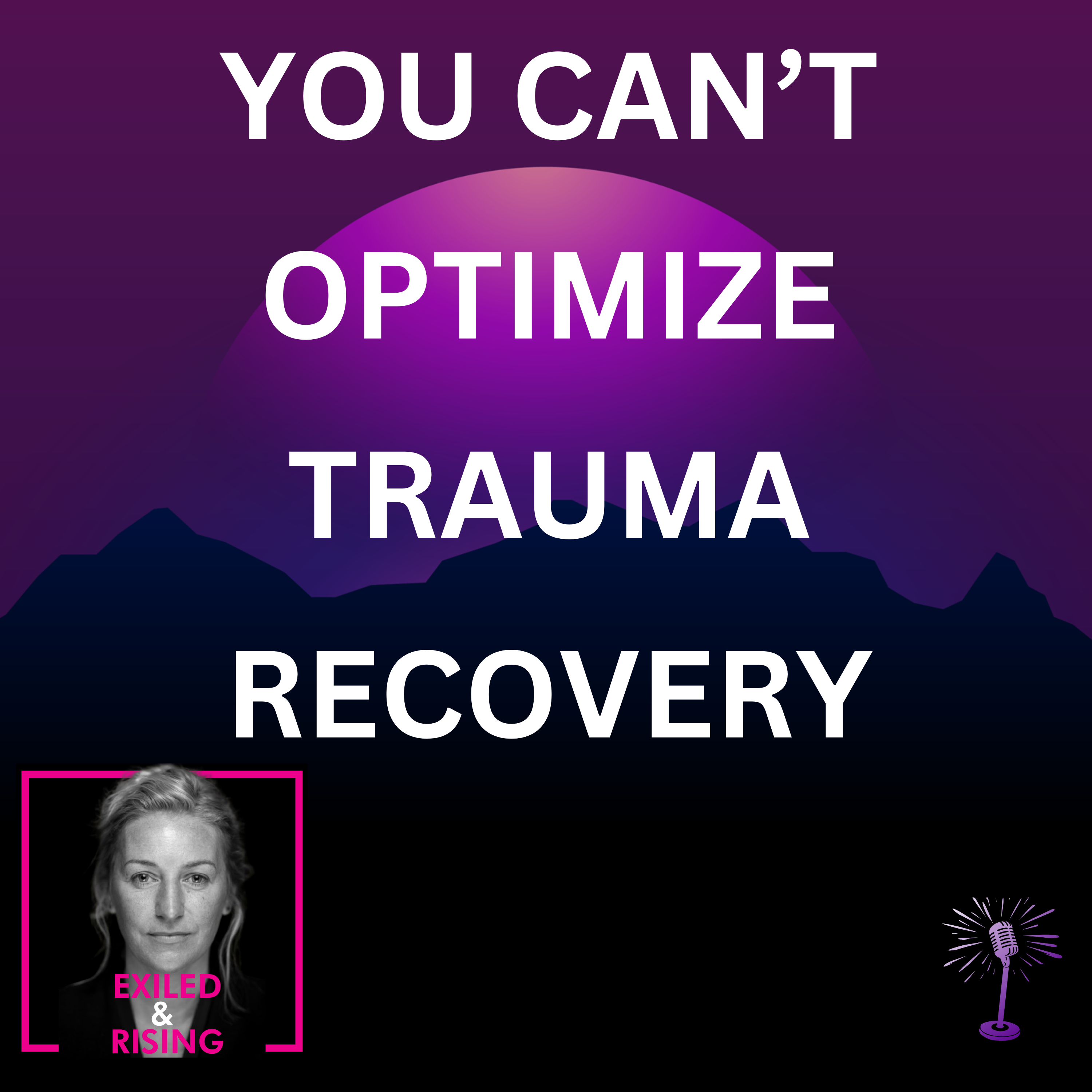
You Cannot Optimize Your Way Out of Trauma: Healing Is Not Another Hustle
from Exiled & Rising: Trauma Recovery & Somatic Healing · host Ana Mael
Trauma Recovery Cannot Be Hacked. Healing Is Not Hustle. What if trauma recovery is not failing because you are not trying hard enough… but because you have been trying to survive your healing instead of grieving your pain? In this profound episode, Ana Mael explores one of the biggest misunderstandings in modern trauma and PTSD recovery: the belief that healing can be optimized through endless productivity, discipline, nervous system hacks, biohacking, routines, self-improvement, and performance culture. Ana examines how survival strategies that once protected trauma survivors can later become barriers to emotional recovery. She speaks about the hidden exhaustion many people experience in therapy, healing spaces, wellness culture, startup culture, hustle culture, and social media optimization culture — where even healing itself becomes another form of over-functioning and survival. This episode explores: trauma recovery and high-functioning survival PTSD and over-optimization grief as a missing piece in healing nervous system exhaustion why trauma survivors struggle to slow down somatic healing and emotional integration why productivity culture harms trauma recovery unresolved grief and emotional suppression hypervigilance, over-functioning, and survival identity the fear of stillness in trauma survivors why healing cannot be treated like a performance system the difference between functioning and true recovery Ana also explores the concept of the “unwept soul” — the grief that remains stored in the body when survivors are never given permission to mourn what happened, what was lost, and who they had to become in order to survive. names a hidden crisis happening inside modern trauma recovery: Many trauma survivors are no longer only exhausted from trauma — they are exhausted from trying to heal trauma through endless performance, optimization, and survival efforting. That is a very important insight. The piece gives language to an experience many people quietly carry but cannot articulate: “Why do I feel exhausted even from healing?” Ana answers this directly. Because healing itself has started to mirror survival. That is the core impact of the piece. Why this resonates deeply Most trauma survivors already live with nervous systems organized around: hypervigilance anticipation over-functioning productivity control perfectionism emotional overriding urgency And modern healing culture often unknowingly reinforces those exact same survival patterns. More: routines tracking discipline regulation systems hacks workshops supplements productivity healing goals The piece exposes this paradox brilliantly: The same survival intelligence that once protected people can later prevent them from recovering. That realization is deeply relieving for many listeners. Because it removes shame. It shifts trauma survivors from: “I am failing healing.” to: “My nervous system may still be surviving instead of grieving.” That is a profound shift. Why it is psychologically important The piece restores legitimacy to grief. Modern culture tolerates: performance resilience optimization achievement functioning But struggles with: devastation slowness mourning emotional collapse surrender deep grief Ana rehumanizes healing. She says: grief is not weakness rest... Chapters (00:00:00) - Trauma Recovery: Optimizing Our Grief(00:06:44) - How to Heal From Trauma(00:13:18) - Anna Mail on PTSD and Trauma Recovery
What this episode covers
Trauma Recovery Cannot Be Hacked. Healing Is Not Hustle. What if trauma recovery is not failing because you are not trying hard enough… but because you have been trying to survive your healing instead of grieving your pain? In this profound episode, Ana Mael explores one of the biggest misunderstandings in modern trauma and PTSD recovery: the belief that healing can be optimized through endless productivity, discipline, nervous system hacks, biohacking, routines, self-improvement, and performance culture. Ana examines how survival strategies that once protected trauma survivors can later become barriers to emotional recovery. She speaks about the hidden exhaustion many people experience in therapy, healing spaces, wellness culture, startup culture, hustle culture, and social media optimization culture — where even healing itself becomes another form of over-functioning and survival. This episode explores: trauma recovery and high-functioning survival PTSD and over-optimization grief as a missing piece in healing nervous system exhaustion why trauma survivors struggle to slow down somatic healing and emotional integration why productivity culture harms trauma recovery unresolved grief and emotional suppression hypervigilance, over-functioning, and survival identity the fear of stillness in trauma survivors why healing cannot be treated like a performance system the difference between functioning and true recovery Ana also explores the concept of the “unwept soul” — the grief that remains stored in the body when survivors are never given permission to mourn what happened, what was lost, and who they had to become in order to survive. names a hidden crisis happening inside modern trauma recovery: Many trauma survivors are no longer only exhausted from trauma — they are exhausted from trying to heal trauma through endless performance, optimization, and survival efforting. That is a very important insight. The piece gives language to an experience many people quietly carry but cannot articulate: “Why do I feel exhausted even from healing?” Ana answers this directly. Because healing itself has started to mirror survival. That is the core impact of the piece. Why this resonates deeply Most trauma survivors already live with nervous systems organized around: hypervigilance anticipation over-functioning productivity control perfectionism emotional overriding urgency And modern healing culture often unknowingly reinforces those exact same survival patterns. More: routines tracking discipline regulation systems hacks workshops supplements productivity healing goals The piece exposes this paradox brilliantly: The same survival intelligence that once protected people can later prevent them from recovering. That realization is deeply relieving for many listeners. Because it removes shame. It shifts trauma survivors from: “I am failing healing.” to: “My nervous system may still be surviving instead of grieving.” That is a profound shift. Why it is psychologically important The piece restores legitimacy to grief. Modern culture tolerates: performance resilience optimization achievement functioning But struggles with: devastation slowness mourning emotional collapse surrender deep grief Ana rehumanizes healing. She says: grief is not weakness rest...
NOW PLAYING
You Cannot Optimize Your Way Out of Trauma: Healing Is Not Another Hustle
No transcript for this episode yet
Similar Episodes
Apr 15, 2026 ·28m
Mar 12, 2026 ·14m
Feb 17, 2026 ·21m
Feb 14, 2026 ·11m
Jan 5, 2026 ·61m
Dec 29, 2025 ·33m