
EPISODE · Jan 30, 2026 · 16 MIN
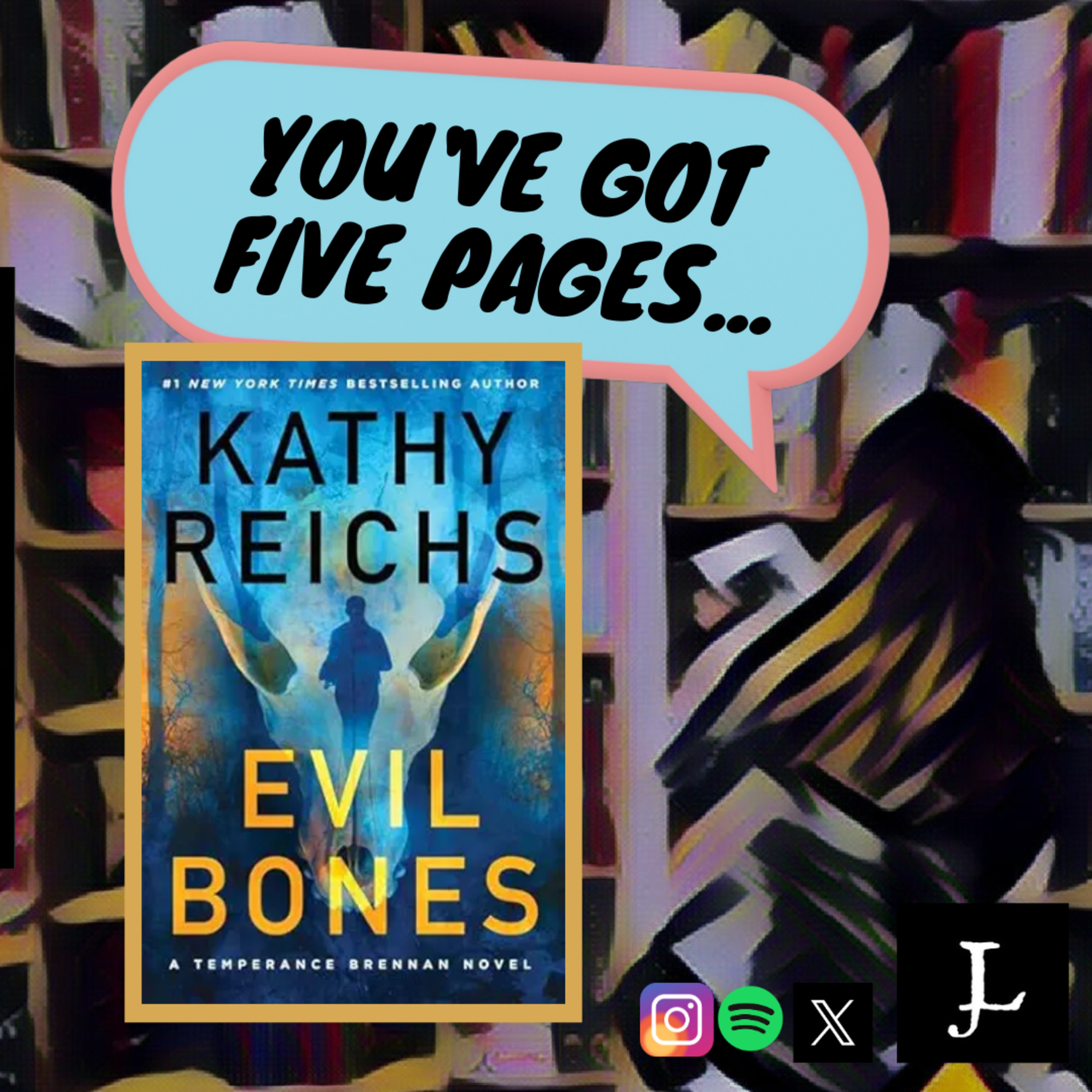
You've Got Five Pages, Evil Bones by Kathy Reichs, to Tell Me You're Good.
from You've Got Five Pages...To Tell Me It's Good · host Jean Lee
Welcome back, my fellow creatives!Yup, I'm back to looking at the first five pages of various stories, for those five pages can make or break the engagement of a reader--or an agent. So, let's scope out the stories of others to see how they hook an audience!The prologue focuses on an elderly woman who should not bedriving in a rainstorm. She constantly puts herself down through all the prayers and panic in the weather. While this emotional/environmental pacing works fine, the prose here gets...odd. For example:Brake now! A cluster of panicky neurons bellowed.Waiting until you can safely pull off! a more rational gaggle countermanded.Bellowing neurons countermanded by a gaggle of neurons....Come again?Awkward bits like this made it very difficult to care whatwas going on with this woman, and considering this book is a thriller, I should care about what happens to this vulnerable old woman. But this is a prologue, and with such awkward prose I'm just powering through to see what Chapter 1 islike.And sure enough, Chapter 1 is different. It's first-personnarration from Temperance the protagonist, bemused by a frog she hears outside her office. She's supposed to be annotating reports from all her cases that year, and she lists some major categories of those cases involving skeletalremains, how they're found, etc. Typically, exposition like this could turn readers off, but after that awkward prologue, I found this approach refreshing. I'm a first-timer with this series, and within a page and a half I got a good senseof this character, her personality, and her field of expertise. Plus, by page 3 of the first chapter, Temperance is called to visit an old lady who crashed her car in a storm because she was shocked by an animal mutilation. Why on earth did we need the prologue when the first chapter was going to warp us over to the scene of the crime anyway?Yet another case of the prologue doing no favors. The firstchapter could have hooked us and reeled us in for the inciting incident without a problem. Readers do not have to see preludes to The Incident, especially when that prelude is prioritizing elements barely tangential to the storyline. Letreaders imagine the prelude on their own terms, or allow unreliable character narrators to share their perspectives. It's just another way to throw fresh layers of mystery over the plot to keep readers moving forward, ever curious about what hides in the storm.And what will we discover in the next story's five pages?We'll have to wait and see. xxxxRead on, share on, and write on, my friends!
Embed this episode
NOW PLAYING
You've Got Five Pages, Evil Bones by Kathy Reichs, to Tell Me You're Good.
No transcript for this episode yet
Similar Episodes
No similar episodes found.
Similar Podcasts
No similar podcasts found.