
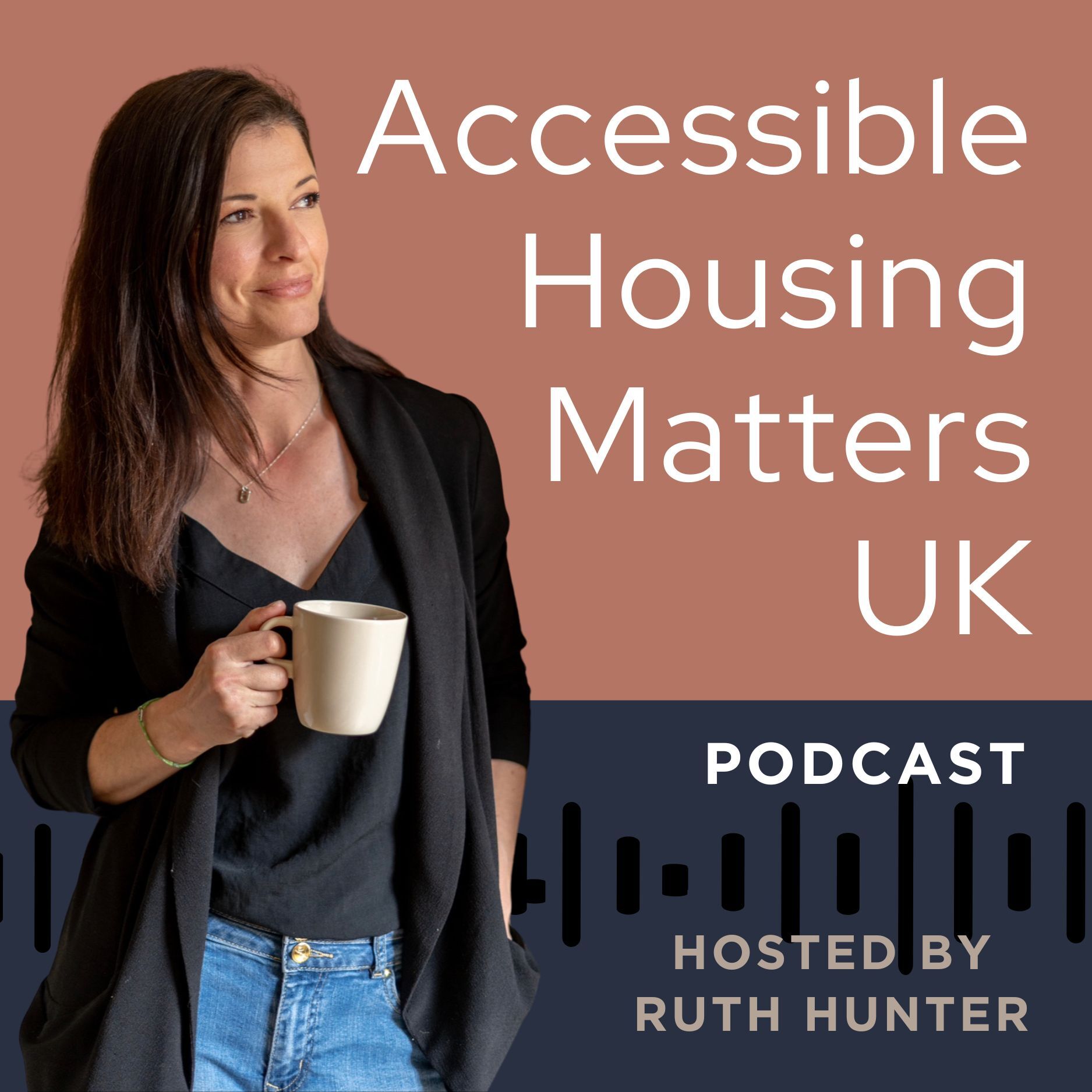
PODCAST · society
Accessible Housing Matters UK
by Ruth Hunter
If you care about homes that work for everyone, this podcast is for you. Each episode of Accessible Housing Matters UK dives into real conversations with the people shaping the future of inclusive living — from developers and designers to policy makers and everyday people with lived experience.You’ll discover inspiring stories, innovative solutions, and practical insights that prove accessibility doesn’t mean compromise — it means better design for all. Whether you’re a property professional, architect, landlord, or someone passionate about equality and independence, you’ll come away informed, motivated, and empowered to be part of the change.Thanks for listening to Accessible Housing Matters UK!If you’re inspired to learn more or want to explore working with me on creating accessible, inclusive, and beautiful properties, I’d love to hear from you.👉 Visit www.veredusproperty.co.uk📩 Email me directly at [email protected]🔗 Connect with me on LinkedIn: linkedin.com/in/ruthh
-
17
Building Accessible Homes from the Start, with Luis Canto E Castro
Season 2 Ep 4 Summary Ruth Hunter is joined by disability inclusion and accessibility consultant Luis Canto E Castro for a powerful and deeply personal conversation about the reality of inaccessible housing in the UK. Living with spinal muscular atrophy, Luis shares firsthand experience of navigating unsuitable homes, inaccessible bathrooms, restrictive care policies, and the challenges of trying to access support through the Disabled Facilities Grant (DFG) system after moving to the UK from South Africa. Together, Ruth and Luis explore why retrofitting homes is often far more expensive and traumatic than building accessible homes from the start, why current housing standards still fail many disabled people, and how outdated policies continue to leave thousands trapped in unsuitable housing. They also discuss societal attitudes towards disability, the importance of lived experience in decision-making, and why accessible housing should be viewed as essential infrastructure, not an optional extra. Chapters 00:00 — Welcome + introduction to Luis Canto E Castro 01:00 — Luis’ lived experience with spinal muscular atrophy 02:58 — Moving to the UK and working in accessibility and inclusion 04:35 — The Inside Housing article and the need for accessible homes from the start 06:01 — Why current accessibility standards still fail disabled people 07:53 — Unsafe housing, inaccessible thresholds, and losing independence 11:23 — Trying to navigate the DFG system and online discrimination 14:34 — The government’s £50 million DFG funding announcement 17:38 — Why accessible homes should be designed for lifetime living 19:44 — Developers, “value engineering,” and accessibility being removed from schemes 22:18 — Why most people still don’t understand the accessible housing crisis 23:16 — Representation, politics, and the lack of disabled voices in decision-making 29:27 — Disability awareness, schools, and societal change 31:13 — Luis’ personal experience applying for a Disabled Facilities Grant 35:18 — Being refused DFG funding despite needing adaptations 38:38 — Self-funding home adaptations and creating independence 42:00 — Leaving agency care and taking control through direct payments 45:33 — What needs to change in the DFG system 47:23 — Why the UK must rethink accessible housing policy 48:18 — Where to find Luis and connect online Keywords Accessible housing, universal design, disability inclusion, spinal muscular atrophy, Disabled Facilities Grant, DFG, accessible homes, wheelchair users, M4(2), M4(3), housing policy, inclusive housing, disability advocacy, accessible bathrooms, adaptations, retrofitting homes, housing crisis, disability discrimination, accessible design, independent living, planning policy, social care, universal housing, ageing in place, lifetime homes, inclusive environments, disability awareness Contact details Luis Canto E Castro LinkedIn: Luis Canto E Castro Thanks for listening to Accessible Housing Matters UK! If you’re inspired to learn more or want to explore working with me on creating accessible, inclusive, and beautiful properties, I’d love to hear from you. 👉 Visit www.veredusproperty.com 📩 Email me directly at [email protected] 🔗 Connect with me on LinkedIn: linkedin.com/in/ruthhunter
-
16
The Hidden Crisis: Life After Injury in an Inaccessible System
Season 2 Ep 3 Summary Ruth Hunter is joined by Glyn Hayes, accessible housing advocate and Public Affairs Coordinator at the Spinal Injuries Association. After sustaining a spinal cord injury in 2017, Glyn experienced firsthand just how inaccessible the UK housing system can be, from losing his home and job to being placed in unsuitable temporary accommodation. With lived experience, a background in local government, and deep insight into planning policy, he now campaigns for better provision of wheelchair accessible homes across the UK. Together, Ruth and Glyn explore the reality of navigating housing after life-changing injury, the lack of accessible rental stock, why local councillors have more power than most people realise, and how housing policy continues to fail disabled people. They also unpack the urgent need for more M4(3) wheelchair accessible homes, why the National Planning Policy Framework matters, and how accessible housing is not just a social issue but an economic one too. Chapters 00:00 — Welcome + introduction to Glyn Hayes 01:18 — Glyn’s injury, losing his home, and navigating unsuitable housing 04:36 — Why local councillors can be key in housing cases 10:13 — Leaving hospital, losing work, and trying to rebuild life 17:03 — From lived experience to advocacy and policy work 25:22 — Why the National Planning Policy Framework matters 30:18 — The shortage of wheelchair accessible homes and the push for 10% M4(3) 33:17 — How local plans and developers continue to fail disabled people 42:28 — The economic case for accessible housing 48:21 — Why accessible homes must work inside and out 53:02 — Where to find Glyn and learn more Keywords Accessible housing, wheelchair accessible homes, spinal cord injury, Spinal Injuries Association, Glyn Hayes, M4(2), M4(3), National Planning Policy Framework, NPPF, local councillors, planning policy, accessible homes, disability housing, inclusive design, housing crisis, temporary accommodation, housing advocacy, wheelchair users, local plans, planning committees, developers, economic case for accessible housing, universal design, disabled parking, dropped kerbs, holistic design Contact details Glyn Hayes / Spinal Injuries Association LinkedIn: Glyn Hayes Website: www.spinal.co.uk Email: www.veredusproperty.com 📩 Email me directly at [email protected] 🔗 Connect with me on LinkedIn: linkedin.com/in/ruthhunter
-
15
Equity of Experience: Rethinking Accessibility in Architecture with Suzanne Tate
Season 2 Ep 2 Summary Ruth Hunter is joined by Suzanne Tate, founder of Studio TO, an award-winning architecture practice with a passion for inclusive design and creating spaces that support human potential. Together they explore why accessibility should never be an afterthought, how discrimination has been designed into our buildings, and why the industry must move beyond tick-box compliance to focus on equity of experience, how a space feels to move through, arrive in, and belong in. Suzanne also shares insight from her role judging the Civic Trust Awards (including the Selwyn Goldsmith Award for Universal Design), including standout examples of inclusive architecture and a real-world case where “public” design still pushed wheelchair users to a lesser side entrance. Chapters 00:00 — Welcome + introduction to Suzanne Tate and Studio TO 01:12 — How Ruth and Suzanne met and why this conversation has been a long time coming 03:03 — Suzanne’s approach: architecture through psychology, wellbeing and human potential 05:20 — Why design education misses accessibility and how Suzanne learned through lived exposure 07:50 — Experiencing the built world differently: wheelchairs, blindness, autism and sensory needs 11:04 — Why awareness still isn’t widespread (architects, developers and homeowners) 12:01 — Designing for life: the questions private clients should be asked during renovations 12:59 — Beyond compliance: why “code-based” design doesn’t create inclusive experiences 16:29 — Civic Trust judging: what they assess beyond aesthetics and architecture trends 18:52 — A standout project: Southeast Dance in Brighton and why it’s a benchmark 21:18 — Why a brilliant project still might not win (and how high the bar is) 22:05 — The “how did this happen?” moment: a new public entrance with steps 24:39 — Side entrances and inequality: why equity of experience matters 25:33 — A major shift: designing for emotional experience, not just widths and regs 27:08 — Designing for children and what it teaches us about scale and perception 28:13 — Proving the model: Ruth and Suzanne’s first joint project and what it aims to show 29:52 — The language problem: why “accessible design” creates resistance and assumptions 31:20 — Reframing as humanity, wellbeing and intuitive support (not “ugly” adaptations) 33:11 — Invisible Creations and the power of normalising supportive features 35:55 — The commercial question: value, rent and demand (and why we need proof) 36:58 — Fundamentals developers can implement now without blowing budgets 39:03 — Suzanne’s magic wand: mindset shift before anything else changes 39:55 — Suzanne’s message: challenge yourself, every small change compounds 40:57 — Where to find Studio TO + how to connect with Suzanne Keywords Universal design, inclusive design, accessible housing, equity of experience, discrimination by design, Civic Trust Awards, Selwyn Goldsmith Award, Studio TO, architecture, interior architecture, sensory design, autism-friendly spaces, wellbeing in buildings, mobility, wheelchair access, level thresholds, wider doorways, corridor widths, prams and strollers, ageing population, design legacy, inclusive workplaces, Brighton Southeast Dance, side entrance accessibility, Invisible Creations, grab rails, supportive design features Contact details Suzanne Tate / Studio TO Instagram: studio_to_london LinkedIn: Suzanne Tate Website: www.studio-to.co.uk Thanks for listening to Accessible Housing Matters UK! If you’re inspired to learn more or want to explore working with me on creating accessible, inclusive, and beautiful properties, I’d love to hear from you. 👉 Visit www.veredusproperty.com 📩 Email me directly at [email protected] 🔗 Connect with me on LinkedIn: linkedin.com/in/ruthhunter Together, we can make accessible housing the standard, not the exception. Don’t forget to subscribe, leave a review, and share this episode with someone who cares about inclusive living!
-
14
Lord Richard Best — Why Accessible Housing Still Isn’t the Default (and What Must Change)
Summary Ruth Hunter is joined by Lord Richard Best, one of the UK’s most influential voices in housing policy and a long-standing campaigner for Lifetime Homes and inclusive design. Lord Best shares how the Lifetime Homes movement began, why accessibility progress has stalled, and what needs to change now — including making M4(2) the default through Building Regulations and creating trusted Good Home Hubs so people can get impartial support to adapt their homes before crisis hits. The conversation also explores the power of major housebuilders, the economics of preventing falls, and why stigma and poor design still stop people from accepting adaptations. Chapters 00:00 — Welcome + introduction to Lord Richard Best 01:39 — The letter that changed everything: Dr Jenny Morris calls out a lack of accessibility 03:20 — Creating Lifetime Homes: the 16 principles and “homes for a whole lifetime” 05:00 — Housebuilders’ resistance and why standards work best when they’re mandatory 06:22 — The lift analogy: how regulation normalises better design 08:30 — Why we need to move beyond M4(1): the case for M4(2) as baseline 09:48 — Lifetime Homes vs specialist older persons’ housing: why both matter 11:31 — Falls, delayed discharge, and the real cost of inaccessible homes 12:56 — The biggest lever: upgrading Building Regulations (M4(2) as mandatory) 16:04 — The “oligopoly”: how a handful of major builders shape delivery 18:23 — Downsizing as a housing solution: accessible homes unlocking family stock 19:33 — A practical model: redeveloping underused garage sites into accessible homes 23:05 — Planning delays aren’t just policy — they’re resourcing and skills 26:14 — Retrofitting reality: we’ll never build enough new homes for an ageing population 28:42 — The “push factor”: why people act late, not early 30:03 — DFG support and why many people still don’t know where to start 31:03 — Equity loans for adaptations: unlocking value to fund home improvements 32:40 — BATH-OUT: why bathing is one of the most powerful adaptations 36:02 — Stigma and aesthetics: why people refuse adaptations (and what good design changes) 38:41 — Safety and “visual markers”: how poor exterior design can increase vulnerability 40:28 — Two priorities: upgrade regs + create Good Home Hubs 46:44 — Political churn: why progress keeps resetting (housing minister turnover) 48:46 — How to contact Lord Best Keywords Accessible housing, Lifetime Homes, universal design, Building Regulations, Approved Document M, M4(1), M4(2), M4(3), inclusive design, ageing population, occupational therapy (OT), Disabled Facilities Grant (DFG), home adaptations, walk-in showers, falls prevention, delayed discharge, social housing, planning system, housebuilder oligopoly, Good Home Hubs, Centre for Ageing Better, Habinteg, Joseph Rowntree Foundation, Dr Jenny Morris Contact details Lord Richard Best: [email protected] 🔗 Connect with Lord Best on LinkedIn (search: Lord Best) Thanks for listening to Accessible Housing Matters UK! If you’re inspired to learn more or want to explore working with me on creating accessible, inclusive, and beautiful properties, I’d love to hear from you. 👉 Visit www.veredusproperty.com 📩 Email me directly at [email protected] 🔗 Connect with me on LinkedIn: linkedin.com/in/ruthhunter Together, we can make accessible housing the standard, not the exception. Don’t forget to subscribe, leave a review, and share this episode with someone who cares about inclusive living!
-
13
From Planning Battles to Beautiful Homes: The Story of 1 Level Developments
Season 2 - Ep 1 Summary In this episode of Accessible Housing Matters UK, Ruth kicks off Season 2 with a deep dive into accessible bungalow design with small-scale developer Allan Craigen, founder and director of 1 level Developments.. Allan shares his journey from running a scaffolding business to buying a modest plot of land at auction with the vision of creating a flagship accessible bungalow scheme. He and Ruth talk candidly about planning refusals over garden sizes, the true cost of surveys and drainage strategies, and why choosing the right architect and builder is absolutely critical when you’re aiming for more than just “wide doors and a ramp”. They then dig into the nuts and bolts of inclusive design: hybrid M4(2)/M4(3) layouts, level thresholds instead of ramps, properly sized bathrooms and hallways, reinforced walls for future grab rails, and an accessible kitchen designed with input from accessibility specialist Adam Thomas. Allan is refreshingly honest about the mistakes, the extra costs (hello piling!), and what he’d do differently next time to make accessible development scalable, sellable, and commercially viable. Whether you’re a developer, investor, designer, OT, or you just care about where we’re all going to live as we age, this episode is full of practical insight from someone who’s learning by doing – one accessible bungalow at a time. Chapters 00:00 – Welcome, Season 2 intro & meet Allan 02:06 – From scaffolding to small developer: Allan’s background 06:25 – Buying the plot at auction & why bungalows 10:48 – First planning application and refusal over garden sizes 14:45 – Surveys, drainage strategies & the hidden cost of planning 18:33 – Should you do pre-apps and options? Lessons in risk 24:00 – Finding the right architect and discovering accessibility isn’t “just wider doors” 27:45 – Hallways, bathrooms & a hybrid approach between M4(2) and M4(3) 33:20 – Designing an accessible kitchen with Symphony and Adam Thomas 37:38 – Bathroom layouts, grab rails, plywood backing & real-life usability 45:10 – MMC vs traditional build, piling costs and below-ground surprises 52:00 – Working with builders: level thresholds, ramps and practical site issues 59:40 – Heating choices, underfloor vs radiators and keeping corridors clear 01:02:20 – Selling the bungalows & creating a bespoke combined home 01:07:35 – Key learnings, what Allan would do differently & marketing future schemes 01:12:20 – How to connect with Allan & closing thoughts Keywords Accessible housing, Accessible bungalows, Single-storey homes, Ageing in place, Universal design, Part M, M4(2), M4(3), Inclusive design, Planning permission, Garden size standards, Developers, Property investors, Accessible kitchens, Wet rooms, Level access, Building costs, Piling, Small-scale development, Future-proof homes Contact details Allan Craigen – Founder, Level One Developments 📞 07815 152693 🔗 Connect with Allan on LinkedIn (search: Allan Craigen) Thanks for listening to Accessible Housing Matters UK! If you’re inspired to learn more or want to explore working with me on creating accessible, inclusive, and beautiful properties, I’d love to hear from you. 👉 Visit www.veredusproperty.com 📩 Email me directly at [email protected] 🔗 Connect with me on LinkedIn: linkedin.com/in/ruthhunter Together, we can make accessible housing the standard, not the exception. Don’t forget to subscribe, leave a review, and share this episode with someone who cares about inclusive living!
-
12
Insights of Accessible Homes from a Building Inspector: with Jack Calveley
EP - 10 Summary In this episode of Accessible Housing Matters UK, Ruth Hunter is joined by Jack Calveley, a registered building inspector with a passion for ensuring accessibility isn’t just a box-ticking exercise but a lived reality. Together, they unpack Approved Document M4 – the section of UK building regulations that covers accessible and adaptable housing. Jack explains the key differences between M4(1) visitable dwellings and M4(2) adaptable dwellings, the most common mistakes developers make, and why working with the right contractors and designers is crucial to getting compliance right. Whether you’re a developer, investor, architect, or simply interested in how we can create homes that work for everyone, this conversation is packed with practical advice and real-world insights. Chapters 00:00 – Welcome & introduction 01:05 – Jack’s journey into building control and accessibility 04:00 – Understanding Part M and why it matters 06:58 – The difference between M4(1) and M4(2) 09:32 – Reinforced walls, wider stairs, and future-proofing homes 12:30 – Common mistakes developers make on site 16:00 – Finding the right contractors and architects 20:53 – Why knowledge and collaboration are crucial 23:39 – The design details that make the biggest difference 27:49 – Accessibility in refurbishments and small-scale developments 30:24 – What you can and can’t remove when renovating 33:11 – Preparing for the future of housing standards 37:12 – Final thoughts and how to connect with Jack Keywords Accessible housing, Building regulations, Approved Document M, M4(1), M4(2), Adaptable homes, Visitable dwellings, Building control, Universal design, Housing standards, Developers, Property investors, Refurbishments, Future-proof housing Contact details Jack Calveley – Registered Building Inspector Find Jack on LinkedIn (search: Jack T Calveley) Thanks for listening to Accessible Housing Matters UK! If you’re inspired to learn more or want to explore working with me on creating accessible, inclusive, and beautiful properties, I’d love to hear from you. 👉 Visit www.veredusproperty.com 📩 Email me directly at [email protected] 🔗 Connect with me on LinkedIn: linkedin.com/in/ruthhunter Together, we can make accessible housing the standard, not the exception. Don’t forget to subscribe, leave a review, and share this episode with someone who cares about inclusive living!
-
11
Accessible Homes Week Special: Setting M4(2) as the New Normal
EP - 10 This special Accessible Homes Week episode of Accessible Housing Matters UK features Ruth in conversation with Christina McGill, Director of Social Impact & External Affairs at Habinteg. Christina has been at the forefront of national campaigns — from For Accessible Homes Week to co-chairing the Home Coalition — making sure accessibility is recognised as an issue that benefits everyone, not just a minority. Together, Ruth and Christina explore why Approved Document M4(1) isn’t enough, why M4(2) should be the baseline for all new housing, and what’s needed to deliver M4(3) wheelchair user homes at scale. They bust common myths around cost, space, and demand, reveal the real social and economic benefits of accessible housing, and set out a clear 3-step roadmap for government and industry. 👉 As part of Accessible Homes Week, don’t miss the special webinar panel — with lived experience voices, forward-thinking local authorities, and new research findings. 📅 Wednesday 10th September, 11:00am (BST) 🔗 Register here for the Accessible Homes Week Webinar Chapters [00:01] Welcome & intro to Christina + Habinteg [02:26] Accessible Homes Week webinar preview (panel + new research) [04:04] Why M4(1) falls short (steps allowed, tiny WCs, garden access) [10:37] Attitude + design: level from the outset vs “add a ramp” [13:56] The cost myth: typical M4(2)/M4(3) uplifts when planned early [16:38] Real demand: waiting lists, 400k+ in unsuitable homes, data caveats [20:45] Marketing gap: why private M4(3) homes aren’t reaching buyers [22:16] Economic & health benefits: fewer falls, quicker discharge, 4× work likelihood [27:24] Making accessibility beautiful (Invisible Creations & normalising safety) [31:45] Message to local authorities: NPPF, evidence, and setting M4(2) expectations [38:03] Will M4(3) help planning outcomes? On-the-ground examples [42:57] Policy levers now: housing plan baseline, Homes England criteria, New Towns, training [47:59] Many developer obligations; why a single baseline simplifies delivery [50:51] Building control: consistent enforcement & best-practice upskilling [57:32] Christina’s 3-step roadmap (policy → education → co-design) [1:01:50] Designing with lived experience (ramps, landings, natural light) [1:02:31] Wrap-up & invites Keywords Accessible Housing, Habinteg, Approved Document M, M4(1) / M4(2) / M4(3), Wheelchair Accessible Homes, Universal Design, Planning Policy, Building Control, Homes England, NPPF, New Towns, Falls Prevention, Hospital Discharge, Inclusive Design, Cheltenham, Gloucestershire Contact Details Guest — Christina McGill / Habinteg • Website: https://www.habinteg.org.uk/ • LinkedIn: https://www.linkedin.com/in/christina-mcgill-53150110/ • Email: [email protected] Host — Ruth Hunter • Website: www.veredusproperty.co.uk • Email: www.veredusproperty.com 📩 Email me directly at [email protected] 🔗 Connect with me on LinkedIn: linkedin.com/in/ruthhunter Together, we can make accessible housing the standard, not the exception. Don’t forget to subscribe, leave a review, and share this episode with someone who cares about inclusive living!
-
10
Before You Call the Architect, Call These People
EP-9 Summary: In this episode of Accessible Housing Matters UK, Ruth Hunter talks with Georgina Berry and Victoria Malcher from OT33 Occupational Therapy. With decades of experience as housing-specialist OTs, they reveal how their work bridges the gap between clinical assessment and practical housing solutions. From bespoke adaptations to future-proofed design, Georgina and Victoria explain why involving an OT early in the build process can save time, money, and stress — and lead to homes that genuinely work for the people who live in them. Chapters: [00:00] Introduction: Meet Georgina and Victoria, and learn about OT33’s housing and moving & handling expertise. [03:42] What Is Occupational Therapy? Understanding the role of an OT and how it supports quality of life. [07:44] Specialist Housing Focus: Why not all OTs are the same — and why developers need housing specialists. [10:09] Finding the Right OT: How to access an OT through local authorities or privately. [12:41] Bespoke Assessments: How OT33 tailors recommendations to each client’s needs and lifestyle. [19:24] Designing for Complex Needs: From turning circles to carers’ accommodation — what “fit for purpose” really means. [24:00] Top Housing Priorities: Insights from clients, families, and support teams — with some surprises. [29:03] Impactful Projects: Real-life stories of homes that transformed lives. [33:20] Future-Proofing Homes: Why developers should think beyond minimum building regs — and consider lifts. [35:35] Final Message: Bring OTs in from the start to create homes that truly work. Keywords Occupational Therapy, Accessible Design, Inclusive Housing, Developer Insights, Future-Proofing Contact Details for OT33: 📧 Email: www.ot33.co.uk 📞 Phone: 01604 340 988 💼 LinkedIn: Search “OT33” plus Georgina Berry and Victoria Malcher Thanks for listening to Accessible Housing Matters UK! If you’re inspired to learn more or want to explore working with me on creating accessible, inclusive, and beautiful properties, I’d love to hear from you. 👉 Visit www.veredusproperty.com 📩 Email me directly at [email protected] 🔗 Connect with me on LinkedIn: linkedin.com/in/ruthhunter Together, we can make accessible housing the standard, not the exception. Don’t forget to subscribe, leave a review, and share this episode with someone who cares about inclusive living!
-
9
Smart Homes: Future-Proofing with Chris Lewis
EP - 8 Summary: In this episode of Accessible Housing Matters UK, Ruth Hunter talks with Chris Lewis, a cybersecurity expert and smart home advocate. Chris shares his expertise on integrating affordable, privacy-focused smart systems into homes to support vulnerable residents, enhancing accessibility with smart lighting, locks, water safety, and emergency alerts. Chapters: [00:00] Introduction: Meet Chris Lewis and learn about his extensive background in cybersecurity and smart home technology. [05:15] Future-Proofing Homes: Discover the importance of integrating smart technology to future-proof homes. [12:30] Cost-Effective Systems: Learn how to implement smart systems without relying on internet connectivity. [20:45] Privacy Benefits: Explore the privacy advantages of using open-source smart home hubs. [28:00] Developer Insights: Practical steps for developers to integrate smart technology during the build stage. Keywords Smart Home, Accessibility, Tech Innovation, Privacy, Future-Proofing Contact Details for Chris: Chris Lewis is available on LinkedIn and can be reached via email at [email protected]. Thanks for listening to Accessible Housing Matters UK! If you’re inspired to learn more or want to explore working with me on creating accessible, inclusive, and beautiful properties, I’d love to hear from you. 👉 Visit www.veredusproperty.com 📩 Email me directly at [email protected] 🔗 Connect with me on LinkedIn: linkedin.com/in/ruthhunter Together, we can make accessible housing the standard, not the exception. Don’t forget to subscribe, leave a review, and share this episode with someone who cares about inclusive living!
-
8
Championing Accessibility: Scott Whitney's Journey
EP-7 Summary In this episode, Ruth Hunter interviews Scott Whitney, founder of All4Inclusion, who shares his personal journey of becoming disabled and the challenges he faces in advocating for accessibility and inclusivity. Scott discusses the importance of community, the struggles of finding accessible housing, and the mental health impacts of his experiences. He emphasises the need for better design in housing and the role of government in ensuring accessibility standards are met. Through his organisation, Scott aims to empower disabled voices and foster connections within the community. Chapters 00:00 Introduction to Scott Whitney and All4Inclusion 02:57 Scott's Journey to Disability and Its Impact 05:57 The Birth of All4Inclusion and Community Building 08:40 Navigating Mental Health Challenges and Purpose 11:37 Struggles with Housing and Accessibility 14:20 Experiences in Temporary Housing and Accessibility Issues 17:25 The Importance of Accessible Design in Housing 20:09 Real-Life Challenges Faced in Hotels and Emergency Housing 25:35 Navigating the Private Rental Market 28:04 Accessibility Challenges in Housing 30:54 Emergency Preparedness in Accessible Housing 35:06 The Impact of Housing on Mental Health 39:01 Recommendations for Future Housing Development Takeaways Scott Whitney founded All4Inclusion to support disabled individuals facing loneliness. His disability journey began suddenly in 2020, leading to significant life changes. Scott emphasizes the importance of community and connection for disabled individuals. Accessibility challenges in public transport and housing are prevalent and often overlooked. Mental health struggles are common among those with disabilities, especially during transitions. The search for accessible housing is fraught with difficulties and frustrations. Temporary housing solutions often fail to meet accessibility needs. Emergency evacuation plans for disabled individuals are often inadequate. Designing accessible properties requires input from the disabled community. Government policies need to prioritise accessibility in housing development. Keyword Accessibility, neurodiversity, disability, inclusivity, housing, mental health, community, All4Inclusion, Scott Whitney, design Contact details for Scott Whitney https://www.linkedin.com/in/scottjwhitney [email protected] Thanks for listening to Accessible Housing Matters UK! If you’re inspired to learn more or want to explore working with me on creating accessible, inclusive, and beautiful properties, I’d love to hear from you. 👉 Visit www.veredusproperty.com 📩 Email me directly at [email protected] 🔗 Connect with me on LinkedIn: linkedin.com/in/ruthhunter Together, we can make accessible housing the standard, not the exception. Don’t forget to subscribe, leave a review, and share this episode with someone who cares about inclusive living!
-
7
Navigating the Disabled Facilities Grant: Sandra Bentley’s Journey to an Accessible Home
EP - 6 Summary In this episode, Ruth Hunter speaks with Sandra Bentley, an accessibility advocate with a spinal cord injury, about her journey navigating the Disability Facilities Grant (DFG) to adapt her home. Sandra shares her experiences, challenges, and insights on the importance of autonomy in design, the role of occupational therapists, and the complexities of funding and VAT related to home adaptations. They discuss the need for policy change in accessible housing and the importance of educating developers and policymakers to create universally designed homes that meet the needs of all individuals, regardless of ability. Takeaways Sandra Bentley is a passionate accessibility advocate with lived experience of disability. Navigating the DFG can be complex and requires proactive engagement with local authorities. Occupational therapists play a crucial role in the home adaptation process. Home adaptations should prioritize the individual's needs and preferences, not just standard solutions. Understanding VAT implications can significantly impact the budget for home adaptations. It's essential to advocate for oneself and seek out available resources and funding. Designing accessible spaces can be aesthetically pleasing and functional. Policy change is necessary to ensure all new homes are built with accessibility in mind. Education for developers and policymakers is key to creating inclusive housing. Future-proofing homes is vital for accommodating changing needs over time. Chapters 00:00 Introduction to Accessibility Advocacy 04:12 Navigating Life Changes After Disability 10:10 Understanding the Disability Facilities Grant (DFG) 19:51 The Process of Home Adaptation and Project Management 24:53 Navigating the Builder Selection Process 27:31 Lessons Learned from Home Adaptations 29:56 Understanding Funding and Financial Support 30:54 VAT and Adaptations: What You Need to Know 35:04 The Need for Education in Accessible Housing 41:02 Future-Proofing Homes for All Keywords accessible housing, disability facilities grant, accessibility advocacy, home adaptations, occupational therapy, project management, universal design, VAT on adaptations, policy change, housing crisis Contact details for Sandra Bentley [email protected] Linkedin - https://www.linkedin.com/in/sandra-bentley-825407112 Thanks for listening to Accessible Housing Matters UK! If you’re inspired to learn more or want to explore working with me on creating accessible, inclusive, and beautiful properties, I’d love to hear from you. 👉 Visit www.veredusproperty.com 📩 Email me directly at [email protected] 🔗 Connect with me on LinkedIn: linkedin.com/in/ruthhunter Together, we can make accessible housing the standard, not the exception. Don’t forget to subscribe, leave a review, and share this episode with someone who cares about inclusive living!
-
6
From Challenges to Solutions: A Personal Story with Katy Deacon
EP - 5 Summary In this episode of Accessible Housing Matters UK, Katy Deacon shares her journey as a chartered engineer and her personal experiences with accessibility challenges due to multiple sclerosis. She discusses the importance of inclusive design in engineering, her efforts to modify her home for accessibility, and the financial and emotional hurdles she faced. Katy also highlights the role of benevolent funds in supporting individuals with disabilities and introduces her company, Towards Belonging, which aims to bridge the gap between the disabled community and the engineering industry. She concludes with an exciting project involving AI in design software to promote accessibility in architecture. Takeaways Accessibility must be a priority in engineering design. Personal experiences can drive professional change. Inclusive design benefits everyone, not just those with disabilities. Financial support options exist for home modifications. Benevolent funds can provide crucial assistance for those in need. Community engagement is essential for understanding accessibility needs. Innovative solutions can transform living spaces for wheelchair users. Education on accessibility should be integrated into engineering curricula. AI can streamline the process of creating accessible designs. Collaboration between disabled individuals and engineers is vital for progress. Chapters 00:00 Introduction to Katy Deacon's Journey 04:17 Personal Experience with Accessibility Challenges 08:35 Engineering Solutions for Accessibility 13:44 Financial Aspects of Home Modifications 21:57 The Role of Benevolent Funds 23:44 Towards Belonging: Bridging Gaps in Accessibility 27:34 Innovative Projects in Accessible Design Keywords accessible housing, engineering, disability, inclusivity, personal experience, home modifications, benevolent funds, Towards Belonging, AI in design, accessibility challenges Contact for Katy Deacon www.towardsbelonging.co.uk https://www.linkedin.com/in/katy-deacon Thanks for listening to Accessible Housing Matters UK! If you’re inspired to learn more or want to explore working with me on creating accessible, inclusive, and beautiful properties, I’d love to hear from you. 👉 Visit www.veredusproperty.co.uk 📩 Email me directly at [email protected] 🔗 Connect with me on LinkedIn: linkedin.com/in/ruthhunter Together, we can make accessible housing the standard, not the exception. Don’t forget to subscribe, leave a review, and share this episode with someone who cares about inclusive living!
-
5
Creating Inclusive Getaways: The AbleStays Journey with Charles van Berckel
EP- 4 Summary In this conversation, Ruth Hunter speaks with Charles Van Berkel, founder of AbleStays, about the importance of accessible holiday accommodation. They discuss the challenges faced in creating inclusive spaces, the financial hurdles in the accessible housing market, and the need for collaboration to improve accessibility in tourism. Charles shares his journey in establishing AbleStays and the vision for expanding accessible housing solutions internationally. Takeaways Accessible holiday accommodation is crucial for inclusion. The journey to create inclusive holiday lets is challenging. Finding suitable properties for adaptation is increasingly difficult. Financial barriers hinder the development of accessible housing. Lenders often undervalue accessible properties, complicating financing. There is a significant demand for accessible holiday accommodations. Universal design can help overcome financial valuation issues. Collaboration is essential to tackle the challenges in accessible housing. The need for education around accessible housing is paramount. Creating aspirational designs can benefit everyone, not just those with disabilities. Chapters 00:00 Introduction to Accessible Housing and AbleStays 14:25 The Journey of Creating Inclusive Holiday Lets 33:15 Challenges in Finding Accessible Properties 44:01 Financial Hurdles in Accessible Housing 56:03 The Future of Accessible Housing and Collaboration Contact for Charles van Berckel [email protected] https://www.ablestay.co.uk/ - please register for updates and bookings https://www.facebook.com/AbleStay https://www.instagram.com/ablestay_london/ Thanks for listening to Accessible Housing Matters UK! If you’re inspired to learn more or want to explore working with me on creating accessible, inclusive, and beautiful properties, I’d love to hear from you. 👉 Visit www.veredusproperty.co.uk 📩 Email me directly at [email protected] 🔗 Connect with me on LinkedIn: linkedin.com/in/ruthhunter Together, we can make accessible housing the standard, not the exception. Don’t forget to subscribe, leave a review, and share this episode with someone who cares about inclusive living!
-
4
Designing for Dignity and Independence with Laura Woods
Ep - 3 Summary In this episode, Ruth Hunter interviews Laura Wood, co-founder of Invisible Creations, discussing the importance of inclusive design in housing. Laura shares her inspiration from her grandmother's struggles with mobility and how it led to the creation of aesthetically pleasing and functional adaptations for homes. The conversation covers the significance of future-proofing designs, the cost-effectiveness of early interventions, and the need to change societal perceptions of accessibility. Laura emphasises the importance of outdoor accessibility and the role of campaigning in promoting inclusive design solutions. Takeaways Laura's grandmother inspired the creation of Invisible Creations. Minor adaptations can significantly improve independence for older adults. Stigma around traditional grab rails prevents necessary adaptations. Inclusive design benefits everyone, not just those with disabilities. Future-proofing homes can save costs on retrofitting later. Accessible design can be aesthetically pleasing and functional. Early intervention can prevent falls and health issues. Outdoor accessibility is crucial for mental well-being. Campaigning is essential to raise awareness about inclusive design. 91% of older adults live in mainstream housing, highlighting the need for adaptations. Chapters 00:00Introduction to Invisible Creations 03:11The Inspiration Behind the Business 05:45Designing for Dignity and Independence 08:51Future-Proofing Bathrooms and Kitchens 11:55Cost-Effectiveness of Accessible Design 14:57The Importance of Early Intervention 18:11Changing Perceptions of Accessibility 21:01Innovative Everyday Solutions 23:57The Future of Inclusive Design 27:02Outdoor Accessibility and Well-Being 29:53Campaigning for Change 33:04Conclusion and Call to Action Contact Laura Woods Here is the link for the Fit for our Future campaign www.fitforourfuture.co.uk Visit the websites www.invisiblecreations.co.uk and www.procare-ltd.co.uk for their products. Email [email protected] Thanks for listening to Accessible Housing Matters UK! If you’re inspired to learn more or want to explore working with me on creating accessible, inclusive, and beautiful properties, I’d love to hear from you. 👉 Visit www.veredusproperty.co.uk 📩 Email me directly at [email protected] 🔗 Connect with me on LinkedIn: linkedin.com/in/ruthhunter Together, we can make accessible housing the standard, not the exception. Don’t forget to subscribe, leave a review, and share this episode with someone who cares about inclusive living!
-
3
Beyond Ramps and Rails: Universal Interior Design with Elaine Hollerhead
Ep - 2 Summary In this conversation, Ruth Hunter and Elaine Hollerhead discuss the importance of accessible housing and universal design. Elaine shares her journey from occupational therapy to interior design, emphasising the need to change perceptions about accessible adaptations. They explore the concept of the 'purple pound' and the financial power of the disabled community, while also addressing common misconceptions about the demand for accessible housing. The discussion highlights the role of occupational therapists in the design process, the definition of universal design, and the importance of creating spaces that are functional yet aesthetically pleasing. They also touch on the challenges faced in the industry, the need for policy changes, and the potential market opportunities for accessible housing. Takeaways Accessible design should be functional and aesthetically pleasing. The purple pound represents significant spending power in the disabled community. There is a misconception that accessible housing is not in demand. Occupational therapists play a crucial role in housing adaptations. Universal design should cater to everyone, regardless of ability. Design mistakes often stem from a lack of understanding of universal needs. Both baths and showers can be incorporated into accessible designs. Policy changes are needed to prioritize accessible housing. There is a growing market for accessible properties. Collaboration with experts can enhance design outcomes. Chapters 00:00 Introduction to Accessible Housing 01:14 Elaine's Journey and Background 02:17 Perceptions of Accessible Housing 03:01 Understanding the Purple Pound 04:38 Challenges in Housing Adaptations 06:44 The Role of Occupational Therapists 08:22 Defining Universal Design 09:07 Common Mistakes in Design 12:16 Balancing Baths and Showers 15:35 Successful Design Examples 18:04 Cost-Effective Universal Design Tips 19:27 Finding Occupational Therapists 21:56 Policy Changes for Accessible Housing 24:21 Clientele and Market Opportunities Contact Elaine Hollerhead https://www.designate-uk.co.uk/ Telephone +44 117 3790049 Mobile +44 7557 309466 Thanks for listening to Accessible Housing Matters UK! If you’re inspired to learn more or want to explore working with me on creating accessible, inclusive, and beautiful properties, I’d love to hear from you. 👉 Visit www.veredusproperty.co.uk 📩 Email me directly at [email protected] 🔗 Connect with me on LinkedIn: linkedin.com/in/ruthhunter Together, we can make accessible housing the standard, not the exception. Don’t forget to subscribe, leave a review, and share this episode with someone who cares about inclusive living!
-
2
Understanding the Disabled Facilities Grant: Paul Smith Breaks It Down
Ep - 1 Summary In this episode of Accessible Housing Matters UK, host Ruth Hunter introduces the concept of accessible housing and the importance of Disabled Facilities Grants (DFGs). She interviews Paul Smith, director of Foundations, who explains the DFG process, eligibility, and the role of landlords in facilitating adaptations for tenants with disabilities. The conversation also covers the design aspects of accessible housing, emphasising the need for aesthetically pleasing adaptations that do not compromise on functionality. The episode concludes with a discussion on the benefits of investing in accessible adaptations for landlords and the potential for creating inclusive housing solutions. Takeaways Accessible housing is crucial for individuals with disabilities. Disabled Facilities Grants (DFGs) are available for all tenures. The average DFG amount is around £9,000 to £10,000. Landlords can apply for DFGs on behalf of tenants. The application process can take up to six months. Designing accessible spaces can be aesthetically pleasing. Investing in accessible adaptations can attract long-term tenants. Local authorities have discretion in DFG applications. Understanding means testing is essential for eligibility. Creating inclusive housing benefits the community as a whole. Chapters 00:00 Introduction to Accessible Housing Matters UK 05:12 Application Process for DFGs 14:53 Designing Accessible and Universal Spaces 21:08 Benefits of Accessible Adaptations for Landlords Contact Paul Smith [email protected] www.linkedin.com/paul-smith-63749b1a Thanks for listening to Accessible Housing Matters UK! If you’re inspired to learn more or want to explore working with me on creating accessible, inclusive, and beautiful properties, I’d love to hear from you. 👉 Visit www.veredusproperty.co.uk 📩 Email me directly at [email protected] 🔗 Connect with me on LinkedIn: linkedin.com/in/ruthhunter Together, we can make accessible housing the standard, not the exception. Don’t forget to subscribe, leave a review, and share this episode with someone who cares about inclusive living!
-
1
Welcome to Accessible Housing Matters UK: Why This Podcast Exists
In this short intro episode, host Ruth Hunter shares why this podcast was created, who it’s for, and what you can expect in upcoming episodes. If you're passionate about inclusive design, housing equity, or building a better future for everyone, you're in the right place.
We're indexing this podcast's transcripts for the first time — this can take a minute or two. We'll show results as soon as they're ready.
No matches for "" in this podcast's transcripts.
No topics indexed yet for this podcast.
Loading reviews...
ABOUT THIS SHOW
If you care about homes that work for everyone, this podcast is for you. Each episode of Accessible Housing Matters UK dives into real conversations with the people shaping the future of inclusive living — from developers and designers to policy makers and everyday people with lived experience.You’ll discover inspiring stories, innovative solutions, and practical insights that prove accessibility doesn’t mean compromise — it means better design for all. Whether you’re a property professional, architect, landlord, or someone passionate about equality and independence, you’ll come away informed, motivated, and empowered to be part of the change.Thanks for listening to Accessible Housing Matters UK!If you’re inspired to learn more or want to explore working with me on creating accessible, inclusive, and beautiful properties, I’d love to hear from you.👉 Visit www.veredusproperty.co.uk📩 Email me directly at [email protected]🔗 Connect with me on LinkedIn: linkedin.com/in/ruthh
HOSTED BY
Ruth Hunter
Loading similar podcasts...
Frequently Asked Questions
How many episodes does Accessible Housing Matters UK have?
Accessible Housing Matters UK currently has 17 episodes available on PodParley. New episodes are automatically indexed when they're published to the podcast feed.
What is Accessible Housing Matters UK about?
If you care about homes that work for everyone, this podcast is for you. Each episode of Accessible Housing Matters UK dives into real conversations with the people shaping the future of inclusive living — from developers and designers to policy makers and everyday people with lived...
How often does Accessible Housing Matters UK release new episodes?
Accessible Housing Matters UK has 17 episodes. Check the episode list to see recent publication dates and frequency.
Where can I listen to Accessible Housing Matters UK?
You can listen to Accessible Housing Matters UK on PodParley by clicking any episode. We provide an embedded audio player for direct listening, and you can also subscribe via your preferred podcast app using the RSS feed.
Who hosts Accessible Housing Matters UK?
Accessible Housing Matters UK is created and hosted by Ruth Hunter.
URL copied to clipboard!