
PODCAST · society
Ancient Wisdom for Modern Marriage
by Ed & Maya
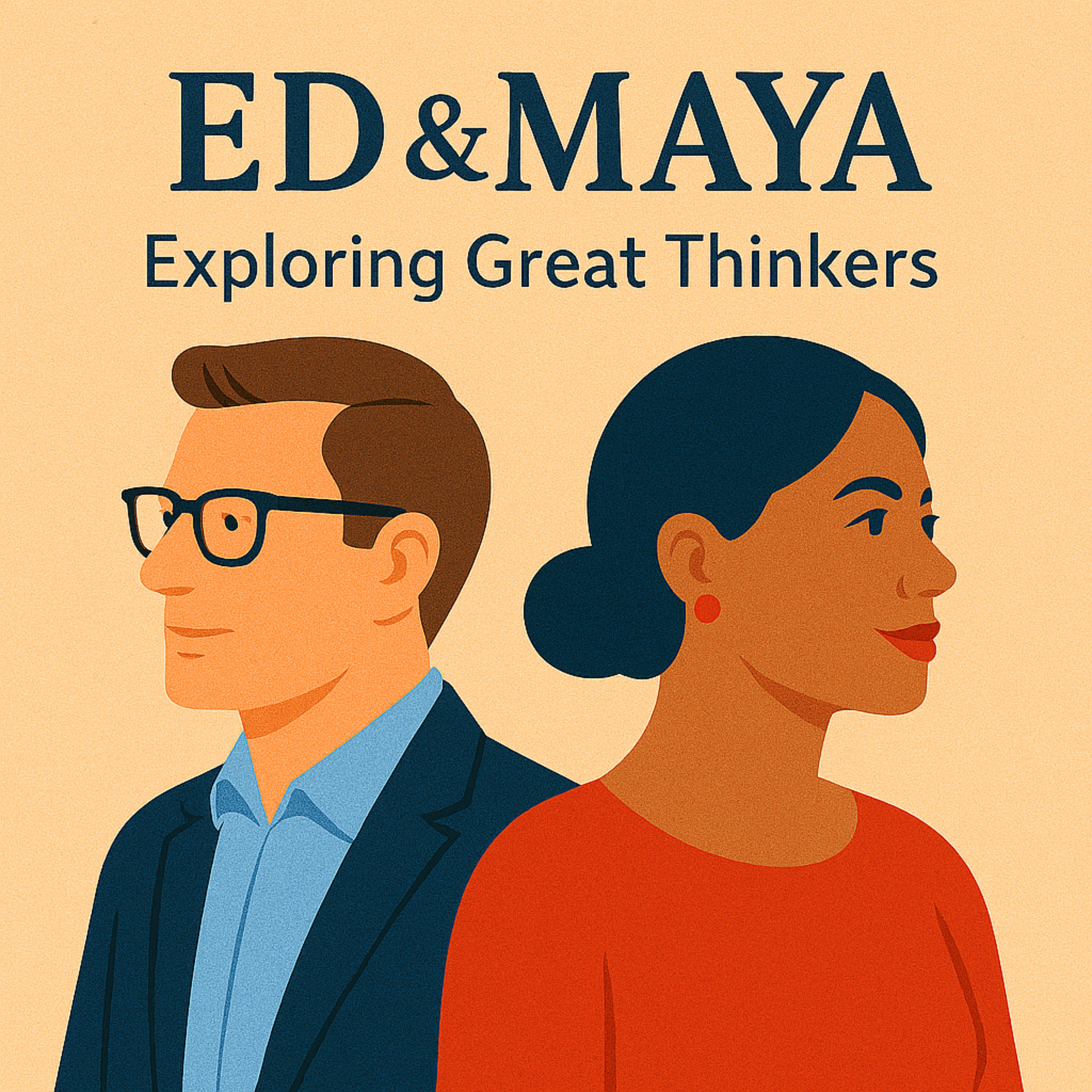
Ed & Maya are a married couple exploring timeless ideas from classic thinkers to build a stronger relationship and meaningful life. Each episode turns ancient wisdom into clear, practical insights for modern life—covering character, relationships, decision‑making, and the forces that shape us.
-
24
Spinoza on Marriage: Reason, Love, and the Freedom of the Mind
What would Spinoza advise to strengthen a marriage? In this episode, Ed and Maya explore the philosopher’s powerful vision of love as a rational and enduring partnership rooted in freedom of soul rather than fleeting passion. Drawing from the Ethics, they examine why relationships built on physical attraction often collapse, while those grounded in reason, mutual understanding, and shared purpose flourish over time. The discussion highlights emotional self‑mastery, transforming conflict through clarity, and overcoming anger with kindness. They also explore the role of intellectual growth, trust, and personal freedom in sustaining harmony. The episode concludes with Spinoza’s measure of marital success—defined by stability, mutual usefulness, and a shared pursuit of truth, joy, and inner freedom.
-
23
John Bunyan on Marriage: Faith, Devotion, and Spiritual Unity
What would John Bunyan advise to strengthen a marriage? In this episode, Ed and Maya explore Bunyan’s deeply spiritual vision of marriage as a partnership rooted in faith, character, and shared purpose. Drawing from The Pilgrim’s Progress and his moral writings, they examine why spiritual unity is essential for lasting harmony, how everyday conduct—what Bunyan calls “conversation”—shapes the health of a relationship, and why prayer, discipline, and mutual encouragement sustain the home. The discussion highlights the dangers of vice, selfish motives, and divided values, while emphasizing patience, forgiveness, and devotion in adversity. The episode concludes with Bunyan’s measure of marital success—defined not by comfort or wealth, but by a shared journey toward spiritual growth, integrity, and enduring peace.
-
22
Pliny the Younger on Marriage: Love, Intellect, and Lasting Devotion
What would Pliny the Younger advise to strengthen a marriage? In this episode, Ed and Maya explore Pliny’s vision of marriage as a partnership built on intellectual companionship, shared values, and deep personal devotion. Drawing from his letters, they examine how a strong bond grows through mutual admiration, emotional support, and active participation in each other’s lives. They discuss the importance of daily communication, valuing character over appearance, and celebrating each other’s achievements with genuine enthusiasm. The conversation also highlights loyalty in adversity, shared time, and a sense of gratitude within the union. The episode concludes with Pliny’s measure of marital success—defined by harmony of mind and character, enduring affection, and a shared life rooted in virtue and mutual respect.
-
21
Ancient Egyptian Wisdom on Marriage: Fidelity, Legacy, and Eternal Love
What defines success in a marriage across time and tradition? In this episode, Ed and Maya explore ancient Egyptian wisdom on love, fidelity, and the moral foundations of a lasting union. Drawing from funerary texts and the concept of Ma’at—truth, balance, and order—they examine why marital success depends on faithfulness, ethical living, and harmony within the household. The discussion highlights the importance of building a lasting legacy through children, maintaining household stability, and resolving conflict with compassion. They also explore the ideal of unwavering devotion, modeled by mythic figures, and the belief that true marital bonds endure beyond death. The episode concludes with a powerful insight: a successful marriage is one rooted in virtue, balance, and a shared commitment to enduring order in life and beyond.
-
20
Pliny the Elder on Marriage: Fidelity, Simplicity, and Lasting Harmony
What would Pliny the Elder advise to strengthen a marriage? In this episode, Ed and Maya explore how Pliny’s Natural History reveals a philosophy of marriage grounded in fidelity, moderation, and the lessons of nature itself. They examine why unwavering loyalty—seen in animals like pigeons and elephants—sets a standard for human unions, why excess luxury corrodes domestic harmony, and how ancient traditions and rituals reinforced stability within the home. The discussion highlights the importance of mutual care, household order, and shared responsibility, along with Pliny’s strong emphasis on family continuity through children. The episode concludes with his broader vision of marital success—defined by concord, discipline, and a life rooted in simplicity, stability, and enduring commitment.
-
19
Spinoza on Marriage: Love, Reason, and Emotional Freedom
What would Spinoza advise to strengthen a marriage? In this episode, Ed and Maya explore Spinoza’s radical vision of love as a rational, enduring partnership grounded in freedom of soul rather than fleeting passion. Drawing from the Ethics, they examine why relationships built on physical attraction often decay, while those rooted in reason and mutual understanding grow stronger over time. The discussion highlights the role of self‑mastery, transforming conflict through clear understanding, and repaying anger with kindness. They also explore the importance of shared purpose, intellectual growth, and emotional freedom in sustaining long‑term harmony. The episode concludes with Spinoza’s measure of marital success—found not in intensity, but in stability, clarity, and the shared pursuit of truth and inner freedom.
-
18
Marriage Lessons From Alexander the Great Will Surprise You
What would Alexander the Great advise to strengthen a marriage? In this episode, Ed and Maya explore how the conqueror’s actions reveal a philosophy of love rooted in honor, self‑control, and shared purpose. Drawing from historical accounts of his campaigns and court life, they examine why presence and time together matter, how respect for a partner’s dignity builds trust, and why commitment must be chosen over impulse. The discussion highlights financial support, cultural unity, and the creation of a shared identity as foundations of a strong union. The episode also reflects on Alexander’s broader measure of success—defined by loyalty, stability, and legacy—and his deeper view of human worth, grounded in courage, integrity, and the discipline to master oneself.
-
17
Daniel Webster on Marriage: Faith, Virtue, and Lasting Legacy
What would Daniel Webster advise to strengthen a marriage? In this episode, Ed and Maya explore Webster’s vision of marriage as a moral, spiritual, and domestic partnership rooted in faith, character, and shared responsibility. They examine why a strong marriage must be grounded in religious principle, how patience in adversity and humility in prosperity sustain lasting unity, and why the “domestic virtues” are the true foundation of happiness. The discussion highlights the importance of intellectual partnership, family legacy, and creating a home defined by comfort, dignity, and purpose. The episode also reflects on Webster’s measure of success—not in wealth, but in moral resilience, generational continuity, and the ability to build a household that nurtures both character and community.
-
16
Pre‑Socratic Philosophers on Marriage: Love, Harmony, and Balance
What would the pre‑Socratic philosophers teach us about strengthening a marriage? In this episode, Ed and Maya explore timeless insights from thinkers like Heraclitus, Empedocles, and the Pythagoreans on love, harmony, and balance. They examine why love must unite what would otherwise fall into strife, how tension between partners can create deeper harmony, and why equality, reciprocity, and temperance are essential for lasting stability. The discussion highlights the importance of self‑knowledge, noble conversation, and shared purpose in building a resilient bond. The episode concludes with a reflection on how these early philosophers measure success—not by ease, but by unity, harmony in difference, and the disciplined pursuit of truth within a shared life.
-
15
Suetonius on Marriage: Power, Loyalty, and the Price of Scandal
What would Suetonius advise to strengthen a marriage? In this episode, Ed and Maya explore how the historian’s vivid portraits of the Caesars reveal hard lessons about love, power, and domestic stability. Drawing from The Twelve Caesars, they examine why reputation must remain above suspicion, why marriages built on politics rather than affection often fail, and how outside influence—from family, advisors, or ambition—can corrupt a household. The discussion highlights the importance of fidelity, compatibility of temperament, and mutual respect, while exposing the destructive consequences of jealousy, cruelty, and excess. The episode also reflects on Suetonius’s broader measure of success—seen in stability, dignity, and loyalty—and his view of human worth, rooted in character, restraint, and the responsible use of power.
-
14
Grimm Brothers on Marriage: Love, Loyalty, and the Danger of Greed
What would the Brothers Grimm teach us about strengthening a marriage? In this episode, Ed and Maya explore how the timeless Grimm fairy tales reveal hard truths about love, trust, and domestic life. Drawing from stories like The Fisherman and His Wife, Our Lady’s Child, and The Singing, Springing Lark, they examine why greed destroys households, why honesty restores broken bonds, and how compatibility and shared effort sustain long‑term stability. The discussion highlights the power of perseverance, the dangers of idleness and quarrels, and the importance of mutual respect in everyday life. The episode also reflects on the Grimm vision of marital success—rooted in contentment, loyalty, and resilience through hardship, where enduring love proves stronger than temptation or trial.
-
13
Tacitus on Marriage: Loyalty, Discipline, and Enduring Fidelity
What would Tacitus advise to strengthen a marriage? In this episode, Ed and Maya explore Tacitus’s sober vision of marriage as a bond grounded in loyalty, discipline, and shared endurance. Drawing from his accounts of Roman leaders and Germanic customs, they examine why mutual respect and affection must be paired with strict fidelity, why spouses should share in both hardship and responsibility, and how simplicity protects the household from corruption. The discussion highlights the importance of monogamy, moral integrity, and devotion to family life as the foundation of a stable union. The episode also reflects on Tacitus’s broader measure of success and human worth—defined by consistency of character, courage under pressure, and the ability to remain virtuous even in difficult times.
-
12
Aristophanes on Marriage: Love, Intimacy, and Domestic Harmony
What would Aristophanes advise to strengthen a marriage? In this episode, Ed and Maya explore how the Greek playwright’s comedies reveal a surprisingly practical philosophy of love grounded in intimacy, compatibility, and shared domestic life. Drawing from Lysistrata, The Clouds, and The Frogs, they examine why physical connection strengthens bonds, why mismatched values create lasting conflict, and how a peaceful, present home life sustains affection over time. The discussion highlights the importance of humor, financial harmony, and simple shared pleasures, while warning against jealousy, absence, and extravagance. The episode also reflects on Aristophanes’ broader measure of success—found in vitality, civic responsibility, and the ability to live joyfully within both marriage and society.
-
11
Emily Post on Marriage: Etiquette, Respect, and Lasting Love
What does Emily Post teach us about building a lasting marriage? In this episode, Ed and Maya explore Post’s timeless etiquette‑based philosophy of love, focusing on adaptability, character, and daily conduct as the foundation of a strong union. They examine why maintaining respect, appearance, and “the illusion” of courtship matters, how forgiveness and restraint preserve harmony, and why moral steadfastness outweighs charm or polish. The discussion highlights the importance of privacy, loyalty, and presenting a united front, even during conflict. The episode also reflects on Post’s deeper view of success—not as perfection, but as resilience, attentiveness, and genuine care—and her broader measure of human worth, rooted in integrity, consideration, and authenticity in every interaction.
-
10
Xenophon on Marriage: Partnership, Order, and the Discipline of Love
What would Xenophon advise to strengthen a marriage? In this episode, Ed and Maya explore Xenophon’s practical philosophy of marriage as a cooperative partnership grounded in virtue, order, and shared purpose. Drawing from The Economist, they examine why a strong marriage depends on clear roles, mutual responsibility, and the husband’s duty to educate while the wife governs the home with discipline and care. They discuss the importance of organization, honesty, and building affection on character rather than appearance. The episode also highlights Xenophon’s broader vision of success—seen in a well‑ordered household, thriving children, and growing prosperity—and his deeper measure of human worth: self‑mastery, usefulness, and the ability to improve one’s partner and community.
-
9
Herman Melville on Marriage: Trust, Tolerance, and Emotional Truth
What would Herman Melville advise to strengthen a marriage? In this episode, Ed and Maya explore Melville’s complex vision of love as a bond shaped by trust, tolerance, and emotional honesty. Drawing from Pierre, Moby‑Dick, and his short fiction, they examine why “unbounded confidence” is essential yet fragile, how small resentments can erode a home, and why impossible ideals must give way to practical “virtuous expediency.” The discussion highlights the role of humor, the value of balancing opposing temperaments, and the danger of distrust that poisons even the strongest unions. The episode also explores Melville’s deeper measure of success—found not in perfection, but in endurance, kindness, and the ability to remain inwardly steady amid life’s turbulence.
-
8
Vitruvius on Marriage: Building Love with Balance, Strength, and Beauty
What would Vitruvius teach us about building a strong marriage? In this episode, Ed and Maya explore how the Roman architect’s timeless principles—durability, usefulness, and beauty—offer a powerful framework for lasting partnership. Drawing from De Architectura, they examine why a marriage must be built on a solid foundation of trust and integrity, how balance and proportion create harmony between partners, and why adaptability is essential in changing circumstances. The discussion highlights the importance of shared purpose, moral character, and combining thoughtful principles with daily practice. The episode also reflects on Vitruvius’s deeper measure of success and human worth—rooted in knowledge, virtue, and contributions that endure beyond the individual, shaping both the home and the wider world.
-
7
Archimedes on Marriage: Balance, Reason, and Partnership
What would Archimedes teach us about strengthening a marriage? In this episode, Ed and Maya explore a unique, metaphorical approach inspired by Archimedes’ principles of balance, mechanics, and intellectual partnership. Drawing from his work on equilibrium and centers of gravity, they examine how a strong marriage depends on balance between partners, shared purpose, and understanding the deeper “mechanics” of human behavior. The discussion highlights the importance of thoughtful problem‑solving, mutual respect, and approaching conflict with clarity rather than impulse. The episode also reflects on a broader measure of human worth—seen in intellectual curiosity, contribution to others, and the ability to create harmony within a larger system. A fresh perspective on marriage through the lens of reason, balance, and insight.
-
6
Lysias on Marriage: Virtue, Reputation, and Household Stability
What would Lysias advise to strengthen a marriage? In this episode, Ed and Maya explore how the Athenian orator’s legal and political insights reveal a practical philosophy of marriage grounded in character, trust, and social responsibility. Drawing from his speeches, they examine why virtue matters more than wealth or dowry, why marriage should function as a stable alliance built on mutual reliability, and how an orderly, scandal‑free life protects the household’s honor. The discussion highlights the importance of securing children’s future, preserving family reputation, and upholding shared duties within the home. The episode also reflects on Lysias’s broader measure of success and human worth—rooted in civic virtue, moderation, loyalty, and a life lived in accordance with law and justice.
-
5
Virgil on Marriage: Duty, Fidelity, and the Power of Shared Purpose
What would Virgil advise to strengthen a marriage? In this episode, Ed and Maya explore how Virgil’s epics and pastoral poetry present marriage as a union grounded in duty, fidelity, and shared labor. Drawing from the Aeneid and Georgics, they examine why passion without purpose leads to ruin, why “plighted faith” must remain unbroken, and how a chaste and orderly home builds lasting stability. The discussion highlights marriage as a partnership shaped by work, family, and tradition, and warns against the destructive pull of unchecked desire seen in the tragedy of Dido and Aeneas. The episode also reflects on Virgil’s measure of success and human worth—rooted in piety, moral integrity, endurance, and devotion to a greater destiny beyond the self.
-
4
Marcus Aurelius on Marriage: Stoic Love, Self‑Mastery, and Harmony
What would Marcus Aurelius advise to strengthen a marriage? In this episode, Ed and Maya explore how Stoic philosophy offers a powerful framework for lasting partnership grounded in gratitude, self‑mastery, and shared purpose. Drawing from the Meditations, they examine why marriage should function as a union of “fellow‑workers,” why anger must be met with patience and understanding, and how controlling one’s perceptions can dissolve conflict at its root. They also highlight Marcus’s emphasis on sincerity, quiet affection, and appreciating a partner’s virtues daily. The episode concludes with his deeper measure of success and human worth—found not in status or emotion, but in character, reason, and the pursuit of the common good within the shared life of the household.
-
3
Demosthenes on Marriage: Loyalty, Integrity, and Shared Duty
What advice would Demosthenes give to strengthen a marriage? In this episode, Ed and Maya explore how the great Athenian orator’s principles of integrity, loyalty, and shared responsibility extend beyond politics into domestic life. Drawing from Demosthenes’ speeches, they examine why marriage must be grounded in truth rather than appearances, why shared interest matters more than affectionate phrases, and why actions—not vows—ultimately prove devotion. The discussion highlights loyalty through every phase of fortune, respect for legal and moral obligations within the household, and the danger of self‑deception in personal bonds. The episode concludes with Demosthenes’ broader measure of success and human worth—defined by incorruptibility, sustained commitment, service over self‑interest, and the protection of human dignity at home as in public life.
-
2
Goethe on Marriage: Love, Desire, and Domestic Harmony
What advice would Goethe give to strengthen a marriage? In this episode, Ed and Maya explore Johann Wolfgang von Goethe’s vision of marriage as a living union sustained by openness, desire, and mutual forbearance. Drawing from The Sorrows of Young Werther, Faust, and Erotica Romana, they examine why silence and suppressed feeling corrode intimacy, why physical connection must be renewed rather than assumed, and how ill‑humor becomes a moral threat to the household. The discussion highlights marriage as a refuge from the world, a harmony between body and spirit, and a space shaped by care, order, and shared sentiment. The episode also reflects on how Goethe measures human worth—not by rank or knowledge, but by striving, depth of heart, meaningful action, and the courage to live authentically within love.
-
1
1001 Nights of Marriage: Fidelity, Desire, and Domestic Power
What does the 1001 Nights reveal about marriage, fidelity, and human worth? In this episode, Ed and Maya explore Burton’s strikingly candid marital philosophy, drawn from The Arabian Nights and his extensive essays. They examine why physical satisfaction and education are treated as essential to marital stability, how jealousy turns the home into a prison, and why “Faith is fair; Unfaith is foul” serves as a moral foundation for domestic order. The discussion highlights patience, magnanimity, and intellectual companionship through the figure of Shahrazad, whose wisdom heals a tyrant and restores trust. The episode also explores how Burton measures success in marriage—through harmony, progeny, fidelity, and household peace—and how he measures human worth through nobility of character, intellect, generosity, self‑control, and social responsibility.
-
0
Rumi on Marriage: Patience, Unity, and Spiritual Love
What would Rumi advise to strengthen a marriage? In this episode, Ed and Maya explore how Rumi’s poetry and parables present marriage as a path of spiritual unity, patience, and mutual veneration. Drawing from the story of the Arab and his wife, they examine why harmony depends on shared purpose, why constant complaint erodes the soul of a home, and how contentment becomes a hidden treasure. The discussion highlights Rumi’s reverence for the spouse as a divine trust, the transformative power of kind speech, and the role of humility, apology, and mercy in healing conflict. The episode concludes with Rumi’s vision of marital success—not in wealth or ease, but in mutual refinement of the heart and a shared journey toward the Divine.
-
-1
Marriage in Islam: Love, Mercy, and Sacred Responsibility
What do divine teachings reveal about the purpose and success of marriage? In this episode, Ed and May explore the spiritual, moral, and practical guidance found in Islamic sources on strengthening the bond between husband and wife. Marriage is presented as a sacred union rooted in a shared divine origin, intended to bring tranquillity, love, and mercy to the household. They examine spouses as garments for one another, the call to kindness and equity even in difficulty, and the importance of modesty, integrity, and just speech. They also explore defined roles and responsibilities, financial fairness, and methods of resolving conflict through consultation, forgiveness, and mediation. The episode concludes with how marital success is measured—not by status or ease, but by righteousness, mutual mercy, and striving together for peace in this life and success in the hereafter.
-
-2
Francis Bacon on Marriage: Discipline, Wisdom, and Moral Order
What did Francis Bacon believe truly sustains a successful marriage? In this episode, Ed and Maya explore Bacon’s sober, disciplined view of marriage as a moral and civil institution designed to shape character and preserve social order. Drawing from his essays and The New Atlantis, they examine why mutual respect matters more than passion, how jealousy destroys wisdom and trust, and why marriage should be a “discipline of humanity” that softens the heart through responsibility to spouse and children. The discussion explores Bacon’s emphasis on chastity, self‑reverence, deliberate choice, and prudence in forming a union, as well as his warning against treating marriage as a mere bargain or indulgence. The episode also reflects on Bacon’s measure of marital success—defined by generation, stability, moral growth, and comfort across the stages of life.
-
-3
Boccaccio on Marriage: Nature, Desire, and the Danger of Jealousy
What does Giovanni Boccaccio believe truly sustains a marriage? In this episode, Ed and Maya explore Boccaccio’s earthy and incisive view of marriage as a partnership governed by Nature, fairness, and mutual satisfaction rather than rigid moralism or empty jealousy. Drawing from The Decameron, they examine why unmet physical and emotional needs breed resentment, why groundless jealousy turns a home into a prison, and why double standards in desire undermine marital justice. The discussion contrasts extreme patience, such as Griselda’s trials, with Boccaccio’s critique of cruelty and his call for kindness, wit, and reciprocity. The episode also explores his broader measure of human worth—rooted in inner excellence, intelligence, generosity, and constancy rather than rank or appearance. A candid exploration of marriage shaped by nature, humor, and human reality.
-
-4
Martin Luther on Marriage: Faith, Patience, and Mutual Service
What did Martin Luther believe made marriage strong, meaningful, and faithful? In this episode, Ed and Maya explore Luther’s view of marriage as a divinely ordained estate rooted in faith, patience, and mutual considerateness. Drawing from Luther’s writings, they examine why faith is the foundation of marital harmony, how spouses are called to serve one another with forbearance, and why overlooking faults is essential to peace in the home. The conversation explores marriage as a “real church,” the dangers of legalism, and Luther’s vision of spouses living as “Christs” to one another—sharing burdens and blessings alike. The episode also reflects on Luther’s deeper measure of human worth, grounded not in status or works, but in faith, vocation, and loving service to one’s neighbor.
-
-5
Benjamin Franklin on Marriage: Virtue, Industry, and Respect
What did Benjamin Franklin believe made a marriage successful—and why did he view it as a moral and practical partnership? In this episode, Ed and Maya explore Franklin’s pragmatic philosophy of marriage, drawn from his writings on virtue, industry, and domestic life. They examine his conviction that marrying early fosters compatibility, why mutual respect prevents household discord, and how modesty in argument preserves harmony. The discussion highlights Franklin’s view of a wife as an equal helpmate, his emphasis on shared industry and frugality, and his belief that character is the true foundation of a happy home. The episode also explores Franklin’s broader measure of human worth—defined by usefulness, integrity, service to society, and continual self‑improvement. A practical, clear‑eyed guide to marriage rooted in virtue and shared labor.
-
-6
Krishna on Marriage: Self‑Mastery, Duty, and Sacred Partnership
What can Krishna’s dialogue with Arjuna on the battlefield teach us about marriage and lasting human bonds? In this episode, Ed and Maya explore how the teachings of the Bhagavad Gita offer a spiritual framework for marriage rooted in self‑mastery, selfless duty, and inner balance. They examine Krishna’s warning against passion and anger, the practice of acting without attachment to results, and the importance of fulfilling one’s natural duty within the household. The conversation highlights equanimity, compassion, patience, and forgiveness as the true markers of marital strength, and reflects on Krishna’s deeper measure of success and human worth—found in self‑control, devotion, and shared spiritual purpose. A grounded exploration of marriage as disciplined love and sacred partnership.
-
-7
Victor Hugo on Marriage: Love Without Moderation
What does Victor Hugo believe makes a marriage truly enduring? In this episode, Ed and Maya explore Hugo’s passionate vision of love, marriage, and human worth—one that rejects moderation and embraces excess, devotion, and spiritual fusion. Drawing from Hugo’s novels and reflections, they examine why a strong marriage requires absolute adoration, loyalty without reserve, and a willingness to be “foolish” in love. Hugo argues that true union is not a contract but the blending of two souls into one, sustained by beauty, superfluity, and shared wonder rather than mere housekeeping. The conversation also explores Hugo’s measure of human worth, defined by conscience, compassion, suffering, and the capacity for love, not status or success. A dramatic and lyrical exploration of marriage as sanctuary, ecstasy, and moral force.
-
-8
Dante on Marriage: Love, Reason, and the Path to the Highest Good
What does Dante’s Divine Comedy reveal about marriage, love, and devotion? In this episode, Ed and Maya explore how Dante’s journey through Hell, Purgatory, and Paradise offers a powerful philosophy of marriage grounded in reason, constancy, and spiritual ascent. Drawing on figures such as Penitent lovers, Piccarda, and Nella Donati, they examine why love must be governed by reason rather than lust, how inward faithfulness endures despite external trials, and why spouses should guide one another toward the Highest Good. The discussion highlights chastity, temperance, and prayer as forces that purify desire, transforming marriage into a ladder toward divine tranquility. A reflective exploration of marriage not as passion alone, but as shared spiritual striving.
-
-9
Homer on Marriage: Loyalty, Unity, and the Ideal Partnership
What can Homer’s epics teach us about marriage, loyalty, and human worth? In this episode, Ed and Maya explore how The Iliad and The Odyssey portray a strong marriage as a unity of mind, unwavering loyalty, and deep mutual respect. Drawing from the examples of Ulysses and Penelope, Hector and Andromache, and King Alcinous and Queen Arete, they examine why harmony in the home discomfits enemies and steadies the soul. The conversation contrasts faithful endurance with destructive passion, highlights the role of shared struggle and storytelling in restoring intimacy, and reflects on Homer’s deeper measure of human worth—found in wisdom, loyalty, hospitality, and the ability to endure suffering with honor. A timeless exploration of marriage as steadfast partnership and moral foundation.
-
-10
Charles Perrault on Marriage: Grace, Virtue, and Lasting Love
What do Charles Perrault’s fairy tales reveal about marriage, love, and human worth? In this episode, Ed and Maya explore how Perrault’s stories offer a refined moral vision of lasting partnership—one grounded in inner virtue, grace, and mutual respect rather than beauty, wealth, or power. Drawing from tales such as Riquet with the Tuft, Blue Beard, Donkey‑Skin, and The Ridiculous Wishes, they examine why “sweet discourse” matters more than appearance, how love can transform perception, and why patience, sacrifice, and balanced influence strengthen marriage. The episode also explores Perrault’s measure of human worth, defined by grace of character, gifts of mind, kindness of temper, and the willingness to place virtue above ambition. A thoughtful exploration of marriage as a bond deepened by love, humility, and enduring affection.
-
-11
Hans Christian Andersen on Marriage: Love Beyond Beauty and Form
What do Hans Christian Andersen’s fairy tales reveal about marriage, love, and human worth? In this episode, Ed and Maya explore how Andersen’s stories offer a deeply spiritual vision of lasting union—one rooted not in beauty, wealth, or status, but in a true “union of mind.” Drawing from tales like Beauty of Form and Beauty of Mind, What the Old Man Does is Always Right, and Under the Willow‑Tree, they examine why inner character outweighs appearance, why unwavering mutual validation creates harmony, and why unspoken love leads to quiet tragedy. The conversation also explores Andersen’s standard for human worth, measured through mercy, self‑sacrifice, humility, and faith rather than social standing. A reflective journey into marriage as a space for spiritual growth, honest speech, and compassionate transformation.
-
-12
Marriage Through Fables: Aesop on Love, Unity, and Character
What can Aesop’s fables teach us about marriage, unity, and character? In this episode, Ed and Maya explore the timeless wisdom embedded in Aesop’s stories and how their moral lessons apply to building a strong and lasting marriage. Drawing from classic fables, they examine why Aesop believed equality and compatibility make the best unions, why internal unity protects a partnership from outside forces, and why gentleness and persuasion succeed where force fails. They also explore the dangers of stubbornness, inconsistency, and ambition, and why compromise and steady character are essential for trust. The episode concludes with Aesop’s deeper standard for human worth—measured not by status or appearance, but by wisdom, integrity, usefulness, and virtue. A practical and memorable guide to marriage, unity, and moral character told through timeless fables.
-
-13
Thucydides on Marriage: Power, Equality, and Stability
What can an ancient historian of war teach us about marriage? In this episode, Ed and Maya turn to Thucydides to explore how his insights into human nature, power, and alliances offer a sober framework for a stable domestic union. Drawing from The History of the Peloponnesian War, Ed and Maya examine why an “identity of interest” is the surest bond between partners, why equality of power prevents resentment, and why no lasting union can survive without mutual honesty and congeniality. They discuss the role of reasoned arbitration over passion, the danger of arrogance in prosperity, and the need to acknowledge human ambition and frailty. A clear‑eyed exploration of marriage as a political alliance—one that succeeds through balance, realism, and shared purpose.
-
-14
Laozi on Marriage: Taoist Wisdom for Love, Harmony, and Partnership
What would marriage look like if it followed the Tao? In this episode, Ed and Maya explore how Laozi’s teachings on harmony, selflessness, and gentleness offer a quiet but powerful philosophy for lasting partnership. Drawing from the Tao Te Ching, Ed and Maya examine why Laozi would measure a successful marriage not by wealth, passion, or control, but by natural harmony, mutual selflessness, softness over force, and contentment with the simple and ordinary. Like water, a healthy relationship yields without losing strength, supports without possessing, and endures by avoiding contention. Ed and Maya also explore Laozi’s standard for human worth—rooted not in status or achievement, but in humility, inner stillness, self‑mastery, and alignment with the Tao. A reflective guide to love, character, and enduring harmony.
-
-15
Montaigne on Marriage: Why Friendship Makes Love Last
Ed and Maya explores what makes a marriage truly successful—and how should we measure the worth of a human being? In this episode, they discover Michel de Montaigne’s timeless philosophy on marriage, love, and virtue. Rejecting romantic “furious ardor,” Montaigne defines a successful marriage as a “sweet society of life” grounded in friendship, trust, constancy, and mutual obligation. They examine his advice on modeling marriage on friendship rather than passion, showing affection while alive, managing anger wisely, valuing practical partnership, and honoring the sacred commitment of the nuptial bond. The episode then turns to Montaigne’s deeper moral standard for human worth: judgment over learning, character over status, constancy over single heroic acts, and self‑mastery over fortune. A clear, sober guide to marriage, virtue, and the art of living well.
-
-16
The Long-Term Marriage of Shared Purpose
Ed and Maya explore Montesquieu’s The Spirit of the Laws powerful insights on marriage and society in this episode, where political philosophy meets domestic life. They break down how aligning marriage with the spirit of government, fostering domestic order, and shaping incentives through modesty, respect, and legal protections can strengthen the family—the foundation of the state. Learn how climate, religion, and civic virtue shape successful unions, and why Montesquieu saw stable homes as essential to preserving liberty and social harmony.
-
-17
Centering the Marriage
Ed & Maya explore how Euclid’s geometric principles reveal timeless wisdom for modern relationships. This episode uncovers how shared axioms, congruent goals, symmetry, and proportionality can strengthen a marriage. We examine why aligned direction, balanced effort, and a shared center create relational stability, and how avoiding “parallel disconnection” fosters true connection. A clear, logical guide to building a marriage as harmonious and precise as Euclid’s geometry.
-
-18
Declutter Your Marriage
Ed & Maya explore Henry David Thoreau’s timeless wisdom on building a meaningful marriage grounded in simplicity, truth, and individual freedom. This episode reveals how reducing material clutter, honoring personal solitude, and embracing honest communication can strengthen partnership. Learn why Thoreau believed inward integrity, independent growth, and a life aligned with one’s deepest values create a resilient, authentic, and truly liberated union.
-
-19
Mutal Respect in Marriage
Ed & Maya explore David Hume's works on human nature, morals, and human understanding. They discover how David Hume’s timeless philosophy can transform modern relationships. This episode breaks down Hume’s principles for a thriving marriage—mutual benevolence, refined manners, emotional trust, and lasting fidelity. Learn why cheerfulness, wit, and delicate attention create deeper connection, and how Hume measures marital success through harmony, shared purpose, and inner peace. A powerful guide for couples seeking wisdom that endures.
-
-20
The Federalist Guide to a Strong and Stable Marriage
Ed and May discover how the Federalist Papers offer timeless guidance for building a strong and stable marriage. By applying principles meant to unite a nation—compromise, moderation, shared interests, and checks and balances—They explore how couples can cultivate trust, prevent destructive jealousy, and resolve conflict with candor. The Federalists teach that lasting union grows through experience, mutual deference, and acting as “mutual guardians” of each other’s happiness, creating a partnership built to endure.
-
-21
Descartes’ Guide to a Rational Marriage
Ed and Maya discover how Descartes’ method and moral code can strengthen a modern marriage through clarity, moderation, and self‑mastery. They explore how breaking down conflicts, avoiding rash judgments, and acting with firm resolution create stability at home. Descartes teaches that true harmony comes from governing our own thoughts, practicing emotional balance, and honoring the vows that guide commitment. A clear, thoughtful roadmap for building a steady, reason‑centered marriage
-
-22
Zarathustra’s Guide to a Higher Marriage
Ed and Maya discover Zarathustra’s bold vision of a higher marriage built on self‑mastery, shared purpose, and the will to create something greater together. They explore his call for partners to conquer themselves before uniting, maintain love through active effort, and pursue a common creative ideal. From productive tension to trial unions and the “bitter cup” that fuels growth, Zarathustra reveals how true marriage becomes a path of strength, transformation, and upward striving.
-
-23
Creating Marriage Harmony
Ed and Maya explore Cicero’s timeless wisdom on building a harmonious marriage rooted in reason, virtue, and mutual forbearance. They examine his call to restrain anger, cultivate gentleness, and let conscience guide domestic life. Cicero shows how shared virtue, fidelity, and the natural bond of children create stability and happiness within the home. A successful marriage, he argues, offers a refuge from public turmoil—a place of honesty, affection, and lasting moral partnership.
-
-24
A Guide to Marriage as Virtuous Friendship
Ed and Maya explore Aristotle’s vision of a successful marriage as the highest form of friendship, where utility, pleasure, and virtue unite to build lasting partnership. They examine his call for couples to share a common life, contribute their complementary strengths, and cultivate moral character through balanced roles. From proportional equality to the unifying bond of children, Aristotle shows how harmony, virtue, and mutual excellence create a marriage rooted in the true good.
-
-25
Natural Love: Rousseau’s Blueprint for a Strong Marriage
Ed and Maya explore Rousseau’s vision of a natural, harmonious marriage built on mutual affection, shared duties, and personal liberty. They examine his call for mothers to nurse their children to strengthen family bonds, the power of gentleness and tact in the home, and the importance of remaining lovers even after becoming husband and wife. Rousseau shows how shared talents, balanced influence, and love grounded in esteem—not wealth or rank—create a happy, lasting union rooted in nature’s design.
We're indexing this podcast's transcripts for the first time — this can take a minute or two. We'll show results as soon as they're ready.
No matches for "" in this podcast's transcripts.
No topics indexed yet for this podcast.
Loading reviews...
ABOUT THIS SHOW
Ed & Maya are a married couple exploring timeless ideas from classic thinkers to build a stronger relationship and meaningful life. Each episode turns ancient wisdom into clear, practical insights for modern life—covering character, relationships, decision‑making, and the forces that shape us.
HOSTED BY
Ed & Maya
CATEGORIES
Loading similar podcasts...
Frequently Asked Questions
How many episodes does Ancient Wisdom for Modern Marriage have?
Ancient Wisdom for Modern Marriage currently has 50 episodes available on PodParley. New episodes are automatically indexed when they're published to the podcast feed.
What is Ancient Wisdom for Modern Marriage about?
Ed & Maya are a married couple exploring timeless ideas from classic thinkers to build a stronger relationship and meaningful life. Each episode turns ancient wisdom into clear, practical insights for modern life—covering character, relationships, decision‑making, and the forces that shape us.
How often does Ancient Wisdom for Modern Marriage release new episodes?
Ancient Wisdom for Modern Marriage has 50 episodes. Check the episode list to see recent publication dates and frequency.
Where can I listen to Ancient Wisdom for Modern Marriage?
You can listen to Ancient Wisdom for Modern Marriage on PodParley by clicking any episode. We provide an embedded audio player for direct listening, and you can also subscribe via your preferred podcast app using the RSS feed.
Who hosts Ancient Wisdom for Modern Marriage?
Ancient Wisdom for Modern Marriage is created and hosted by Ed & Maya.
URL copied to clipboard!