
PODCAST · arts
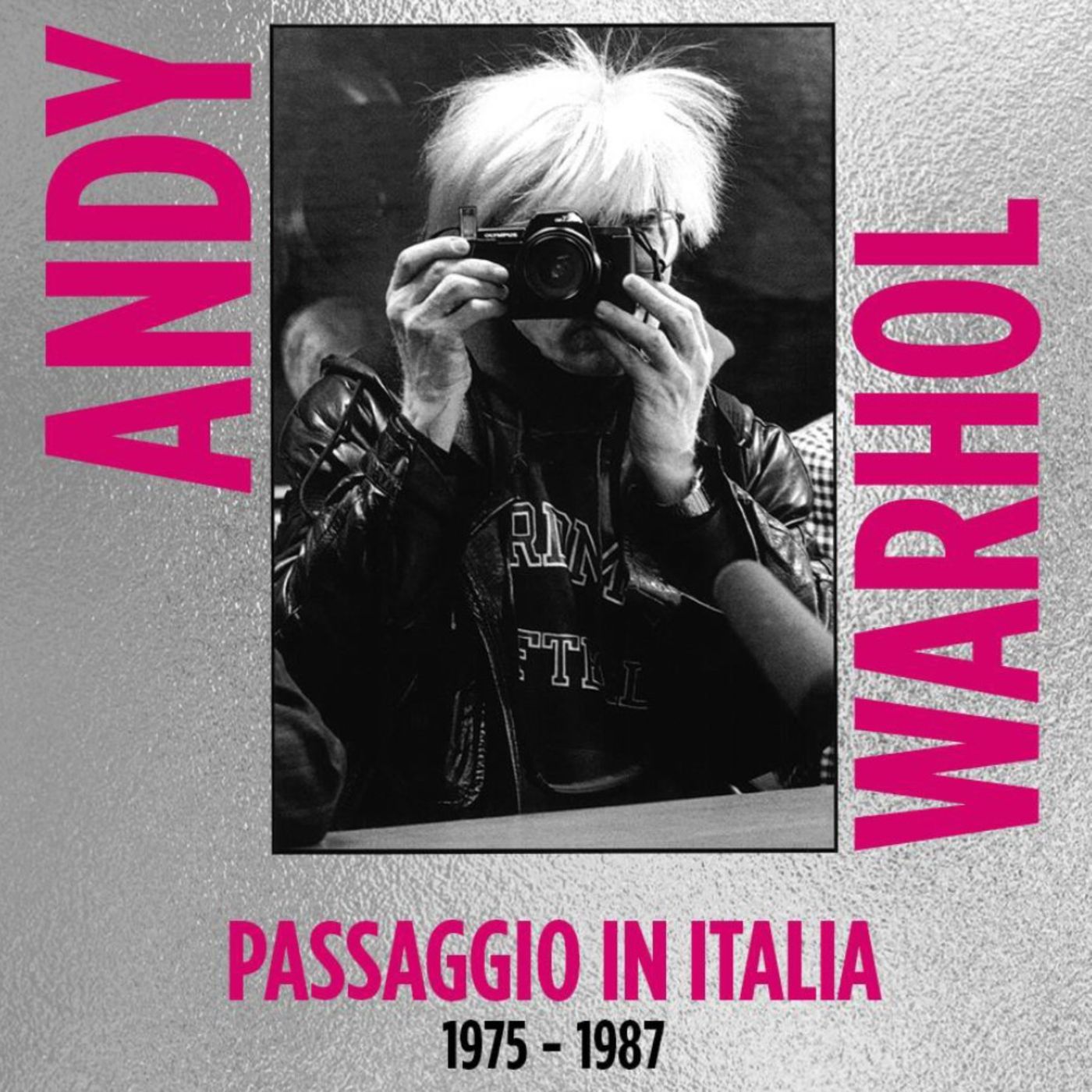
ANDY WARHOL. PASSAGGIO IN ITALIA 1975 - 1987
by Alchemilla
An exploration of Andy Warhol's relationship with Italy between the 1970s and 1980s, through collaborations and site-specific projects that bound him deeply to the country.Three cities shape the exhibition: Milan, Naples, Turin and the works they inspired: The Last Supper, Vesuvius and Ladies & Gentlemen, in dialogue with a selection from the Crédit Agricole Italia Collections.Framing the entire visit, two symbols that cut across the entire 20th century: the Last Supper and the Hammer and Sickle.
-
7
1. A guide to the exhibition
Welcome to the exhibition.Before you begin, a few tips to make the most of your visit.Throughout the galleries you will find QR codes: the black-and-white ones give you access to the historical and critical notes on the works from the Crédit Agricole Italia Collections; the magenta ones open this playlist, with a series of audio insights into the context in which Warhol created the works on display, the documentary materials, photographic records and memorabilia in the exhibition.Enjoy the experience!
-
6
3. Crédit Agricole Italia Collections
American Pop Art reshaped the way art was made and thought across Europe in the final decades of the 20th century. Continental artists could not ignore the Pop phenomenon and its prophet Andy Warhol: pushing back against it or embracing it, but never indifferent.Tadini, Cantafora, Morlotti, Zigaina, Nitsch, Stefanoni, Spoerri, Sottsass and many others make up the cultural landscape Warhol moves through during his time in Italy: a layered, living ecosystem of relationships, ideas and influences, in dialogue with the Crédit Agricole Italia Collections.
-
5
4. Ladies & Gentlemen. Luciano Anselmino , "Il Fauno": Torino, Ferrara e Milano
In 1975, Turin-based gallerist Luciano Anselmino gave Warhol an unusual commission: Ladies & Gentlemen, a series of screen prints based on Polaroid portraits of 13 trans women, each paid $50 a session. The show opened at Palazzo dei Diamanti in Ferrara, then moved to Milan with a catalogue essay by Pier Paolo Pasolini.Anselmino was far more than an art dealer. He was a connector, bridging the Parisian Surrealists with Arte Povera and American Pop, and weaving together worlds that rarely met.
-
4
5. Screen printing
Repetition is at the heart of Warhol's work. The same face, the same object, the same image, returned to again and again with only the slightest variation. A vision of art rooted in multiplication, and screen printing was the technique that made it possible.It was, for Warhol, the perfect way to reflect a world already saturated with copies, where images look alike but never quite match. The artwork was no longer a unique object. It was a cultural product, endlessly replicable.
-
3
7. The Factory
New York, the 1960s.On the fifth floor of 231 East 47th Street in Manhattan, the lights in Andy Warhol's studio never go out. Silver walls, the sharp smell of screen-printing ink, the Velvet Underground on permanent rotation. Artists, musicians, drag queens, poets and outsiders drift in unannounced and leave without saying goodbye.The Factory is film set, laboratory and endless party rolled into one. A refuge for those who don't fit anywhere else, where glamour and fragility share the same space and identities shift, blur and collide."I can never tell where the artificial ends and the real begins," says Warhol.This is where his art is born: in the noise, the chaos, the energy of a place where people become images and images become legend.
-
2
8. Vesuvius. Lucio Amelio e Napoli. 1975 - 1985
In 1985, eighteen unique screen prints from the Vesuvius cycle go on show at the Museo di Capodimonte. Warhol takes the iconic image of the volcano seen from the Gulf of Naples and pushes it into Pop territory, trading the quiet romanticism of the 19th century Scuola di Posillipo for neon and raw energy.His relationship with Naples, built over years alongside gallerist Lucio Amelio from 1976 onwards, drew him towards subjects charged with emotional weight: the volcano, ever-present and unpredictable, and the front page of Il Mattino carrying the headline Fate Presto in the aftermath of the Irpinia earthquake. Nature's violence and social violence converge, and Warhol fixes both in print: from deep, unrelenting black through to the full overexposure of the printing screen.
-
1
9. Il Cenacolo alle Stelline. L'occhio del fotografo
22 January 1987. Police are stationed along Corso Magenta, not because of an incident but because of an opening: Warhol. Il Cenacolo at the Refettorio delle Stelline. Warhol is received like a rock star, spending two hours signing posters, postcards, t-shirts and skin in a spontaneous body painting session. International jet-set, fashion, design and a crowd far beyond what the gallery's 500 square metres can hold.The evening is documented by Maria Mulas and Fabrizio Garghetti. It would prove to be the last public appearance for both Warhol and his gallerist Alexander Iolas, who both died later that year. Among the photographs, one stands out: Andy raising a small automatic Pentax to reply, with a single click, to Maria's shot.
We're indexing this podcast's transcripts for the first time — this can take a minute or two. We'll show results as soon as they're ready.
No matches for "" in this podcast's transcripts.
No topics indexed yet for this podcast.
Loading reviews...
ABOUT THIS SHOW
An exploration of Andy Warhol's relationship with Italy between the 1970s and 1980s, through collaborations and site-specific projects that bound him deeply to the country.Three cities shape the exhibition: Milan, Naples, Turin and the works they inspired: The Last Supper, Vesuvius and Ladies & Gentlemen, in dialogue with a selection from the Crédit Agricole Italia Collections.Framing the entire visit, two symbols that cut across the entire 20th century: the Last Supper and the Hammer and Sickle.
HOSTED BY
Alchemilla
CATEGORIES
Loading similar podcasts...
Frequently Asked Questions
How many episodes does ANDY WARHOL. PASSAGGIO IN ITALIA 1975 - 1987 have?
ANDY WARHOL. PASSAGGIO IN ITALIA 1975 - 1987 currently has 7 episodes available on PodParley. New episodes are automatically indexed when they're published to the podcast feed.
What is ANDY WARHOL. PASSAGGIO IN ITALIA 1975 - 1987 about?
An exploration of Andy Warhol's relationship with Italy between the 1970s and 1980s, through collaborations and site-specific projects that bound him deeply to the country.Three cities shape the exhibition: Milan, Naples, Turin and the works they inspired: The Last Supper, Vesuvius and Ladies &...
How often does ANDY WARHOL. PASSAGGIO IN ITALIA 1975 - 1987 release new episodes?
ANDY WARHOL. PASSAGGIO IN ITALIA 1975 - 1987 has 7 episodes. Check the episode list to see recent publication dates and frequency.
Where can I listen to ANDY WARHOL. PASSAGGIO IN ITALIA 1975 - 1987?
You can listen to ANDY WARHOL. PASSAGGIO IN ITALIA 1975 - 1987 on PodParley by clicking any episode. We provide an embedded audio player for direct listening, and you can also subscribe via your preferred podcast app using the RSS feed.
Who hosts ANDY WARHOL. PASSAGGIO IN ITALIA 1975 - 1987?
ANDY WARHOL. PASSAGGIO IN ITALIA 1975 - 1987 is created and hosted by Alchemilla.
URL copied to clipboard!