
PODCAST · business
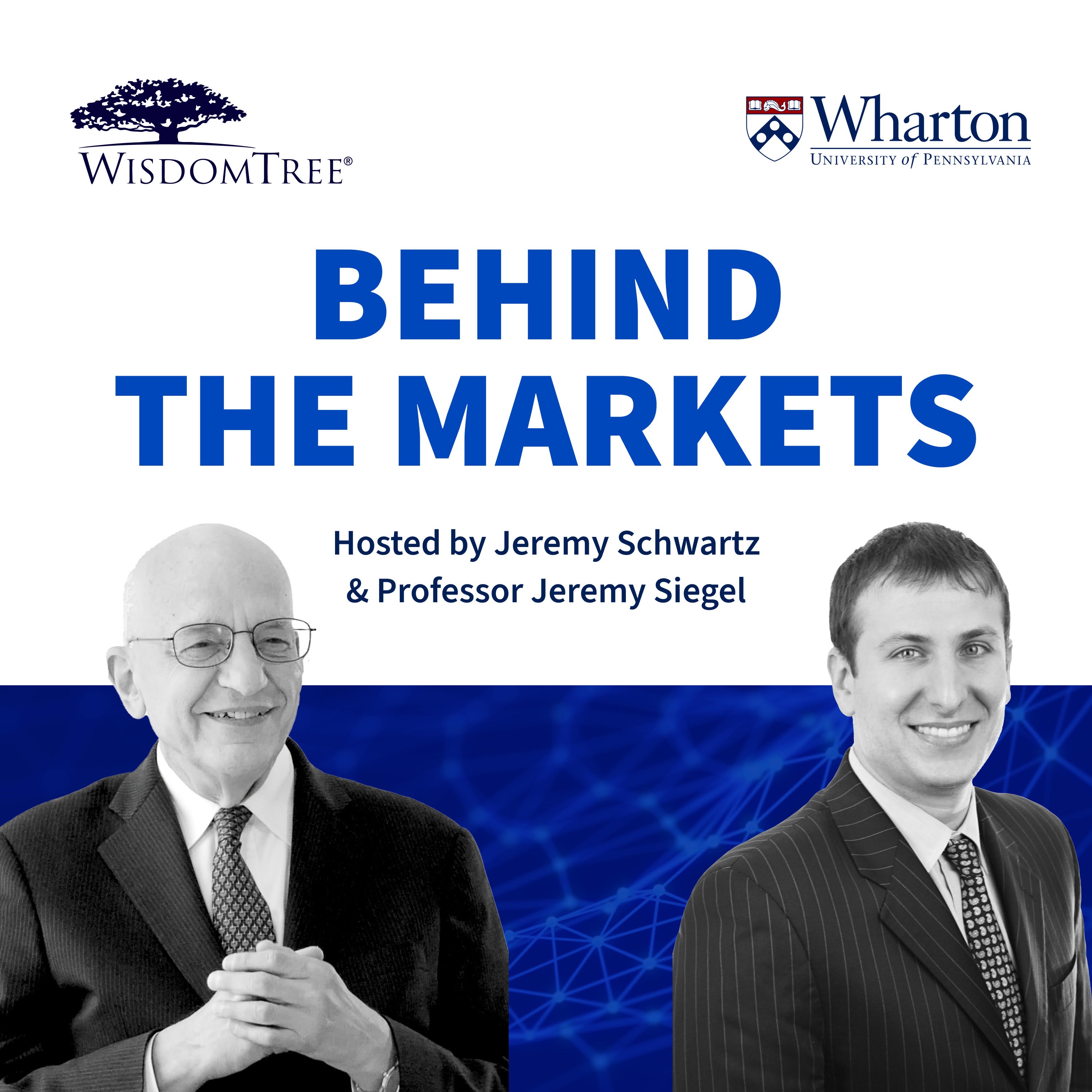
Behind the Markets Podcast
by Behind the Markets
Jeremy Schwartz, Global Chief Investment Officer at WisdomTree and Jeremy Siegel, professor of finance at Wharton and author of Stocks for the Long Run, host this long-running podcast that dives into the how and why of market performance with leading economists and market strategists to inform you what’s ahead for the economy and your portfolio.Regularly joining the two Jeremys is the Deep Rooted Macro Team that decodes the forces shaping markets and portfolios worldwide.Chris Gannatti, CFA, Global Head of Research, offers an analytical and thematic edge—bridging macro trends with on-the-ground technology and innovation. Whether unpacking the infrastructure powering the AI age or latest biotech breakthroughs, Chris translates complexity into conviction.Jeff Weniger, CFA, Head of Equity Strategy, injects the pulse of behavioral markets and valuation discipline. With sharp macro instincts, Jeff dissects cycles, sentiment, and structural change with trademark clarity and wit.Sam Rines
-
500
Hiking Around the World
Show from 2026-09-11 Jeremy Schwartz and Professor Jeremy Siegel open the show by assessing hotter-than-expected inflation, rising Treasury yields, and the growing likelihood of a Federal Reserve rate hike. Siegel argues that credit expansion, persistent inflation pressures, and signals from the yield curve support tighter policy, while noting that equities have remained surprisingly resilient despite higher rates and volatile energy prices. The discussion also covers oil, diesel, geopolitical risks surrounding Iran and key shipping routes, and concerns about Treasury-market credibility and policy coordination. (18:00) After Professor Siegel leaves, Jeremy is joined by Sam Rines and Chris Gannatti for a broad look at earnings, artificial intelligence, and global macro developments. They discuss Oracle’s massive backlog, data-center financing, and continued demand for compute; Kroger’s AI-driven precision marketing business; Meta’s AI investments; and Adobe’s valuation, AI strategy, and content-provenance advantages. Chris also reviews Apple’s latest product event and progress in quantum computing, including developments at IonQ. The conversation closes with the ECB, European energy pressures, Middle East negotiations, currency-market reactions, the Japanese yen, and how a potential Fed rate hike could influence the dollar and longer-term yields. WisdomTree: https://www.wisdomtree.com/investments
-
499
Hot Jobs, Cool Productivity
Show from 2026-09-04 Jeremy Schwartz and Professor Jeremy Siegel open with the latest jobs report, highlighting stronger-than-expected payroll growth, upward revisions, rising hours worked, improved labor-force participation, and contained wage pressures. Siegel argues the data point to a resilient economy but may temper hopes for a dramatic AI-driven productivity surge this quarter. He also discusses the case for a Federal Reserve rate hike, rising money supply growth, bond yields, inflation risks tied to oil and Iran, and the market implications of stronger growth and higher discount rates. The conversation also touches on AI-related productivity gains, limited evidence of widespread AI-driven layoffs, and geopolitical developments involving Russia and Ukraine. (16:00) After Professor Siegel signs off, Schwartz continues with Sam Rines and Chris Gannatti. They examine whether longer-duration bonds are becoming more attractive, along with opportunities in gold, housing, and other rate-sensitive areas. The discussion then turns to AI, including hyperscaler spending, data-center commitments, semiconductor beneficiaries, the risks surrounding future compute demand, and whether major technology companies are becoming value opportunities. They also cover Tesla’s robotaxis, the strategic importance of compute, Japan’s currency and rate outlook, Venezuela’s potential role in U.S. energy security, and continued progress in quantum computing. WisdomTree: https://www.wisdomtree.com/investments
-
498
Warsh Gets an A, SaaS and AI Bears Not So Much
Show from 2026-08-28 Jeremy Schwartz and Professor Siegel open with a discussion of the latest Federal Reserve signals, with Siegel praising the renewed emphasis on money supply, bank credit, commodity prices, market-based inflation expectations, and interest rates. Siegel views the Fed’s tone as more hawkish than expected, but argues that markets responded positively because policymakers provided clearer criteria and demonstrated a more disciplined framework. He also discusses the possibility of additional rate hikes, the resilience of economic activity, and the market implications of strong earnings from NVIDIA and Salesforce. (12:40) After Professor Siegel leaves, Schwartz is joined by Michael Fridman, Sam Rines, and Chris Gannatti for a broader market and technology discussion. The group examines NVIDIA’s continued data-center growth, the widening base of AI demand, improving sentiment toward software, Salesforce’s rebound, and the distinction between broad software recovery and selective opportunities. They also debate potential risks to the AI trade, custom chips versus NVIDIA’s full-stack ecosystem, Marvell’s positioning, Meta’s legal settlement, and developments in quantum computing. The conversation closes with signs of resilience in consumer spending, the transition from AI infrastructure buildout toward commercialization, improving profit margins, and renewed interest in gold as a portfolio diversifier. Michael on LinkedIn: https://www.linkedin.com/in/michaelfridman23/ WisdomTree: https://www.wisdomtree.com/investments
-
497
Bessent Twists Markets
Show from 2026-08-21 Professor Jeremy Siegel joins Jeremy Schwartz to discuss Treasury Secretary Scott Bessent’s efforts to influence the yield curve, the implications for Fed credibility, and the market’s reaction across bonds, crypto, gold, and the dollar. Siegel also previews Jackson Hole, arguing investors need more clarity on Chair Kevin Warsh’s reaction function, while noting that rising commodity prices and continued money-supply growth could strengthen the case for higher rates later in the year. He also weighs geopolitical risks surrounding Iran, China, oil flows, and the Strait of Hormuz. (14:12) After Siegel leaves, Sam Rines and Chris Gannatti join Schwartz for a broader discussion spanning consumers, technology, and global markets. Rines assesses Walmart, Target, Ross Stores, and Redbook data, concluding that consumer spending remains resilient despite mixed retail earnings. The group explores AI-driven drug discovery, Moderna’s cancer-treatment developments, humanoid robotics, drones, and the growing overlap between defense technology and commercial applications. They also examine opportunities in Europe and Japan, renewed momentum in crypto and gold, the impact of a weaker dollar, China’s AI ecosystem, and NVIDIA’s expanding role in financing AI infrastructure. Gannatti closes with developments in quantum computing, including sensing, navigation, cybersecurity, and emerging commercial applications. WisdomTree: https://www.wisdomtree.com/investments
-
496
Prof. Siegel and Jim Bianco Write the Missing FOMC Playbook
Show from 2026-08-14 Host Jeremy Schwartz and Professor Siegel discuss weaker retail sales, inflation trends, strong corporate earnings and the market continuing to reach new highs. The Prof notes that some recent economic data has softened, but higher-frequency indicators are not yet pointing to a major slowdown, while lower oil prices and encouraging inflation details remain supportive for markets. He also focuses on Fed policy, arguing that while avoiding forward guidance is defensible, the Fed still needs to be clearer about its reaction function, the inflation measures it is watching and the conditions that would lead to a rate change, with Jackson Hole potentially providing that clarity. Jim Bianco joins the discussion with the Prof to break the issue into forward guidance, the Fed’s reaction function and the increasingly independent voting behavior of committee members. (21:12) Jeremy continues with Jim Bianco, Sam Rines and Chris Gannatti to discuss their takeaways from Camp Kotok, including the massive scale of AI capital spending, the federal deficit, geopolitical risk and the changing nature of warfare as drones and lower-cost technologies challenge traditional military spending. Sam expands on defense procurement and tariffs, while Chris discusses developments in quantum computing and the roadmaps public companies are laying out toward fault-tolerant systems. Jim then walks through his current bond-market positioning, including a more neutral stance on duration, corporate bonds and mortgages, along with exposure to convertible bonds tied to the AI theme. He also explains why moderately higher rates may be consistent with a strong economy, where rates could begin to pressure equities, and why lower mortgage rates alone may not solve housing affordability. The conversation closes with global markets, Japan, rising rates overseas, currency intervention, the yen and the effect of tariffs on corporate capital flows. About the guest: Jim Bianco is President and Index Manager at Bianco Research Advisors. He is also the President of Bianco Research LLC. Since 1990, Jim’s commentaries have offered a unique perspective on the global economy and financial markets. Unencumbered by the biases of traditional Wall Street research, Jim has built a decades long reputation for objective, incisive commentary that challenges consensus thinking. Jim appears regularly on CNBC, Bloomberg, and Fox Business, and is often featured in the Wall Street Journal, Bloomberg News, Grants Interest Rate Observer, and MarketWatch. Jim has a Bachelor of Science degree in Finance from Marquette University (1984) and an MBA from Fordham University (1989). Learn More about the Bianco Total Return Index: https://www.biancoadvisors.com/ WisdomTree: https://www.wisdomtree.com/investments
-
495
Unprecedented Profits and Neglected Alpha Opportunities
Show from 2026-08-07 Host Chris Gannatti and Professor Siegel discuss the latest employment report, including weaker payroll growth, downward revisions, wage trends and what the data could mean for productivity. The Prof also weighs in on the outlook for Fed policy, oil prices, M2 money supply and unusually strong corporate earnings and profit margins. (19:50) Chris Gannatti is joined by Jon Flynn and Jeff Weniger to discuss commodities, starting with gold and the recent shift in investor flows before looking at copper and the AI data center buildout. The group explores gold’s role as a portfolio diversifier, currency intervention involving the yen, the dollar and interest-rate differentials, along with what the yield curve and economic data could signal for monetary policy. They close by discussing contrarian opportunities, including India and other areas that have seen significant investor outflows. WisdomTree: https://www.wisdomtree.com/investments
-
494
Tackling AI as Fed Fumbles
Show from 2026-07-31 Host Jeremy Schwartz and Professor Siegel discuss the Fed’s decision to hold rates steady and what the Prof viewed as a poorly handled press conference that failed to clearly explain a defensible policy decision. The Prof also covers the sharp rotation from growth to value, strong consumer spending beneath the GDP report, rapid money supply growth and the importance of oil prices to inflation, sentiment and the market outlook. (13:50) Jeremy continues with Sam Rines, Blake Hyman and Michael Fridman to break down the month’s volatility in AI-related stocks, including hedge fund de-risking, leverage unwinds and the impact of risk management on semiconductor and memory names. The group reviews earnings and AI spending from Meta, Microsoft, Amazon, Google and Apple, debating whether hyperscaler capital expenditures are generating sustainable returns and whether enterprise demand confirms that AI is moving from experimentation into commercialization. They also discuss the outlook for memory companies, long-term supply agreements and why the broader AI infrastructure buildout may still be in its third or fourth inning. The conversation closes with Apple’s uncertain AI strategy, potential opportunities for private local models, movements in the Japanese yen, the Bank of Japan’s policy stance, tariff refunds for U.S. companies and the possibility that volatility and further leverage-related selling could continue into August. WisdomTree: https://www.wisdomtree.com/investments
-
493
Consumer Nerds and Capital Pigs
Show from 2026-07-24 Host Jeremy Schwartz and Professor Siegel discuss the pullback in mega-cap technology stocks, the market’s growing concern around massive capital expenditures and the pressure rising bond yields are putting on equity valuations. The Prof also weighs in on oil prices and renewed inflation risks, the importance of distinguishing real yields from nominal yields when evaluating the equity risk premium, the upcoming Fed meeting and the potential market impact of tariffs and tighter financial conditions. (19:29) Jeremy continues with Sam Rines, Chris Gannatti and Jeff Weniger to break down the latest tech earnings and the market’s increasingly skeptical reaction to AI-related spending, with a focus on whether higher CapEx, shareholder dilution and a more asset-heavy business model could change how investors value the largest technology companies. The group compares spending and buyback trends across large technology companies and financials while discussing Intel, Alphabet, Apple, Tesla, Nvidia, AMD and the broader semiconductor complex, along with the rapid growth of firms such as Anthropic and what that could mean for continued AI infrastructure investment. They also examine consumer spending and financial resilience data, the contrast between pessimistic economic surveys and still-healthy consumer activity, and close with a discussion of oil, interest rates, gold and bonds as potential portfolio hedges as markets watch for further geopolitical and inflation developments. WisdomTree: https://www.wisdomtree.com/investments
-
492
Rotation, Not Ruin
Show from 2026-07-17 Host Jeremy Schwartz and Professor Siegel discuss softer-than-expected CPI and PPI readings, the renewed rise in oil and gasoline prices, and the possibility that higher energy costs could reverse some recent inflation progress. The Prof says the latest data reduces the likelihood of an immediate Fed hike, but warns that persistent strength in oil, gasoline and the money supply could make later policy decisions more difficult. He also reviews stronger housing starts, steady GDP expectations and the sharp rotation away from high-flying AI, semiconductor and memory stocks. Professor Siegel argues that the pullback is healthy because investors are reassessing valuations, competition, hyperscaler spending and how much customers will continue paying for computing power. (14:02) Jeremy continues with Sam Rines, Jeff Weniger and Chris Gannatti to examine crack spreads, diesel prices and the economic effects of elevated refining costs. The group discusses volatility in Korean technology shares, widespread margin calls, leveraged retail accounts and the rebalancing pressures facing major pension funds in Korea and Japan. They also review strong bank earnings, resilient consumer spending, improving credit trends and the broadening of earnings growth beyond technology. The conversation closes with hyperscaler capital spending, U.S.-China AI competition, IBM’s sharp decline, a possible rotation from hardware into software, credit-card rewards, gold prices and housing affordability. WisdomTree: https://www.wisdomtree.com/investments
-
491
The $1.5 Trillion AI Race Rewrites Earnings Expectations
Show from 2026-07-10 Host Jeremy Schwartz is joined by Chris Gannatti and Jeff Weniger for a wide-ranging discussion on the latest developments driving technology markets and the economy. The group examines surging AI infrastructure spending, demand for memory chips, expectations for another strong earnings season, and the growing investment cycle surrounding data centers, hyperscalers and physical AI. Professor Siegel joins later in the episode to discuss the resilience of equity markets despite renewed geopolitical tensions in the Middle East, highlighting the surprising stability in oil prices, the outlook for inflation, interest rates and second-quarter GDP, while also explaining how AI-driven margin expansion continues to fuel historically strong corporate earnings growth. After Professor Siegel signs off, Jeremy, Chris and Jeff briefly wrap up the show with additional commentary on Delta's earnings, travel demand, and observations from the summer travel season. The conversation concludes with a discussion of activity in Las Vegas, consumer travel trends, and how pricing dynamics may be affecting tourism and convention traffic. WisdomTree: https://www.wisdomtree.com/investments
-
490
Cracks, Chips, and Market Shifts
Show from 2026-07-02 Host Jeremy Schwartz and Professor Siegel discuss the latest jobs report, noting downward payroll revisions, an unusually sharp decline in labor force participation, and why broader labor market data still points to a steady economy rather than a significant slowdown. Professor Siegel also explains why lower oil prices and easing commodity inflation could keep the Fed on hold for the rest of the year while highlighting the increased volatility between value and growth stocks driven by AI-related trading. (14:52) Jeremy is joined by Blake Hyman, Sam Rines and Jeff Weniger to discuss the latest developments across AI infrastructure, semiconductor spending, Meta’s new compute capacity initiative and OpenAI’s delayed IPO. The group also examines geopolitical developments affecting energy markets, AI adoption and employment trends, opportunities in Japan, recent market rotations, and the investment implications of AI across technology, healthcare and other sectors. They close with a discussion on the new Trump Accounts program and its potential long-term retirement planning benefits. WisdomTree: https://www.wisdomtree.com/investments
-
489
Trade Outside the Box, Featuring Brent Donnelly
Host Jeremy Schwartz and Professor Siegel discuss the sharp rotation from growth into value, falling oil prices, stronger-than-expected economic data, and the implications of rising memory chip costs across the technology sector. Professor Siegel also shares his view that lower energy prices should help keep inflation contained, making additional interest rate hikes this year unlikely, while highlighting upcoming labor market, housing, and money supply data as key indicators to watch. (13:23) Jeremy continues with Brent Donnelly to discuss his new book, Trade Outside the Box, and how successful traders can gain an edge by thinking beyond traditional investment frameworks. Brent explains how psychology, poker, creativity, narratives, and behavioral finance influence his trading process, while also discussing the role of AI, market positioning, and sentiment in identifying opportunities. The conversation concludes with insights on market rotations, disciplined risk management, adapting to changing market environments, and the broader life lessons that can be drawn from trading, decision-making, and independent thinking. Read Brent's book: https://a.co/d/09sXk2jA Learn more about Brent: https://www.amazon.com/stores/author/B07NC8MVZZ/about?ccs_id=7f690ca0-41d4-43c0-b13c-b3140b3a8411 WisdomTree: https://www.wisdomtree.com/investments
-
488
Building the Circuit of AI
Show from 2026-06-19 Host Jeremy Schwartz and Professor Siegel discuss the Federal Reserve's latest meeting, the outlook for interest rates, and how falling oil prices could influence inflation, monetary policy, and investor sentiment in the months ahead. Professor Siegel explains why declining energy prices could lead to significantly lower inflation readings, shares his views on the political and economic challenges of raising rates in that environment, and discusses the potential for market leadership to broaden beyond AI-related stocks as energy prices stabilize. (25:43) Jeremy is joined by Tyson Tuttle, CEO of Circuit AI, to explore how artificial intelligence is transforming manufacturing and industrial businesses by improving productivity, addressing skilled labor shortages, and helping companies accelerate revenue growth. Tyson explains how Circuit AI applies AI to automate complex quoting, technical documentation, and service workflows while preserving valuable institutional knowledge. The conversation also covers AI's long-term impact on employment, the rapid buildout of AI infrastructure, the outlook for semiconductors and enterprise software, token economics, and why startups may be best positioned to capitalize on the next wave of AI-driven innovation. Learn more: https://www.circuit.ai/ Tyson Tuttle: https://www.linkedin.com/in/tuttle/ WisdomTree: https://www.wisdomtree.com/investments
-
487
To Infinity and Mars
Show from 2026-06-12 Host Jeremy Schwartz and Professor Siegel discuss the market’s positive reaction to a ceasefire agreement involving Iran, the reopening prospects for the Strait of Hormuz, and the potential impact of lower oil prices on inflation and economic growth. The Prof also highlights the highly anticipated SpaceX IPO, the wealth creation it could generate for investors, and previews next week’s pivotal Federal Reserve meeting and comments expected from Kevin Warsh. (21:01) Jeremy is joined by Sam Rines, Chris Gannatti, and Jeff Weniger to discuss competition in artificial intelligence between OpenAI and Anthropic, the economics of AI token usage, and the potential for lower AI costs over time. The group also explores government investment in strategic industries such as semiconductors and quantum computing, examines investor sentiment and thematic investing trends, and debates the broader implications of the SpaceX IPO, including wealth creation, index inclusion, and consumer spending impacts. WisdomTree: https://www.wisdomtree.com/investments
-
486
Risk & Reward with Ben Carlson
Show from 2026-06-05 Host Jeremy Schwartz and Professor Siegel discuss the surprisingly strong jobs report, the implications for upcoming Federal Reserve policy, and continued strength in equity markets despite geopolitical tensions and questions around productivity gains from AI. Professor Siegel also comments on international diversification, the dominance of U.S. technology companies, and the disconnect between Wall Street performance and broader economic productivity. (19:23) Jeremy is joined by Ben Carlson to discuss his new book, Risk and Reward: How to Handle Market Volatility and Build Long-Term Wealth. The conversation covers investor behavior during bull and bear markets, the importance of diversification, lessons from Japan and international markets, concentration risk, systematic investing, trend-following strategies, and how investors can avoid common mistakes such as market timing while maintaining a long-term perspective. Guest: I’m the Director of Institutional Asset Management at Ritholtz Wealth Management. We create detailed investment plans and manage portfolios for institutions and individuals to help them achieve their goals. I’ve been managing institutional portfolios for my entire career. I started out with an institutional investment consulting firm developing portfolio strategies and creating investment plans for various foundations, endowments, pensions, hospitals, insurance companies and high net worth individuals. More recently, I was part of the portfolio management team for an investment office that managed a large endowment fund for a charitable organization. I’m the author of four books about saving, investing and money. In 2017, I was named to the Investment News 40 Under 40 list of top financial advisors. Every Wednesday, you can listen to a new episode of my podcast Animal Spirits with Michael and Ben. Fortune named Animal Spirits to its list of Best Business Podcasts. Investopedia named Animal Spirits to its top 10 investing podcast list. Wealth of Common Sense: https://awealthofcommonsense.com/my-book/ WisdomTree: https://www.wisdomtree.com/investments
-
485
Strength Beneath the Noise
Show from 2026-05-29 Host Jeremy Schwartz and Professor Siegel discuss easing oil prices, lower Treasury yields, AI-driven market strength, recent economic data, and why investors should compare stock earnings yields to real bond yields rather than nominal bond yields. Professor Siegel notes that growth remains positive with no signs of recession, while also highlighting stronger money supply growth and upcoming labor market data as key areas to watch. (16:45) Jeremy is joined by Jeffrey Roach, Jeff Weniger, Sam Rines, and Chris Gannatti to discuss the economic outlook, inflation expectations, Fed independence, and portfolio positioning. The group examines consumer spending trends, opportunities in international markets with a focus on India, the outlook for oil prices following the Strait of Hormuz disruption, and sector opportunities across technology, healthcare, and biotech. They also explore AI infrastructure demand, government investment in strategic technologies such as drones, semiconductors, and quantum computing, and the broader implications of AI on productivity, employment, and future market leadership. Guest: Jeffrey Roach is Chief Economist for LPL Financial. Responsible for relating economic conditions with financial market outcomes, Jeffrey provides forward-looking views of global economic conditions and sets forecasts across various economic data series. Jeffrey is also a member of LPL Research’s Strategic & Tactical Asset Allocation Committee (STAAC), which provides a united investment view across a comprehensive range of investing disciplines. He provides regular, compelling insights for financial advisors and enterprise clients, and communicates the firm's economic views via conference calls, webinars, LPL events, and media engagements. Known for cutting-edge research across a career that spans over 20 years in investing and economics, Jeffrey maintains frequent contact with Federal Reserve economists, Wall Street analysts, and other leading global money managers. He’s an avid contributor to the financial press outside of LPL Financial and is a sought-after speaker. Jeff Roach: https://www.linkedin.com/in/jeffreyroachphd WisdomTree: https://www.wisdomtree.com/investments
-
484
India to Mars: Contrarian Opportunities in a Changing World
Show from 2026-05-22 Host Jeremy Schwartz is joined by Sam Rines, Jeff Weniger, Chris Gannatti and Jon Flynn to discuss geopolitical developments surrounding Iran negotiations, China’s growing pushback on ADRs and solar exports, and contrarian opportunities emerging in India, Europe and gold amid heavy investor outflows. The group also explores Nvidia’s latest earnings, the government’s new investments in quantum computing, and how expectations and capital flows are shaping the next phase of AI, commodities and infrastructure investing. (9:21) Jeremy continues with Chris, Jeff and Jon as they debate the rise of quantum computing, the strategic importance of rare earth metals and utilities, and the growing overlap between AI, energy and national security. The conversation also covers SpaceX’s upcoming IPO, private market enthusiasm surrounding AI and space, and how investors are beginning to think about the next generation of technological infrastructure and innovation. WisdomTree: https://www.wisdomtree.com/investments
-
483
China Summit Disappoints: Rated Minus 2 Out of 10
Show from 2026-05-15 Host Jeremy Schwartz and Professor Siegel discuss the market reaction to President Trump’s summit with China, with the Prof calling the outcome a disappointment due to tensions around Taiwan, limited progress on Iran and weaker-than-expected economic deals. Professor Siegel also highlights rising oil prices, higher long bond yields and the resilience of the U.S. economy despite growing geopolitical uncertainty and inflation pressures. (12:39) Jeremy continues with Samuel Rines, Jeff Weniger and Chris Gannatti to discuss rising global bond yields, the impact of Taiwan tensions on markets and the growing influence of AI-related trades across emerging markets and tech sectors. The group also examines opportunities in India, healthcare valuations and the ongoing quantum computing race, while debating whether the recent surge in AI and semiconductor names is becoming stretched. Sam closes by noting the surprising resilience of the U.S. economy and the possibility that stronger growth could justify higher long-term interest rates. WisdomTree: https://www.wisdomtree.com/investments
-
482
Paris, Tariffs, and S&P 8,000
Show from 2026-05-08 Host Jeff Weniger and Professor Siegel discuss a much stronger than expected jobs report, the implications for Fed policy and interest rates, and how resilient AI-driven earnings growth continues to support equity markets despite geopolitical uncertainty and elevated oil prices. The Prof also comments on valuations, the declining energy intensity of the economy, and why he would not stand in front of the current momentum-driven market environment. (13:13) Jeremy is joined by Sam Rines and Jeff Weniger to discuss the latest developments surrounding Iran, China trade negotiations, tariffs and commodity markets. The group also explores the long-term outlook for oil supply, the growing divergence between energy and technology stocks, and the resurgence in AI-driven software and infrastructure names. They finish with a discussion on how AI is augmenting productivity across industries, the parallels to past technological revolutions, and why software companies may ultimately benefit rather than suffer from the AI boom. WisdomTree: https://www.wisdomtree.com/investments
-
481
AI CapEx, Fed Dissent, and the Bull Market That Won’t Quit
Show from 2026-05-01 Host Jeremy Schwartz and Professor Siegel discuss the latest Fed meeting dynamics, highlighting the unusual dissents toward a neutral bias and what it signals about the direction of monetary policy, while also reviewing strong economic data including historically low jobless claims, resilient retail sales, and a solid GDP print. Siegel emphasizes continued market strength driven by robust earnings, steady consumer activity, and sustained AI-related capital expenditures, while cautioning that rising oil prices and gasoline costs could pose a psychological and economic risk if they continue climbing. (13:53) Jeremy continues with Chris Gannatti, Jeff Weniger, Sam Rines, and Michael Fridman to break down a pivotal week in earnings, focusing on the acceleration of AI investment, exceptional strength in semiconductors, and early signs of improving sentiment in beaten-down software names. The group explores major tech results including standout performance from hyperscalers like Google, evolving competition between GPUs and ASICs, and how shifting capex flows are influencing market leadership and valuation debates. They also discuss portfolio positioning shifts toward software, geopolitical considerations impacting defense and Asia, currency movements in Japan, and broader global opportunities, while reinforcing the view that strong earnings growth and improving market breadth continue to support overall equity momentum. Michael on LinkedIn: https://www.linkedin.com/in/michaelfridman23/ WisdomTree: https://www.wisdomtree.com/investments
-
480
Behind the Markets Podcast: David Rosenberg
Show from 03/22/24 Host Jeremy Schwartz and Professor Siegel discuss this week's market and Powels dovish announcement. The Prof states that the Fed believes trends are decreasing however he feels the economy is still moving along nicely. He notes that deflationary forces have begun to ease up. David joins to give his market opinion alongside the Prof as the two discuss their opposing views. (23:42) David continues with Jeremy to talk about how he forecasts the market with his business. Jeremy asks David about consumer sales and how it’s affecting some of the luxury brands. David touches on topics like the employment report, and recent comments from Bullard. He gives his case on why he loves the Japanese Market. David also talks about India as another alternative market to China. Guest: David is the Founder and President of Rosenberg Research. Prior to Rosenberg Research, David was Chief Economist & Strategist at Gluskin Sheff + Associates Inc. from 2009 to 2019. From 2002 to 2009, he was Chief North American Economist at Merrill Lynch in New York. During this time, he was consistently ranked in the Institutional Investor All-Star analyst rankings. Prior thereto, he was Chief Economist and Strategist for Merrill Lynch Canada, based out of Toronto, where he and his team placed first in the Brendan Wood survey of Canadian economists for ten years in a row. Mr. Rosenberg is a frequent contributor to major financial newspapers and publications in North America and makes regular TV appearances in the financial media. He received both a Bachelor of Arts and Master of Arts degree in Economics from the University of Toronto. Learn more about David at: https://www.rosenbergresearch.com/ Follow David on X(Twitter): @EconguyRosie
-
479
Behind the Markets Podcast: Samuel Rines
Show from 10/13/23 Hosts Jeremy Schwartz and Professor Siegel discuss the economic uncertainties, such as rising inflation, geopolitical risks, and potential government shutdowns. Professor Siegel believes that while there are warning signs, the data does not indicate an imminent recession, attributing low unemployment claims and expected seasonal economic boosts as positive signs. He also argues that inflation is better than official numbers suggest, citing alternative metrics considering lagging factors like housing costs in the CPI calculation. (12:22) Samuel Rimes agrees with Professor Siegel that the Fed is unlikely to change rates soon due to volatile data points affecting monetary policy. On the topic of energy and inflation, Rimes highlights how the global energy landscape has evolved significantly, allowing for quick shifts in supply chains, and notes that U.S. oil production has been surprisingly robust due to technological advances, which is keeping oil prices lower than one might expect given current geopolitical tensions. They discuss how temporary external pressures like deficits and liquidity should be watched. Regarding margins and investment strategies, Samuel points out that cost benefits arise from improved supply chains and moderated costs in commodities and labor. Guest: Samuel Rines is the Managing Director of CORBU, a research intelligence and advisory platform at the intersection of markets, policy, and national security. Based in CORBU’s Houston, Texas office, Samuel is a global macro expert focused on the investment implications of politics and policy. His PolyMacro research and model portfolios are widely followed. Follow him on LinkedIn: https://www.linkedin.com/in/samuelerines Follow him on Twitter: @SamuelRines
-
478
Behind The Markets Podcast: John Davi
Show from 1/6/23 Happy New Year! In this episode of Behind the Markets, Host Jeremy Schwartz kicks off 2023 with Wharton Finance Professor Jeremy Siegel giving his projections for the new year. Professor Siegel talks about the latest jobs report, jobless claims dropping, inflation, Dow Jones Industrial, and more. Then Jeremy Schwartz brings on John Davi of Astoria Advisors to discuss investing in 2023 from the S&P, momentum, the energy sector, and commodities to bonds and alternatives vs equities. Guest: John Davi - CEO and CIO of Astoria Portfolio Advisors For more on Astoria, visit their website: https://www.astoriaadvisors.com/ Follow Astoria on Twitter: @AstoriaAdvisors Follow WisdomTree on Twitter: @WisdomTreeETFs Follow Jeremy Schwartz on Twitter: @JeremyDSchwartz
-
477
Behind The Markets Podcast: James Bullard
Show from 10/21/22 Wharton Finance Professor Jeremy Siegel kicks off the show with his weekly market update. He talks about the status of inflation, the slowdown in money supply, and the inconsistencies in GDP data. Then, the 12th president of the Federal Reserve Bank of St. Louis James Bullard joins Professor Siegel and Host Jeremy Schwartz to discuss the economic events of 2022, productivity numbers, labor markets, the inverted yield curve, and more. Guest: James Bullard - Chief executive officer and 12th president of the Federal Reserve Bank of St. Louis Follow the St. Louis Fed on Twitter: @stlouisfed For more interviews with Bullard visit: https://www.stlouisfed.org/from-the-president Follow WisdomTree on Twitter: @WisdomTreeETFs Follow Jeremy Schwartz on Twitter: @JeremyDSchwartz
-
476
Behind The Markets Podcast: Marc Chandler
Show from 12/4/20 Wharton Finance Professor Jeremy Siegel kicks off the show talking about the positive news regarding fiscal stimulus packages, COVID-19 vaccines, and the election of Chris Weller to the Fed. Then Marc Chandler joins Host Jeremy Schwartz to discuss the declining dollar valuation, emerging markets, China, trade, high beta currencies and much more. Find out how to read the current state of national and international markets so that you can properly allocate your portfolio. Guest: Marc Chandler - Chief Market Strategist at Bannockburn Global Forex. He writes a widely followed blog called Marc to Market. Chandler is a frequent guest on CNBC, Bloomberg Television, FOX Business, Business News Network, and Nightly Business Report where he provides his insights on the global capital markets. Chandler has been published in the Financial Times, Foreign Affairs, Barrons, The Nation, Euromoney Institutional Investor, and Corporate Finance. He is regularly published by Seeking Alpha and TheStreet.com. Follow him on Twitter: @marcmakingsense Follow WisdomTree on Twitter: @WisdomTreeETFs Follow Jeremy Schwartz on Twitter: @JeremyDSchwartz Ask Siegel: If you have a pressing finance question we invite you to email us: [email protected]
-
475
Behind The Markets Podcast: Andy Rothman
Show from 2/21/20 In this episode of Behind the Markets Jeremy Siegel kicks off the show discussing the most recent impact of the Coronavirus, low earnings, and fed rates. Then hosts Jeremy Schwartz and Liqian Ren take a deeper dive into the effects of the Coronavirus on markets. They talk to an expert on US/ China relations, Andy Rothman, who discusses the future of trade and technology transfer with China. Guest: Andy Rothman: Investment Strategist for Matthews Asia Sinology Blog: https://us.matthewsasia.com/perspectives-on-asia/sinology/default.fs Matthews Asia Website: https://us.matthewsasia.com/default.fs?set=true&gclid=Cj0KCQiAnL7yBRD3ARIsAJp_oLayWiYE4hnI9RTLuTPTAJX7Twedon5jPmre0k4OhOGZLObJBBOv6hgaAqFUEALw_wcB
We're indexing this podcast's transcripts for the first time — this can take a minute or two. We'll show results as soon as they're ready.
No matches for "" in this podcast's transcripts.
No topics indexed yet for this podcast.
Loading reviews...
ABOUT THIS SHOW
Jeremy Schwartz, Global Chief Investment Officer at WisdomTree and Jeremy Siegel, professor of finance at Wharton and author of Stocks for the Long Run, host this long-running podcast that dives into the how and why of market performance with leading economists and market strategists to inform you what’s ahead for the economy and your portfolio.Regularly joining the two Jeremys is the Deep Rooted Macro Team that decodes the forces shaping markets and portfolios worldwide.Chris Gannatti, CFA, Global Head of Research, offers an analytical and thematic edge—bridging macro trends with on-the-ground technology and innovation. Whether unpacking the infrastructure powering the AI age or latest biotech breakthroughs, Chris translates complexity into conviction.Jeff Weniger, CFA, Head of Equity Strategy, injects the pulse of behavioral markets and valuation discipline. With sharp macro instincts, Jeff dissects cycles, sentiment, and structural change with trademark clarity and wit.Sam Rines
HOSTED BY
Behind the Markets
CATEGORIES
Loading similar podcasts...
Frequently Asked Questions
How many episodes does Behind the Markets Podcast have?
Behind the Markets Podcast currently has 26 episodes available on PodParley. New episodes are automatically indexed when they're published to the podcast feed.
What is Behind the Markets Podcast about?
Jeremy Schwartz, Global Chief Investment Officer at WisdomTree and Jeremy Siegel, professor of finance at Wharton and author of Stocks for the Long Run, host this long-running podcast that dives into the how and why of market performance with leading economists and market strategists to inform you...
How often does Behind the Markets Podcast release new episodes?
Behind the Markets Podcast has 26 episodes. Check the episode list to see recent publication dates and frequency.
Where can I listen to Behind the Markets Podcast?
You can listen to Behind the Markets Podcast on PodParley by clicking any episode. We provide an embedded audio player for direct listening, and you can also subscribe via your preferred podcast app using the RSS feed.
Who hosts Behind the Markets Podcast?
Behind the Markets Podcast is created and hosted by Behind the Markets.
URL copied to clipboard!