
PODCAST · society
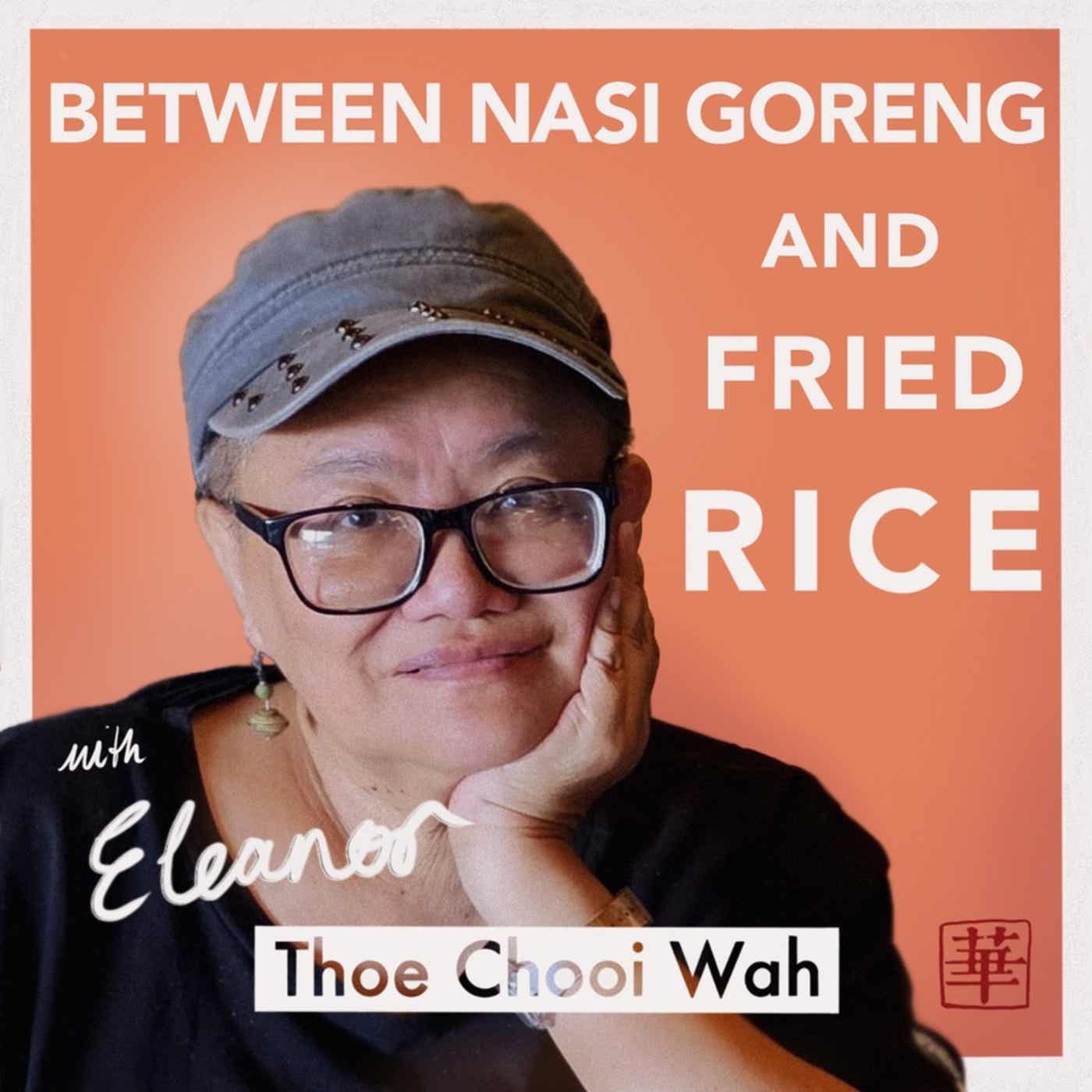
Between Nasi Goreng and Fried Rice
by Culture Connect
Eleanor Lisney (Thoe Chooi Wah) writer and cultural leader, embarks on a journey exploring identity. Her own, and with guests who share her East and South-East Asian Identity. Diving deeper, and exploring the intersections of being disabled, a woman and LGBTQ+. Being from the East, by heritage and adopted by Western Cultures. How do we adapt and negotiate? We get packaged together, but like an onion we can get to the different layers. eleanorlisney.substack.com
-
14
Leaving Mainland China
On Between Nasi Goreng and Fried Rice this week I spent some time with Shan, a friend from Coventry who came to keep me company over Christmas. Shan came to the UK from China over 20 years ago. We discussed the unique journeys of mainland Chinese immigrants compared to those from Hong Kong and other regions.We explored the diverse cultural landscape of Coventry, language barriers and cultural adjustments. Plus the voluntary work she does helping Chinese immigrants with employment, and interpreting for a law firm. We touched on the cultural richness of China and the limitations of accessibility in certain regions. We also talked about the Confucius Institute and its impact on cultural exchange despite controversies.There is an increased openness of China to the world, making it easier for people to travel and study abroad. The impact of technology has made the world smaller and more accessible and financial and educational opportunities have attracted younger generations to study in the UK.Catch up with all episodes of Between Nasi Goreng and Fried Rice on Spotify, Apple Podcasts and YouTubeSubscribe to the Sisters Of Frida newsletter, bringing disabled women together, mobilising and sharing through lived experiences.Also consider giving a friend a subscription to New Tide Media, a UK-based network that aims to strengthen ESEA voices and perspectives in journalism. Their mission is to bring nuance into anglophone reporting on ESEA and push back on western-centric storytelling that flattens this rich and diverse region.Happy New Year to everyone and wishing you all the best for 2026!As always you can keep up with my work and news here. Please get in touch with me at [email protected] if you think I should be highlighting your ESEA organisation on Between Nasi Goreng and Fried Rice. This is a public episode. If you would like to discuss this with other subscribers or get access to bonus episodes, visit eleanorlisney.substack.com
-
13
The "Model Minority" and Cultural Identity
Between Nasi Goreng and Fried Rice this week is James Lee. You can also listen to this episode on Spotify, YouTube and Apple PodcastsJames and I first met at the House of Commons during a campaign to ratify the Istanbul Convention. Since then James' career has taken him from being a trustee at Muscular Dystrophy UK, City Bridge Trust to his current role as director at Publica, an urban design practice. We delved into the intersectionality of race and disability, noting the rise in violence against East and Southeast Asians during COVID-19. We discussed the complexities of addressing racism, disablism, and economic inequality in London and other cities.James shared his experiences as a parent discussing racism with his children and the challenges of accessibility within his community. We also reflected on the privileges and challenges of living in London, highlighting economic disparities and the impact of classism.The recent announcement that Chancellor Rachel Reeves is considering scrapping tax breaks for Motability scheme users as part of a £1 billion budget cut is a move that could severely impact the lives of many disabled individuals in the UK. This scheme is not just about cars; it's about providing independence and accessibility to those who need it most. Sign the petition hereAs always you can keep up with my work and news here. Please get in touch with me at [email protected] if you think I should be highlighting your ESEA organisation on Between Nasi Goreng and Fried Rice. This is a public episode. If you would like to discuss this with other subscribers or get access to bonus episodes, visit eleanorlisney.substack.com
-
12
What stories are silenced when history paints over the living?
In this week's episode of Between Nasi Goreng and Fried Rice I was delighted to talk to the multi-hyphenate and award winning artist and author Khairani Barokka. We discussed how she first came to the UK, her book, Annah, Infinite, published by Tilted Axis Press in September and why she wrote it. Okka's new book is an experimental work of creative non-fiction that challenges art history, confronts colonial ableism, and reclaims a stolen spiritCatch up with the latest episodes of Between Nasi Goreng and Fried Rice on Spotify here or on Apple Podcasts below. Okka is a writer, artist, arts consultant, translator and editor from Jakarta. Her work has been presented widely internationally, and centres disability justice as anticolonial praxis, environmental justice, and access as translation. She regularly teaches, mentors, and consults for arts organisations, and has a PhD by Practice in Visual Cultures from Goldsmiths, University of London. Among her many honours, she has been a UNFPA Indonesian Young Leader Driving Social Change, a Delfina Foundation Associate Artist, an Artforum Must-See, and Associate Artist at the UK’s National Centre for Writing. She was the first Poet-in-Residence at Modern Poetry in Translation, and later became the magazine’s first non-British Editor. In 2023, Okka was shortlisted for the Asian Women of Achievement Awards in the Arts and Culture Category. Her books include Indigenous Species (Tilted Axis), Stairs and Whispers: D/deaf and Disabled Poets Write Back (Nine Arches, as co-editor), Rope (Nine Arches),Ultimatum Orangutan (Nine Arches), shortlisted for the 2022 Barbellion Prize, and 2024’s amuk (Nine Arches), longlisted for the Jhalak Prize.‘Annah, Infinite is a luminous act of reclamation. It’s a text that dares to ask what lies behind a portrait, what stories are silenced when history paints over the living.Disability activist and author Alice Wong calls it “a fascinating exploration” of how pain is written on Annah’s body and how Barokka refuses to look away. Bhanu Kapil sees it as a work staged “at the limit of portraiture,” metabolising the body into presence and absence. Anton Hur describes it as “so precise and empathetic that the reader aches with phantom pain.” And Daisy Rockwell reminds us that it heralds “the birth of a new, yet-to-be-named genre.”‘A profoundly disturbing, intriguing, and illuminating work—Khairani Barokka is so precise and empathetic that the reader aches with phantom pain.’ — Anton Hur, author of Toward Eternity and 2025 International Booker Prize judge.‘Through this study of a single canvas and its subject, Barokka presents a brilliant book that defies classification, one that delves into linguistics, colonial history, queer theory and memoir, and is by turns lyrical, angry, tender and pained, harking back to the pioneering work of Linda Nochlin and John Berger, but blazing a new trail that is as unexpected as it is enthralling.’ — Frank Wynne, The Irish TimesAs always you can keep up with my work and news here. Please get in touch with me at [email protected] if you think I should be highlighting your ESEA organisation on Between Nasi Goreng and Fried Rice. This is a public episode. If you would like to discuss this with other subscribers or get access to bonus episodes, visit eleanorlisney.substack.com
-
11
Filipinos on the Frontlines
This week I sat down with the brilliant James Olabre. James is the Operations and Development Manager at Transport for London. We were both directors at EVR (End Violence and Racism Against ESEA Communities) now rebranded as Sesame.Over the years we have met at events but never quite managed to have a proper chat. I wanted to know more about him as a friend, and his life as a Filipino in the UK. In this episode we spoke about food, Filipino karaoke and how we navigate living in London as part of the ESEA community.This week our conversation felt even more poignant because of Apple, an NHS worker who was assaulted and racially abused in Manor Heath Park, Halifax.Apple is a NHS nurse from the Philippines with 15 years of service. She was racially abused and assaulted while walking with her family on 28th August. In a social media post, she shared her feelings after the attack stating, “After what happened, it only validated my decision [to leave]. I love what I do, but some people aren’t worth my time or my care.” She added, “Justice must be served.”West Yorkshire Police reported that a white man and woman, both in their 60s, targeted Apple’s family with racist abuse. A bystander who intervened and Apple’s mother were also assaulted.The couple demanded to know if the nurse, who has worked for the NHS for 12 years, 'came here on a rubber boat' and hurled water and grabbed her hair during the assault The police have made two arrests.Catch up with all episodes of Between Nasi Goreng and Fried Rice on Spotify, Apple Podcasts and YouTube Recently I went to the launch of New Tide Media, a UK-based network that aims to strengthen ESEA voices and perspectives in journalism. Their mission is to bring nuance into anglophone reporting on ESEA and push back on western-centric storytelling that flattens this rich and diverse region. According to a 2025 report by the Reuters Institute, Asian and Asian British people make up 9 per cent of the United Kingdom’s population, but only three per cent are journalists (90 per cent of journalists are White). In the past ten years, there’s been no significant change in the percentage of journalists from underrepresented ethnic backgrounds working in the UK’s journalism industry, the report says. Journalists of Asian heritage are also underrepresented in American newsrooms. But in the US, there are established networks such as the Asian American Journalist’s Association, that support community members working in the industry and advocate for their interests. Find New Tide Media on Instagram here Keep up with my work and news here. Please get in touch with me at [email protected] if you think I should be highlighting your ESEA organisation on Between Nasi Goreng and Fried Rice. This is a public episode. If you would like to discuss this with other subscribers or get access to bonus episodes, visit eleanorlisney.substack.com
-
10
Staying Authentic in the Arts
Very pleased to have Jasmine Thien on Between Nasi Goreng and Fried Rice this week. Jasmine is a fully blind, Bruneian born Chinese actor, writer, spoken word artist and stand up comedian.Her work explores intersectionality, ableism, culture and trauma in ways that are authentic while remaining accessible to all.Jasmine has written a semi autobiographical play called I Dream in Colour. She will be performing at the Omnibus Theatre 22nd/ 23rd July and at the Edinburgh Fringe.We first met though a mutual friend and subsequently realised we were neighbours! After listening to her podcast on Disability Arts Online about her intersectional experience of the performing arts as a disabled migrant to the UK and finding out she is from Brunei, I knew she had to come on the show. We talked about her upcoming play, future plans and explored the similarity in our backgrounds and experiences as disabled people.You can find Jasmine on instagram @ jasminethiencreativeCatch up with past episodes of Between Nasi Goreng and Fried Rice on Spotify here or on Apple Podcasts below. This Week in Disability News MPs voted through the disability benefits bill with a majority of 75 today after facing major opposition from all Disability organisations, advocates and some members of the press. A total of 335 MPs voted in favour of the bill, while 260 voted for the proposals to be dropped.There was fierce opposition from some in the chamber who argued that the “brutal cuts would push hundreds of thousands of vulnerable, sick and disabled people into poverty”. The Universal Credit and Personal Independence Payment Bill will now go to the third stage in parliament, and will face another vote.The government says they will wait for the outcome of the review led by Work and Pensions Minister Sir Stephen Timms - now set to include input from disabled people.However this is simply not good enough and there will be an opportunity to fight it in the House of Lords where it will be debated further."Expecting disabled people of today to turn our back on disabled people of tomorrow is unreasonable and it will never happen."Photos from the vigil outside parliament today. DPAC (Disabled People Against Cuts) has said they will be making a list of MPs who vote in favour and will make sure they lose their seats at the next General Election and that their disabled constituents hound them until then.#TakingThePIP #WelfareNotWarfare #DisabilityBenefitsKeep up with my work and news on my linktr.ee here This is a public episode. If you would like to discuss this with other subscribers or get access to bonus episodes, visit eleanorlisney.substack.com
-
9
The Personal is Political
This week I sat down with Pierre Tran. Pierre is a Paris based reporter, who has worked for specialist websites, newspapers, international news agencies, and magazines, covering corporate news, politics and financial markets. He has also been a sub-editor.Pierre and I first met in 2023 at the National Union of Journalists Delegates Meeting in London. We had lunch together with other union members, and since then I've followed his reporting. When I was last in Paris, we met up and I got him to agree to record an episode of Between Nasi Goreng and Fried Rice. I know nothing about defence and weapons so when he came to London for this year's NUJ delegates meeting it seemed like the perfect opportunity! Catch up with past episodes of Between Nasi Goreng and Fried Rice here.This Week in Disability NewsLots of us gathered in Westminister this week for a mass lobby to challenge our elected representatives about the government's proposed cuts to disability benefit. PIP (Personal Independence Payment) is a benefit to help towards some of the extra costs that come with having a long-term health condition or disability that is expected to last 12 months or longer.Follow Disabled People Against Cuts on Instagram to keep informed. The ‘First Report of the Work and Pensions Committee, Safeguarding vulnerable claimant’ has been published. One witness said they felt as if "a system that is meant to wrap its arms around us is strangling us”.“Having choice is only valid if it’s a meaningful choice, and for many disabled people we strongly fear it won’t be.”A disabled MP has dropped his support for the assisted suicide bill, largely because of concerns that “broken” social care and palliative care services could push terminally-ill people into seeking an assisted death.Steve Darling MP told Disability News Service (DNS) this week that he had not yet decided how he would vote on the bill’s third reading, which is likely to take place next month, but he said he had moved from being “marginally in favour” of the bill at its second reading last November, to now being “marginally against”.Keep up with my work and news on my linktr.ee here This is a public episode. If you would like to discuss this with other subscribers or get access to bonus episodes, visit eleanorlisney.substack.com
-
8
Craving Something Real
I first met Anthony Leung when I was hotdesking at the Design district. Anthony is the founder of Mean Write Hook, a media and marketing company with vision. He moved from Hong Kong to Canada and then to London. In our conversation, he talks about the impact living in such different places has had on him - he feels as much Canadian as he does being from Hong Kong. We also talked about cultural influences from food to music to sport. We talked about his work, what he does and future plans.ICYMI catch up on my conversation with Dr. Ahneez Abdul Hameed last week here This month in Disability NewsA petition has been launched to protect disabled people who cannot work from planned cuts to benefits.The pandemic widened the gap between current financial support and the extra cost of living for Disabled people; the government’s proposed cuts will worsen this. Forcing people to work will strain the fragile NHS. Disabled people should not be punished for being unable to work.Sign the petition here. The government must respond to all petitions that get more than 10,000 signatures. At 100,000 signatures, Parliament should debate their proposed changes. David*, from Salisbury, was found dead in his home in February, just weeks after his personal independence payment (PIP) had been stopped when he failed to return a review form.Conservative councillors responsible for housing, social care, public health and safeguarding have all refused to comment on *David's death after he was found in distressing conditions after the wrongful removal of his disability benefits. Full story here.Leading disabled people’s organisations (DPO) have written to work and pensions secretary Liz Kendall to express “serious concerns” about the human rights implications of her “incredibly dangerous” plans to cut spending on disability benefits.They say in the letter that her consultation on the Pathways to Work green paper, launched officially this week after the long-awaited publication of accessible versions of the document, is a “sham”.And they have called on her to withdraw the consultation, postpone imminent legislation – due within weeks – until all the proposed measures can be subjected to proper and accessible consultation, and provide accessible versions of all documents relating to the proposals.Read more at Disability News Service Keep up with my work and news on my linktr.ee here This is a public episode. If you would like to discuss this with other subscribers or get access to bonus episodes, visit eleanorlisney.substack.com
-
7
Crossing Continents
Dr. Ahneez Abdul Hameed is a Malaysian medical doctor specialising in clinical microbiology.She's also my friend and classmates' daughter from back home in Malaysia. I met her as a child when her mother, Begum came to the UK to do her postgraduate studies. We caught up recently when Ahneez came here to do some exchange work. I asked her to make some time to do a podcast with me, and she graciously agreed. By day, Ahneez is unraveling the mysteries of microbes, and by evening—or on her days outside the hospital—she is a cafe-hopping, globe-trotting foodie with a love for pretty skies, lush gardens, vibrant flowers, Michael Jackson’s timeless beats, the magic of musicals, and the purr-fect company of cats. It was wonderful to hear about her professional life in Malaysia as a medical doctor since I had no idea of the work she does there.In 2022 I did an interview for the Royal Society of Arts about the social model of disability. Here's an excerpt.Social model of disability: five decades on: I was not in the UK half a century ago. I was born and bred in Malaysia, so I did not learn about the social model until I came back to the UK in the early 2000s.What changed for me is the realisation that I can demand reasonable adjustments and access was not my individual responsibility. I became part of Disabled People Against Cuts (DPAC) and protested disability and benefit cuts and demanded disabled people’s rights and independent living. It started me and others on the route to what is now disability justice.The social model has also included an international understanding of intersectionality. We are not isolated in what oppresses us, be it discrimination and oppression due to being disabled, poor, working class, lack of status, citizenship, qualifications, age, ethnicity, gender, or sexual orientation. We can have mixed identities. In our fight for human rights for disabled people, we cannot ignore those compounded oppressions are also in structural inequalities. What about rights for refugees or BIPOC (black, indigenous and other people of colour)– many of whom are also disabled? Or women?Sisters of Frida was formed with the understanding that disabled women’s struggles were not included in mainstream disability discussions. But we also pick up voices from the disabled community with an intersectional perspective.It is good that the disabled community seems to be also picking up on this need to include different identities against dis/ableism.Stay connected with my social media and work here. This is a public episode. If you would like to discuss this with other subscribers or get access to bonus episodes, visit eleanorlisney.substack.com
-
6
What makes inclusive and universal design?
Naziaty Mohd Yaacob is an architectural educator, entrepreneur and artist. She is a former associate professor and architectural design practitioner.Naziaty (Naz) and I first met in Kuala Lumpur, Malaysia when I was there on a family visit. I’ve always admired her work as a disabled activist and her work as a lecturer. She fights for both accessibility and access. In this episode we talked about her work, her passions and her life. We also discussed the intersection of being disabled and Malaysian and her work with inclusive and universal design and accessibility. We discussed the difference in access and legislation in London and Kuala Lumpur. Plus disabled activism in Malaysia and the importance of mental health when getting older.Go here to learn more about Naziaty’s work and listen to her podcast Talk Architecture. On Wednesday I joined thousands of others as we protested against the cuts that have been proposed by the government.Here's some coverage of the Welfare Not Warfare demos in the Disability News Service:DPAC says ‘this is just the start’, after protest over ‘vile and cruel’ benefit cuts outside Downing StreetDisabled people have spoken of their anger, frustration and fear – and sense of betrayal by the Labour government – over plans to cut billions of pounds from disability benefits, as they protested outside Downing Street on Wednesday.Estimates suggest more than 1,000 disabled people and allies chanted outside the Downing Street gates or listened to speeches across the road, on the other side of Whitehall.They later marched down Whitehall and past the Houses of Parliament, just as chancellor Rachel Reeves was delivering a spring statement that confirmed more than £4.5 billion in cuts to personal independence payment (PIP) and £3 billion in cuts to the health element of universal credit.Read more here This is a public episode. If you would like to discuss this with other subscribers or get access to bonus episodes, visit eleanorlisney.substack.com
-
5
A Hero Born
Daniel York Loh is a phenomenon in the cultural scene. An actor, writer, playwright, director but also a social activist. Forgotten 遗忘, 2018He is also an activist. In this podcast we discussed his works and his philosophy and our interest in Wuxia (Chinese martial) films.But most of all I appreciated the opportunity to chat about novelist and co-founder of Ming Pao, Jin Yong's work. Daniel’s reading of A Hero Born: Legends of the Condor Heroes, Volume I is available to listen to on Audible.We also talked about being ESEA and mixed race, intersectionality and representation. How do those work in film and media? Being disabled and being represented. Do successful actors such as Michelle Yeoh, Henry Golding, Tony Leung, Maggie Cheong represent us? We also talked about the films, A Touch of Zen, Hidden Dragon, Crouching Tiger and Chinese dramas, including Nirvana in Fire1m. Daniel is a writer, filmmaker, actor and musician. His first stage-play, The Fu Manchu Complex was produced at Ovalhouse. His second play, Forgotten 遗忘, was performed at Arcola and Plymouth Theatre Royal in 2018. He is one of 21 “writers of colour” featured in the best-selling award-winning essay collection The Good Immigrant. His most recent play was The Dao of Unrepresentative British Chinese Experience at Soho Thetare, London.You can find him on Instagram and Twitter/X. Here is an art piece that I created in 2024. It's part of Culture Access’ Pan-Disability exhibition. The exhibition is open until the 31st March at Woolwich Centre Library. Please do come along! This is a public episode. If you would like to discuss this with other subscribers or get access to bonus episodes, visit eleanorlisney.substack.com
-
4
From Vietnam to England
I have known *Lin for a few years but didnt know much about her life before she moved to the UK. Today's episode was an opportunity to delve into that - her leaving Vietnam as part of the boat people in her mother's stomach. Moving from Hong Kong to the UK, and to the U.S. Coming back to London as a single mother. It was not easy. *Lin's decision to study acupuncture for the next stage of her life and her journey up until now highlights that there are many East and South East Asian disapora who have stories just like this. However we seldom get a chance to meet or encounter their stories. In Other News..Many thanks to Woolwich Centre Library for hosting the launch of Culture Access’ Pan-Disability exhibition on Friday. Thanks also to Tatayana D'Souza for her patience and support. She's in costume here for #WorldBookDay . One of the artists in the exhibition is @dimmodessa who is working with a Deaf group in Bali. He sent these great photos to share with us with best wishes for the launch.The exhibition is open until the until 31st March. Please do come along.Episode 4 Show NotesLin* recounts her story of when she was a baby in her mother's stomach as they left Vietnam as part of the 'boat people'. They settled in the UK in an area with no other people from the ESEA community. She left for the Mid West USA with her husband and baby daughter before returning back to London as a single mum. Part of the conversation is also about being a PA (personal assistant} and her future plans.*Not her real name This is a public episode. If you would like to discuss this with other subscribers or get access to bonus episodes, visit eleanorlisney.substack.com
-
3
'Returning home' as Malaysians
In this week’s episode I discuss the term 'balik kampung’ with David Kam.David and I are both from Malaysia. 'Balik kampung’, in Malay, signifies going back to your home town/village. Being in London and the barriers to going back because of Malaysia's inaccessibility as well as the non-acceptance of LGBTQ people are topics that are rarely discussed. However concepts of home and how we place that in our journeys are as important as identity.David helps others find home in their bodies through movement and embodied practices of connection from the lens of joy, wonder and liberation. We first met when he asked me to do an interview for besea.n, Britain’s East and South East Asian network.besea.n is a community focused, volunteer-led organisation with a mission to empower, educate and embrace East and South East Asian people - and their allies! - in the UK.Episode show notesDavid and Eleanor discuss the concept of 'balik kampung' - 'returning home' as Malaysians. What does that mean and how does being queer or disabled affect that choice?Join Culture Access for our upcoming Pan-Disability exhibition launch on Friday 14th March 2025, from 4-5pm, at Woolwich Centre Library!I look forward to welcoming you, whether you’ve been to any of our events before or are totally new.Please direct RSVP & Inquiries to [email protected]. If you need BSL interpretation, please let us know by 7th March.Want to keep up to date with what’s going on? Follow the Culture Access Instagram page for the latest information!Keep up with me, my interviews and events on my linktr.ee page here. This is a public episode. If you would like to discuss this with other subscribers or get access to bonus episodes, visit eleanorlisney.substack.com
-
2
Balancing ESEA motherhood with a career
This week in Between Nasi Goreng and Fried Rice I meet Bonnie Chui.Bonnie has impressed me since we first met and even more so since we became friends, agreeing on women's rights and discussing on accessibility and disability rights. In today's episode we discuss being a mother in an intercultural and multicural context. I’ve been in a similar position but while I was a full time mum, she also runs a business. How does she balance the two roles, when she is also the Founder of Lensational, an award-winning social enterprise which provides storytelling and photography training to marginalised women and girls in 23 countries and provides platforms to sell their work? Bonnie also partners with corporates including American Eagle Outfitters, Standard Chartered Bank and Colgate.Bonnie is a Forbes Senior Contributor writing on gender and diversity, and has been invited to speak in over 18 countries and by corporates about social entrepreneurship and social impact.Click here to learn more about Bonnie’s work and connect. This is a public episode. If you would like to discuss this with other subscribers or get access to bonus episodes, visit eleanorlisney.substack.com
-
1
Who are the Global ESEA diaspora?
Welcome to Between Nasi Goreng and Fried Rice.I’m Eleanor Lisney I was born in Malaysia and have since lived in the UK, France and the USA .Over the next few months I’ll be interviewing ESEA people about food, culture, disability and intersecting and shared identities.This week I meet Eric Wu who is a Master of Public Health student at Imperial College London. He is a registered dietitian and award-winning Community Organiser and Leader who takes pride in being able to help and support the wider community. He has worked with BAME communities across the UK. I first met Eric during the production of a performance we did at Moongate Mix in 2023. Moongate Mix is a regular salon series at the Omnibus Theatre in Clapham. Artists in Residence, Moongate Productions, who champion ESEA artists whilst challenging stereotypes produce and program the series.The ‘Angry Asian Anonymous’ salon was comprised of four people. We begun with a mock type list of “how to be the perfect Asian child”, making fun of the cultural expectations of what Asian cultures and the media envision the perfect Asian child to be. The second part of the piece is a telling of three different stories and backgrounds of how we deal with the outside world judging and making assumptions about us based on their expectations of our identities. For example, loyalty or putting our identities into neat boxes. The last part of the piece pulls together the first two pieces into a “Angry Asians Anonymous” help group. Essentially saying to us that the microaggressions which we face are still impactful to us, and that we are allowed to be angry, to be loud, to stand up for ourselves despite what they tell us about being the perfect Asian child.In short, the work plays with the themes of identity, anger, and stereotypes.It was a blast and this first podcast with Eric encapsulates a great deal of why I wanted to produce this podcast. It’s to have a conversation about our East and South East Asian identities. The influences that impact us by having this heritage. We come from a diaspora that spans the globe. In Eric's case, from the US to Singapore to London.Connect with Eric on Linkedin hereEpisode 1 Show NotesEric and Eleanor discus the differences and similarities about being in the East and South East Asian diaspora in London - from the perspective of being an Asian American as well. This is a public episode. If you would like to discuss this with other subscribers or get access to bonus episodes, visit eleanorlisney.substack.com
We're indexing this podcast's transcripts for the first time — this can take a minute or two. We'll show results as soon as they're ready.
No matches for "" in this podcast's transcripts.
No topics indexed yet for this podcast.
Loading reviews...
ABOUT THIS SHOW
Eleanor Lisney (Thoe Chooi Wah) writer and cultural leader, embarks on a journey exploring identity. Her own, and with guests who share her East and South-East Asian Identity. Diving deeper, and exploring the intersections of being disabled, a woman and LGBTQ+. Being from the East, by heritage and adopted by Western Cultures. How do we adapt and negotiate? We get packaged together, but like an onion we can get to the different layers. eleanorlisney.substack.com
HOSTED BY
Culture Connect
Loading similar podcasts...
Frequently Asked Questions
How many episodes does Between Nasi Goreng and Fried Rice have?
Between Nasi Goreng and Fried Rice currently has 14 episodes available on PodParley. New episodes are automatically indexed when they're published to the podcast feed.
What is Between Nasi Goreng and Fried Rice about?
Eleanor Lisney (Thoe Chooi Wah) writer and cultural leader, embarks on a journey exploring identity. Her own, and with guests who share her East and South-East Asian Identity. Diving deeper, and exploring the intersections of being disabled, a woman and LGBTQ+. Being from the East, by heritage and...
How often does Between Nasi Goreng and Fried Rice release new episodes?
Between Nasi Goreng and Fried Rice has 14 episodes. Check the episode list to see recent publication dates and frequency.
Where can I listen to Between Nasi Goreng and Fried Rice?
You can listen to Between Nasi Goreng and Fried Rice on PodParley by clicking any episode. We provide an embedded audio player for direct listening, and you can also subscribe via your preferred podcast app using the RSS feed.
Who hosts Between Nasi Goreng and Fried Rice?
Between Nasi Goreng and Fried Rice is created and hosted by Culture Connect.
URL copied to clipboard!