
PODCAST · education
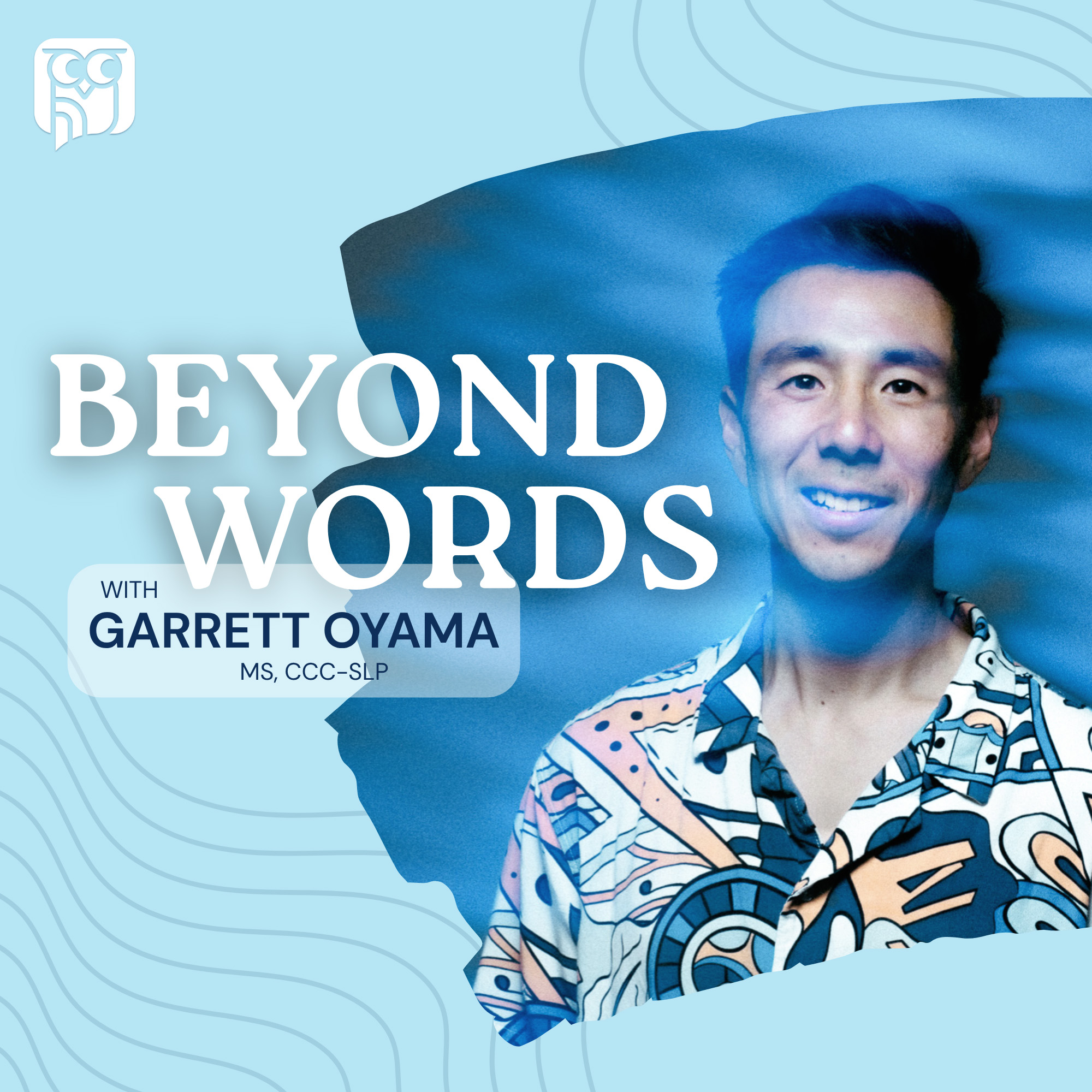
Beyond Words with Garrett Oyama
by Garrett Oyama, MS, CCC-SLP
What lies beyond the words we speak? Hosted by speech-language pathologist, musician, and communication PhD student Garrett Oyama, this podcast explores the rich space where communication, music, neuroscience, and creativity converge. Through conversations, sound, and story, we go beyond the clinical and into the poetic dimensions of human connection.Each episode of Beyond Words is worth 0.10 ASHA CEU when you complete the accompanying course on www.speechtherapypd.com.
-
20
Active Infant Learning with Dr. Martin Zettersten
Beyond Words Ep. 22 | Active Infant Learning: Curiosity and How Children Seek Words with Martin Zettersten, PhDGet ASHA CEUs: Speech Therapy PD for this podcastIn this episode of Beyond Words, host Garrett Oyama, MS, CCC-SLP, welcomes Martin Zettersten, PhD, to explore how infants actively learn language through curiosity, attention, and everyday experiences. Dr. Zettersten shares insights from his work as Principal Investigator of the Language and Infant Learning (LIL) Lab at the University of California, San Diego, highlighting how children seek out and process information as they begin to build their early vocabularies.Together, they break down how attention and learning interact in early word learning, and what that means for how infants begin to connect words with meaning.🎙️ Topics include:How infants and children learn languageLarge collaborative projects and shared datasetsImprove confidence in infant development findingsDevelopmental evidence to inform the caregiverGuidance and early language supportResources:Agency and Cognitive Development (Oxford Series in Cognitive Development) by Michael Tomasello
-
19
Understanding Autistic Language with Dr. Rhiannon Luyster
Beyond Words Ep. 21 | Understanding Autistic Language Variability, Strengths, and Meaning with Rhiannon Luyster, PhDGet ASHA CEUs: Speech Therapy PDIn this episode of Beyond Words, host Garrett Oyama, MS, CCC-SLP, sits down with researcher and clinician Rhiannon Luyster, PhD, to challenge some of the assumptions baked into how we assess and interpret autistic communication.Dr. Luyster brings her research to life as she and Garrett explore why variability is not a problem to solve but a feature to understand. From the way caregivers naturally adapt their language in real interactions to how focused interests and unconventional word use can drive learning, this conversation reframes what “atypical” communication really means.🎙️ Topics include:Sources of variability in language development among autistic individualsUnconventional language features (e.g., neologisms, focused interests)Meaningful linguistic systemsClinical implications for assessment and interventionDeficit-based models of autistic language
-
18
Neural Encoding of Speech with Dr. Jill Kries
Beyond Words Ep. 20 | Neural Encoding of Speech: Insights from Aphasia with Dr. Jill Kries In this episode of Beyond Words, Garrett Oyama speaks with Dr. Jill Kries, cognitive neuroscientist, about how the brain transforms sound into language—and what this reveals about aphasia. They explore how aphasia may involve disruptions not just at the level of words and grammar, but in lower-level speech processing, including phoneme perception and acoustic discrimination. From EEG studies using natural story listening to concepts like lexical entropy, this conversation reframes aphasia as a breakdown across the full speech processing hierarchy.🎙️ Topics include: • Low-level auditory and phoneme processing in aphasia • Neural encoding of speech using EEG • Lexical entropy and real-time language processing • Implications for assessment and intervention • Connections to dyslexia and statistical learning Learn more about Dr. Jill's work: https://linktr.ee/jillkries Get ASHA CEUs: https://www.speechtherapypd.com/courses/neural-encoding-of-speech
-
17
Comics and Visual Language with Dr. Neil Cohn
Beyond Words Ep. 19 | Comics and Visual Language with Dr. Neil CohnIn this episode of Beyond Words, Garrett Oyama speaks with Dr. Neil Cohn, cognitive scientist and director of the Visual Language Lab, about how drawings and comics function as full-fledged visual languages.They explore how visual narratives have structure, grammar, and vocabulary, and why understanding comics isn’t as automatic as we might assume. Dr. Cohn challenges the idea that language is purely speech-based, introducing a multimodal language faculty that includes vocal, bodily, and graphic expression.Along the way, they connect language to drawing, gesture, writing systems, and even AI, offering a powerful reframe of what it means to communicate.🎙️ Topics include:Comics as structured visual languagesMultimodal language faculty (speech, gesture, drawing)How children learn visual narrativesWhy image-based tasks may be misleading in assessmentVisual language and neurodevelopmental differencesImplications for speech therapy and AACLearn more about Neil and purchase his books here: https://visuallanguagelab.com/Get ASHA CEUs here: https://www.speechtherapypd.com/courses/comics-visual-language
-
16
Brain-to-Brain Synchrony and Attention in Early Development with Dr. Sam Wass
Beyond Words Ep. 18 | Brain-to-Brain Synchrony and Attention in Early Development with Dr. Sam WassIn this episode of Beyond Words, Garrett Oyama speaks with Dr. Sam Wass, developmental neuroscientist, about how attention, arousal, and social interaction shape the developing brain.They explore how infants regulate attention in real time, how stress and environmental context influence learning, and what brain-to-brain synchrony between parents and children reveals about communication. They discuss neural entrainment, shared book reading, and the role of co-regulation in supporting language development. Along the way, they connect laboratory neuroscience to everyday parenting and clinical practice, reframing language learning as something deeply embedded in attention, physiology, and relationships.Watch on YouTube https://www.youtube.com/@GarrettBeyondWords Get ASHA CEUs: https://www.speechtherapypd.com/courses/brain-to-brain-synchrony
-
15
Language as a Complex Adaptive System with Dr. Joan Bybee
Beyond Words Ep. 17 | Language as a Complex Adaptive System with Dr. Joan BybeeIn this episode of Beyond Words, Garrett Oyama speaks with Dr. Joan Bybee, pioneer of usage-based linguistics, about how language emerges through use, repetition, and social interaction rather than abstract rules.They explore why sounds don’t exist in isolation, how frequency and predictability shape speech and sound change, and what this means for child language development, speech therapy, and learning. Along the way, they connect language to music, motor practice, and improvisation, reframing speech as a dynamic, living skill shaped by experience.Get ASHA CEUs: Speech Therapy PD Watch on YouTube
-
14
Speech Therapy in the Age of AI with Dr. Kathy Hirsh-Pasek
Beyond Words Ep. 16 | Speech Therapy in the Age of AI: Play, Screens, and Language DevelopmentIn this episode of Beyond Words, Garrett sits down with renowned developmental scientist Dr. Kathy Hirsh-Pasek—professor at Temple University, senior fellow at the Brookings Institution, bestselling author, and one of the leading voices in early learning, language development, and play.Kathy breaks down what quality language input really looks like, why back-and-forth interaction is the engine of learning, how play and boredom shape the developing brain, and what parents and clinicians should know about screens, e-books, and the rise of AI-powered toys.This conversation is packed with clarity, humor, and practical wisdom for anyone who works with children—or wants to understand how humans learn in a world overflowing with technology.Watch on YouTubeGet ASHA CEUs: SpeechTherapyPDKathy's work: WebsiteEinstein Never Used Flashcards Playful Learning Spaces
-
13
Before Words: Understanding Babbling with Dr. Kimbrough Oller
Beyond Words Ep. 15 | Before Words: Understanding Babbling with Dr. D. Kimbrough OllerWhat do a baby’s coos, squeals, and growls reveal about the origins of language? In this episode of Beyond Words, Dr. D. Kimbrough Oller — a leading voice in speech and language development — joins Garrett Oyama to explore protophones, functional flexibility, and why spontaneous infant vocalizations may hold the key to understanding how language evolved.Topics include:What protophones are and why they matterThe Functional Flexibility HypothesisHow infant vocal play relates to evolutionWhat LENA recordings reveal about early speechWhy babies vocalize even when no one is listeningGet ASHA CEUs: Speech Therapy PD Watch on YouTube
-
12
Inside the Language Network: Brains, AI, and What Words Really Mean with Dr. Blank
Beyond Words Ep. 14 | Inside the Language Network: Brains, AI, and What Words Really MeanIs language the same as thought? Dr. Idan Blank (UCLA) joins Beyond Words to explain why the answer is no — and why that matters for neuroscience, speech therapy, and AI. We explore the brain’s language network, how large language models learn, why Broca’s area is misunderstood, and what this all means for testing, development, and the future of cognition.Topics include:Why language and thought are separate systemsHow ChatGPT challenges our assumptionsWhat Broca’s area really doesImplications for speech therapy and assessmentWhat LLMs and infants both tell us about language learningJoin the Beyond Words Newsletter Get ASHA CEUs: Speech Therapy PD Watch on YouTube
-
11
Bilingual Brains and Sound Processing with Dr. Jennifer Krizman
Beyond Words Ep. 13 | Bilingual Brains and Sound Processing with Dr. Jennifer KrizmanWhat does it mean to hear the world through two languages? In this episode, host Garrett Oyama speaks with Dr. Jenn Krizman, research scientist at the Brainvolts Lab (Northwestern University), about how bilingualism reshapes the brain’s sound processing networks.Together they explore how speaking multiple languages enhances inhibitory control, boosts consistency in auditory encoding, and even provides a kind of “neural armor” that can delay cognitive decline. They also discuss clinical implications for speech-language pathologists, common myths about bilingualism, and why parents should feel confident nurturing their child’s native tongue.Join the Beyond Words Newsletter Get ASHA CEUs: Speech Therapy PD Watch on YouTube
-
10
The Developing Sound System: From Canonical Proportion to Cochlear Implants with Dr. Cychosz
Beyond Words Ep. 12 | The Developing Sound System: From Canonical Proportion to Cochlear Implants with Dr. CychoszIn this episode of Beyond Words, Dr. Meg Cychosz (Stanford University) joins host Garrett Oyama to explore how children develop speech and language—from babbling and canonical proportion to cochlear implants and multilingual environments. We dive into naturalistic data, cultural variation, and the surprising ways infants make sense of sound.Join the Beyond Words NewsletterGet ASHA CEUs: Speech Therapy PD Watch on YouTube
-
9
The Inner Voice: Exploring Intrapersonal Communication with Constance Bainbridge
Beyond Words Ep. 11 | The Inner Voice: Exploring Intrapersonal Communication with Constance BainbridgeIn this special archive episode, Garrett sits down with fellow UCLA PhD student Constance (Connie) Bainbridge, a researcher in the Department of Communication who studies the inner voice—how we communicate with ourselves. Connie is the Principal Investigator of the Stream of Mind Lab and her work blends evolutionary, developmental, and cognitive science to better understand intrapersonal communication and the flow of consciousness. She also draws on her background as a musician to explore how music and self-expression shape human experience.This conversation covers:What the “inner voice” really isHow self-talk and imagination shape decision-making, self-regulation, and well-beingWhy hidden differences (like having no inner voice) matter for research and therapyConnections between music, language, and consciousnessJoin the Beyond Words Newsletter Get ASHA CEUs: Speech Therapy PD Watch on YouTube
-
8
The Magic of the Sound Mind with Dr. Nina Kraus
Beyond Words Ep. 10 | The Magic of the Sound Mind: Bridging Neuroscience and Speech Therapy with Dr. Nina KrausIn this special archive episode of Beyond Words, host Garrett Oyama sits down for his very first conversation with Dr. Nina Kraus — renowned auditory neuroscientist and author of Of Sound Mind: How Our Brain Constructs a Meaningful Sonic World.Dr. Kraus shares her journey from studying chinchilla neurons to developing clinically relevant tools for measuring how the human brain processes sound. Together, they explore the frequency following response (FFR), the role of music in therapy, and why understanding the brain’s sound processing is essential for clinicians, educators, and anyone working with language.This episode laid the foundation for an ongoing series of conversations between Garrett and Dr. Kraus, diving deeper into the science and clinical applications of Of Sound Mind. Find them here: Dialogue SeriesBook Join the Beyond Words Newsletter Get ASHA CEUs: Speech Therapy PD
-
7
The Power of Gesture in Language Development with Dr. Susan Goldin-Meadow
Beyond Words Ep. 9 | The Power of Gesture in Language Development with Dr. Susan Goldin-MeadowGet ASHA CEUs: Speech Therapy PD Watch on YouTubeJoin the Beyond Words NewsletterJoin host Garrett Oyama as he sits down with Dr. Susan Goldin-Meadow, one of the world’s foremost experts on gesture and language development. Together, they explore how our hands reflect what we know, how gesture supports learning and communication, and why paying closer attention to movement can reshape how we teach, think, and connect.🧠 Learn more about Dr. Goldin-Meadow’s work:Thinking With Your Hands Bookcontact: [email protected]
-
6
Memory, Language, and Meaning with Dr. Charan Ranganath
Beyond Words Ep. 8 | Memory, Language, and Meaning with Dr. Charan RanganathJoin the Beyond Words Newsletter Get ASHA CEUs: Speech Therapy PD Watch on YouTubeIn this episode, neuroscientist Dr. Charan Ranganath (author of Why We Remember) joins Garrett Oyama to explore how schemas, event boundaries, and the structure of language shape what we remember — and why. We discuss how memory works not just in the brain, but in real life: through storytelling, attention, emotion, and meaning. SLPs, therapists, and educators will also gain practical tools for supporting memory using language — from narrative scaffolds to emotional salience and linguistic cues that enhance recall.Topics include:How the brain chunks experience into eventsWhy schemas help (and sometimes distort) memoryThe blurred line between cognition and memoryHow to use language to support clients with memory difficultiesMemory as prediction, not just storageLearn more about Dr. Ranganath’s work:https://www.charanranganath.com/https://dml.ucdavis.edu/https://www.charanranganath.com/bookPlease like, subscribe, and share it with anyone curious about language, memory, and the brain. Your support helps keep the podcast going and growing.
-
5
The Neuroscience of Language: Brain Networks and Individual Differences with Dr. Ev Fedorenko
Beyond Words Ep. 7 | The Neuroscience of Language: Brain Networks and Individual Difference with Dr. Ev FedorenkoJoin the Beyond Words NewsletterGet ASHA CEUs: SpeechTherapyPD Watch on YouTubeDr. Ev Fedorenko (MIT) joins host Garrett Oyama to explore how the brain processes language — and why the language network is far more distinct and specialized than previously thought. From the surprising isolation of this network to what this means for aphasia, speech therapy, and AI, this episode dives into some of the most exciting neuroscience of language today.We discuss:Why traditional brain maps may be misleadingHow individual brain variability affects language recoveryWhy the language system doesn’t overlap with math, music, or logicWhat this means for clinicians and educators🔗 Relevant Links🧠 Ev Fedorenko’s lab: https://evlab.mit.edu
-
4
The Music and Speech Connection with Dr. Anita Collins
Beyond Words Ep. 6 | The Music and Speech Connection with Dr. Anita CollinsGet ASHA CEUs: SpeechTherapyPDJoin the Beyond Words NewsletterWatch on YouTube Join host Garrett Oyama in this Beyond Words archive episode with internationally renowned educator and author Dr. Anita Collins to explore one of the most practical and powerful tools for child development: music.Best known for her TED-Ed video How Playing an Instrument Benefits Your Brain, Dr. Collins brings science down to earth, showing how sound acts as “superfood” for a baby’s brain and how music learning can profoundly shape language, attention, literacy, and even emotional regulation.Whether you’re a parent, speech-language pathologist, educator, or simply music-curious, this episode is packed with insights and real-life strategies:🎶 Why singing to your baby is more powerful than playing music on a device🧠 How rhythm and beat perception relate to reading ability🗣️ The surprising connection between musical training and speech development👶 What to know about noisy environments and infant sound nutrition💡 Easy musical activities that support language — even if you “can’t sing”This is an inspiring and actionable listen that reminds us of something deeply human: music and language aren’t separate — they’re entwined from the very beginning.🟢 More from Dr. Anita Collins: https://www.biggerbetterbrains.com
-
3
What Big Data Reveals About How Kids Learn to Talk with Dr. Michael Frank
Get ASHA CEUs: Speech Therapy PDWatch on YouTube Join the Beyond Words NewsletterLearn more about Dr. Michael Frank: XYouTube talksJoin host Garrett Oyama on Beyond Words for a fascinating conversation with Dr. Michael C. Frank, the Benjamin Scott Crocker Professor of Human Biology at Stanford University. Dr. Frank directs the Language and Cognition Lab and the Symbolic Systems Program, and his research asks some of the biggest questions about how children learn language and how social interaction shapes that learning.In this episode, we explore:The origins of WordBank and how massive open datasets are transforming child language research.What the MacArthur–Bates CDI reveals about early vocabulary, variability, and developmental trajectories.Why children’s first words are more social than survival-based.How pointing, joint attention, and even hand movements lay the foundation for communication.The surprising universals of variability across cultures and languages.What large language models (LLMs) can and can’t teach us about human language learning.New multimodal projects like BabyView, capturing the world from a child’s perspective.
No matches for "" in this podcast's transcripts.
No topics indexed yet for this podcast.
Loading reviews...
ABOUT THIS SHOW
What lies beyond the words we speak? Hosted by speech-language pathologist, musician, and communication PhD student Garrett Oyama, this podcast explores the rich space where communication, music, neuroscience, and creativity converge. Through conversations, sound, and story, we go beyond the clinical and into the poetic dimensions of human connection.Each episode of Beyond Words is worth 0.10 ASHA CEU when you complete the accompanying course on www.speechtherapypd.com.
HOSTED BY
Garrett Oyama, MS, CCC-SLP
Loading similar podcasts...
URL copied to clipboard!