PODCAST · education
Biological Farming Roundtable
by Biological Farming Roundtable
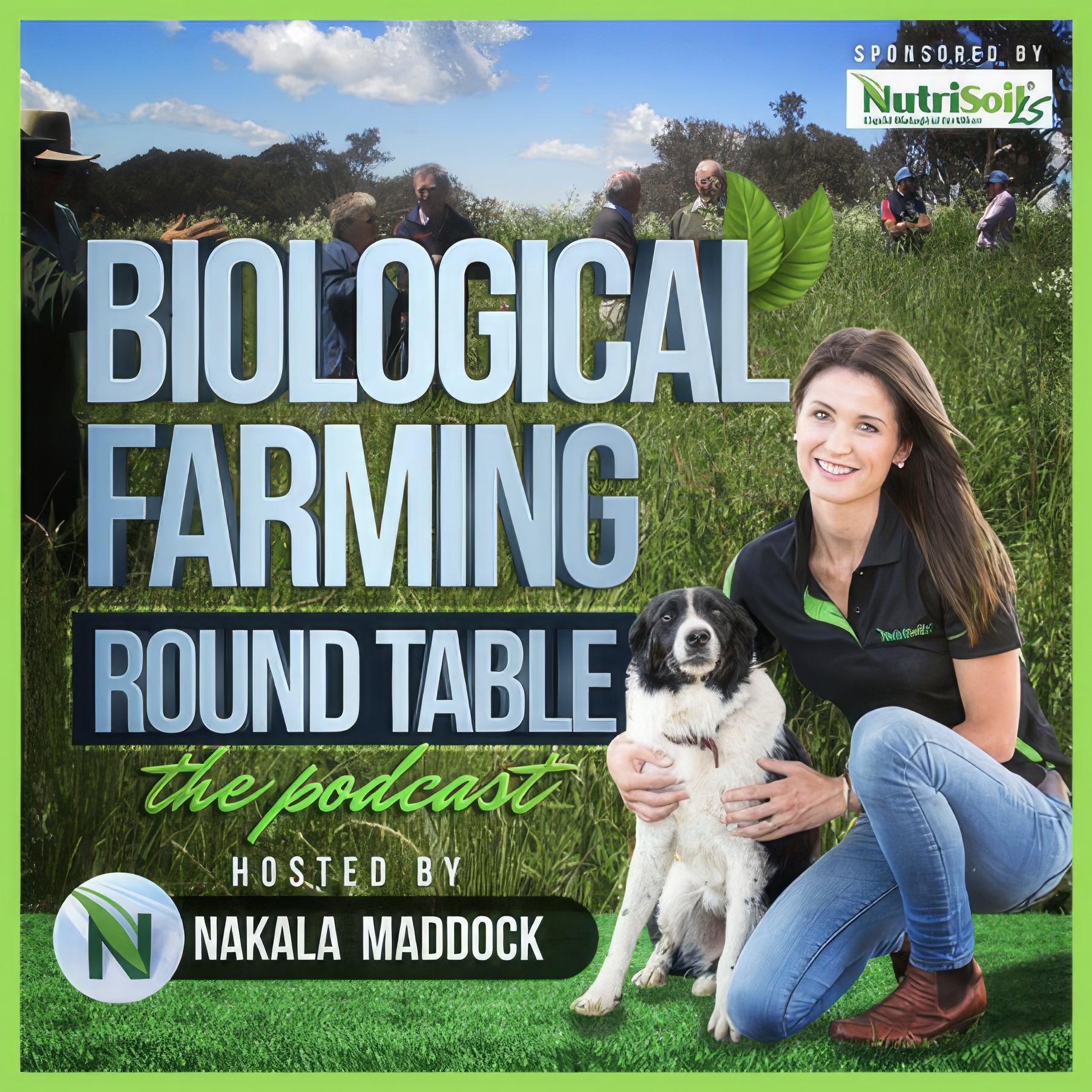
The Biological Farming Roundtable Podcast is for farmers and food consumers. Join host Nakala Maddock as she interviews regenerative farmers that are turning the tides in agriculture by reducing chemical inputs, rebuilding nature’s natural solar, mineral and water cycles and returning nutrient integrity back into the food chain.
-
49
Episode 48: Managing Regenerative Transition: Part One – New Beginnings
Biological Farming RoundTable host Nakala Maddock is joined by David Hardwick from Soil Land Food and Luke Harrington from Re‑Gen Farming in Episode 48. In part one of this two‑part series, they explore the motivations and challenges behind transitioning to regenerative farming. They also reveal some unexpected factors to watch for — insights that can help you regain confidence and control in your farm management journey.
-
48
Episode 48: Managing Regenerative Transition: Part One – New Beginnings
Biological Farming RoundTable host Nakala Maddock is joined by David Hardwick from Soil Land Food and Luke Harrington from Re-Gen Farming in Episode 48. In part one of this two-part series, they unpack the motivations and challenges to managing transitions to regenerative farming. The unpack some unexpected aspects to be aware of to help you in your journey to gaining control back in your farm management.
-
47
AI for Farmers, what you need to know
In the first episode of the Biological Farming RoundTable for 2026, Nakala sits down with NutriSoil’s tech‑savvy Nige for a candid, sometimes confronting, and ultimately empowering conversation about the rise of AI in agriculture.What begins as a simple chat about who owns AI quickly opens into a deeper exploration of ethics, power, risk, and opportunity. Nakala and Nige unpack the major players behind today’s AI platforms, how algorithms shape the answers we receive, and why farmers need to stay alert as technology accelerates faster than policy.Nakala then switches on voice‑activated ChatGPT and interviews it as an “AI agronomist,” asking it to respond to real‑world farming scenarios. Together, they explore how AI could support farmers with soil tests, rainfall patterns, sowing windows, pest prediction, grazing management, nutrient density, and the future of on‑farm sensors.
-
46
Episode 46: Rebuilding Soil From the Ground Up
In Episode 46 of the Biological Farming RoundTable Podcast, Nakala and Shelley travel to Pingrup, in the southeast of the WA wheatbelt. They are joined by David Steele and his wife, Deb, who are multigenerational farmers running a cropping and sheep enterprise. David and Deb recall when the soil had that earthy smell and have their sights set upon bringing the aroma back to the farm. When David relied mainly on synthetic fertilisers, he watched his soil health steadily decline. He shares the steps he’s taken, including addressing all of his plants’ nutrient needs, including trace elements, with a mineral fertiliser, and more recently adding biology to the mix. He has watched his topsoil steadily increase and he still has some tools up his sleeve to add to the system.
-
45
Episode 45 The Microbe Solution: Part Two – The Hidden Heroes
In Episode 45 of the Biological Farming RoundTable Podcast, Nakala continues her conversation with Gundi Rhoades in part two of The Microbe Solution. This episode dives deeper into Gundi’s exploration of the powerful connection between soil microbes and human health. We examine how synthetic compounds have disrupted microbial balance and how farmers play a critical role in restoring it.Gundi shares compelling insights on why rebuilding soil biology is not just achievable but essential for the future of farming and wellbeing. A must-listen for anyone passionate about regenerative agriculture and the ripple effects of healthy soil.
-
44
Episode 44: The Microbe Solution, Part One - Joining the Dots
In this eye-opening episode of the Biological Farming RoundTable podcast, host Nakala Maddock sits down with regenerative vet Dr Gundi Rhoades to explore the profound ripple effects of historical decisions and technological advancements on soil biology and by extension, human and animal health. Gundi shares her remarkable journey of discovery, revealing how disruptions in soil microbes have led to nutrient imbalances linked to disease, autoimmune disorders, anxiety, and depression. In Part 1 of this two-part series, she dives into the crucial roles bacteria and fungi play in producing minerals, amino acids, and vitamins essential to wellbeing. It is a powerful conversation that reframes wellness through a biological lens, starting from the ground up.
-
43
If I knew what I know now
In this special episode of the Biological Farming RoundTable, we’re turning the tables. Host Nakala Maddock swaps seats to become the guest, with NutriSoil’s communication coordinator, Shelley Scoullar, stepping in behind the mic. What unfolds is a candid and spirited conversation between two passionate advocates for healthy farming systems. From the marvels of microbes and nutrient-dense food to the often-controversial topic of irrigation, Nakala and Shelley don’t shy away from the big issues. They explore what drives NutriSoil’s mission and how that mission is rooted in more than just soil - it's about farmers being the solution.
-
42
Achieving disease and pest resilience – Part Two: vigorous biology
In this compelling continuation, Nakala and John Kempf delve into the concept of Active Immunity in plants—a state made possible by biologically active soils rich in diverse microorganisms. Discover how microbial compounds, such as lipids and phytochemicals, are transported into the plant, playing a pivotal role in fostering complete resilience against diseases and pests. Tune in to uncover how soil health drives plant vitality!
-
41
Achieving disease and insect resilience – Part One: balancing chemistry
In this episode, Nakala is joined by John Kempf, a pioneering voice in regenerative agriculture and a trusted mentor to farmers worldwide. Together, they delve into the transformative concept of the Plant Health Pyramid, an innovative framework developed through extensive research by John and the team at Advancing Eco Agriculture. The Plant Health Pyramid reveals the secrets to cultivating resilient, thriving plants that are naturally immune to diseases and pests. In this episode—the first in a two-part series—Nakala and John explore the foundation of Passive Immunity, uncovering how balancing plant chemistry can unlock nature's own defense mechanisms. Whether you're a farmer, gardener, or simply curious about the power of plants, this conversation will inspire and educate.
-
40
Episode 40: Nutrient-Dense Food with Dan Kittredge
In this episode, we sit down with Dan Kittredge, farmer, founder of the Bionutrient Association, and educator behind the world’s first Certificate-Level Masterclass in Nutrient-Dense Food.Dan is at the forefront of groundbreaking research, measuring and defining food quality—and linking it directly to how it’s grown. This conversation dives deep into the medicinal potential of food, exploring how growing food in the the right growing conditions can not only enhance human health but also reverse chronic disease, reward farmers producing high-quality food, and contribute to climate restoration.Dan is currently on a world tour, bringing his Certificate-Level Masterclass in Nutrient-Dense Food to Australia this April. Don’t miss the opportunity to learn from a global leader in regenerative agriculture.
-
39
Episode 40: Nutrient-Dense Food with Dan Kittredge
In this episode, we sit down with Dan Kittredge, farmer, founder of the Bionutrient Association, and educator behind the world’s first Certificate-Level Masterclass in Nutrient-Dense Food. Dan is at the forefront of groundbreaking research, measuring and defining food quality—and linking it directly to how it’s grown. This conversation dives deep into the medicinal potential of food, exploring how growing food in the the right growing conditions can not only enhance human health but also reverse chronic disease, reward farmers producing high-quality food, and contribute to climate restoration. Dan is currently on a world tour, bringing his Certificate-Level Masterclass in Nutrient-Dense Food to Australia this April. Don’t miss the opportunity to learn from a global leader in regenerative agriculture. Check out the dates, locations, and ticket links below! Cowaramup, Western Australia, April 3 –4, 2025. https://www.dankittredge.com/events/western-australia Glazier’s Bay, Tasmania, April 12– 13th 2025. https://www.dankittredge.com/events/tasmania Drysdale, Victoria, April 16th – 17th, 2025. https://www.dankittredge.com/events/victoria Boorowa, New South Wales, April 23th – 24th https://www.dankittredge.com/events/boorowa Kandanga, Queensland, April 28th to 29th. Here is the website to the Bionutrient Association where you can explore their research: https://www.bionutrient.org/ Here is the link to Dan’s website where you can find out more about the Certificate level Masterclass in Nutrient Dense Food. https://www.dankittredge.com
-
38
Episode 39: Simple secrets to self-regulating soils
In episode 39 of the Biological Farming Round Table, Nakala visits Don Jarvis, a dedicated dairy farmer from Towong near Corryong in the picturesque Snowy Valley. Don reveals his simple methods for transforming acidic, compacted soils into balanced, self-regulating ecosystems through the power of biology. Alongside his wife Denise and son Jamie, Don operates an organically certified dairy farm, working in harmony with nature. Join us as Don shares his journey and the steps he has taken to achieve a fulfilling and sustainable farming practice.
-
37
Episode 38 – A Special Episode giving you a sneak peak into WORM FEST 2024 with Joel Williams and David Hardwick.
In this episode we give you an inside view of what WORM FEST 2024 is about. How it came to be, why and what to expect! Joel Williams talks about his love of amino acids and biostimulants with nutrient delivery and how at WORM FEST 2024 he is going to be diving into the science of what powerful tools lie beneath these often-mysterious names. WORM FEST 2024 is likened to Ground Swell a UK, Festival that provides a forum for farmers, growers, or anyone interested in food production and the environment to learn about the theory and practical applications of regenerative farming systems. Can WORM FEST 2024 be this BIG?! Take a listen to find out.
-
36
Episode 37 The Melody of Earth: Unveiling NutriSoil’s Worm Whisperer Darren Maddock and his Harmonic Approach to Worm Farming
In this episode of our podcast, Nakala and David offer a rare glimpse behind the scenes at NutriSoil headquarters. We’re introducing you to a key figure in our team, the ‘Worm Whisperer’ himself, Darren Maddock. While Darren might be a bit of a hidden gem in our operations, his contributions are vital to the NutriSoil business. Darren delves into his reasons for taking on the family worm business, sharing his passionate views on farming and his aversion to chemical usage in agriculture. His commitment to natural processes is not just a philosophy; it’s a practice that has led to significant successes, particularly in using NutriSoil to improve animal health. Listeners will gain valuable insights about running a commercial worm farm and Darren will give his top three tips for maintaining a thriving, healthy worm farm at home. But there’s more to Darren than worms and farming. He’s also a talented musician and artist. As a special treat, at the end of the podcast, we give you a sneak peek of one of his own compositions, a song titled ‘Testing Times’. We hope you enjoy!
-
35
Episode 36 Reviving the Range: Callum Lawson’s Journey from Overgrazing to Oasis
In this inspiring episode, we delve into the story of Callum Lawson, a visionary who transformed a struggling 3000-acre grazing property in North Central Victoria into a flourishing ecosystem. Facing the challenge of an overstocked land, Callum embarked on a mission to revive the farm. This journey wasn’t just about restoring the land; it was a commitment to producing healthy food, fostering environmental sustainability, and ensuring profitability. Discover the strategic steps Callum took, the valuable courses he attended, and the essential networks he engaged with. His story is a testament to the power of regenerative agriculture and its positive impact on our food system, the environment, and human health.
-
34
Episode 35: Building resilience through community.
In Episode 35 host Nakala Maddock interviews three amazing guests about the importance of building networks and community ties for farmers and their families. During this podcast our special guests discuss tools for developing resilience to weather the next tough time when it comes along, and what you can do to help someone who might be struggling. A big thanks to Luke Harrington, Brad and Katie Collins for allowing themselves to be vulnerable for this special episode of the Biological Farming Roundtable podcast.
-
33
Episode 34: The power of biostimulants and learning from observation
This month's podcast takes the Biological Farming Roundtable podcast to Ingham QLD, for the Regenerative Cane Farmers Forum. Host Nakala Maddock is joined by agroecologist David Hardwick from Soil Land Food, they speak with cane farmer Ray Zamora from Tully about addressing soil compaction and declining soil health in the sugar cane industry. Ray shares his soil health learning journey, and how invention, biology and networking earnt him the right to farm with less Nitrogen, without compromising profits.
-
32
Episode 33: Necessity is the Mother of Invention, driving change in cane farming
This month's podcast takes the Biological Farming Roundtable podcast to Ingham QLD, for the Regenerative Cane Farmers Forum. Host Nakala Maddock is joined by agroecologist David Hardwick from Soil Land Food, they speak with cane farmer Ray Zamora from Tully about addressing soil compaction and declining soil health in the sugar cane industry. Ray shares his soil health learning journey, and how invention, biology and networking earnt him the right to farm with less Nitrogen, without compromising profits.
-
31
Episode 32: Enhancing nature for profitable grazing and nutrient density in corporate ag.
In episode 32 of the Biological Farming Roundtable host Nakala Maddock is joined by Robin Tait an independent consultant in Tasmania, as they chat with Aiden and Sarah Coombes. Aiden manages Westmore a 3400 ha grazing property owned by Greenhams and is involved in implementing the Never Ever Beef Program, while Sarah manages properties owned by the Coombes. Located in the northwest of Tasmania the climate has a unique set of challenges, which the couple meets head-on and are thriving. The podcast explores how expanding knowledge, thinking outside the square and pushing boundaries, along with a team approach are aiding their journey to producing nutrient-dense food while staying profitable.
-
30
Episode 31: Creating non-negotiable synthetic free grazing systems with Dale Retschlag
In episode 31 of the Biological Farming Roundtable Podcast, host Nakala Maddock is joined by Jane Slattery co-founder of natural intelligence farming. Nakala and Jane speak with cattle grazier Dale Retschlag from Biloela in Queensland. Dale is the president of Central Queensland Landscape Alliance, a farmer led regenerative restoration group and explains his journey to being at peace with a non-negotiable synthetic free farming system. The podcast covers all things involved in the regenerative movement, including; steps to transition and how they felt, the light bulb moment (when he knew he was not going back), worm extracts, community, family, health and an open intuitive mind.
-
29
Episode 30: Creating Innovative Food Systems with Jacob Wolki.
Jacob Wolki is an entrepreneur from Albury Wodonga. Treating animals with respect, family and medicinal food drive his quest to build a community where farmers and consumers are connected by shared values. He raises animals, processes them, sells online, has a self-serve butchery, and runs farm tours. He is changing the system of how farmers share their produce, which is what we discuss in this episode.
-
28
Episode 28 – From 1927 to next generation cropping in WA with Rob Hetherington
In Episode 28 of the Biological Farming Roundtable podcast Nakala and David Hardwick speak with Western Australian farmer Rob Hetherington from Lake King. Rob’s grandparents first moved to the region in 1927 battling scrub and deep sodic soils and managed to carve a future for the family of farmers when many others walked off the land. We follow the Hetherington’s amazing journey and discuss the changes to management over nearly 100 years, which have resulted in Rob recently being awarded the Wheatbelt NRM Soil Health Champion for 2022.
-
27
Episode 27 – Marvelous multispecies with Grant Sims and Simon Mattsson
Nakala speaks to agroecologist David Hardwick Soil Land Food and Luke Harrington from Re-Gen Farming about the skyrocketing Phosphorous prices and how to unlock the phosphorous reserves in your soil to protect your profit margin.
-
26
Episode 26 – Optimising soil health can protect your business from increasing phosphorous prices
Nakala speaks to agroecologist David Hardwick Soil Land Food and Luke Harrington from Re-Gen Farming about the skyrocketing Phosphorous prices and how to unlock the phosphorous reserves in your soil to protect your profit margin.
-
25
Episode 25 – How to build a dung beetle corridor and compost extractor
In episode 25 of the Biological Farming Roundtable Nakala explores the natural intelligence of the dung beetle, and how to establish a dung beetle corridor. She also speaks to regenerative farmer Rodney Bacon about how he used good old ingenuity to build his own compost extractor.
-
24
Episode 24 – A journey to biodiversity and risk management
Nakala and Shelley speak to northern Victorian dairy farmer Jodie Hay about the driving forces behind her family’s decision to rethink their farming system.
-
23
Episode 23 – Unlocking Your Infinite Possibilities
In episode 23 Nakala speaks to Jane, whose unique skills are helping regenerative farmers expand their mindsets so they can unlock barriers to reach their potential and the world of infinite possibilities.
-
22
Episode 22 – Increasing profitability in cane production with less inputs, Alan and Jenny Lynn
Cane farmers Alan and Jenny Lyn from Ingham in northern Queensland speak openly to Nakala Maddock from NutriSoil about the positive impacts traffic control and multispecies cover crops are having on their production system. Alan and Lyn discuss the stabilisation of their soil structure, abundance of worms and plant available nitrogen thanks to permanent raised beds, traffic control, cover crops and a customised renovator. They pay credit to their network of likeminded neighbours and colleagues, who provide a great support base for the transition, which the Lyn’s see will reap benefits for regulations relating to the Great Barrier Reef.
-
21
Episode 21 – Dairy Farming Synthetic Free (Not Organic) with Andrew and Linda Whiting
Today’s episode is with dairy farmers Andrew and Linda whiting who farm 600acres, in Simpson Victoria with 800mm annual rainfall. With me is Shelley Scouller, Nutrisoil’s new Communications extraordinaire. Andrew and Linda Whiting were share farming when they decided to become self-start dairy farmers 18 years ago. They bought a dairy farm which had become run down and in fact had stopped milking. Everything the Whitings had was put into the purchase, finding themselves in a position with low equity they just put their heads down and worked hard. The Whitings inherited soil with low pH (4.3 in places), and low potassium areas, their soils were high in iron, phosphorus was locked up, and there was an abundance of sorrel and fog grass. They were applying 300 units of Nitrogen per year and lime followed the cows every 3 weeks. While they achieved industry benchmark of 1 tonne per 100mm rainfall of dry matter, money was going around in circles and they could not get ahead. They were at the top of their field, but there were cracks in the system. This is a story of never giving up, having an open mind, searching for their path ,taking one step after the other until their system came together. They now farm with no synthetic inputs, and the only herbicides they use are spot sprays for blackberries and thistles. This is the path of Linda and Andrew Whiting.
-
20
Episode 20 – Coming back from the drought with Paul and Wendy Wemyss and Phill Lee
Today’s episode is with our long term friends Paul and Wendy Weymes, who operate a broadacre grazing property from Tarcutta, NSW. 2017 to 2020 was a tough a tough drought, the toughest they had experienced on their farm. This episode talks about what they experienced coming out of that drought and the tools they chose to use. Co-hosting with me is Phill Lee from Regenerate earth. Phill has been helping Paul and Wendy assess and increase the biology in their soils.
-
19
Episode 19 – John Kempf – Author | Quality Agriculture
Today’s episode is a book review with John Kempf, who has recently released a NEW book, Quality Agriculture. This episode is FULL of new science in soil, animal, food and human health. John is founder of Advancing Eco Agriculture, a plant nutrition and bio-stimulants consulting company in the US. He is an agronomist, host of the Regenerative Agriculture Podcast, a speaker and educator, and now an author. In the book, John interviews a group of growers, consultants and scientists who describe how to think and farm differently in order to profit from producing high quality food. This conversation teases out these interviews and concepts including how pesticides and herbicides are tying up micronutrients; how plants take up whole microbes as their main source of nutrition; what measurements are important in identifying quality food that is premium for human health; and the role of cover crops. It’s a book and conversation that has the potential to ignite BIG change in how we grow our food. If you’re interested in purchasing the book, or learning more from John, please take a look at his website https://johnkempf.com/ The transcript for the Podcast is available through the link below. Biological_Farming_Round_Table_John_Kempf_MASTER_TRANSCRIPT
-
18
Episode 18 – Bio-stimulants, Compost Extract, Grazing and Pasture Cropping with David and Ruth Read
Today’s conversation is with David and Ruth Read from Wootcote Farms, a 823 Ha regenerative grazing property in Perry Bridge Victoria. We discuss the natural processes they use to build health and productivity on their farm and in their life. We talk through how to make a compost extract system, a liquid inject system and their successes with pasture cropping and grazing management. David and Ruth share their experiences with RCS, KLR Marketing and a whole range of experts and support systems that have taken the overwhelm out of their farming system and facilitated happiness in their lives.
-
17
Episode 17 – Regenerative Cropping & Genetic Sheep Breeding with Anthony Thomas, Co-hosted with Dr Charles Massy
Today’s conversation is with Anthony Thomas and with me co-hosting is Dr Charles Massy. We recorded this podcast in March when we were there for the Three Springs Biological Farming Roundtable. Anthony and Geraldine Thomas farm approx. 8000Ha in the North Midlands of W.A at Three Springs. Anthony and Geraldine operate Hill Padua Polls, breeding multipurpose Merinos, and crop 1300 Ha regeneratively. Adam Thomas their great nephew share farms the rest of the cropping program. Anthony has always been focused on soil health starting in the 1970s working with Agro Nutritional Research Laboratories run by the late Tom Arkley who analysed their soils and pastures. Arden Anderson has been another influence for Anthony. For the past two years, Anthony’s cropping system has dropped fertiliser inputs down to 5 units of Nitrogen and 5 L of NutriSoil at sowing and as a foliar, and he has been using NutriSoil and calcium across his pastures. The combination of careful genetic breeding, low stress sheep management and working with nature has resulted in quiet, highly fertile sheep that do not require mulesing. His soils are visually increasing soil organic matter and measuring decreased compaction. Dr Charles Massy, my special co-host is a Monaro woolgrower, a scientist and a renowned author. His classic book The Australian Merino: The Story of a Nation, is the account of how Merino sheep became one of the main supports of the Australian economy. More recently, Charles’ book Call of the Reed Warbler: A New Agriculture, a New Earth, exemplifies his role as an advocate for regenerative agriculture. This is my enlightening conversation with Anthony Thomas and Dr Charles Massy.
-
16
Episode 16 – Regenerative Cane Farming
Today’s episode is with Cane Farmer, Michael Waring from Ingham, QLD. This podcast was recorded at the 2019 Regenerative Cane Farming Forum in March this year which is being repeated this year in March 2020 in Cairns. David Hardwick and Michael Waring are the contact for this event and details to register are below. In this episode Michael tells us about what things he is doing to increase his soil heath including implementing controlled traffic, multispecies crops, and biological stimulants. Michael has also done a course with Kym Kruse at RegenAG who teaches farmers how to make their own biofertilizers and he talks about how him and some farming friends have put in together to purchase a relocatable biofertilizer production plant. We also talk about a great initiative called Catalyst that supports farmers to trial new farming initiatives and the positive steps Cane Farmers are taking to minimize run off from their farms into waterways, and of great public interest our beloved Great Barrier Reef. https://www.regencane.com.au
-
15
Episode 15 – Building a local food market
Today’s episode is with father and son, Bob and Ian Congdon from Organic Woodstock Farm and Flour in Berrigan, NSW. Ian and his wife Courtney met at the University of Melbourne while they were studying landscape management and geography. They both had a passion for agriculture and local food markets and saw farming as a means for environmental restoration and building healthy communities. Being young adults that were not in the thick of busy farming and were able to do their own market research. Together they built an innovative business milling and selling direct Ian’s dads organic grain. In 2016 they purchased a New American Stone Mill. They now are the sole buyers of Woodstock grain and sell the milled flour to bakers, restaurants, shops and families in the local region and across Melbourne. Their flour is as soft as baby’s powder and a delight to bake with. Their marketing strategy is simple and effective and their packaging is stylish and sustainable. The farm is now moving beyond organic and trialling regenerative pasture cropping. In past episodes we have talked about closing profit margins and commodity market restraints. These restrains can limit farmers from operating a value driven farming system that is good for the farmer, the consumer and the planet. This is a great story to get you thinking….but how could we? www.woodstockflour.com.au
-
14
Episode 14 – The importance of a value driven farming system
The importance of a value driven farming system. In this episode Rod Fraser talks about values, states and perceptions and the importance of these in making great farming and life decisions. www.businessgrowthstrategies.biz Rod Fraser and Ellyn Martin are the directors of Business Growth Strategies. They provide a wholistic approach to help you build something special. Starting with personal coaching for the business owner to help think things through and have those important conversations on multiple levels. Then they focus on getting your whole team firing around a sound achievable strategic plan. Consciously designing your business for purpose, people, profit AND planet. Our co-host David Hardwick is an Agroecologist who provides extension work in soil health. www.soillandfood.com.au David and his team provide extension projects, workshops and courses in soils, regenerative agriculture, agroecology, organics, composting, biofertilisers, regional food systems and rural cooperatives. They take an ecological and systems approach to Australia’s farming and food systems. From orchards to grazing, cropping to dairying; horticulture to sugarcane; they help build landholder capacity. They also carry out a range of consultancy services to clients across agriculture. Great reads recommended: The Culture Code by Daniel Coyle. The Intelligence Trap by David Robson.
-
13
Episode 13 – Sustainable Abundance with Joel Salatin
Today’s conversation is with Joel Salatin, a farmer, author, wordsmith, master communicator and world renown spokesperson for regenerative agriculture. Co-hosting with me is Charlie Arnot, Biodynamic, holistic, cattle, sheep and pig producer. This is the conversation we had the evening prior to the NutriSoil Sustainable Abundance Event. Two great men, nutting out the complexities and marvels of life. We talk farming, politics, psychology, health and carnivores.
-
12
Episode 12 – Multispecies, inter row cropping & introducing cattle into regenerative cane farming
Today’s podcast is co-hosted with Agroecologist David Hardwick at the first ever cane regenerative farming forum held in Ingham, Queensland. A key presenter and leader at the event was Simon Mattsson, who operates a 190 hectare property at Marion, 30 kilometers west of Mackay, producing sugarcane, soybeans and chickpeas in rotation, in a controlled traffic farming system. Simon is a Nuffield scholar and a passionate soil health advocator who believes the biggest difference between the really resilient successful farmers and the rest, is their ability to take advantage of nature’s free resources, sunlight, rainfall, carbon and nitrogen. This is our after-dinner conversation with Simon Mattsson.
-
11
Episode 11 – Increasing Carbon With Regenerative Agriculture
Today’s conversation is with mixed farmer, Col Harper, from Ariah Park NSW. Col changed to regenerative agriculture 10 years ago. He uses a combination of exhaust fertiliser, worm liquid and animals in his system. Since changing to regenerative agriculture, Col has doubled his organic matter, and increased his Carbon levels by over 70%. Regular tissue tests, once unbalanced, are now returning a complete balance, and his grain is testing to have higher nutrient content and less screenings than other conventional grains in the area. Helping to prevent the rise in human disease Col explains that farming with regenerative practices is profitable, heals the environment and produces food that can be considered as medicine. This is my conversation with Col Harper, an ethical grain and sheep producer, and my good friend. Col’s website for exhaust fertilisers and stumble crunchers mentioned in the podcast is www.exhaustfertiliser.com.au. The website for the worm liquid used is www.nutrisoil.com.au.
-
10
Episode 10 – Agroecology – A New Mindset in Agriculture | David Hardwick
David Hardwick is an agroecologist and has over 20 years’ experience in farming and food systems. David develops and delivers extension projects helping farmers gain tools, and information to transition to low chemical, ecological and profitable farming systems. Today’s conversation pivots around acceptance of change in agriculture and how mastering a whole farm system is the key to agroecological success. Just one part of the jigsaw missing can be the difference between success and failure. In the show David talks about soil structure building and refers to the following utube link with Terrain NRM. There are 8 short video links in the series. https://www.youtube.com/watch?v=IgbjFxvVeQo&list=PLgBNGL5zqSA2Yx2RD6w_vhnzr2DTXzswi&index=1 We also talk about the Regenerative Cane Farming Forum coming up on the 18th and 19th of March in Ingham, QLD where David and I will be co-hosting the podcast, interviewing farmers at the event. Spaces are still available. Click on the link below to find out more. https://www.regencane.com.au/ To find out more about David’s courses visit his website Soil Land Food. https://www.soillandfood.com.au/
-
9
Agroecology - A New Mindset in Agriculture | David Hardwick
David Hardwick is an agroecologist and has over 20 years’ experience in farming and food systems. David develops and delivers extension projects helping farmers gain tools and information to transition to low chemical, ecological and profitable farming systems. Today’s conversation pivots around acceptance of change in agriculture and how mastering a whole farm system is the key to agroecological success. Just one part of the jigsaw missing can be the difference between success and failure. In the show, David talks about soil structure building and refers to the following youtube link with Terrain NRM. There are 8 short video links in the series. https://www.youtube.com/watch?v=IgbjFxvVeQo&list=PLgBNGL5zqSA2Yx2RD6w_vhnzr2DTXzswi&index=1 We also talk about the Regenerative Cane Farming Forum coming up on the 18th and 19th of March in Ingham, QLD where David and I will be co-hosting the podcast, interviewing farmers at the event. Spaces are still available. Click on the link below to find out more. https://www.regencane.com.au/ To find out more about David’s courses visit his website Soil Land Food. https://www.soillandfood.com.au/
-
8
Episode 9 – From Chemical Farm Accident to Australia’s Largest Worm Farm
This is the NutriSoil story with Graham Maddock and his daughter Rachelle Armstrong. From a traditional dairy farmer, Graham became a shell of himself after being doused in insecticide in a farming accident. After twelve months of illness following the accident, Graham made the decision to remove synthetic fertiliser and pesticides from his farming system and started using vermiculture, a product produced through large worm farms. Using this natural system, over time, Graham was able to raise his pH from 3.8 to 6.2 without the use of lime. Together with his family, they built the largest worm farm in Australia, supplying broad acre farmers with a natural alternative to synthetic fertiliser and lower chemical applications. NutriSoil is part of building the Regenerative Agriculture movement, challenging corporate power who have provided misleading information about the effects of chemicals used in farming systems. Along with many others, NutriSoil is educating farmers about the effects of chemicals in farming profitability, human health, and the environment.
-
7
Episode 8 – Girl in the Arena with Brooke French
Brooke French and her daughter Katie who is 13 years old, operate a 932 acre sheep and cattle property in Brungle Creek, NSW. From a passionate herbicide user who took pleasure in seeing her weeds die, Brooke’s mindset about weeds and synthetic fertilisers has been turned on its head. A change of perspective can change your farming practices so dramatically. In this conversation we go deeper, we talk weeds, hay, droving, personal development and we even talk about men! This is a great conversation with an amazing woman, who against the odds, did not feed out hay in the 2018 drought.
-
6
Episode 7 – Building a Holistic Regenerative Farming System with Nick and Lucy Kelly
Nick and Lucy Kelly farm a 2000Ha cereal and livestock farm in Newdegate, WA. Using plants and animals as the tools, Nick has transitioned the farm from conventional to a holistic regenerative system. Multispecies summer covers are sown, with French White Millet as the main species, and plant senescing is now the key trigger to sowing the following winter cash crop. A mix of perennial multispecies summer active plants are progressively being sown, synthetic fertilisers have been removed, and herbicides have been drastically reduced. Results are increased profit margins, plummeting frost damage, increased soil aggregation, and earthworms returning to the system. Listen to Nick and Lucy’s story as they travel the road together to a profitable, no chemical, regenerative pasture cropping system.
-
5
Episode 6 – Low input, closed, profitable system
Jeff, his wife Jenny and son Jarrod Andrews operate a 1000 Ha sheep property in Blighty, NSW. Using NutriSoil, a worm based fertiliser, for 15 years and low levels of Nitrogen (N), they turn off 6500 lambs per year. The Andrews are breaking the boundaries with using low nitrogen inputs in their corn crops. They use under 11 units of nitrogen and grow crops that are comparable in yield to those grown with 100 plus units of N. The combination of low amounts of nutrients, in a stable form, mixed with a living worm solution allows the corn to engage with the soil and microbial life. In this system, insoluble nutrients are made soluble and the plant’s natural defence mechanisms are enhanced, all while building humus for future soil health. Adding nitrogen with a carbon source and worm solution also stabilises nitrogen in ammonium form for longer, reducing the harmful and costly effects that high nitrogen input systems can have. This includes acidification of soil, volatilisation of ammonia, nitrate leaching into the waterways and losses of nitrous oxide to the atmosphere. The Andrews have developed a profitable, low input, closed system, that is good for their soil, animals, human and planet health. We recently had Jeff and Jarrod facilitate at the April Biological Farming Roundtable. Please listen to the podcast to learn about their low input and profitable farming system.
-
4
Episode 5 – Calm the Farm
Suzanne Lewis is an ethical sheep producer that is passionate about low-stress sheep management and explains, that a healthy sheep is a happy sheep. Suzanne explains the benefits such as increased sheep weight, fertility, and meat quality, as well as decreased worm burdens, that result from low-stress sheep management. Suzanne manages 1400 x white suffolk composite ewes and trade merino wether lambs. Suzanne’s husband Evan operates a no-till cropping enterprise which incorporates multispecies cover cropping. The two systems complement each other by the integration of the sheep grazing cover crops and stubble for soil and animal health. Not only is Suzanne an ethical meat producer, she is also a part-time teacher with the school of exercise and nutrition sciences at Deakin University and talks about the connection with healthy soils, healthy animals, and healthy people. Suzanne explains to us that the gut microbiome and soil microbiome act in very similar ways and that microbial diversity is key to both human and soil health.
-
3
Episode 4 – A Five Year Transition with Tom Briggs
In this episode, Nakala interviews Tom Briggs who, along with his dad Colin, operates a mixed cropping property near Rutherglen, Victoria. The father and son team have strong regenerative farming values and while being moderate synthetic input users, are now two years into a longer-term plan to remove synthetic fertilisers from their system. Listen to this impressive young man as he tells their story of using a systems approach with minimal tillage disturbance, multispecies cover crops, companion planting, biological inputs and animals to replace synthetic fertilisers.
-
2
Episode 3 – Natural Intelligence Agriculture with Di Haggerty
Di Haggerty operates a 12000-hectare sheep and cereal property in Western Australia’s central Wheatbelt using animals, worm liquid, compost extract and low levels of nitrogen. Di farms with her husband Ian and son James. The recent Charles Massy book “Call of the Reed Warbler” writes that the Haggertys are two of the most radical and open-minded thinkers in world agriculture. They are not just healing, but also transforming the earth because they are working with and not against Mother Nature”.
-
1
Episode 2 – The beginnings of holistic transition with Andrew Freshwater
Andrew Freshwater from Australian Food and Farming has recently taken over a conventional cropping property in Tocumwal, NSW where he is building a holistic grazing operation. Andrew talks about jumpstarting a biological system, holistic management decision making, and transparency in food production.
-
0
Episode 1 – Roots not Iron with Blake Vince
Blake Vince is a corn, soybean and wheat producer from Canada. He is a Nuffield scholar, a cover crop specialist, a pioneer of no-till practices and an international speaker on regenerative farming practices. In this episode, Blake talks about reducing the impact and use of glyphosate, success in sowing corn clean without fungicide or pesticides, multispecies cover crops, water quality and his take on how others opinions can affect farmers trying to bring about change in farming systems.
We're indexing this podcast's transcripts for the first time — this can take a minute or two. We'll show results as soon as they're ready.
No matches for "" in this podcast's transcripts.
No topics indexed yet for this podcast.
Loading reviews...
ABOUT THIS SHOW
The Biological Farming Roundtable Podcast is for farmers and food consumers. Join host Nakala Maddock as she interviews regenerative farmers that are turning the tides in agriculture by reducing chemical inputs, rebuilding nature’s natural solar, mineral and water cycles and returning nutrient integrity back into the food chain.
HOSTED BY
Biological Farming Roundtable
CATEGORIES
Loading similar podcasts...