
PODCAST · arts
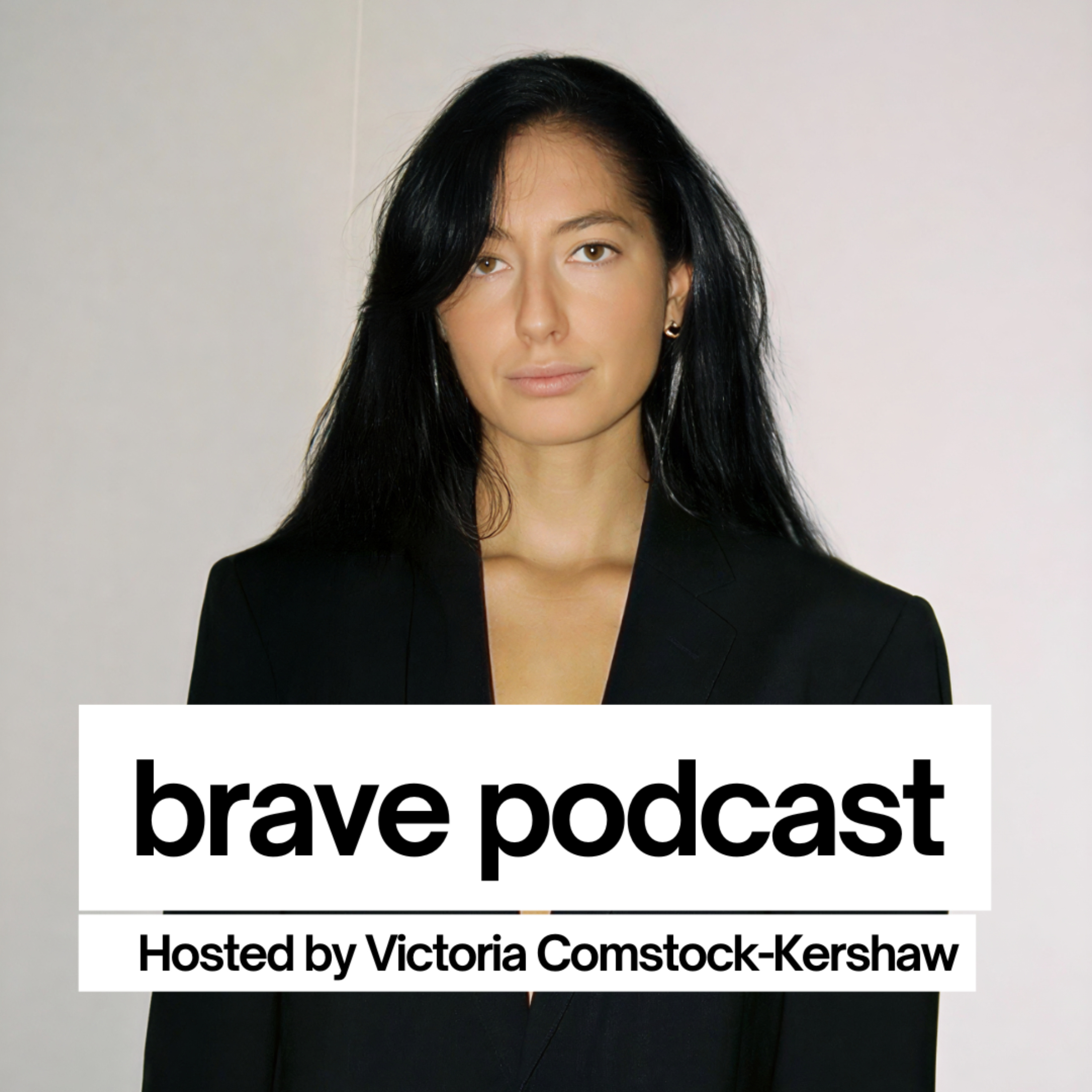
brave podcast
by brave Projects
brave podcast brings forward the voices shaping contemporary art.Through intimate conversations each episode explores the ideas, challenges, and dreams shaping creative practice today.
-
20
Nick Hemming-Brown & Thomas Hjelm: Rethinking the Gallery Model
Nick Hemming-Brown and Thomas Hjelm join Victoria Comstock-Kershaw for this episode of the brave podcast to discuss their collaborative practice and the thinking behind HBH Gallery.Working through a nomadic model, they reflect on building exhibitions outside of fixed spaces, using flexibility as a way to support emerging artists and experiment with new formats. From their first meeting to curating international group shows, the conversation traces how a shared approach to art and audience has shaped their partnership.They also discuss the limitations of the traditional white cube, the importance of narrative in exhibition-making, and how digital culture continues to reshape both the production and experience of art. Throughout, they emphasise a commitment to artist-led thinking, documentation, and creating exhibitions that feel both accessible and engaging.
-
19
Mike Silva: The Incidental Moment
Mike Silva joins Victoria Comstock-Kershaw for this episode of the brave podcast, recorded in his studio as he prepares for an upcoming exhibition in Copenhagen.Working primarily in painting, Silva reflects on his shift away from traditional portraiture towards more incidental, intimate moments, where light, memory, and observation take precedence over representation. Using photography as a starting point, he describes painting as a process of translation shaped by intuition, touch, and the act of looking.The conversation also touches on vulnerability in his work, the influence of analogue culture, and the balance between spontaneity and control in his process. Reflecting on his career, Silva speaks candidly about navigating the art world, from being dropped by a gallery to rediscovering visibility through social media, as well as the changing conditions of image-making today.
-
18
Jacob Barnes: Season 4 Episode 6
Jacob Barnes joins Victoria Comstock-Kershaw for this episode of the brave podcast, recorded inside Season 4 Episode 6, the London-based gallery he founded. Working primarily across sculpture and installation, Barnes reflects on building a programme rooted in ambition, clarity, and a refusal to follow established models. He discusses the gallery’s evolution over its first 18 months and its focus on presenting work that is direct, forceful, and capable of provoking strong reactions. Recent exhibitions are explored, including David Atwood’s use of industrial washing machine components to examine domestic labour, alongside The Bar, an immersive, rule-based project testing endurance and social interaction.The conversation expands to the London gallery landscape, where Barnes advocates for greater urgency and originality while critiquing repetition within the ecosystem. He outlines how initiatives such as Minor Attractions and Summer Sessions connect contemporary art with music, performance, and public programming. An upcoming exhibition by Japanese artist BIEN is introduced, whose work bridges painting and sculptural form while engaging with literary references. Together, these threads point towards a programme that continues to evolve through experimentation, international dialogue, and a sharpened engagement with painting.
-
17
Paula Parole: A Promise Is A Spell
Paola Parole joins Victoria Comstock-Kershaw for this episode of the brave Podcast, recorded inside A Promise is a Spell, her first solo exhibition in London.Working across painting, sculpture, and installation, Parole discusses how themes of womanhood, childhood, domesticity, and storytelling shape her practice. Drawing on the symbolic language of fairy tales, she reflects on passivity in female narratives, the tension between fantasy and reality, and the emotional power of personal memory.The conversation also explores the materials and motifs in the exhibition, from thorns, birds, and cages to her papier-mâché rocking horse, as well as the pressures of making a first solo show and her work co-founding Filthy Fox Auction Club, which supports recently graduated artists in London.
-
16
James Dearlove: The Trilling Wire
We are excited to launch season three of brave podcast with artist James Dearlove, who joins host Victoria Comstock-Kershaw to discuss his painting practice and the intuitive process that shapes his work. Based in Cornwall, Dearlove creates figurative paintings where human figures appear within swirling landscapes populated by animals, plants, and symbolic imagery. Rather than constructing fixed narratives, he allows compositions to emerge from instinct, aiming to interrupt immediate interpretation and hold viewers in a moment of uncertainty before meaning settles.The conversation explores his exhibition The Trilling Wire, whose title references T. S. Eliot and the idea of hidden tension or vibration beneath the surface. Dearlove reflects on how literature influences his visual imagination and how his paintings attempt to capture emotional states before they become defined, allowing multiple feelings and possibilities to coexist within the same image.Dearlove also shares how leaving London for Cornwall helped him focus on painting more seriously, while time spent living and working in Greece introduced new imagery drawn from coastal landscapes and olive groves. The episode concludes with reflections on his unconventional path back to painting after a career in television, and his belief that persistence, experimentation, and openness to chance are essential in building an artistic practice.
-
15
Jonny Tanna: Harlesden High Street, Building Community Through Art
Jonny Tanna is the founder of Harlesden High Street, a gallery rooted in northwest London that centres artists of colour, outsider practices, and community engagement. He explains how the space grew organically from film nights and curatorial experiments into a platform designed to welcome people who are often excluded from the contemporary art world.Throughout the conversation with brave podcast host and arts editor, Victoria Comstock-Kershaw, Jonny challenges the dominance of the white cube, the decline of traditional art fairs, and the narrow collector base that many galleries rely on. He argues for broader cultural engagement, drawing from music, film, and counterculture, and speaks about Minor Attractions as an alternative fair model that prioritises social exchange, experimentation, and atmosphere.The episode explores how outsider artists are supported at Harlesden High Street, including Jonny’s approach to curation, performance, and installation. He shares stories that highlight how everyday encounters, local communities, and unconventional narratives shape the gallery’s programme.Jonny also reflects on sincerity in the art world, warning against the performative use of terms like community and accessibility. He emphasises that galleries are ultimately people-driven spaces and that treating artists and audiences with respect is essential for long-term sustainability.The conversation closes with future plans for Harlesden High Street, including archival-focused projects, exhibitions exploring music history and cultural shifts, and Jonny’s ongoing commitment to building platforms that prioritise cultural value over commercial posturing.
-
14
James Marshall: Access, Confidence and Communication
Curator, writer and founder of communications agency The Inventive, James Marshall joins Victoria Comstock-Kershaw for a new brave podcast episode to talk about access, class and confidence in the art world, and how he built a career without the usual pathways. Growing up in rural Scotland with little access to museums or galleries, James shares how arriving in London at 17 reshaped his relationship to art, and why he decided to create his own opportunities rather than accept unpaid labour as the entry fee.Throughout the episode, James breaks down the power dynamics behind internships and early career roles, and explains how bringing a clear skill set to the table can shift the balance. From learning social media on the fly to building The Inventive, he reflects on the reality that experience does not pay rent, and why paid apprenticeships and properly funded routes into the sector are overdue.The conversation also explores language, communication and the performance of the gallery ecosystem, and why contemporary art needs fewer barriers and less art speak. James and Victoria discuss accessibility in exhibitions, the value of wall texts, and how formats like Minor Attractions can help audiences connect with work beyond the white cube.James also shares what is next, including plans for a group show exploring queer relationships with intimacy, and a full circle moment working with Simone Brewster on a commissioned installation film at the Design Museum.
-
13
Eva Dixon: Fearlessness
Artist Eva Dixon joins Victoria Comstock-Kershaw for a new brave podcast episode to unpack the ideas behind, ‘Mercury 13’, Eva’s exhibition inspired by the women who secretly qualified for astronaut training in the 1960s. Eva shares how their overlooked history, especially the story of Wally Funk, shaped the direction of the show.Throughout the podcast, Eva talks about her approach to materials, sourcing firehoses, discarded objects and community donations to build sculptures that feel alive, improvised and full of tension. Eva’s process blends invention with instinct, letting found materials guide her into new narratives.The conversation also dives into joy as resistance, the problems with the tortured-artist myth and the importance of community, reciprocity and care.Eva is currently exhibiting work at Work In Progress with her solo exhibition ‘Mercury 13’, and at Rose Easton as part of the group show ‘Abigail’s Party’.
-
12
Esther Gatón x anteroom: Vowels
Host Victoria Comstock-Kershaw sits down with artist Esther Gatón at her exhibition Vowels, with anteroom for an episode of brave podcast. Together, they explore the deep relationship between material, process, and intuition that underpins Esther's practice.The conversation moves through ideas of repetition, dreams, care, natural light, and the emotional intelligence of materials. Esther reflects on working across different cities, collaborating with friends, balancing artistic labour with discipline, and the importance of forging one's own path without self-censorship.Esther speaks about her working process, including her transition from sculpture to graphite drawings. She offers insight into her handmade bioplastic sculptures and explains how humidity, geography, and low-tech methods influence their final form.Victoria and Esther also discuss audience interpretation, fluid mechanics, and the quiet, mysterious ways artworks build connections across generations and contexts. The episode concludes with a look ahead to Esther's forthcoming six-month museum exhibition at Patio Herreriano in Spain. A special thank you to Flavia Nespatti, co-founder of anteroom.
-
11
Elizabeth Dimitroff: A Boy Falling Out of the Sky
London-based painter Elizabeth Dimitroff joins brave host Victoria Comstock-Kershaw for a rich and thoughtful conversation recorded on the eve of A Boy Falling Out of the Sky at Soho Revue. Elizabeth traces her unexpected journey from studying furniture design at the Rhode Island School of Design to rediscovering painting in her mid-twenties, reflecting on how memory, nostalgia, and a quiet surrealism shape her figurative worlds.As the co-founder of God Save the Scene, Elizabeth brings a unique perspective on community and the shifting culture of London’s art scene. She shares grounded advice on residencies, building a sustainable studio practice, finding support systems, and navigating the early years after art school. The conversation unfolds with honesty, humour, and a refreshing openness that resonates long after it ends.A special thank you to the team at Soho Revue.
-
10
Anna Pakosz: Long Takes
In this episode, artist Anna Pakosz joins host Victoria Comstock-Kershaw to discuss how her journey from Hungary to the UK, beginning with the Tracey Emin Artist Residency in Margate, shaped her evolving practice. Anna reflects on how movement, gesture, and material experimentation, from dance to rust and blackboard paint, converge in her work to explore presence, rhythm, and transformation.Pakosz opens up about finding her voice in London’s fast-paced art scene, the shift from structured environments to artistic independence, and the balance between control and surrender in her creative process. Pakosz also shares insights on her debut solo exhibition Long Takes at Deák Erika Galéria in Budapest, and her plans for future residencies in warmer places.A conversation about process, vulnerability, and trust, in materials, in the body, and in the unknown.
-
9
Will Jarvis: Shaping a More Equitable Art Ecosystem
In the first episode of season two of the brave podcast, hosted by Victoria Comstock-Kershaw, Will Jarvis, founder and CEO of Gertude, reflects on his journey from painter to art world innovator. After studying painting at Camberwell College of Arts, Jarvis co-founded The Sunday Painter, marking his entry into the art industry.Throughout the conversation, Jarvis explores multiple layers of the art ecosystem, from artists and collectors to galleries and the wider market structures that shape them. With Gertude, he is redefining industry standards by championing transparency and empowering artists to sell their works directly through the app, introducing a new model for visibility and sustainability within the arts.Jarvis’s insights highlight a shift towards greater accessibility and openness in the art world, as Gertude bridges the gap between artists and audiences while encouraging a more direct, equitable exchange of creativity and value.
-
8
Viktoryia Dijk
In this episode, Belarusian-born multidisciplinary artist Viktoryia S. Dijk reflects on her journey in conversation with Kildine de Saint Hilaire.Viktoryia traces her path from early studies in Belarus to pursuing graphic design in The Hague, and more recently completing her MA in Fine Art at the Royal College of Art in London. She shares how her practice evolved from classical training in figure drawing towards large-scale, process-driven canvases that dissolve the human form into colour, energy, and presence.Her work combines layers of pigment, animal glue, and water, creating paintings that feel both anatomical and abstract, alive with their own inner force. She speaks candidly about navigating self-criticism, the liberating turning point she experienced at the RCA, and the ongoing question of when a work is truly finished.Viktoryia also discusses growing up in Belarus, the influence of her upbringing and family, and her deep connection to the London art scene, which she describes as a place of belonging and creative energy. For her, creativity is not only a practice but a way of living, a continual process of understanding oneself.
-
7
Lily Bunney
In this episode, multidisciplinary artist Lily Bunney shares her journey and practice in conversation with Kildine de Saint Hilaire.Lily reflects on how she arrived at her artistic name while working as a teacher and wishing to keep her students from finding her online. She delves into her relationship with social media, her background teaching mathematics, science, and art to pupils aged 11–16, and how her love of art continues to shape her creative thinking.Her practice spans pixelation, found imagery, distance, abstraction, technology, and beyond. She revisits her pivotal exhibition at Guts Gallery, Girls Peeing on Cars, and speaks about the significance of that “here I am” moment. Over the years, she has experimented with a wide range of mediums including wood, puppetry, writing, crochet, animatronics, and painting. Today, she is immersed in her pixelated paintings, a process she describes in depth.Lily also discusses the creative community that surrounds her, the current energy and challenges of London’s contemporary art scene, and the often tricky dialogue around being an artist and talking about sales.Her practice strikes a careful balance between responding to fast-moving cultural conversations and allowing the time required to produce meaningful narratives that resonate with the times we live in.
-
6
Eilen Itzel Mena
Eilen Itzel Mena is an Afro-Dominican American artist, writer, and community organiser from the South Bronx, New York. She holds a BFA from the USC Roski School of Art & Design in Los Angeles and an MFA in Painting from the UCL Slade School of Fine Arts in London. Her work has been exhibited internationally, supported by numerous residencies, grants, and awards, most recently the Adrian Carruthers Studio Prize for her Slade MFA Degree Show presentation. She is currently an artist-in-residence at ACME’s Early Careers Programme in London.Eilen spoke to Kildine de Saint Hilaire about how her practice navigates themes of joy, purpose, community, ancestry, and colonial history within the African Diaspora and Latin America. She shared her reflections on building meaningful connections through her art and social practice, and on her role as a creative collaborator for Honey and Smoke, a global platform fostering artist-led inquiry into the pressing themes of our time.Looking ahead, Eilen hopes to deepen her engagement with communities and histories that inform her work, continuing to explore art as a space for dialogue, healing, and collective imagination.
-
5
Tatiana Cheneviere: Building Pipeline and Rethinking the Contemporary Art Gallery
Tatiana Cheneviere is the founder of Pipeline, a contemporary art gallery in London that opened in late 2022. With a background that includes seven years at Gagosian, Tatiana brings a balance of institutional professionalism and independent experimentation to her approach. Pipeline focuses on emerging artists and is structured to foster layered, thoughtful practices through both its main exhibition space and the end room "In the Pipeline", where artists introduce a single work ahead of their solo exhibition.In this brave talk, Tatiana spoke to Kildine de Saint Hilaire about her journey from practicing painting to building a gallery that functions as both studio and exhibition space. She shared her belief in the gallery as a site of creative exploration and discovery, where she and the artists work together in search of something unresolved. She reflected on the importance of visibility, curatorial risk-taking, and developing artist relationships based on trust and mutual respect.Looking ahead, Tatiana hopes Pipeline will continue to offer space for deeper engagement with artists’ practices. Her vision is for the gallery to serve not only as a platform for exhibition but as a creative tool that invites audiences to think critically, slowly and openly about the work on view.This feature of brave talks was in collaboration with Pipeline.
-
4
Charlie Russell
Our third episode features artist, Charlie Russell, in conversation with Kildine de Saint Hilaire.Charlie Russell, a London-based artist, explores themes of light, memory, and domesticity through a blend of traditional painting and digital aesthetics. With an MA in Painting from the Royal College of Art (2024) and a BA from Camberwell College of the Arts, University of the Arts London (2023).Charlie's work challenges conventional living spaces by transforming organic shapes into indeterminate forms. Also, her art captures the emotive power of light, from sunlight warming concrete structures to streetlamp glow refracted through raindrops, reflecting on its transformative influence on personal narratives.Tune in to this podcast before Charlie's residency at Casa Santa Ana in Panama.
-
3
Samah Rafiq
Our second episode showcases Samah Rafiq, ahead of her solo exhibition in London this upcoming October.Samah earned an MA in Painting from the Royal College of Art in 2024, within this episode, she explores her artistic journey since university, from initially working in her room to a studio in Hackney. She reflects on navigating Instagram's algorithm and her solo exhibition in Germany, last November.This podcast was supported by our partners, 1 Warwick by Maslow’s.Samah Rafiq joins Kildine de Saint Hilaire in conversation.
-
2
Sarah Larby
Our first episode features brave's resident photographer, Sarah Larby, a London-based visual artist and fine art photographer. From her educational journey, books she has created to unexpected encounters like her artwork appearing on a bus stop, we explore Sarah's fascinating story and more!Sarah Larby is in conversation with Kildine de Saint Hilaire.
No matches for "" in this podcast's transcripts.
No topics indexed yet for this podcast.
Loading reviews...
ABOUT THIS SHOW
brave podcast brings forward the voices shaping contemporary art.Through intimate conversations each episode explores the ideas, challenges, and dreams shaping creative practice today.
HOSTED BY
brave Projects
CATEGORIES
Loading similar podcasts...
URL copied to clipboard!