
PODCAST · business
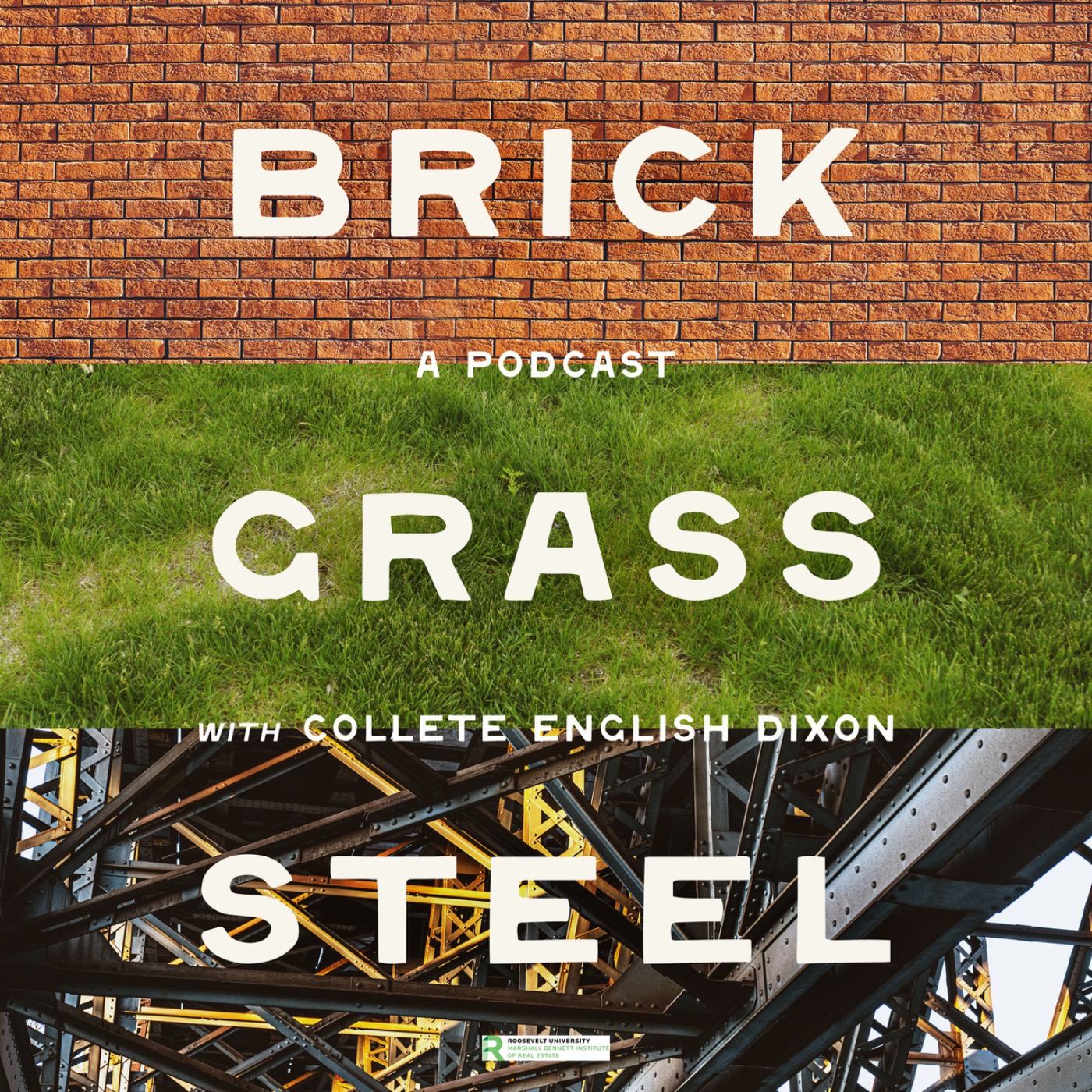
Brick, Grass (&) Steel
by Roosevelt University
A podcast exploring how the built environment can support equitable, sustainable and resilient communities. Episodes will address how physical spaces influence survival and recovery in the face of climate change and natural disasters such as hurricanes and wildfire, as well as how redevelopment affects equitable rebuilding. Brought to you by the Marshall Bennett Institute of Real Estate at Roosevelt University. Hosted on Acast. See acast.com/privacy for more information.
-
11
Climate Adaptation/Climate Gentrification
Brick, Grass & Steel returns with a conversation about how cities can prepare for the impact of climate change – not “after the disaster” but, hopefully, in anticipation of it. Jesse Keenan, PhD, author of North, and Jane Gilbert, Miami’s first Chief Resilience Officer, talk about how communities can prepare and the challenges that go along with that effort. Hosted on Acast. See acast.com/privacy for more information.
-
10
Is rebuilding possible without displacement?
Hurricane Katrina reshaped New Orleans — and reshaped how America thinks about disaster recovery. In this episode, Andrew Kopplin of the Greater New Orleans Foundation joins Collete English Dixon to reflect on the long shadow of Katrina, the realities of displacement, and the hard lessons about equitable recovery. Hosted on Acast. See acast.com/privacy for more information.
-
9
When disaster strikes, resilience doesn’t begin with buildings—it begins with people.
In the Season 2 premiere of Brick, Grass (&) Steel, we explore how schools and libraries became anchors of recovery after the 2025 LA fires—and what communities everywhere can learn about social infrastructure, trust, and resilience. Hosted on Acast. See acast.com/privacy for more information.
-
8
Scorched Earth: What Burned and Why?
In the Season 1 finale of Brick, Grass and Steel, host Collete English Dixon is joined by urban planner and equity advocate Dr. Nina Idemudia to reflect on the major themes of the season. Together, they revisit key insights from conversations on segregation, urban renewal, social infrastructure, environmental injustice, and climate resilience — and discuss how these threads set the stage for Season 2. This wrap-up brings clarity, connection, and a forward-looking vision for what it takes to build communities that are equitable, sustainable, and resilient by design. Hosted on Acast. See acast.com/privacy for more information.
-
7
How the Climate Crisis Exposes, and Deepens, Inequality
Climate change doesn’t strike evenly – scholars Brandon Derman and Lesa Johnson join me to explore how the crisis exposes and deepens the inequalities built into our cities and what is means to build a just response to the climate crisis. Hosted on Acast. See acast.com/privacy for more information.
-
6
Race, Place and Pollution: The Fight for Environmental Justice
Why is environmental justice essential to resilience? Dr. Robert Bullard reveals the history, the fights, and the urgent need for equity in every community. View materials from Dr. Bullard's recent report, "Green Light to Pollute in Texas... Again." Hosted on Acast. See acast.com/privacy for more information.
-
5
From History to Action: Undoing Segregation in our Neighborhoods
Building on Richard Rothstein’s “The Color of Law” and the discussion about urban renewal with Dr. Mindy Fullilove, who wrote “Root Shock”, and Brentin Mock, this discussion with Richard Rothstein and Leah Rothstein explores how “Just Action” offers a tangible framework for communities to dismantle segregation, influence urban planning and public policy decisions, and build more equitable, integrated communities. If you would like to read more about the topics discussed in this episode arc, please see information below for purchasing the books referenced. Also, you can subscribe to Leah Rothstein’s SubStack platform at https://substack.com/@justaction.The Color of Law: A Forgotten History of How Our Government Segregated AmericaRoot Shock: How Tearing Up City Neighborhoods Hurts America, and What We Can Do about Itbookshop.org Hosted on Acast. See acast.com/privacy for more information.
-
4
Urban Renewal or Urban Removal?
Dr. Mindy Fullilove and journalist Brentin Mock explore how urban renewal became “urban removal,” the trauma it caused, and its lasting echoes in today’s redevelopment. Hosted on Acast. See acast.com/privacy for more information.
-
3
Lines that Last: Legal Segregation by Design - A Color of Law Conversation
In this episode, Richard Rothstein reveals how segregation in American communities was not the result of personal choice or private prejudice, but the outcome of deliberate government policy and industry practice. From housing and zoning laws to mortgage lending and urban planning, he explains how the architecture of inequality was built — and why its legacy still defines our neighborhoods today. Hosted on Acast. See acast.com/privacy for more information.
-
2
The Power Behind the Plans: Urban Planning and the Real Estate State
In an interview with Samuel Stein, author of Capital City: Gentrification and the Real Estate State, this episode explores how urban planning – often viewed, but seldom literally seen, as a neutral or technocratic practice – has historically played a central role in enabling inequality, displacement and segregation and how planners can reclaim their power to foster equity, resilience and justice in cities. Hosted on Acast. See acast.com/privacy for more information.
-
1
The Unseen Architecture of Inequality
Featuring Eric Klinenberg, sociologist and New York University professor, whose groundbreaking book Palaces for the People examines how libraries, parks and other social infrastructure can strengthen democracy and reduce inequality. Klinenberg’s research and commentary have been featured widely in The New Times, The New Yorker, and other leading outlets. Hosted on Acast. See acast.com/privacy for more information.
We're indexing this podcast's transcripts for the first time — this can take a minute or two. We'll show results as soon as they're ready.
No matches for "" in this podcast's transcripts.
No topics indexed yet for this podcast.
Loading reviews...
ABOUT THIS SHOW
A podcast exploring how the built environment can support equitable, sustainable and resilient communities. Episodes will address how physical spaces influence survival and recovery in the face of climate change and natural disasters such as hurricanes and wildfire, as well as how redevelopment affects equitable rebuilding. Brought to you by the Marshall Bennett Institute of Real Estate at Roosevelt University. Hosted on Acast. See acast.com/privacy for more information.
HOSTED BY
Roosevelt University
Loading similar podcasts...
Frequently Asked Questions
How many episodes does Brick, Grass (&) Steel have?
Brick, Grass (&) Steel currently has 11 episodes available on PodParley. New episodes are automatically indexed when they're published to the podcast feed.
What is Brick, Grass (&) Steel about?
A podcast exploring how the built environment can support equitable, sustainable and resilient communities. Episodes will address how physical spaces influence survival and recovery in the face of climate change and natural disasters such as hurricanes and wildfire, as well as how redevelopment...
How often does Brick, Grass (&) Steel release new episodes?
Brick, Grass (&) Steel has 11 episodes. Check the episode list to see recent publication dates and frequency.
Where can I listen to Brick, Grass (&) Steel?
You can listen to Brick, Grass (&) Steel on PodParley by clicking any episode. We provide an embedded audio player for direct listening, and you can also subscribe via your preferred podcast app using the RSS feed.
Who hosts Brick, Grass (&) Steel?
Brick, Grass (&) Steel is created and hosted by Roosevelt University.
URL copied to clipboard!